Does the Ryzen AI Max+ 395 Use a Traditional Motherboard?
Short answer: no, not in the way an AM5 or LGA1851 desktop chip does. The Ryzen AI Max+ 395 (codenamed Strix Halo) is a soldered, BGA-packaged mobile and workstation APU. There's no CPU socket, no chipset lineup like X670E governing the board, and no open third-party motherboard market from ASUS, Gigabyte, or MSI. If you searched "Ryzen AI Max+ 395 motherboard" expecting to shop for a board the way you'd pick an X670E board for a Ryzen 9 9950X, the platform simply doesn't work that way — and understanding why changes how you should evaluate one of these systems.
What the Ryzen AI Max+ 395 Actually Is
AMD positions the AI Max+ 395 as a high-end mobile and workstation APU, not a desktop-socket product. The CPU cores, the integrated Radeon 8060S graphics, and the memory controller are packaged together and soldered directly onto whatever board the device maker designs around it — conceptually similar to how Apple's M-series chips are integrated. Practically, that means:
- No socket to remove the CPU from or upgrade later.
- No independent chipset (X670E, B650, or otherwise) defining the board's feature set — each mainboard is purpose-built by the OEM around this one chip.
- Memory (LPDDR5x) is soldered on-package rather than seated in DIMM slots.
Generic "AI Max+ 395 motherboard" checklists that mention X670E chipset requirements, 800Gbps PCIe 5.0 AI data throughput, or VRM sizing for a 350W desktop socket aren't describing this chip's real spec sheet. Those details belong to a different conversation — full-size AM5 desktop builds — and carrying them into Strix Halo shopping advice points you toward a product category that doesn't exist for this platform.
Where You'll Actually Find an AI Max+ 395 "Motherboard"
Because there's no open chipset market, the closest thing to a buyable "motherboard" is the mainboard built into a small number of mini-PCs and mini-ITX systems designed around the chip. Framework sells its Ryzen AI Max mainboard as a standalone component you drop into a mini-ITX case of your choosing, and sealed mini-PC vendors like GMKtec ship their own fixed versions. For more on how that ecosystem looks in practice, see the Ryzen AI Max Mini-ITX / Framework Desktop breakdown and the Ryzen AI Max Mini PC 128GB review, which covers a 128GB unified-memory configuration.
If you're weighing tiers within the same chip family, the Ryzen AI Max 385 Mini PC review covers the mid-tier sibling and where AMD draws the line against the flagship 395.
Devices built around the chip
| Device | Form factor | Notable trait |
|---|---|---|
| Framework Desktop | Mini-ITX, mainboard sold standalone | User-supplied case; one exposed PCIe slot |
| GMKtec Strix Halo mini-PCs | Sealed small-form-factor desktop | Fixed configuration, no board swap |
| HP Z2 Mini G1a | Workstation mini-PC | Positioned for professional/AI workloads |
Memory: Why There's No XMP Profile to Tune
A recurring step in generic "optimize your new motherboard" guides is dialing in an XMP profile for faster RAM. That step doesn't apply here. LPDDR5x on the AI Max+ 395 is fixed at the factory — there's no DIMM slot, no user-installed kit, and no XMP toggle in the firmware, because the memory isn't a separate, swappable component. What you're actually choosing when picking a configuration is the capacity tier you buy up front, not a clock speed to tune afterward.
That fixed, large, unified memory pool is also the main reason the chip draws attention from local-LLM builders: sharing a big low-latency memory space between CPU and GPU is useful for loading large models without hitting a discrete GPU's VRAM ceiling. The Ryzen AI Max LLM Test, Ryzen AI Max+ 395 LLM Performance, and Ryzen AI Max Local LLM Benchmarks pieces go through what the public data actually shows for that use case — worth reading before assuming any specific tokens-per-second figure, since real-world throughput varies heavily by model size and quantization. AMD Ryzen AI Max for Local LLMs: What the Specs Mean is the more general explainer of the platform-and-memory framing in the catalog.
Expansion: What You Can and Can't Add
Board designs vary by OEM, but the pattern across Strix Halo devices is consistent: a limited number of PCIe lanes are exposed for expansion — typically enough for one NVMe SSD slot, and on boards like Framework's, a single open-ended slot that can carry a discrete GPU at reduced lane width — rather than the multi-slot layouts common on full ATX desktop boards. Claims of dual-GPU SLI or CrossFire support, or rows of open M.2 slots for "AI storage arrays," don't match how these boards are actually laid out. CrossFire itself hasn't been an active AMD feature for years on any platform, and these mainboards are single-GPU designs by construction.
If multi-slot PCIe expansion is the priority, a socketed desktop platform remains the more flexible choice.
How This Compares to a Traditional AM4/AM5 Build
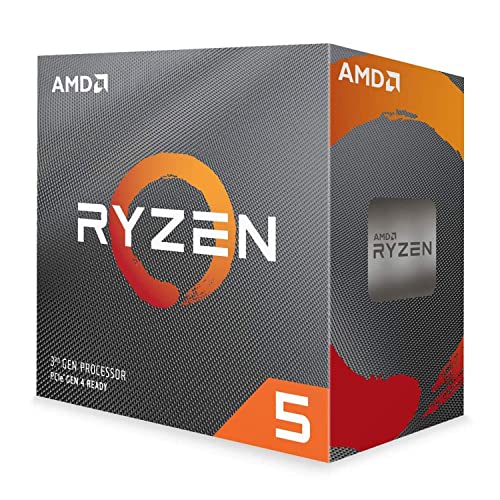
The contrast is easiest to see next to a conventional, upgradable desktop platform. A Ryzen 5 3600 on AM4, for example, still turns in reasonable 1080p numbers in current titles — around 39 fps in Cyberpunk 2077, 63 fps in Baldur's Gate 3, and 72 fps in Starfield, per public GPU benchmarks — and that platform lets you swap the motherboard itself, change coolers (see the Noctua NH-U12S vs MasterLiquid ML240L comparison for one such decision on a Ryzen 5800X build), or upgrade RAM independently using kits like a Crucial 16GB DDR4 3200MHz set or a Crucial 8GB DDR4 3200MHz module.
| Ryzen AI Max+ 395 (Strix Halo) | AM4/AM5 desktop (e.g. Ryzen 5 3600 / 5600X) | |
|---|---|---|
| CPU mounting | Soldered BGA, non-removable | Socketed, user-replaceable |
| Memory | Soldered LPDDR5x, fixed capacity tier | User-installed DDR4/DDR5 DIMMs, upgradable |
| Motherboard market | OEM-fixed mainboard (e.g. Framework Desktop) | Open market — ASUS, Gigabyte, MSI, ASRock boards |
| GPU expansion | One reduced-lane slot at most; integrated Radeon 8060S standard | Full PCIe x16 slot(s); discrete GPU expected |
| Primary appeal | Large unified memory for AI/LLM workloads in a small form factor | Gaming price/performance, full incremental upgrade path |
That's not a knock on either platform — they're built for different jobs. The AI Max+ 395 is a small-form-factor, high-memory AI workstation-in-a-box; a Ryzen 5-class AM4/AM5 build, like one centered on a Ryzen 5 5600X, is a conventional, incrementally upgradable gaming or general-purpose desktop. Comparing the two is really a comparison between "buy a fixed appliance sized for AI workloads" and "buy a chassis you keep upgrading part by part."
If You Want a Traditional, Upgradable Platform Instead
If board-level upgradability — swapping RAM, changing coolers, adding PCIe cards over time — matters more than a large unified memory pool, a socketed AM4 or AM5 desktop is still the more flexible buy, and the open motherboard market is exactly where that flexibility lives. That's the segment the original "which motherboard" question usually assumes, even when it gets attached to a chip that isn't built to work that way.
Citations and sources
- AMD Ryzen AI Max+ 395 product page — official package and platform positioning
- Framework Desktop — standalone Ryzen AI Max mainboard and mini-ITX case details
- Public GPU benchmark data for the Ryzen 5 3600 (Cyberpunk 2077, Baldur's Gate 3, Starfield)
This piece is editorial synthesis based on publicly available information. No independent first-party benchmarking is reported.