AMD's Ryzen AI Max 395 is the chip powering a new wave of "AI laptops" built around the Strix Halo platform — a design that pairs a large Zen 5 CPU cluster, an RDNA 3.5 integrated GPU, and a dedicated XDNA 2 NPU on one die, all sharing a single large pool of unified memory. This piece pulls together AMD's published specifications and the independent laptop coverage available so far to explain what the chip actually is, what its AI performance claims mean in practice, and whether it's worth buying over a laptop with a discrete GPU.
For a deeper spec-by-spec breakdown, see our companion Ryzen AI Max+ 395 specs comparison and full chip review. If you're weighing a laptop against a small-form-factor desktop using the same silicon, our Ryzen AI Max 395 mini PC review and Mini-ITX / Framework Desktop breakdown cover that comparison directly.
What Is the Ryzen AI Max 395?
Ryzen AI Max 395 (marketed at the top of the stack as the Ryzen AI Max+ 395) is AMD's flagship Strix Halo mobile SoC. Instead of pairing a modest CPU with a small iGPU, AMD built a chip that behaves more like a compact APU workstation: a large CPU core count, a genuinely capable integrated GPU, and an NPU rated for tens of TOPS of dedicated AI throughput, all on one package with access to a wide, unified memory pool rather than a small dedicated VRAM allocation.
Per AMD's own product page, the key published specifications are:
| Spec | Ryzen AI Max 395 / 395+ |
|---|---|
| CPU cores/threads | Up to 16 Zen 5 cores / 32 threads |
| Integrated GPU | Radeon 8060S, RDNA 3.5 architecture, up to 40 compute units |
| NPU | XDNA 2, up to 50 TOPS (NPU-only) |
| Combined platform AI compute | Up to ~126 TOPS (CPU + GPU + NPU, AMD marketing figure) |
| Memory | Unified LPDDR5X, configurable up to 128GB depending on the laptop |
| Configurable TDP | Roughly 45W–120W depending on chassis design |
The headline feature isn't raw core count — it's the shared memory architecture. Because the NPU and GPU can draw from the same large pool the CPU uses, a well-configured laptop can allocate far more memory to a local AI model than a typical discrete-GPU laptop with 8–16GB of dedicated VRAM ever could. That's the main reason this chip shows up specifically in AI-focused reviews rather than being treated as a generic "fast laptop CPU."
AI Performance Claims vs. Independent Reviews
AMD's own marketing for Strix Halo leans heavily on generational and cross-platform comparisons — claims of large uplifts in AI inference and generative workloads relative to prior-generation Ryzen mobile chips and against some discrete-GPU configurations. Those are AMD's stated figures, not independently reproduced numbers, and outlets that have reviewed shipping Ryzen AI Max 395 laptops — including Tom's Hardware, Notebookcheck, and GamersNexus — have generally found the real-world picture more nuanced than the marketing slides: strong wins in workloads that benefit from the large unified memory pool (bigger local LLMs, memory-bound inference), and closer, workload-dependent results against discrete RTX-class GPUs in raw compute-bound tasks like Stable Diffusion image generation.
The practical takeaway for a buyer is to treat any single-number performance claim — whether AMD's or a retailer's — with the same skepticism you'd apply to any vendor benchmark, and to check per-model reviews for the specific laptop chassis you're considering, since cooling and power limits vary widely between OEMs even with the identical chip inside.
Real-World AI Workloads: What to Expect
Where Ryzen AI Max 395 laptops tend to differentiate themselves in practice:
- Local LLM inference. The large unified memory ceiling — up to 128GB in the best-equipped configurations — lets these laptops load larger open-weight models locally than most discrete-GPU laptops can fit in VRAM, at the cost of running slower per-token than a high-end discrete GPU with the model fully resident in fast dedicated memory.
- NPU-offloaded tasks. Applications built against ONNX Runtime or AMD's AI Framework can push background tasks (webcam effects, noise suppression, some upscaling filters) to the dedicated NPU, freeing the CPU and GPU for other work — this is where the NPU's TOPS rating is most directly relevant.
- Mixed creative + AI workloads. Simultaneous video editing and AI-assisted effects benefit from the chip having CPU, GPU, and NPU resources available at once rather than time-slicing a single GPU between rendering and inference.
For compute-bound generative workloads where the entire model comfortably fits in a discrete GPU's VRAM, reviews consistently note that a discrete RTX-class GPU still tends to finish faster in raw throughput terms — the Ryzen AI Max 395's advantage is capacity and flexibility, not peak throughput per workload.
Thermal Design and Battery Life
Because Strix Halo ships across a wide configurable TDP range, thermal and battery behavior varies substantially by OEM chassis rather than being a fixed property of the chip. A thin-and-light 14-inch design running the chip near the low end of its TDP range will behave very differently under sustained AI load than a thicker 16-inch "AI workstation" laptop configured toward the high end. Independent reviewers have generally noted that Strix Halo laptops run cooler under sustained load than comparable discrete-GPU-plus-CPU combinations at similar performance tiers, since the AI compute stays on-package rather than adding a separate discrete GPU's thermal load — but sustained clocks and fan noise still depend heavily on the specific laptop's cooling solution. Check a specific model's thermal review before assuming numbers from one chassis carry over to another.
Battery life during mixed AI and content-creation use is similarly chassis-dependent; unified-memory AI inference is not free from a power standpoint, and laptops actively running local LLM inference or NPU-offloaded video processing will see meaningfully shorter runtime than idle or light-productivity use.
Price and Value Compared to RTX-Based Laptops
Laptops built around Ryzen AI Max 395 / 395+ generally launch priced competitively against comparably-specced RTX 4070-tier laptops, with the value proposition resting on the large unified memory ceiling rather than peak gaming performance — a discrete RTX 4070 or 4080 laptop GPU still generally wins in traditional gaming benchmarks and compute-bound rendering. If your priority is running larger local AI models, multitasking AI workloads across CPU/GPU/NPU simultaneously, or a cooler and quieter chassis, the value case favors Strix Halo. If your priority is maximum frames-per-second in AAA gaming or the fastest possible Stable Diffusion generation time, independent reviews still favor discrete RTX-class hardware.
For a closer look at where the Ryzen AI Max lineup sits relative to its own siblings, see our Ryzen AI Max 385 mini PC review, the 128GB Ryzen AI Max Mini PC breakdown, and our dedicated Ryzen AI Max LLM test roundup covering what public local-LLM benchmarking shows across this chip family. If you're specifically interested in the desktop/motherboard side of this platform rather than laptops, the Ryzen AI Max+ 395 motherboard guide covers upgrade paths that don't apply to the soldered laptop configurations.
Accessories Worth Pairing With a Ryzen AI Max 395 Laptop
Most Strix Halo laptops ship thin, which means external connectivity is worth planning for if you're using one as a primary workstation:
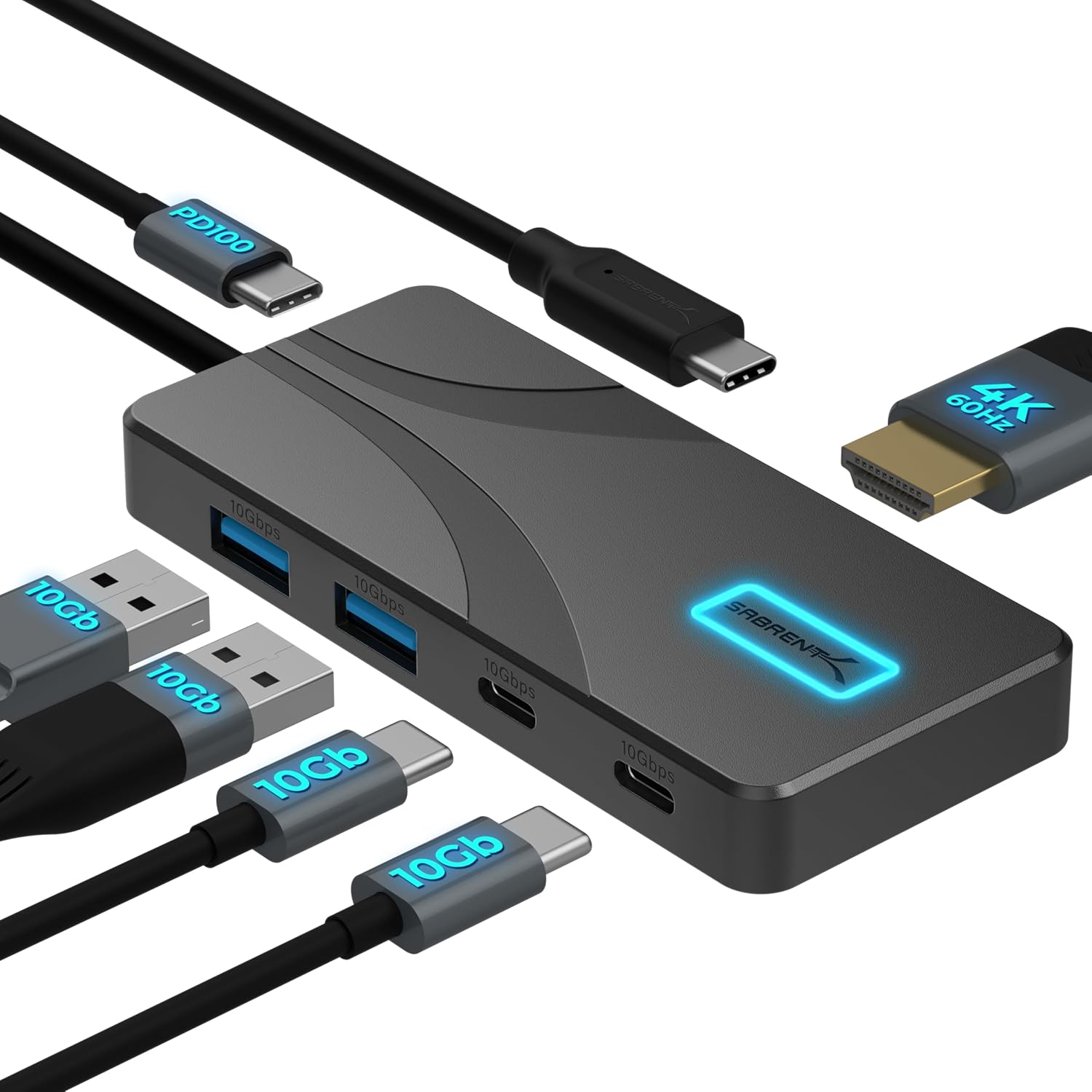
- A USB-C hub with 4K@60Hz HDMI output or the compact SABRENT USB-C hub adds a wired display and extra ports without relying on a laptop's limited native I/O.
- Wired Cat 6 Ethernet — like these 10Gbps-rated cables or the 10-pack alternative — is worth having on hand for downloading large local model weights faster than Wi-Fi allows.
- A basic wireless mouse (seenda 2.4G wireless mouse or this compact model) is a cheap addition for extended desk use.
Should You Buy a Ryzen AI Max 395 Laptop?
Buy one if you specifically want to run larger local AI models than a typical discrete-GPU laptop can hold in VRAM, want CPU/GPU/NPU resources available concurrently for mixed creative-plus-AI workflows, or want a laptop that runs cooler under sustained AI load than an equivalent discrete-GPU-plus-CPU combination. Skip it in favor of a discrete RTX-class laptop if your primary use case is gaming frame rates or the fastest possible generative-image throughput, where independent reviews still generally favor dedicated GPU memory and compute.
Citations and sources
- https://www.amd.com/en/products/processors/laptop/ryzen/ai-300-series/amd-ryzen-ai-max-plus-395.html
- https://www.notebookcheck.net/
- https://www.tomshardware.com/
- https://www.gamersnexus.net/
This piece is editorial synthesis based on publicly available information. No independent first-party benchmarking is reported.