NVIDIA bought 3dfx in late 2000 because 3dfx was effectively bankrupt — drowning in litigation, late with the Voodoo 5 6000, and surpassed technically by the GeForce 256 and GeForce 2. The acquisition was a $112 million asset purchase covering patents, IP, and the engineering team; NVIDIA wound down the Voodoo brand immediately and absorbed the people. The decision to kill 3dfx rather than continue it was about consolidating talent and patents, not about keeping a competing brand alive.
That cold corporate ending obscured what 3dfx actually accomplished. For a brief window from 1996 to 1999, 3dfx was the consumer 3D market. Glide was the API; Voodoo Graphics, Voodoo2, and Voodoo Banshee were the cards; everything else was an also-ran. The mistakes that broke 3dfx — buying STB Systems, abandoning the add-in board partners, missing TSMC capacity, betting on the bloated Voodoo 5 — are studied today because they fit a pattern that every GPU launch since has had to navigate. The technical ideas 3dfx introduced — multi-chip rendering, scan-line interleave, full-scene anti-aliasing as a marketed feature — live on directly in modern GeForce launches.
This is the short history of how 3dfx became dominant, how it broke, what NVIDIA bought when it ended, and what survives.
Key takeaways
- 3dfx dominated 1996–1999 consumer 3D with Voodoo + Glide; nothing else came close.
- The fatal decisions were strategic, not technical: buying STB (alienating board partners), missing a process node, and delivering the Voodoo 5 6000 too late and too expensive.
- NVIDIA's GeForce 256 (1999) and GeForce 2 (2000) caught up technically, then surpassed Voodoo on both performance and cost.
- The acquisition was an asset sale: patents, IP, and the engineering team. The Voodoo brand was deliberately killed.
- 3dfx ideas — SLI, multi-chip rendering, full-scene anti-aliasing, the "high-end consumer halo card" marketing pattern — show up in every NVIDIA launch since.
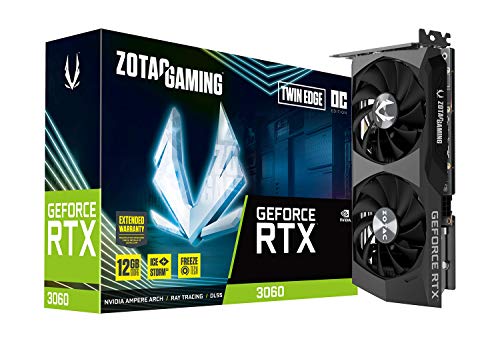
- Working Voodoo systems are still buildable today; the Sound BlasterX G6 handles modern audio on a period rig, and a modern card like the ZOTAC RTX 3060 or MSI RTX 3060 is the everyday descendant of the same enthusiast tier the Voodoo cards once defined.
Setting the late-90s GPU war stage
Before 1996, "PC 3D graphics" mostly meant slow software rasterisers shipped with id Software games, with optional hardware acceleration from a handful of obscure boards. The market was waiting for someone to build the first mainstream 3D accelerator. 3dfx — founded by SGI veterans in 1994 — got there first with the Voodoo Graphics in late 1995. It needed a separate 2D card alongside it, output the framebuffer through a VGA pass-through, and cost more than most people's entire PCs, and it still sold because it was the only thing that ran Quake at 30 fps with proper texture filtering.
For the next three years, 3dfx defined the market. Voodoo2 (1998) added a second TMU and SLI (two cards in parallel for higher resolutions). Voodoo Banshee combined 2D and 3D on one board, killing the pass-through cable. NVIDIA was a competitor but not the competitor — Riva 128 and Riva TNT were respectable but Glide-only titles still ran better on Voodoo, and Glide-only titles were the marquee games of the era.
The shift began in late 1999. NVIDIA's GeForce 256 introduced hardware transform-and-lighting (T&L) at a price 3dfx couldn't match, and at the same time the cross-vendor Direct3D and OpenGL APIs were finally mature enough that "Glide-only" started to look like a liability rather than an advantage. The companion piece Windows 98 vs Windows 2000 for a GeForce-Era Retro Gaming Build covers that specific transition window.
What made 3dfx and Glide dominant in the first place?
Three things, in order: Glide, the chip pipeline, and timing.
Glide. 3dfx's proprietary API was a thin, fast layer over the Voodoo hardware. Direct3D in 1996–1997 was a mess — slow, poorly documented, and prone to driver issues. OpenGL existed but had no consumer-grade implementation. Glide was the API every John Carmack and every Tim Sweeney could write to without fighting the layer. Unreal, Quake II GL, the early Half-Life Glide build, Tomb Raider, Need for Speed III — the entire late-90s 3D catalog ran better on Voodoo precisely because the API was built for it. Our 3dfx Voodoo Glide driver walkthrough documents the practical install path collectors use today.
The chip pipeline. Voodoo Graphics had a dedicated texture mapping unit (TMU) at a time when competitors were doing texture work on the same pipe as everything else. Bilinear filtering, perspective-correct texture mapping, sub-pixel accuracy — Voodoo did them in hardware while the Rendition Vérité and S3 ViRGE struggled. Voodoo2 doubled the TMU count and added SLI for parallel rendering. The hardware was simply ahead.
Timing. 1996–1998 was the right moment for a single-purpose 3D accelerator. CPUs were too slow to do interesting 3D in software. The Quake/Unreal generation of games created the demand. The PCI bus had just enough bandwidth. Voodoo's pass-through-cable approach (use your existing 2D card, plug Voodoo through it) lowered the barrier to entry. Five years earlier or three years later, the same company would have struggled.
Which decisions sank 3dfx?
Four mistakes, compounding. None of them were technical in isolation; together they were terminal.
Buying STB Systems (December 1998). 3dfx had been a chip vendor selling to many board partners — Diamond, Creative Labs, Orchid, Hercules. Buying STB to bring board manufacturing in-house meant 3dfx would now sell finished cards directly. Every existing board partner saw their margins disappear and switched to NVIDIA. NVIDIA's market share went from competitor to dominant in twelve months almost entirely because 3dfx handed them the channel.
Missing TSMC capacity. The Voodoo 4 and Voodoo 5 were late to market because 3dfx couldn't get enough wafers at TSMC's leading-edge process. Every delayed quarter was a quarter NVIDIA's faster GeForce 2 outsold whatever Voodoo card was still on the roadmap.
The Voodoo 5 6000. Four chips on one board, an external power supply (the famous "Voodoo Volts" brick), a $600 retail target, and roughly the performance of a single-chip GeForce 2 Ultra. The architecture proved 3dfx could scale to four chips, but the product was the wrong card at the wrong price. It never shipped commercially.
Bet on the wrong API generation. 3dfx kept iterating Glide while NVIDIA, ATI, and the industry committed to Direct3D as the common surface. By 1999 every major game studio was writing Direct3D paths first. Glide had become the optional fallback rather than the lead target. The strategic foundation of 3dfx's success quietly inverted.
By mid-2000 the company was burning cash, losing the channel war, missing schedules, and litigating with NVIDIA. The sale was the only exit.
Timeline: 1996–2001 key 3dfx and NVIDIA milestones
| Year | 3dfx | NVIDIA |
|---|---|---|
| 1996 | Voodoo Graphics ships, Glide 1.0 dominant | NV1 fails commercially |
| 1997 | Voodoo Rush (2D+3D), Banshee planning | Riva 128 — first competitive part |
| 1998 | Voodoo2 + SLI; STB Systems acquisition | Riva TNT — credible alternative |
| 1999 | Voodoo3 ships, mixed reception | GeForce 256 ships — T&L, leadership |
| 2000 | Voodoo 5 5500 ships; 5 6000 cancelled | GeForce 2 dominates; NVIDIA acquires 3dfx in December |
| 2001 | Brand wound down, employees absorbed | GeForce 3 ships, introduces programmable shaders |
The whole arc takes five years. That's how fast a category-defining company can rise and fall when the technology and the business decisions move out of sync.
How did NVIDIA's 2000 acquisition actually play out?
NVIDIA paid roughly $112 million in cash and stock for substantially all of 3dfx's assets — patents, intellectual property, the engineering team, and outstanding contracts. The deal closed in early 2001 after due diligence and the usual antitrust review. As AnandTech and other industry observers documented at the time, NVIDIA explicitly did not commit to continuing the Voodoo brand or shipping remaining 3dfx products. Cards in the channel were sold through; the Voodoo 5 6000 was cancelled outright; no Voodoo-branded product shipped again.
The patents NVIDIA acquired ended several years of cross-litigation that had been draining both companies. They also gave NVIDIA defensive IP coverage against future entrants. The engineering team, mostly former SGI veterans with deep graphics-hardware experience, was rolled into NVIDIA's existing teams and contributed to the GeForce 3 and subsequent architectures. Several senior 3dfx engineers later took leadership roles inside NVIDIA's GPU group.
The brand-killing decision was deliberate. NVIDIA had finally beaten 3dfx in the market; reviving the brand would have meant pricing future products against their own previous Voodoo positioning, which made no strategic sense. The Voodoo name was retired as cleanly as possible.
What 3dfx ideas live on in modern GPUs?
Most of what 3dfx introduced is still in shipping silicon.
SLI. 3dfx invented Scan-Line Interleave for Voodoo2 in 1998 — two cards rendering alternate scan lines for higher resolutions and frame rates. NVIDIA revived the SLI name for its own multi-GPU technology in 2004; the implementation was different (alternate frame rendering or split-frame rendering rather than scan-line interleave) but the user-facing concept and the branding were direct echoes of 3dfx. SLI as a product category has waned in recent generations as game engines have moved away from it, but the engineering pattern of "render different parts of a frame on different chips" is the same one driving multi-GCD chiplet designs at AMD today.
Full-scene anti-aliasing as a feature. 3dfx made FSAA a marketed bullet point on the Voodoo 5 series. Every modern GPU launch since — MSAA, SSAA, TAA, DLSS, FSR — descends from the same line of "make the image cleaner by rendering more, then resolving it." The pattern of pitching image quality features alongside raw frame rate started with Voodoo.
Multi-chip rendering. The Voodoo 5 6000 was four VSA-100 chips on one board. The card failed, but the architectural exploration of "use more chips, share the rendering" is the same idea AMD applied to RDNA 3's chiplet GPU and NVIDIA hints at for future enthusiast-tier products.
The halo SKU pattern. Voodoo 5 6000 also pioneered the deliberately impractical high-end card. NVIDIA's Titan and 4090/5090 SKUs sit in the same retail position 3dfx tried to occupy: top of the stack, much more expensive than necessary, designed to anchor the rest of the lineup.
Multi-board enthusiast pricing. Voodoo2 SLI required two cards plus a 2D card — $600 total in 1998 dollars. The pattern of "the very fastest configuration costs four times the practical option" was set by 3dfx and is alive and well today.
From Voodoo to RTX: what a collector can still build and buy
The Voodoo cards remain widely available on the used market. A working Voodoo 1 or Voodoo2 costs $80–$200 depending on condition and box completeness. Voodoo 5 5500 cards command higher prices ($300+) precisely because they're rare and historically interesting. A complete period-correct build today pairs the Voodoo card with an era-appropriate Pentium II or III, a Slot 1 or Socket 370 motherboard, Windows 98 SE installed on a CompactFlash boot drive, and a Sound Blaster Live or Audigy for audio. The 1998 Voodoo2 SLI Win98 build covers the canonical setup.
If your goal is to play those games in 2026 without sourcing twenty-year-old hardware, the more honest answer is to run an emulated or virtualised Win98 with software Glide implementations like dgVoodoo2. Most Glide-only titles run cleanly on modern hardware with that wrapper, and the frame rates are far higher than the original Voodoo could deliver.
For the modern descendant of the same enthusiast tier, a 12 GB card like the ZOTAC RTX 3060 or the MSI GeForce RTX 3060 Ventus 2X is the spiritual successor: an accessible entry point into NVIDIA's current product line, the same broad market position Voodoo Graphics held in 1996. The branding and architecture have moved on entirely, but the role — "the gaming card that brings new rendering tech to the mainstream price tier" — is unchanged.
Common 3dfx history misconceptions
- "3dfx invented 3D acceleration." No — earlier boards (Rendition Vérité, S3 ViRGE) shipped first. 3dfx invented the first commercially-dominant consumer 3D accelerator.
- "NVIDIA killed 3dfx by being better." Partially. 3dfx had already wounded itself with the STB acquisition and TSMC delays; NVIDIA being better was the final blow, not the underlying cause.
- "Glide was killed by NVIDIA." No — Glide was killed by Direct3D and OpenGL maturing. NVIDIA didn't need to do anything except wait.
- "The Voodoo 5 6000 was vapourware." Engineering samples exist and have been benchmarked; a handful escaped the cancellation. It was real hardware that never shipped commercially.
- "NVIDIA owns the Voodoo brand." Technically yes — the IP transferred — but it's been deliberately unused since 2001.
Bottom line: the lesson every modern GPU launch echoes
3dfx is the cautionary tale every GPU company internalises: dominance is fragile, channel relationships matter as much as silicon, missing one process node can be terminal, and locking customers to a proprietary API is a single-vendor bet that ages badly the moment cross-vendor alternatives catch up. NVIDIA's careful management of its board partner ecosystem, its repeated foundry diversification, and its commitment to Direct3D and CUDA as multi-customer surfaces are all decisions made with the 3dfx playbook in front of them.
Every NVIDIA launch since 2001 has carried 3dfx DNA — both in the engineering ideas the team kept and in the strategic mistakes the company refuses to repeat. Voodoo is dead. The lessons are not.
Related guides
- Windows 98 vs Windows 2000 for a GeForce-Era Retro Gaming Build — the OS half of a period-correct build.
- Building a 1999 GeForce 256 + Pentium III Win98 Rig in 2026 — the card that finally beat Voodoo.
- Installing 3dfx Voodoo Glide Drivers on Windows 98 — practical Glide install in 2026.
- Building a Period-Correct 1998 Voodoo2 SLI Win98 Gaming PC — the canonical Voodoo2 SLI rig.
- Building a Period-Correct Windows 98 SE Gaming PC in 2026 — the broader Win98 platform.
Sources
- TechPowerup GPU specs database (3dfx parts) — first-party specs for every shipped Voodoo card, useful for cross-referencing capability claims above.
- AnandTech archive — contemporary reviews and acquisition coverage from 1999–2001 that documented the technical and corporate transitions in real time.
- NVIDIA GeForce RTX 3060 product page — first-party reference for the modern card cited as the everyday descendant of the Voodoo enthusiast tier.