Short answer: A usable on-device agent in 2026 needs at minimum a 12GB GPU, 32GB of system RAM, a 6-core+ CPU, and a fast NVMe SSD. That's the realistic floor below which the agent loop starts to feel broken — model unloads, tool-call timeouts, swap thrashing. Everything above is incremental polish. The Microsoft-NVIDIA "Agent PC" marketing is aspirational; the working version is buildable today for under $900.
What is the Microsoft-NVIDIA Agent PC?
Microsoft and NVIDIA spent the back half of 2025 telegraphing a coordinated story: the next generation of personal computing is a PC that always has a capable AI agent running locally, doing chores you used to do manually. Open the browser, find the cheapest flight, fill the form, summarize the four PDFs, schedule the meeting, draft the reply — all without the cloud round-trip and without the privacy surface of a hosted assistant.
The hardware framing has consolidated around three pillars: a Windows-class CPU with a usable NPU, an NVIDIA RTX GPU with enough VRAM for a real local model, and tight OS-level integration via the Windows AI Foundry and DirectML stack. The official Microsoft and NVIDIA collateral is light on a concrete minimum-spec sheet — partly because the spec is genuinely moving, partly because the marketing is positioning RTX 4070-class GPUs and Copilot+ NPUs as the implied floor.
This piece pulls the marketing apart and lays out what an actually-useful local agent needs in mid-2026, what's a nice-to-have, and what you can safely skip.
Key takeaways
- GPU: 12GB VRAM minimum — RTX 3060 12GB, RTX 4060 Ti 16GB, or used 3090. 8GB cards can run small agents but hit ceilings fast.
- System RAM: 32GB floor, 64GB target — agents hold the model, embeddings, and OS context simultaneously.
- CPU: 6-8 modern cores — Ryzen 5 5600G, Ryzen 7 5700X, or Intel Core i5-12400 class. Older quad-cores bottleneck the agent loop.
- Storage: 1TB NVMe Gen 3+ — model files are huge; Gen 3 NVMe (3-3.5 GB/s) is the floor for fast cold-loads.
- NPU is optional for now — the GPU path is more flexible and the model zoo is bigger.
- You can build a usable Agent PC for $800-1,000 without buying into the Copilot+ premium tier.
What an agent actually does on the box
The marketing collapses "agent" into a single noun, but the workload is six distinct things happening at once:
- Model inference — the LLM generates tokens. Bound by GPU VRAM and memory bandwidth.
- Tool execution — the agent calls a browser, a shell, a code interpreter, or a file-system tool. Bound by CPU, RAM, and disk.
- Context management — conversation history, retrieved chunks, scratchpad notes, all held in RAM or paged in.
- Embedding + retrieval — most useful agents have a local vector store of your files; embedding model inference and ANN search hit both GPU and CPU.
- Orchestration — the agent loop itself (parse output, validate tool calls, dispatch, append result) is pure CPU.
- Always-on listening or screen-watching — Copilot+ ambition includes monitoring screen content and audio, which is continuous lightweight inference.
Each piece has a different hardware footprint, and the bottleneck for any given agent depends on which of these dominates. A research agent doing repeated browser-fetch + summarize cycles is CPU-and-network bound for half its loop and GPU-bound for the other half. A coding agent is GPU-dominant. An "ambient" Copilot+-style screen monitor is more about NPU/IGP power efficiency than raw throughput.
GPU: the dominant spec
The GPU drives almost everything that feels "AI-shaped" about the experience: how fast tokens come out, whether the model is responsive enough to feel interactive, and how big a model you can keep loaded.
The honest 2026 floor is 12GB. Here's why:
- 7B models at q4 need ~5GB of weights. Fits comfortably on 8GB.
- 13B models at q4_K_M need ~9GB. Tight on 8GB, comfortable on 12GB.
- Embedding models (e.g. nomic-embed-text, ~500MB) need to stay resident if you want fast retrieval.
- A vision model for screen understanding (Qwen2.5-VL 7B, ~6GB at q4) needs another GPU slot.
- KV cache for an 8K context on a 13B model adds 2-4GB depending on quantization.
Total budget for a fully-loaded tool-using agent: 10-14GB. 12GB is right at the edge; 16GB is comfortable.
Concrete GPU options for 2026
- RTX 3060 12GB ($260-290 used) — the budget hero. Memory bandwidth (360 GB/s) is the bottleneck on generation, but for an agent loop with mostly short turns, it's plenty.
- RTX 4060 Ti 16GB ($430 used) — the modern sweet spot for multi-model setups (LLM + embedding + vision).
- RTX 3090 24GB ($720 used) — the "I'm serious" upgrade. Fits 30B-class models at q4 with room.
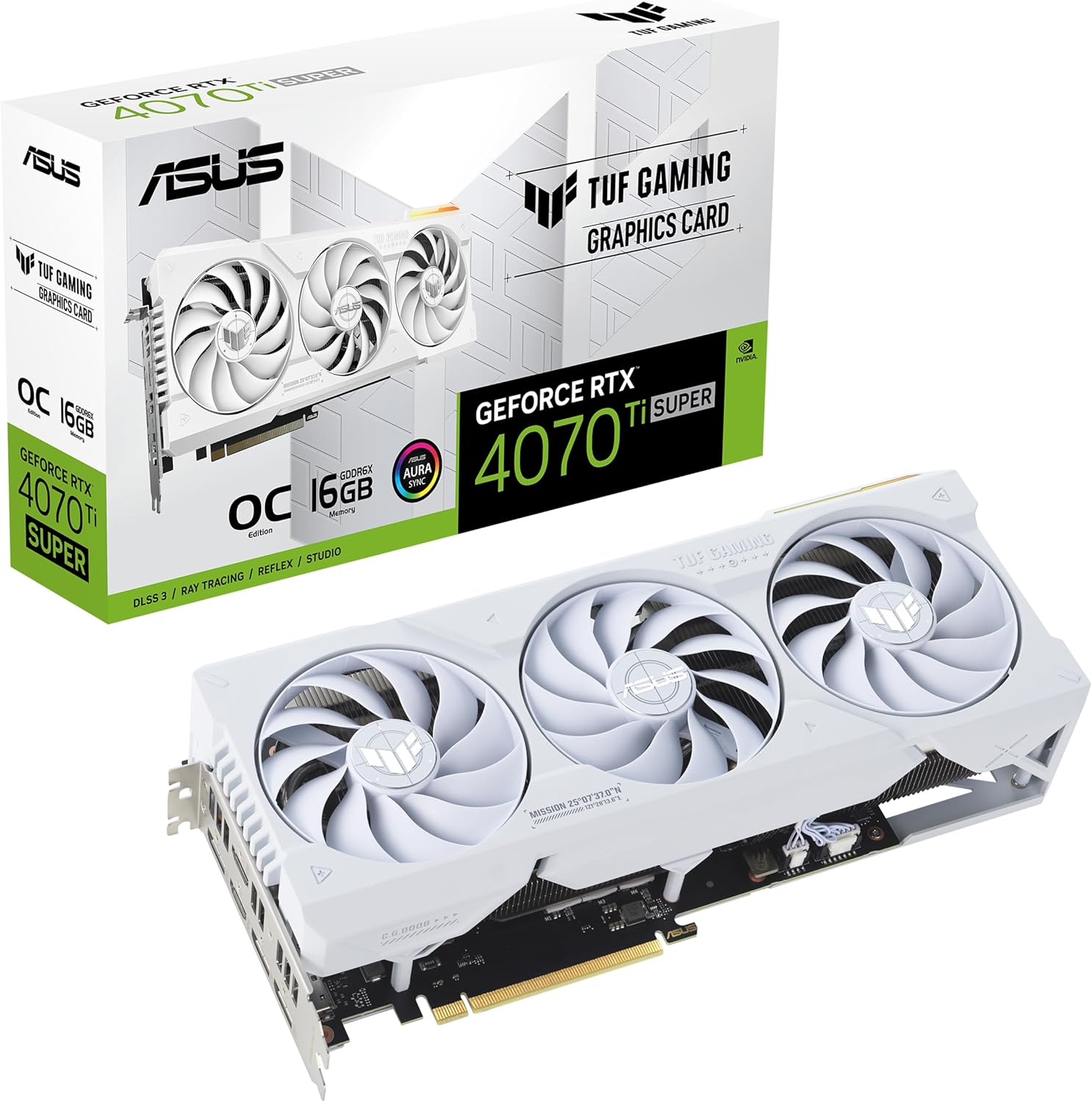
- RTX 4070 Super 12GB ($550 new) — most efficient Ampere/Ada for power-constrained builds.
8GB cards (RTX 3060 8GB, RTX 4060 8GB) are not on this list intentionally. They run small agents fine, but every additional capability you bolt on (vision, embeddings, longer context) pushes them into unload/reload territory.
CPU: more important than the marketing implies
For pure inference, GPU dominates. But a real agent spends substantial wall-clock time on the CPU: tokenizing tool output, parsing JSON, running the orchestrator loop, executing tools, and handling the I/O of file reads, browser fetches, and shell calls. A weak CPU shows up as latency between model-finishes-generating and next-model-call-starts.
The recommended floor:
- AMD Ryzen 5 5600G (~$130 new) — 6 cores, 12 threads, integrated graphics for the desktop. Strong all-rounder.
- AMD Ryzen 7 5700X (~$170 new) — 8 cores, 16 threads. Better for parallel tool execution.
- Intel Core i5-12400 (~$140 new) — equivalent 12th-gen alternative.
- Intel Core i7-9700K (~$180 used) — older but still very capable for an agent loop.
Below 6 cores you start to see contention: the agent process, the browser the agent is driving, and the IDE you're working in all want CPU. The agent loop itself is mostly single-threaded but benefits from being on a fast core, so single-thread performance matters too.
RAM: 32GB is the realistic floor
The agent process itself is light (a few hundred MB), but the things it holds in memory are not:
- Embedding index for your local files: 1-4GB depending on corpus size.
- CPU-offloaded model layers when the model is larger than VRAM: up to 10-20GB.
- Browser the agent drives: 2-6GB for a serious session with extensions.
- OS + background apps: 4-6GB baseline on Windows 11.
- Scratch for tool execution (file reads, code interpreter, image processing): 1-3GB.
On a 16GB system, all of that adds up to swapping, which on NVMe is fast but on SATA is painful. 32GB is comfortable. 64GB is the right answer if you're running a 30B-class model with any CPU offload, or if you want to keep an IDE, browser, and the agent live simultaneously without thinking about it.
Storage: NVMe Gen 3 is the floor
Model files are large — 13B at q4_K_M is 7.5GB; 30B at q4_K_M is 18GB; a multi-model setup easily hits 60-100GB on disk. Cold loads matter when you swap between models and during agent startup.
- SATA SSD (~550 MB/s): a 7.5GB model loads in ~15 seconds. Workable but feels slow.
- NVMe Gen 3 (~3-3.5 GB/s): same model in ~3 seconds. The floor.
- NVMe Gen 4 (~7 GB/s): same model in ~1.5 seconds. Marginal upside beyond Gen 3 for this workload.
1TB is the practical capacity floor; 2TB is comfortable if you're collecting multiple model families. The cheap SATA SSDs from a decade ago are not the answer here.
NPU vs GPU: skip the NPU for now
The Copilot+ marketing has been hard on the NPU angle, and the question of whether you need a Snapdragon X Elite or a 14th-gen Intel with a 40-TOPS NPU keeps coming up. The honest answer for an agent workload in 2026: you don't, and you'd be giving up flexibility to chase it.
NPUs are optimized for narrow, latency-sensitive, low-power inference — voice-activation wake words, real-time vision filters, ambient context detection. They run vendor-specific runtimes (DirectML on Windows, Apple's Neural Engine via Core ML, AMD's XDNA via Ryzen AI) and have a much smaller model zoo than the CUDA/llama.cpp ecosystem. For a general-purpose tool-using agent that runs a 7-13B model with function calling, the NPU does nothing the GPU doesn't do better.
The exception is if you specifically want always-on ambient features (screen watching, audio summarization) and you want them with power efficiency that lets the device stay on battery. There the NPU is doing real work. For desktop or always-plugged-in builds, skip it.
A realistic 2026 Agent PC build
Here's a buildable specification that hits the floor without overbuying:
| Part | Choice | Approx price |
|---|---|---|
| GPU | MSI RTX 3060 Ventus 2X 12GB | $280 |
| CPU | Ryzen 7 5700X | $170 |
| Motherboard | B550M-class AM4 board | $110 |
| RAM | 32GB DDR4 3600 (2x16) | $80 |
| SSD | 1TB Gen 4 NVMe | $90 |
| Case + PSU | mATX case, 650W 80+ Bronze | $130 |
| Total | ~$860 |
That's an Agent PC that runs a 13B model at q4_K_M with 6K of usable context, holds an embedding index for tens of thousands of documents, drives a browser, and stays responsive enough for interactive use. It's neither glamorous nor branded — but it works.
For the budget version, swap to a Ryzen 5 5600G and a $50 motherboard, drop to 16GB of RAM, and you're at roughly $700. Tight but functional. The 5600G's integrated graphics handle the desktop so the 3060 stays free for AI work.
If you have an older PC and you're upgrading piecemeal, the priority order is: GPU first, RAM second, NVMe third, CPU last. An Intel Core i7-9700K on Z390 still drives an RTX 3060 12GB just fine if you don't want to swap the platform.
Comparison: Agent PC tiers in 2026
| Tier | GPU | RAM | Model class | Use case | Build cost |
|---|---|---|---|---|---|
| Floor | RTX 3060 12GB | 32GB | 7-13B q4 | Tool-using agent for personal workflows | $850-900 |
| Mid | RTX 4060 Ti 16GB | 32GB | 13B q5 + embed + vision | Multi-model agent stack | $1,150-1,250 |
| Serious | RTX 3090 24GB | 64GB | 30B q4 / 13B q8 | Production-grade single-user | $1,400-1,600 |
| Workstation | RTX 4090 24GB | 64GB | 30B q5 + multi-model | Heavy concurrent agent work | $2,500+ |
The floor build does 80% of what the workstation does for 30% of the cost. The marketing wants you in the mid or serious tier; you don't need to be.
Common pitfalls
- Buying the wrong GPU because the marketing said "AI." RTX 4060 8GB has Tensor Cores and Ada efficiency, but 8GB is the same VRAM ceiling that hurts on any modern workload. The 3060 12GB is more useful.
- Pairing a strong GPU with a slow CPU. A 5950X paired with a GTX 1660 is silly; the opposite (an i3 with a 4070) is too. Balance matters.
- Underbuying RAM. 16GB is the spec the OEMs quote; 32GB is what you actually want. The cost delta is small.
- Ignoring the PSU. A 3090 pulls 350W under load. A 550W bronze PSU may technically run it but won't last; 750W gold is the sane choice.
- Forgetting about thermals. Mini cases with a 3060 and a 5700X get hot fast. mATX with good airflow saves you a thermal-throttling headache.
When NOT to build a local Agent PC
If you're doing rare bursts of heavy generation (a few hours a week of 30B-class output) and don't care about privacy or offline use, a hosted API still beats local on per-dollar quality. Local makes sense when you have a continuous workload, you want privacy, you want the agent integrated into a workflow that touches local files and tools, or you want to avoid the latency tax of round-trip API calls.
The most common bad reason to build local is "the API got expensive." Run the math: at $0.50 per million output tokens, you can generate a lot of content before the hardware pays itself back.
Bottom line
The Microsoft-NVIDIA Agent PC marketing has the trajectory right but the specs aspirational. A useful on-device agent in 2026 is buildable today for under $900: 12GB GPU, 32GB RAM, 6-8 core CPU, NVMe storage. The NPU isn't required. The Copilot+ premium isn't required. What matters is enough VRAM to keep a 7-13B model with embeddings resident, enough RAM to hold the agent state alongside a real OS, and a CPU that doesn't stall the orchestration loop.
If you want the cheapest path: pair an RTX 3060 12GB with a Ryzen 5 5600G or Ryzen 7 5700X and call it done. If you want headroom, jump to an RTX 3090 24GB on a 64GB system. Either way, the agent runs locally, the model fits, the loop stays responsive, and you don't owe anyone a subscription.
Citations and sources
- NVIDIA — RTX AI PC blog (positioning, VRAM guidance, software stack)
- Microsoft Learn — Windows AI (DirectML, Copilot+ requirements, NPU integration)
- llama.cpp on GitHub (open-weight runtime, quantization, hardware support matrix)


