

Thermal Grizzly
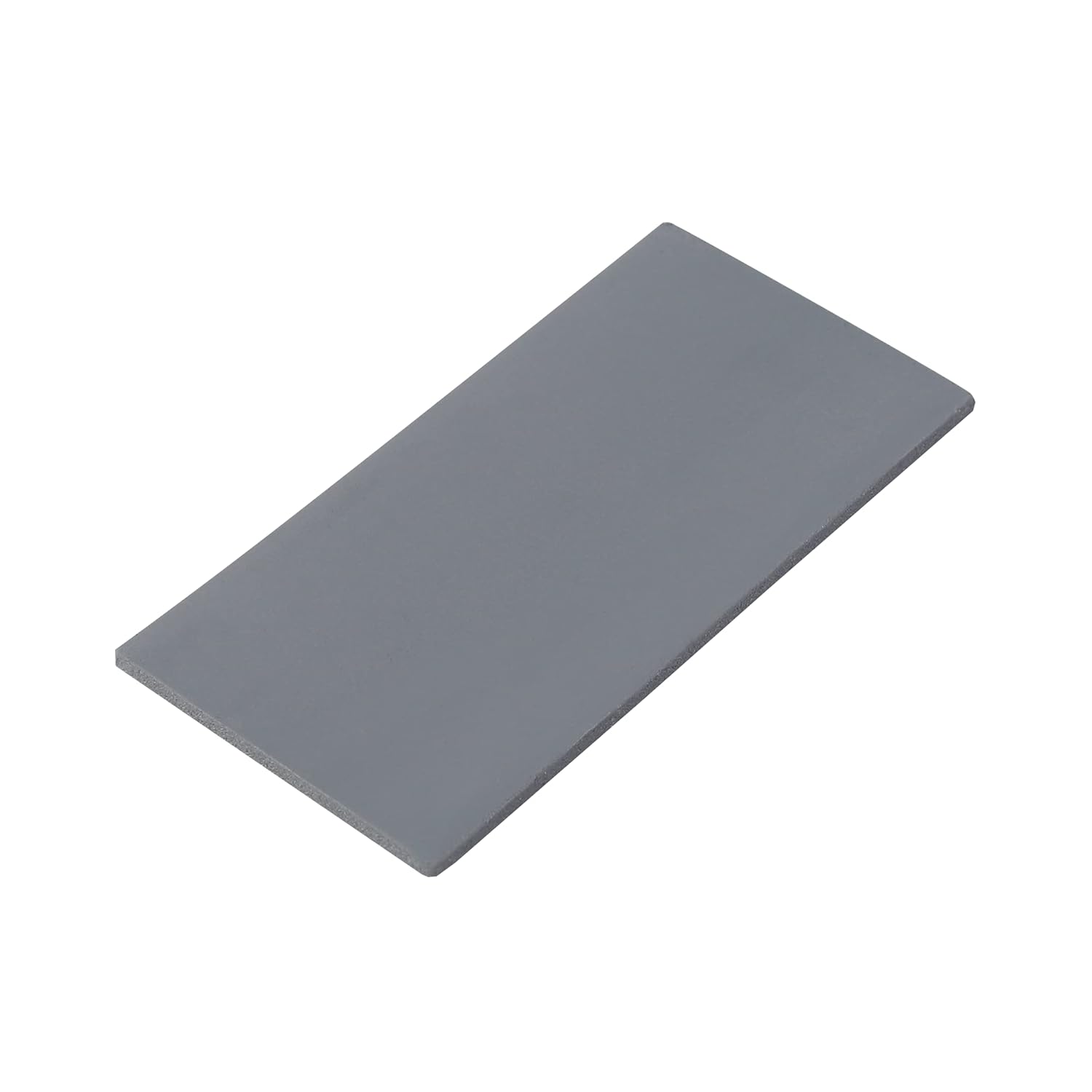
Thermal Grizzly Minus Pad 8 120x20x0.5mm 2Pack - Thermal Interface Pad
Bottom line: The Thermal Grizzly Minus Pad 8 120x20x0.5mm 2Pack ($9.99 on Amazon as of 2026-10-06): 8 W/(m*K) conductivity from ceramic silicone and nano-aluminum oxide; main trade-off: 0.5mm is too thin for large standoff gaps; thicker variants sold separately.
As an Amazon Associate, SpecPicks earns from qualifying purchases. Full disclosure →
*Price sourced from Amazon.com. Last updated 2026-10-06. Price and availability subject to change.
Pros & Cons
Pros
- ✓ 8 W/(m*K) conductivity from ceramic silicone and nano-aluminum oxide
- ✓ Two 120x20mm strips cut into many custom VRM or VRAM shapes
- ✓ 0.5mm thickness fits tight heatsink-to-component clearances
- ✓ Flexible structure fills gaps where thermal paste cannot be applied
Cons
- ✗ 0.5mm is too thin for large standoff gaps; thicker variants sold separately
- ✗ 20mm strip width may need seaming for wide heatsink footprints
- ✗ Pad conductivity trails Thermal Grizzly's paste lineup for direct die contact
- ✗ Requires measuring gap height before purchase to avoid wrong thickness
Manufacturer description
The Thermal Grizzly Minus Pad 8 is a 120x20x0.5mm thermal interface pad sold as a 2-pack, built for the gaps thermal paste was never meant to fill. Its ceramic silicone and nano-aluminum oxide composition carries 8 W/(m*K) of thermal conductivity, enough to move meaningful heat off VRM banks, VRAM packages, M.2 controllers, and the uneven contact surfaces you find on aging hardware and retrofit cooling projects. The flexible structure is the real point here: it compresses into the smallest gaps between a component and its heatsink, keeping contact where a rigid pad or a paste bead would…
SpecPicks Verdict
SpecPicks scored Thermal Grizzly Minus Pad 8 120x20x0.5mm 2Pack using a rating × review-volume × price-fit model applied to published specs and reviews across the retro cpu coolers & fans category. Thermal Grizzly's retro cpu coolers & fans lineup sits within the broader category mid-tier; price and specs are the deciding factors over brand loyalty here. Judge it on the specification table and the price rather than on sentiment: check the figures that decide your use case, then put it side-by-side with two or three close alternatives in the Compare tool before clicking through.
Common buyer scenarios for retro cpu coolers & fans of this kind: matching it to an existing build, replacing a failing part, or upgrading from a previous-generation equivalent. Check the spec table below against your current setup — particularly socket / form-factor / power-rating fields — and confirm compatibility on the retailer's listing before purchase. Prices and stock are set by the retailer and may have moved since this page was last updated.
Frequently Asked Questions
What thickness is this Thermal Grizzly Minus Pad 8?
This listing is the 0.5mm version, measuring 120x20x0.5mm per strip, with two strips in the pack. Measure your component-to-heatsink gap first, as Minus Pad 8 is sold in several thicknesses.
How thermally conductive is the Minus Pad 8?
It is rated at 8 W/(m*K), achieved through a composition of ceramic silicone and nano-aluminum oxide. That places it in the mid-to-upper range for consumer thermal pads.
Can I use this instead of thermal paste on a CPU or GPU die?
No. Thermal pads are for gaps where paste cannot be applied, such as large air gaps or uneven surfaces. Use paste for direct die-to-coldplate contact and pads for VRM, VRAM, and secondary components.
How much pad do I get, and can I cut it?
You get two 120x20mm strips, which you cut with scissors or a blade to match your VRM row, memory chips, or M.2 controller. That is 4,800 square millimeters of usable material total.
Key Features
- FLEXIBLE STRUCTURE - The thermal padding compensates for even the smallest gaps between components with its flexible structure and high heat conductivity
- THERMAL CONDUCTIVE PAD - It effectively dissipates significant amounts of heat thanks to its unique composition of Ceramic Silicone and Nano-Aluminum Oxide
- USED IN VARIOUS SCENARIOS - It is utilized in situations where thermal paste cannot be applied, such as cases with large air gaps or uneven surfaces
- GREAT RESULTS - By filling small gaps with its flexible and highly conductive structure, the Thermal Pad effectively dissipates heat between components
- 8W/(m·K) THERMAL CONDUCTIVITY - With a highly conductive and versatile nature, it is suitable for a wide range of configurations with basic to high requirements
Full Specifications
| Brand | Thermal Grizzly |
|---|---|
| Model | TG-MP8-120-20-05-2R-2-2 |
| CPU Socket | LGA 1150 |
| Dimensions | 120x20x0.5mm |
| Unit Count | 2 Count |
| Part Number | TG-MP8-120-20-05-2R |
| Mounting Type | PCB Mount |
| Item Type Name | CPU-Cooler |
| Number of Items | 2 |
| Number of Packs | 2 |
| Included Components | Thermal Pad |
| Warranty Description | No Warranty |
| Cooler Heatsink Material | Copper |
| Item Dimensions L x W x H | 0.02"H |
| Cooler Heatsink Compatibility | Made of aluminium |
| Global Trade Identification Number | 00753677507401 |
Ready to buy?
Thermal Grizzly Minus Pad 8 120x20x0.5mm 2Pack - Thermal Interface Pad is listed on Amazon. Price, availability, shipping and returns are set by Amazon and its sellers — check the listing for current terms. SpecPicks earns a small commission on qualifying purchases — thank you for supporting independent review work.
*Price sourced from Amazon.com. Last updated 2026-10-06. Price and availability subject to change.
Related Retro CPU Coolers & Fans


More guides & deep dives from the SpecPicks archive
Browse all articles & guides →- The Complete Voodoo5 5500 AGP Driver Guide (2026 Edition)
- Emulation Hardware in 2026: FPGA, Software, and Cart-Reader Ecosystems
- Best Budget Gaming PC Build 2026 — ~$1,000 ($800 on Sale)
- Best 1440p Gaming GPUs in 2026
- Best Retro Handhelds in 2026 — From $35 to $500
- RTX 4070 Super vs RX 7800 XT — Which to Buy in 2026
- How to Build a Windows 98 Retro PC in 2026
More reviews from the SpecPicks archive
Browse all reviews →- Claude Fable 5 Beats GPT-5.5 by 13 Points: The Local-LLM Reality Check
- Radeon Pro W7900 48GB vs RTX A6000 48GB for Local 70B Inference (2026)
- Running a Local Coding Agent on a Small Model: What Actually Breaks (and How to Fix It)
- KOORUI 27" 4K vs Samsung Odyssey 4K: Best 27-Inch Panel for PC and Console
- Best Racing Wheel Under $300: Logitech G29 vs HORI Force Feedback
- Voodoo 5 6000 Stability: Hangs, Wedges and a Bricked Board
- Ryzen 5 5600G vs Ryzen 7 5700X for a Budget Gaming + Streaming PC
- Cactus Hybrid Router: Gemma4-2B Local + Gemini Fallback
- Meta's AI Bill Hits Billions: The Case for Local Inference on a $300 GPU
- Best Gaming Room Lighting in 2026: LED Strips and Ring Lights
- 4K Gaming PC Build 2026: Cost, Parts, FPS
- Linux Gaming Keeps Getting Faster: Windows APIs Land in the Kernel
- Is My CPU Sufficient for Light Universe Simulations?
- Best Beginner Racing Wheel in 2026: Logitech G920 vs HORI Racing Wheel Overdrive
- Beijing's $295B AI Buildout Wants 80% Domestic Chips — What It Means for GPU Buyers
- Qwen3.7-Plus Goes Agentic: Cloud Model vs Your Local 12GB Rig
- Best Streaming Gear for PC Gamers in 2026
- Best AMD GPU for 4K Gaming in 2026
- 3dfx Voodoo2 SLI on Windows 98 SE: Period-Correct Build, Glide Driver Setup, and Real Quake 3 Benchmarks
- Best Gaming Monitor for PS5 & High-Refresh PC Gaming (2026)
- Dual RTX 3090 vs RTX 5090: Gaming vs AI Training
- Matrox G400 MAX in 2026: Period-Correct Install, EMBM Showcase, and Pentium III Benchmarks
- How to Find and Join Active Retro Multiplayer Servers in 2026 (Quake 3, UT99, CS 1.6, Diablo II)
- RTX 3060 12GB vs RTX 5060: Best Value for 1080p Gaming + Local AI
Earliest SpecPicks reviews
Browse full archive →- Best GPU for Llama 3.1 8B (2026)
- Best GPU for Qwen 3 14B (2026)
- Best GPU for Qwen 3 32B (2026)
- Best GPU for Llama 3.1 70B (2026)
- Best GPU for DeepSeek-R1 32B (2026)
- Best GPU for Llama 3.1 405B (2026)
- How to run Llama 3.1 8B on NVIDIA GeForce RTX 5090
- How to run Qwen 3 14B on NVIDIA GeForce RTX 5090
- How to run Qwen 3 32B on NVIDIA GeForce RTX 5090
- How to run Llama 3.1 70B on NVIDIA GeForce RTX 5090
- How to run DeepSeek-R1 32B on NVIDIA GeForce RTX 5090
- How to run Llama 3.1 8B on NVIDIA GeForce RTX 4090