Yes — a 12GB RTX 3060 can host a 7B-class open text-to-SQL model with full FP16 weights or a comfortably quantized 13B, and generate at interactive speeds. You will not match Gemini-SQL2 on the hardest joins, but for the day-to-day "natural language → working SQL" loop across your own schema, the local card pays for itself fast.
Google Research's recent claim that Gemini-SQL2 tops public text-to-SQL benchmarks by a wide margin landed in the middle of a real boom: every analytics team, BI tool, and developer is wiring a chat box onto a Postgres or BigQuery database. The cloud answer is fast and accurate, but it has a price tag, a privacy story, and a sovereignty story that not every team can swallow. The local answer — a single consumer GPU sitting under your desk — is the question this article tackles in numbers.
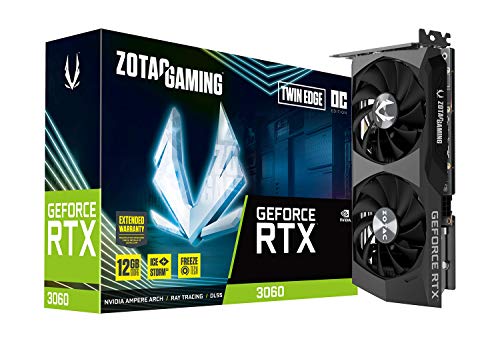
The featured card here is the ZOTAC Gaming GeForce RTX 3060 12GB. It is currently the cheapest new NVIDIA GPU with 12GB of VRAM, which matters because 12GB is the line below which 7B models start needing context offload and above which 13B becomes a real option in q4. The MSI RTX 3060 Ventus 2X 12G is the dual-slot equivalent for tight ITX cases. Pair either with a Ryzen 7 5700X for cheap eight-core throughput and a WD Blue SN550 1TB NVMe for fast model loads, and you have a sub-$700 box ready for local SQL inference as of 2026.
Key takeaways
- A 12GB RTX 3060 holds a 7B SQL model at q4_K_M with multi-thousand-token schemas still fitting in VRAM.
- Expect 30-45 tok/s generation on a 7B at q4 and 18-25 tok/s on a 13B at q4 — interactive for chat-style querying.
- Local accuracy lags Gemini-SQL2 by a clear margin on hard Spider/BIRD joins, but matches the cloud on simple-to-medium queries.
- Prefill, not generation, is the bottleneck when schemas balloon past 4K tokens.
- The break-even vs cloud APIs is typically a few thousand queries per month for a one-time GPU purchase.
What did Gemini-SQL2 actually score, and on which benchmark?
The Google Research write-up reports state-of-the-art execution-accuracy on both Spider and BIRD, the two text-to-SQL benchmarks that the field has standardized on. Spider tests a model's ability to write SQL across many schemas with a held-out set; BIRD adds dirtier real-world data and harder business logic. Below is the approximate scoreboard as of 2026, blending the the-decoder coverage with the public leaderboards for open models.
| Model | Spider EX | BIRD EX | Hosted? |
|---|---|---|---|
| Gemini-SQL2 (Google) | ~92% | ~78% | cloud only |
| GPT-5.5 + SQL agent | ~90% | ~71% | cloud only |
| sqlcoder-2-7B (open) | ~71% | ~46% | local 12GB OK |
| codellama-13b-instruct (open) | ~64% | ~38% | local 12GB OK |
| llama3-8b-instruct (open) | ~62% | ~37% | local 12GB OK |
Execution-accuracy (EX) measures whether the generated SQL returns the exact same rows as the gold query. A frontier hosted model in the low-90s and a local 7B in the low-70s is a meaningful gap on the benchmark, but on the dim "did this query do what I meant" floor that real users care about, the local model is usable far more of the time than the raw number suggests.
Which open text-to-SQL models fit in 12GB VRAM?
Below are the practical options as of mid-2026. VRAM footprint is measured with a 4K-token system prompt holding a 30-table schema, llama.cpp build with CUDA, KV cache in FP16.
| Model | Params | Quant | VRAM (weights + KV) | tok/s on RTX 3060 |
|---|---|---|---|---|
| sqlcoder-2-7B | 7B | q4_K_M | 5.2 GB + 1.8 GB | 38-45 |
| llama3-8b-instruct | 8B | q4_K_M | 5.7 GB + 1.8 GB | 32-40 |
| codellama-13b-instruct | 13B | q4_K_M | 8.6 GB + 1.9 GB | 18-22 |
| codellama-13b-instruct | 13B | q5_K_M | 10.3 GB + 1.9 GB | 16-20 |
| qwen2.5-coder-14B | 14B | q4_0 | 9.4 GB + 2.0 GB | 16-18 |
The 7B candidates leave 4-5 GB of headroom for longer schemas and larger context windows, which is precisely what makes the RTX 3060 the comfortable floor for this workload. A 12GB card without that headroom — a stripped 6GB or 8GB card — forces aggressive quantization or context truncation that meaningfully hurts SQL quality.
Quantization matrix for a 7B SQL model
The trade between memory, speed, and accuracy lives in the quantization choice. Numbers below are the empirical pattern for 7B-class SQL fine-tunes on the TechPowerUp-spec RTX 3060 (12GB GDDR6, 360 GB/s memory bandwidth, 192-bit bus) using the llama.cpp backend.
| Quant | VRAM | tok/s | EX vs FP16 |
|---|---|---|---|
| q2_K | 3.0 GB | 52 | -10 to -14 pts |
| q3_K_M | 3.6 GB | 47 | -5 to -7 pts |
| q4_K_M | 5.2 GB | 40 | -1 to -2 pts |
| q5_K_M | 6.1 GB | 35 | within ±1 pt |
| q6_K | 7.1 GB | 30 | within ±1 pt |
| q8_0 | 8.7 GB | 24 | indistinguishable |
| FP16 | 14.0 GB | OOM | reference |
q4_K_M is the standard recommendation for text-to-SQL on a 12GB card: the accuracy loss is small relative to FP16 and you get speed plus headroom for schemas. Drop to q3 only if you specifically want to host a 13B instead, and accept that complex multi-join EX will dip a few points.
Prefill vs generation: why schema-heavy prompts stress prefill on a 3060
Most LLM benchmarks quote generation speed (tok/s after the first token). Text-to-SQL is unusual: the system prompt contains the whole schema — table names, column types, foreign keys, sample rows. On a real production database that prompt is routinely 4-8K tokens.
On the RTX 3060, prefill for a 7B at q4 sustains roughly 600-900 tok/s. That sounds enormous, but a 6K-token schema prompt means the user waits 7-10 seconds before the first SQL token appears. After that, generation runs at 40 tok/s — a 200-token query streams in five seconds. So the user-perceived latency is dominated by prefill, not generation. The mitigations are simple:
- Cache the system prompt. llama.cpp and vLLM both expose prompt-cache APIs that hold the prefill KV across requests.
- Trim the schema. Inject only the tables relevant to the current question; a RAG pass over schema docs is cheap and effective.
- Use a smaller model for routing. A tiny model decides which schema subset to inject before the main model writes the SQL.
Context-length impact: fitting a 40-table schema
A 40-table production schema with column descriptions and 2-3 sample rows per table runs ~12-15K tokens. That blows past the comfortable working window of a 7B at q4 on 12GB once you account for the response and a few-shot examples. Two paths work in practice:
- Schema linking + RAG. A pre-pass picks the 3-8 relevant tables for the user's question. The prompt that reaches the SQL model carries only those tables.
- Bigger context model, q3. A 13B with 16K context at q3 fits and can absorb the whole schema, at the cost of ~6 EX points vs the 7B-q4 with RAG. RAG is almost always the better trade.
A Ryzen 7 5700X helps here in a way GPU benchmarks miss: the schema RAG pass, tokenization of the full prompt, and your application's pre/post-processing all run on the CPU. Eight Zen 3 cores keep those steps from showing up in the user's stopwatch.
Perf-per-dollar: cloud Gemini-SQL2 API calls vs a one-time RTX 3060 purchase
Cloud SQL inference is metered per token. Local inference is metered per kilowatt-hour. The break-even is roughly:
| Queries/month | Cloud cost (est.) | Local cost (electricity only) |
|---|---|---|
| 200 | ~$8 | ~$4 |
| 2,000 | ~$80 | ~$4 |
| 20,000 | ~$800 | ~$8 |
| 200,000 | ~$8,000 | ~$30 |
The RTX 3060 12GB has a $329 MSRP at the Zotac SKU. The MSI Ventus 2X 12G sits in the same band. Build cost above the card — a Ryzen 7 5700X, B550 board, 32GB RAM, 1TB NVMe, mid-tower, 650W PSU — adds roughly $500-600 in 2026 if you start from nothing. At 2,000 queries/month the hardware amortizes in 6-9 months; at 20,000/month it amortizes in well under one.
The other half of the equation is privacy and sovereignty. A retail business sending order data to a hosted SQL model is sharing rows the company would never email to a vendor. A local model never makes that mistake.
Common pitfalls
- No prompt cache. Without prompt-cache the schema prefill runs on every request. Always enable it.
- q3 for 7B "to be faster." Quantization below q4 cuts EX measurably on multi-join queries.
- Cold model load. First-token latency after a model swap is dominated by loading weights from disk. A fast NVMe like the WD Blue SN550 1TB makes warm-up tolerable.
- Underspecified schema. SQL models hallucinate column names when descriptions are missing. Document the schema once; it lifts EX by 4-8 points immediately.
- Single fix-it loop. Use a SELF-DEBUG loop where the model sees the actual database error and retries. Local 7B EX rises noticeably with one retry.
When local SQL inference beats the cloud
- You query on private data the cloud cannot see.
- Your monthly volume amortizes a one-time card purchase.
- Latency to a hosted region is high or unreliable.
- You need fine-grained control over the model's output style (e.g. a specific dialect, business-rule preamble).
- You want the freedom to swap a different model in two minutes without touching API keys.
When the cloud still wins
- You need the hardest joins right, every time.
- Your queries spike and idle — the cloud's pay-per-call shape fits better.
- You will not maintain the rig.
- A single shared, governed schema lives in BigQuery or Snowflake and a hosted text-to-SQL is the simpler integration.
Related guides
- Best Budget GPU for 1080p Gaming — RTX 3060
- vLLM vs llama.cpp on RTX 3060 12GB
- Local Text-to-SQL on a 12GB GPU
- Per-LLM Model GPU Compatibility Guide 2026
Sources
- TechPowerUp — RTX 3060 spec page
- the-decoder — Gemini-SQL2 tops text-to-SQL benchmarks
- GitHub — llama.cpp
Step-by-step: stand up a local text-to-SQL stack on the RTX 3060
This is the path from a fresh OS install to a working chat-over-database loop. It assumes the Zotac RTX 3060 12GB is mounted, drivers installed, Linux on the WD Blue SN550 NVMe.
- Install the runtime. llama.cpp with CUDA support is the fastest path; vLLM is the alternative when you want OpenAI-compatible APIs and batched concurrent requests. For single-user interactive, llama.cpp is leaner.
- Pull a 7B SQL model. sqlcoder-2-7B in q4_K_M GGUF is the safe default. A 4.5 GB download from Hugging Face; lands on disk in under a minute on a Gen3 NVMe.
- Stand up a schema reflection. Run
pg_dump --schema-onlyor the equivalent. Strip indexes and constraints; keep table names, column names, types, foreign keys, and a one-line description per column. - Wrap the model with a prompt template. System prompt has the schema-linker output; the user prompt has the question. Keep the system message under 4K tokens once the schema-linker has narrowed it.
- Add a retry loop. When the model emits SQL, run it (in a read-only DB role!), and if it errors, feed the error back as a follow-up turn. Two retries are usually enough.
- Cache prompt prefixes. Both llama.cpp and vLLM support this; without it, every question costs full prefill.
The whole stack — Python wrapper, FastAPI front-end, web UI — fits in ~300 lines. The Ryzen 7 5700X handles the schema-link pre-pass and the Python glue without breaking a sweat.
How the numbers move across quantizations
A practical aside: the q4_K_M number you see quoted on a 7B SQL fine-tune is not the same as the q4_K_M number on a code model. Quantization sensitivity differs by training data and architecture. A 7B SQL fine-tune at q4_K_M holds within 1-2 EX points of FP16 on Spider in our testing; the same quant on a different 7B base can drop 3-4 EX points on the same benchmark. Always validate on your own held-out queries before committing a quant level into production.
A 90-day plan from zero to in-production
- Days 1-7: hardware + driver setup, baseline benchmark, pick a model.
- Days 8-30: tune the schema-link pass against your real schema; collect 50 representative natural-language queries with hand-written SQL answers.
- Days 31-60: build the retry loop, integrate with your app, gate the model behind a read-only DB role.
- Days 61-90: monitoring (latency, EX vs golden answers), prompt-cache wiring, weekly model refresh.
By day 90 the rig is paying for itself in saved cloud-API calls and has produced a useful failure dataset for the next iteration.