For a 12 GB GPU like the RTX 3060 in mid-2026, the best local-LLM coding assistant depends on workflow more than raw model quality. Aider wins for terminal-first, git-aware editing; Cline wins for agentic, multi-step changes inside VS Code; and Continue.dev wins for low-latency inline autocomplete and chat. All three can target the same local Ollama-served model, so the meaningful choice is which surface you spend the day in.
The local AI-coding stack and who each tool suits
Local AI coding tools have matured into three distinct shapes, and the shape — not the model — usually decides who is happy with which. The pattern is consistent across the 2026 cohort of open-weight coding models: a strong 7B–14B coder quantized to roughly 4 bits is the sweet spot for a 12 GB consumer card, leaving headroom for context and KV cache. Once you accept that constraint, the tool layer is what shapes daily life.
Aider is the terminal-native option. You point it at a repo, it reads the files you mention, it produces a diff, and it commits. Edits flow through git, which means you get review-by-default and trivially git revert anything you do not like. Aider is loved by developers who already live in tmux and Neovim, and by those who do not want a heavyweight extension hooking into their editor's autocomplete pipeline.
Cline is the VS Code agent. It runs as an extension, takes natural-language instructions, and plans multi-step edits across files. It can execute shell commands, read terminal output, and iterate — the kind of agentic loop that ChatGPT's Code Interpreter popularized for Python. On a local model, that agentic style depends heavily on how well the model handles tool-use; smaller open coder models can struggle with long planning chains, so Cline's experience scales with model capability.
Continue.dev sits in the middle. It is a VS Code (and JetBrains) extension that does inline ghost-text autocomplete, side-panel chat, and slash commands. It is the closest open-source analogue to GitHub Copilot's surface, and it is the most forgiving of weaker local models because each request is short and well-bounded.
Budget developers who already own — or are eyeing — a 12 GB card like the MSI GeForce RTX 3060 Ventus 2X 12G want private, free, always-available coding help. Aider, Cline, and Continue.dev all make that possible; the trade-offs below decide which one earns a slot in your ~/.bashrc or your VS Code sidebar.
Key takeaways
- For a 12 GB GPU in 2026, a 7B coder at q4_K_M plus an 8K–16K context is the realistic baseline; bigger models force tighter context or CPU offload.
- Aider is the strongest terminal experience: git-aware, diff-first, model-agnostic via LiteLLM, and excellent for surgical edits in known files.
- Cline is the strongest agent experience inside VS Code, but its multi-step loop demands more from your local model than the other two.
- Continue.dev is the easiest entry point: inline autocomplete, chat, and slash commands that tolerate smaller models gracefully.
- All three speak OpenAI-compatible APIs, so a single Ollama or llama.cpp server can power whichever tool you pick — or all of them.
- The 12 GB ceiling is real: VRAM math matters more than tool choice when you start mixing context length, multiple files, and KV cache.
Step 0: terminal-driven vs IDE-embedded — which workflow fits you?
Before comparing tools, decide where you want the AI to live. Developers who run vim, nvim, helix, or emacs in a terminal, or who pair-program over tmux, generally prefer Aider — it does not fight their existing editor and it commits its changes so they can git diff them in whichever tool they already know. Developers who already live in VS Code, Cursor's fork, or a JetBrains IDE generally prefer Cline or Continue.dev because the suggestions appear where their cursor already is.
There is a second axis: how agentic do you want the assistant to be? Aider is conversational and surgical — you tell it what to change, it changes it, you review the commit. Cline is plan-and-execute — you describe an outcome, it proposes a sequence of edits and shell commands, and it can iterate against test runs. Continue.dev is reactive — it answers what you ask, completes what you type, and otherwise stays out of the way. The agentic style depends on local model quality more than the surgical or reactive styles do.
The choice is rarely permanent. Many developers keep Continue.dev installed for autocomplete and chat, fire up Aider in a terminal for refactors, and reserve Cline for one-off agent tasks they would otherwise burn cloud credits on. The Ollama server underneath does not care which client is connected.
How does Aider's git-aware, terminal workflow perform with a local model?
Aider's defining trick is that every edit is a git commit. You drop into a chat-style REPL in your repo, list the files you want to edit, ask for a change, and Aider produces a unified diff that it applies and commits on your behalf, per the Aider documentation. That makes the loop legible: every AI change is a discrete commit you can read, revert, or amend.
Under the hood, Aider routes through LiteLLM, which gives it OpenAI-compatible support for cloud models and any local OpenAI-compatible endpoint — including Ollama, llama.cpp's server, vLLM, and LM Studio. Per Ollama's model library as of mid-2026, popular coding-tuned options that fit a 12 GB card at q4_K_M include Qwen2.5-Coder 7B, DeepSeek-Coder-V2 Lite (16B MoE with ~2.4B active), and Code Llama 13B with reduced context. Aider's docs explicitly recommend stronger models for its "whole-file" edit format and smaller models for its "diff" format, because diff-format edits are easier for a weaker model to produce correctly.
The terminal workflow has real ergonomic benefits on a single-GPU desktop. You can keep the MSI GeForce RTX 3060 Ventus 2X 12G hosting an Ollama server in one tmux pane, Aider in another, and your editor in a third. There is no extension to crash, no electron process to consume RAM, and no surprise telemetry. Pair it with a strong CPU like the AMD Ryzen 7 5800X 8-core, 16-thread processor — which AMD's product page lists with a 105 W TDP and 8 Zen 3 cores — and prompt-processing latency on long contexts becomes tolerable even when the GPU is fully loaded with the model.
The drawbacks are real too. Aider expects you to manage file context manually — you /add the files you want it to see — which is more friction than an IDE agent that crawls the project for you. And because every edit is a commit, very chatty exploratory sessions can produce noisy histories you will want to squash before pushing.
What does Cline bring as a VS Code agent?
Cline is a VS Code extension that behaves like a planning agent. You give it a goal, it proposes a plan, and it iterates: read a file, edit a file, run a command, observe output, decide what to do next. Per the project's GitHub README, it can run terminal commands, edit files, and use a browser preview, with explicit user approval gates between steps. That approval model is important: agents that act without confirmation tend to surprise you in bad ways.
The upside is dramatic when it works. "Refactor this module to use the new logging interface and run the test suite" is a single instruction; Cline plans the edits, applies them, runs the tests, reads the failures, and tries again. That loop is genuinely productive on capable models. On weaker local models, the loop can degrade — the agent may misread test output, repeat the same broken edit, or wander into low-value paths. Community reports throughout 2026 on r/LocalLLaMA consistently note that Qwen2.5-Coder 7B and DeepSeek-Coder-V2 Lite handle short Cline tasks well but struggle with deep multi-step plans compared to frontier hosted models.
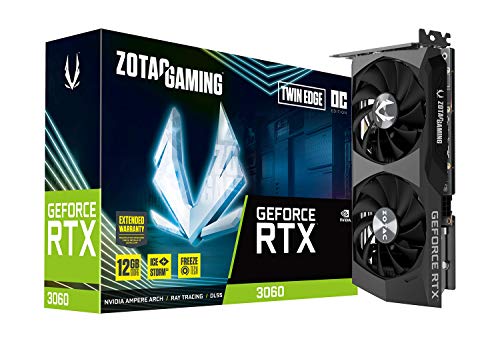
VRAM pressure also matters. Long agentic conversations accumulate context, and a 12 GB card running a 7B model at q4_K_M with 16K context is already using most of its memory; pushing to 32K context with KV cache typically requires offloading some layers to CPU or using a smaller quant. The ZOTAC Gaming GeForce RTX 3060 Twin Edge provides the same 12 GB GDDR6 192-bit configuration per ZOTAC's product page, so the budget is identical regardless of which 3060 board partner you buy — what varies is cooling and clocks, not the VRAM ceiling.
Cline shines for users who want a Copilot-style agent without a subscription. It is less ideal as your first local AI tool because the agent loop amplifies any model weakness; if you are still learning what your local model can do, start somewhere gentler.
Where does Continue.dev's autocomplete + chat fit?
Continue.dev is the gentlest landing spot. It installs as a VS Code or JetBrains extension, surfaces inline ghost-text autocomplete as you type, opens a side-panel chat for longer questions, and exposes slash commands for common workflows like /edit, /comment, and /test. Per Continue.dev's docs, it supports a long list of model providers, including local Ollama, llama.cpp, LM Studio, and any OpenAI-compatible endpoint.
The autocomplete model and the chat model can be different — a common pattern is a tiny, fast model (e.g., Qwen2.5-Coder 1.5B or 3B) for autocomplete and a larger coding-tuned model (e.g., Qwen2.5-Coder 7B or DeepSeek-Coder-V2 Lite) for chat. That split is friendly to a 12 GB GPU because the small autocomplete model has minimal VRAM cost and the chat model only loads when you ask for it. The result is a Copilot-like feel without the network round-trip and without the subscription.
What Continue.dev gives up is agency. It does not plan multi-step edits across files the way Cline does, and it does not own your git history the way Aider does. It answers what you ask and completes what you type. For many developers — especially those who already think clearly about what they want and just want help typing it — that is exactly the right amount of automation.
One nuance worth flagging in 2026: Continue.dev's autocomplete quality depends heavily on the FIM (fill-in-the-middle) capability of the underlying model. Qwen2.5-Coder and DeepSeek-Coder both support FIM well; older general-purpose chat models do not, and using them for autocomplete produces frustrating dropouts. Pick a model that explicitly lists FIM training.
Which local models on a 3060 12GB are good enough for coding?
The 12 GB ceiling is the binding constraint on every local coding setup. As of mid-2026, the practical model shortlist for an MSI GeForce RTX 3060 Ventus 2X 12G — verified at 12 GB GDDR6 on a 192-bit bus per NVIDIA's RTX 3060 specifications page — looks like this:
| Model | Quant | Approx VRAM | Context (typical) | Notes |
|---|---|---|---|---|
| Qwen2.5-Coder 7B | q4_K_M | ~5.0 GB | 16K+ | Strong all-rounder; good FIM for autocomplete |
| DeepSeek-Coder-V2 Lite 16B (MoE, ~2.4B active) | q4_K_M | ~9–10 GB | 8K–16K | Reasoning-strong; tight fit on 12 GB |
| Code Llama 13B | q4_K_M | ~8.5 GB | 4K–8K | Older but reliable for surgical edits |
| Qwen2.5-Coder 1.5B / 3B | q4_K_M | ~1.5–2.5 GB | 8K+ | Ideal autocomplete model alongside a larger chat model |
| StarCoder2 7B | q4_K_M | ~5.0 GB | 8K+ | Strong FIM; permissive license |
VRAM figures are approximate and vary by exact quant variant and runtime; community measurements from llama.cpp's GitHub discussions and Ollama's model library are the canonical reference. Throughput on a 3060 typically lands in the 30–60 tokens/sec range for 7B models at q4_K_M, and 15–30 tokens/sec for 13B-class models, depending on context length and prompt-processing strategy. Those numbers depend on configuration; exact tok/s varies by workload.
None of these models match a hosted Claude or GPT for hard, multi-file reasoning. They are good enough for boilerplate, focused edits, code explanation, simple refactors, test scaffolding, regex composition, SQL drafting, and most of the daily friction of programming. They are not yet good enough to reliably do large, ambiguous, agent-driven work without supervision.
Spec/feature table: editor integration, model backends, agentic edits, cost
| Capability | Aider | Cline | Continue.dev |
|---|---|---|---|
| Surface | Terminal REPL | VS Code extension | VS Code + JetBrains extension |
| Git integration | Native: every edit is a commit | Edits files; user commits | Edits files; user commits |
| Inline autocomplete | No | No | Yes (separate model) |
| Side-panel chat | Implicit (the REPL) | Yes | Yes |
| Multi-step agent loop | No (single-turn diffs) | Yes (plan + execute + iterate) | Limited (slash commands) |
| Multi-file context | Manual /add and repo map | Automatic project crawl | Indexed context + manual @-mentions |
| Local model backends | Ollama, llama.cpp, vLLM, LM Studio, any OpenAI-compatible | Ollama, LM Studio, any OpenAI-compatible | Ollama, llama.cpp, LM Studio, any OpenAI-compatible |
| Cloud model backends | All major providers via LiteLLM | All major providers | All major providers |
| Best for | Surgical edits, refactors, terminal-first devs | Multi-step agent tasks, IDE-first devs | Daily autocomplete + chat, gentle onboarding |
| Subscription | Free | Free | Free |
| Open source | Yes | Yes | Yes |
All three are free and open source. The "cost" of running them locally is the GPU electricity bill plus the time to download model weights. With an AMD Ryzen 7 5800X and a 12 GB RTX 3060, full-load wall power for the rig is usually under 350 W during inference, and the GPU itself idles below 20 W between requests per NVIDIA's published TDP guidance.
How context window limits on 12GB models affect each tool
Context length is the second axis of the 12 GB squeeze. The model weights are a fixed cost; the KV cache scales linearly with context length and roughly linearly with model size. A 7B model at q4_K_M with 16K context can comfortably leave headroom on a 12 GB card; the same model at 32K context starts to brush against the ceiling depending on runtime overhead. A 13B model at 16K context is usually fine; at 32K context it typically requires either a smaller quant or partial CPU offload.
This matters per tool:
- Aider keeps context tight by default because you
/addonly relevant files, and it uses a compact repo map for the rest. It is the most VRAM-friendly of the three on big repos. - Cline's agent loop accumulates context as it reads files, runs commands, and observes output. Long sessions can balloon past what a 12 GB card holds at high context length. The pragmatic answer is to start fresh sessions per task and to keep tasks scoped.
- Continue.dev's autocomplete requests are short by design, and chat requests are bounded. It is the easiest of the three to keep inside a tight VRAM budget, especially with a small dedicated autocomplete model.
A reasonable default in 2026: run Qwen2.5-Coder 7B at q4_K_M with 16K context as the primary, and a Qwen2.5-Coder 1.5B at q4_K_M with 8K context as the autocomplete companion. That stack fits comfortably on a 12 GB card with all three tools.
Verdict matrix: pick Aider if… / Cline if… / Continue.dev if…
Pick Aider if you already live in a terminal, you want every AI change to be a git commit, you care about minimal extension surface area, or you want fine control over which files the model sees. It is the strongest choice for refactors and surgical edits on a known codebase. It also pairs best with smaller local models because the diff edit format is forgiving.
Pick Cline if you want a Copilot-style agent that can plan and execute multi-step changes inside VS Code, you are willing to give it explicit approval at each step, and you have either a capable local model (DeepSeek-Coder-V2 Lite or similar) or you accept that hard tasks will sometimes need a cloud model. It is the most exciting and the most demanding of the three.
Pick Continue.dev if you want a frictionless Copilot replacement: inline autocomplete, side-panel chat, slash commands, and zero new mental model. It is the easiest to install, the easiest to tune for a 12 GB GPU, and the most forgiving of weaker local models. It is the right starting point for most developers new to local AI coding.
The pragmatic answer is often "all three." Aider, Cline, and Continue.dev can all talk to the same Ollama server. Install them, give each a week of real use, and let your daily workflow decide.
Common pitfalls when running local coding tools on a 12 GB card
- Forgetting context length VRAM cost. A 7B model that fits with room to spare at 4K context can OOM at 32K. Always set the context length explicitly in your runtime config rather than letting defaults bite you.
- Using a non-FIM model for autocomplete. Continue.dev's autocomplete needs an FIM-trained model; using a general chat model produces broken suggestions. Stick with Qwen2.5-Coder, DeepSeek-Coder, or StarCoder2 variants for autocomplete.
- Pointing Cline at too-small a model. Cline's agent loop demands solid instruction-following and tool-use. A 3B general model will frustrate you; a 7B coder is the minimum, and 13B-class or MoE coders are noticeably better.
- Mixing quants without measuring. A q4_K_S and a q5_K_M of the same model can differ by a couple of GB and noticeable quality. Pick one, measure tok/s, then change one variable at a time.
- Ignoring CPU load. On a 12 GB card, partial CPU offload is sometimes inevitable. A weak CPU turns that into a tar pit; a Ryzen 7 5800X-class chip keeps the offload usable.
- Treating local models like frontier cloud models. Local 7B–14B coders are great at routine work and limited at hard, ambiguous reasoning. Match the task to the model.
When NOT to use a local coding assistant
Local AI coding is not always the right answer. If you only code occasionally and do not have privacy constraints, a cheap cloud subscription is usually simpler and more capable. If your work routinely involves novel algorithm design, multi-file architectural reasoning, or following recently-published research, frontier hosted models will outperform any model that fits on 12 GB. And if you are on a laptop where the GPU runs hot under sustained load, the thermal cost may outweigh the convenience.
The sweet spot for local coding in 2026 is privacy-sensitive teams, heavy daily users, offline developers, and anyone who already owns capable consumer hardware and wants to extract more value from it. A 12 GB RTX 3060 fits all four of those use cases neatly.
Bottom line
For most developers picking one local-LLM coding assistant for a 12 GB GPU in 2026, Continue.dev is the easiest first install, Aider is the most powerful terminal-and-git workflow, and Cline is the most ambitious agent. All three are free, all three speak OpenAI-compatible APIs, and all three can share a single Ollama server backed by a card like the MSI GeForce RTX 3060 Ventus 2X 12G or ZOTAC Gaming GeForce RTX 3060 Twin Edge. Pick the one that matches the surface you already work in; you can always add the others later.
Related guides
- Which LLMs Fit on an RTX 3060 12GB
- Best Budget AI Rig for Local LLMs in 2026
- Ollama vs LM Studio vs llama.cpp for Local Model Serving
Citations and sources
- Aider — terminal AI pair-programmer
- Continue.dev — open-source IDE assistant
- Cline — VS Code agent on GitHub
- Continue.dev documentation
- Ollama model library
- llama.cpp GitHub discussions
- NVIDIA GeForce RTX 3060 specifications
- AMD Ryzen 7 5800X product page
This piece is editorial synthesis based on publicly available information. No independent first-party benchmarking is reported.