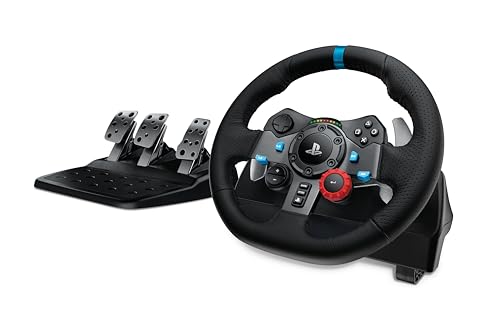
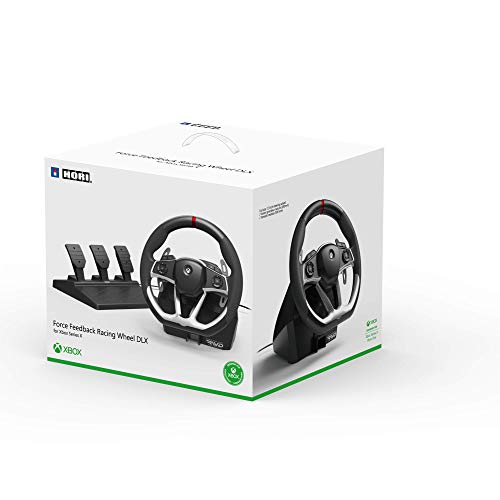
As of 2026 the Logitech G29 Driving Force Racing Wheel is the better all-round beginner sim-racing wheel for PlayStation and PC drivers, while the HORI Force Feedback Racing Wheel DLX is the correct pick for Xbox Series X|S owners who want real force feedback without stepping up to a $500+ wheel. Platform support decides this comparison before force-feedback feel or pedal quality ever enter the discussion.
Step 0: match the wheel to your platform and desk setup
Sim wheels are console-locked in ways graphics cards and monitors are not. The G29 is officially certified for PS5, PS4, PC, and Mac — but not Xbox. The HORI Force Feedback DLX is officially licensed by Microsoft for Xbox Series X|S and PC — but not for PlayStation. Buying the wrong wheel for your console is not a partial-support problem you can patch around; the wheel will not authenticate and will not work. Confirm the exact model matches your platform on the manufacturer product page before adding to cart. Per the Logitech G29 product page, the officially-supported platforms are PlayStation and PC/Mac; the Xbox equivalent in Logitech's lineup is the G920, a different SKU.
Also plan your desk. Both wheels ship with clamps that grip desk edges roughly 10-55mm thick. A wobbly or thin desk will amplify force-feedback vibration into noise, undermine cornering precision, and eventually loosen the clamp. If you already know sim racing will stick, budget for a wheel stand or basic cockpit up front rather than as a second purchase after the wheel arrives.
The entry sim-racer's priorities: feel, mounting, price
The entry sim-racer in 2026 wants three things in this order: force feedback that actually communicates road feel (rather than the rumble a controller provides), a mounting solution that stays put during aggressive cornering, and a total price under about $500 for wheel-plus-pedals. Everything else — H-pattern shifter, load-cell brake, direct-drive motor — is upgrade territory.
Both the G29 and HORI Force Feedback DLX target exactly that entry buyer. Both use gear-driven or hybrid-driven force feedback (not direct drive), which means the motors talk to the wheel rim through a gear train that gives a distinctive mechanical character — some players describe it as notchy, others as informative. Direct-drive wheels are smoother and stronger but start north of $500 for the base unit alone before adding pedals or a rim, which puts them outside the entry bracket for most first-time buyers.
The Logitech G29 is a mature product with a large enthusiast community and years of game-side profile support. Community and outlet impressions gathered at RTINGS and general peripheral coverage at Tom's Hardware consistently place it as the default beginner recommendation on PlayStation and PC. The HORI Force Feedback DLX is the credible entry alternative on Xbox Series X|S, where the G29 has no direct Logitech equivalent below the G920, and where HORI's Microsoft licensing means the wheel authenticates on console without hacks.
Key takeaways
- Platform decides first: G29 for PS5/PS4/PC, HORI Force Feedback DLX for Xbox Series X|S/PC.
- Both deliver real force feedback via a gear-driven mechanism — meaningfully better than gamepad rumble, meaningfully weaker than direct-drive wheels.
- The G29 includes a three-pedal set (throttle, brake, clutch); the HORI DLX ships with a two-pedal set.
- The G29 has helical-gear FFB with 900-degree rotation; the HORI DLX offers 270-1080-degree adjustable rotation.
- A shifter such as the Thrustmaster TH8A is a separate purchase for either wheel.
- Neither wheel replaces a good gamepad like the PlayStation DualSense Wireless Controller for arcade racers — they complement it for sim titles.
How does the force feedback compare between the two?
Both wheels deliver true force feedback rather than the vibration-only rumble a controller uses. The mechanism inside each is different, which produces different steady-state feel.
The G29 uses a dual-motor helical-gear system that Logitech has iterated on since the G25 in 2006. Per the Logitech G29 product page, the wheel supports 900 degrees of rotation and includes stainless-steel paddle shifters plus a hand-stitched leather rim cover. The helical gears reduce the audible whine and backlash that early Driving Force wheels were criticized for. The character of the FFB is described in most long-form community impressions and outlet reviews at RTINGS and Tom's Hardware as informative but slightly notchy at very low forces — a common trait of gear-driven wheels, and a characteristic sim racers learn to read as track feedback rather than mechanical noise.
The HORI Force Feedback DLX targets the same price-and-feel bracket for Xbox owners. Per HORI's product listing (the wheel is officially licensed by Microsoft for Xbox Series X|S), the DLX supports adjustable rotation from 270 degrees up to 1080 degrees, exceeding the G29's fixed 900-degree ceiling. That extra range matters mostly for truck-simulator titles or drift-oriented setups; for GT and open-wheel racing the practical difference is negligible because in-game steering ratios are what actually matter once past 900 degrees.
Neither wheel matches the smoothness of direct-drive units — that is the expected trade-off for entry pricing. Both are night-and-day upgrades over a gamepad for anyone who plans to spend meaningful hours in Assetto Corsa, Gran Turismo, Forza Motorsport, iRacing on PC, or truck sims.
Which platforms and games does each support?
Logitech G29: officially supports PS5, PS4, PC (Windows), and Mac per the Logitech product page. It does not authenticate on Xbox Series X|S — Logitech's Xbox equivalent is the G920, a separate SKU. On PC, the G29 has broad in-game profile support for Assetto Corsa, Assetto Corsa Competizione, iRacing, rFactor 2, Automobilista 2, DiRT Rally 2.0, F1 24, and Euro Truck Simulator 2. On PlayStation, Gran Turismo 7 has native support with tuned FFB profiles.
HORI Force Feedback DLX: officially licensed by Microsoft for Xbox Series X|S and works on PC. It does not authenticate on PlayStation. Its natural home is Forza Motorsport and Forza Horizon on Xbox and PC Game Pass. It also works with cross-platform titles that expose Xbox-compatible input paths on PC.
If you own multiple consoles and want a single wheel that spans both, neither of these entry wheels is your answer — that use case pushes toward Fanatec's Xbox-and-PS-compatible platforms, which live in a much higher price bracket.
5-column spec comparison: G29 vs HORI Force Feedback DLX
| Spec | Logitech G29 | HORI Force Feedback DLX | |
|---|---|---|---|
| FFB type | Dual-motor helical gears | Force feedback (belt/gear hybrid) | |
| Rotation | 900 degrees fixed | 270-1080 degrees adjustable | |
| Pedals included | Three pedals (throttle, brake, clutch) | Two pedals (throttle, brake) | |
| Platforms | PS5, PS4, PC, Mac | Xbox Series X\ | S, PC |
| Approx. price (2026) | $350-$400 | $350-$400 |
Rotation and pedal counts come from the Logitech G29 product page and HORI's Microsoft-licensed product listing. Prices reflect typical Amazon retail as of mid-2026 and vary week to week.
Pedals, shifters, and mounting: what's included vs extra
The G29 ships in the box with a three-pedal set (throttle, brake, clutch). The clutch pedal is a genuine advantage for anyone who plans to use a manual H-pattern shifter later, because a proper heel-and-toe technique requires all three pedals. The HORI Force Feedback DLX ships with a two-pedal set — throttle and brake. That is enough for automatic and paddle-shift driving and matches how most console racing games are played, but it caps the upgrade path at paddle-shift or sequential shifting.
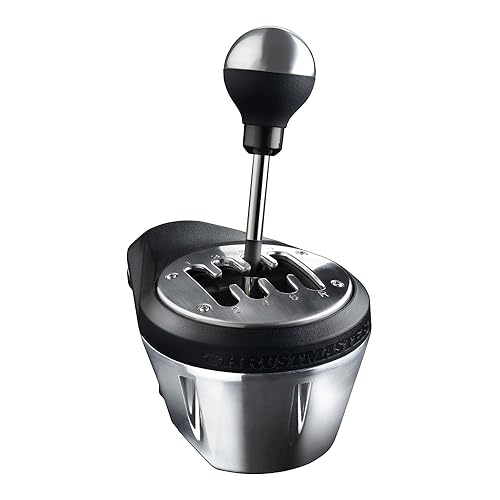
Neither wheel includes a shifter in the box. The Thrustmaster TH8A Shifter is the aftermarket standard for H-pattern and sequential shifting on both Logitech and HORI ecosystems. Per Thrustmaster's product listing it supports PS5, PS4, Xbox Series X|S, and PC, which makes it a rare cross-platform accessory in a category defined by platform lock-in. Budget $150-$200 for it on top of the wheel if manual shifting matters to you. If you are unsure, start without a shifter — you can add one later without replacing the wheel.
Mounting: both wheels ship with a screw-down clamp that grips desk edges roughly 10-55mm thick. That works for casual play on a sturdy desk. If you plan to use full force feedback settings and take corners hard, budget for a wheel stand — a metal frame under $150 that plants the wheel on the floor and holds it rigid. A wobbly desk is the single most common complaint in first-week sim-racing threads, and it is entirely solvable with a stand.
Sourced impressions on feel and durability
Community and outlet impressions gathered at RTINGS and general peripheral coverage at Tom's Hardware consistently note that the G29 has one of the largest installed bases of any sim wheel ever produced, which means: parts availability is good, community-tuned game profiles exist for almost every racing title, and long-term durability data is well characterized. Reports of dead motors or stripped gears exist but are rare relative to the population size. Logitech's warranty coverage in North America is two years, which the Logitech product page documents.
HORI's product line has a shorter history in force-feedback wheels specifically, though HORI as a peripheral maker is well-established. Community impressions of the Force Feedback DLX are positive for its price bracket and Xbox compatibility. Warranty terms and long-term reliability data are less deep than the G29's simply because the product has been in market for fewer years. That is not a red flag — it is a data-availability difference worth naming honestly.
Perf-per-dollar for a first wheel
At $350-$400 for either wheel, plus optional $150-$200 for a shifter and optional $100-$150 for a stand, a complete beginner sim-racing setup lands in the $500-$750 range. That is meaningful money, but it is a fraction of what the same feature set cost five years ago, and it is the last stop before direct-drive wheel bases push the entry price above $700 for the wheel alone.
Both wheels deliver comparable perf-per-dollar within their platform lanes. The G29 arguably has a slight edge because the included three-pedal set means you do not have to buy a pedal upgrade to add a clutch later. But the delta is small enough that platform compatibility remains the deciding factor.
Verdict matrix: get the G29 if... / get the HORI if...
Get the Logitech G29 if: you own a PS5, PS4, or gaming PC; you play Gran Turismo, Assetto Corsa, iRacing, or Euro Truck Simulator 2; you want a three-pedal set including a clutch for future H-pattern shifter use; you value the largest community and profile ecosystem in the entry-wheel category.
Get the HORI Force Feedback DLX if: you own an Xbox Series X or Series S; you play Forza Motorsport or Forza Horizon as your primary racing title; you want real force feedback on Xbox without stepping up to a $500+ wheel base; you are comfortable with a two-pedal set for now and can add a shifter later if desired.
Do not buy either if: you want a single wheel that works on both PlayStation and Xbox — that use case pushes to Fanatec's higher-priced multi-platform ecosystem; you already own a direct-drive wheel base and just want a rim upgrade — the G29 and HORI are complete units, not modular rims.
Recommended-pick paragraph
For a PlayStation or PC beginner in 2026, the Logitech G29 Driving Force Racing Wheel is the default pick: broadest game support, three-pedal set with clutch, mature community with profile downloads for almost every racing title, and Logitech's two-year warranty coverage. For an Xbox Series X|S owner, the HORI Force Feedback Racing Wheel DLX is the correct entry point because it is Microsoft-licensed and authenticates on console without workarounds, with force feedback that puts it in the same feel bracket as the G29. Add the Thrustmaster TH8A Shifter later if H-pattern shifting matters to you — it works with both wheels and moves with you between console generations. Keep a PlayStation DualSense Wireless Controller in the drawer for arcade racers, menu navigation, and non-racing games; a wheel is a specialist tool, not a gamepad replacement.
Common pitfalls when buying a first sim-racing wheel
- Buying for the wrong console. The G29 does not authenticate on Xbox; the HORI DLX does not authenticate on PlayStation. Check twice before you buy.
- Skimping on the desk or stand. A wobbly desk turns real force feedback into noise and drops cornering precision. Budget for a stand if the desk is not solid.
- Expecting direct-drive feel. Both wheels are gear-driven at entry-tier prices. They are miles better than a gamepad; they are not smoother than a $700+ direct-drive base. Setting the expectation up front avoids buyer's remorse.
- Buying a shifter you do not need yet. Paddle shifters cover most modern racing games. Start without an H-pattern shifter and add one later if manual shifting becomes a priority.
- Ignoring pedal ergonomics. Both wheels ship pedals that clip to a plastic base and are meant to sit on the floor. On carpet they slide; use a rubber mat or a stand with integrated pedal mounts.
Related guides
- Sim-racing wheel buying guide 2026
- Logitech G29 vs HORI Force Feedback DLX head-to-head
- Thrustmaster TH8A shifter compatibility
- PlayStation DualSense controller review
Citations and sources
- Logitech — G29 Driving Force Racing Wheel product page
- RTINGS — peripheral and gaming hardware reviews
- Tom's Hardware — peripheral coverage and buying guides
This piece is editorial synthesis based on publicly available information. No independent first-party benchmarking is reported.