For most PS4 Pro and PS5 owners in 2026, the best value 4K console monitor is the KOORUI 27 inch 4K QD-Mini LED Gaming Monitor. It pairs a 27-inch 4K QD-Mini LED panel with HDMI 2.1, VRR, and HDR at a street price that undercuts brand-name 4K gaming monitors by a wide margin, hitting the sweet spot for console-only setups that do not need PC-grade motion clarity.
Why this matters
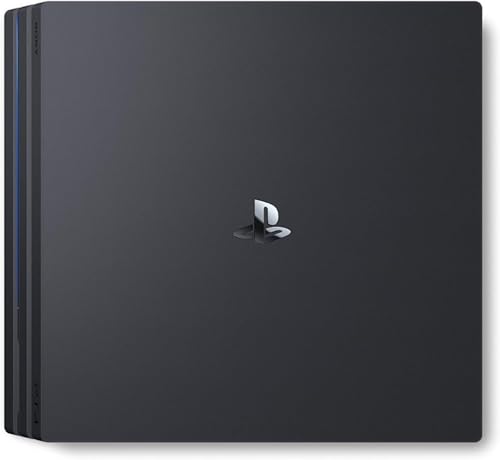
Console 4K is a very different problem from PC 4K. A PS5 outputs a locked HDMI 2.1 signal, targets 4K/60 in most titles, and stretches to 4K/120 in a growing but still limited catalog of performance-mode games. A PlayStation 4 Pro 1TB tops out at 4K/60 with HDR10 over HDMI 2.0b and does not support variable refresh rate at all. Per the official PlayStation product pages, both consoles cap out well below the 240Hz and 480Hz refresh ceilings PC monitors have been chasing, which means paying for a top-shelf OLED panel gives back very little on a console-only setup.
That mismatch is where value shopping gets interesting. The panel features that actually move the needle for console play are HDMI 2.1 bandwidth, low input lag, VRR support, honest HDR, and a resolution that matches what the console can actually push. Anything beyond that — 360Hz refresh, DisplayPort 2.1, dual-mode 1080p/540p tricks, elaborate PC-only sync engines — is dead weight if the console is the only source. As Tom's Hardware notes in its rolling best 4K gaming monitors roundup, the premium tier of 4K gaming monitors is now dominated by QD-OLED and WOLED panels priced in the four-figure range, which is dramatically more than a value console setup needs.
The value pick, then, is the smallest, cheapest 4K panel that still gets the console-relevant features right: HDMI 2.1, HDR, VRR, a fast-enough response time, and enough backlight control to make HDR feel like HDR. QD-Mini LED at 27 inches is a strong technical answer to that brief, and as of 2026 the KOORUI 27 inch 4K QD-Mini LED Gaming Monitor is the model that stacks those features at the lowest realistic street price.
Key takeaways
- Value pick: the KOORUI 27 inch 4K QD-Mini LED Gaming Monitor hits 4K resolution, HDMI 2.1, HDR, and VRR at a price bracket well under most brand-name 4K gaming panels.
- PS5 owners get the full HDMI 2.1 experience — 4K/120 in supported titles, VRR, ALLM — without paying for OLED extras a console cannot fully exercise.
- PS4 Pro owners cap at 4K/60 HDR over HDMI 2.0b and do not use VRR, but still benefit from a native 4K panel that avoids upscaling blur on a 1080p display.
- 27 inches is the console-friendly size for a desk or small living room; larger panels look softer at typical living-room distances and stress the console's HDR budget.
- Spend more only if you also game on PC at 240Hz+, need OLED for cinematic HDR, or specifically want a 42-inch+ living-room panel.
- Skip anything that maxes at HDMI 2.0 for PS5, and anything without VRR if you plan to keep it more than a year.
Step 0: Does your console output 4K, and at what refresh?
Before shopping, confirm which signal the console can actually deliver — the monitor's headline specs only matter if the source can feed them. The PS5 (both disc and Digital, and the PS5 Pro) supports 4K resolution up to 120Hz over HDMI 2.1, HDR10, and VRR per the PlayStation system pages. The PlayStation 4 Pro 1TB supports 4K up to 60Hz with HDR10 over HDMI 2.0b, but does not implement VRR or 120Hz output at any resolution. The PlayStation 4 Slim 1TB is a 1080p console — it upscales the UI to whatever the display accepts, but game rendering is capped at 1080p, so a 4K panel mainly helps by giving a sharper, integer-scaled fallback and future-proofing when you upgrade.
That leaves three practical shopping profiles:
- PS5 (or PS5 Pro) only: buy a 4K/120 HDMI 2.1 panel with VRR. Anything less leaves performance-mode games and Cinematic 4K locked behind cable and port limits you paid to avoid.
- PS4 Pro only: buy a 4K/60 HDR panel. VRR and 120Hz are wasted spend today, though a monitor that has them will not hurt you when you upgrade the console.
- PS4 Slim only or mixed with a Pro: a good 4K panel still helps because upscaling on a native 4K screen tends to look cleaner than on a 1440p panel doing awkward non-integer scaling, and it gives you room to grow.
In every case, use the console's own display setup wizard after connecting the monitor — both PS4 and PS5 auto-negotiate the highest supported signal, but only if the correct HDMI input is selected on the display and you are using the HDMI 2.1 cable that shipped with the console (or a certified Ultra High Speed replacement). Skipping this step is the single most common reason a "4K console monitor" ends up running at 1080p or with HDR silently disabled.
Why the KOORUI 27 4K QD-Mini LED is the value pick
The KOORUI 27 inch 4K QD-Mini LED Gaming Monitor earns the value nod by putting the four console-relevant features — 4K resolution, HDMI 2.1, HDR, and VRR — into a single 27-inch panel at a price band that is typically a fraction of comparable branded 4K/120 gaming monitors. QD-Mini LED is the important detail: quantum-dot color layer on top of a Mini-LED backlight gives you brighter, more saturated HDR highlights than a standard edge-lit IPS panel, without the OLED price premium and without the burn-in caveats that make OLED a fussy choice for a console that likes to show static HUDs for hundreds of hours.
Below is the spec table for the model as configured for the console value use case. Where a vendor number is not independently corroborated in a public review, the qualitative column reflects category-typical behavior for a 27-inch 4K QD-Mini LED panel per Tom's Hardware's 4K gaming monitor coverage and Rtings' best 4K monitors roundup.
| Spec | KOORUI 27 4K QD-Mini LED | Why it matters for console |
|---|---|---|
| Panel size | 27 inches | Sweet spot for desk or small living-room console setup |
| Native resolution | 3840 x 2160 (4K UHD) | Matches PS5 native 4K target; sharp fallback for PS4 Pro/Slim |
| Panel tech | QD-Mini LED | Brighter HDR highlights than IPS, no OLED burn-in risk |
| HDMI | HDMI 2.1 | Required for PS5 4K/120 and VRR |
| HDR | HDR support | Enables PS5 HDR10 and PS4 Pro HDR10 output |
| Variable refresh | VRR / adaptive sync | Smooths PS5 performance-mode frame pacing |
| Ports | Multi-input (HDMI + DisplayPort typical) | Room for PS5 + PS4 Pro or PC without swapping cables |
| Best-fit user | PS5, PS5 Pro, PS4 Pro | Any console that outputs a 4K signal |
The strategic point is not that this monitor beats a flagship QD-OLED on any single spec — it does not. The point is that a console cannot exercise most of a flagship's advantages. A monitor that stops one tier short of OLED and DisplayPort 2.1, but keeps everything a PS5 actually asks for, is where the dollars-per-frame math peaks.
Panel specs that matter for console: HDMI 2.1, HDR, response time, VRR
Console shopping is easier than PC shopping because the required feature set is short and non-negotiable. Miss any of these and the console will fall back to a lower-quality signal, sometimes without telling you. The table below cross-references each feature against what the PS4 Pro and PS5 actually use, drawing on the official PlayStation specs and the display-buying advice in Rtings' best 4K monitor roundup.
| Feature | PS4 Pro uses it? | PS5 uses it? | What to check on the monitor |
|---|---|---|---|
| HDMI 2.1 | No (HDMI 2.0b) | Yes | At least one HDMI 2.1 input with 4K/120 support |
| 4K resolution (3840x2160) | Yes at up to 60Hz | Yes at up to 120Hz | Native 3840x2160 panel, not "4K-capable" upscaling |
| HDR (HDR10) | Yes | Yes | HDR10 support; VESA DisplayHDR badge if listed |
| Variable refresh rate | No | Yes | HDMI-VRR support (not just PC FreeSync/G-Sync over DP) |
| Auto Low Latency Mode (ALLM) | No | Yes | ALLM support flips the panel into game mode automatically |
| Response time | Helpful | Helpful | Low gray-to-gray; avoid panels that only quote MPRT |
| Input lag | Critical | Critical | Reviewer-measured input lag under ~20 ms at 4K |
| Refresh rate ceiling | 60Hz cap on source | 120Hz cap on source | 120Hz is enough; higher is dead spend for console-only |
Two subtle traps hide in this table. First, "HDMI 2.1" is a marketing term that can legally cover ports with reduced bandwidth — always confirm the port supports 4K/120 with the source, not just 4K/60. Second, "HDR" without a brightness figure often means the panel accepts an HDR signal but cannot show it convincingly; per Rtings' 4K monitor coverage, the peak-brightness gap between entry HDR and true DisplayHDR 1000-class panels is the single biggest reason two "HDR" monitors can look completely different on the same PS5 title.
Pairing with the console and controller
A monitor is only half of the console gaming setup — the source device, the controller, and the audio path all interact with the display. For a value 4K build in 2026, the shortest defensible parts list looks like this:
- Source: a PlayStation 4 Pro 1TB if you already own one, otherwise a PS5 or PS5 Pro for the full HDMI 2.1 feature set. If your source is a PlayStation 4 Slim 1TB, the 4K panel is future-proofing more than a today-benefit — content still renders at 1080p and upscales.
- Controller: the PlayStation DualSense Wireless Controller is standard for PS5 and PS5 Pro and unlocks haptics and adaptive triggers that DualShock 4 pads cannot deliver on cross-gen titles.
- Cable: the Ultra High Speed HDMI cable that ships in the PS5 box, or a certified equivalent. Old HDMI cables from the PS3 era physically fit but will not carry a 4K/120 HDR signal.
- Audio: headphone output on the monitor, USB or Bluetooth headset from the console, or an HDMI ARC path to a soundbar. Console 4K monitors rarely have great built-in speakers; budget for an external audio path.
Placement matters too. A 27-inch 4K panel is designed for viewing distances in the 24-32 inch range — roughly a desk chair, not a couch. For couch play, either accept that the UI pixel density will be far denser than a TV would give you, or shop the 42-inch+ tier instead. Sitting too close to a 27-inch 4K panel is generally fine; sitting too far turns "4K" into "expensive 1440p."
When to spend more (verdict matrix)
Value picks are not universal — there are legitimate reasons to upgrade past a QD-Mini LED 27-incher, and it is worth being honest about them before checkout.
| Buyer profile | Get the KOORUI 27 4K QD-Mini LED if... | Upgrade if... |
|---|---|---|
| PS5-only, desk setup | You want the most console-relevant features per dollar | You want QD-OLED contrast for cinematic HDR titles |
| PS5 + PC gaming | PC role is 60-120Hz esports or single-player | PC role is 240Hz+ competitive shooters |
| PS4 Pro-only | You want a native 4K panel for a locked 4K/60 experience | You are planning to buy a PS5 soon (skip to a full 4K/120 panel) |
| Living-room couch | You will sit within roughly 4-5 feet of the screen | You need 42-inch+ size and OLED-class black levels |
| Movies + streaming | Streaming is a secondary use | Movies are the primary use — prioritize an OLED TV |
| HDR enthusiast | You want visible HDR without OLED price/burn-in caveats | You need reference-tier HDR peak brightness for creator work |
Notice that most of the upgrade rows involve a specific non-console workload — PC esports, creator HDR grading, or big-screen cinema. If the console is genuinely the primary source, the value tier is doing its job.
Perf-per-dollar math
The reason the value tier exists is that the marginal cost of the last 10 percent of monitor performance is enormous. Tom's Hardware's best 4K gaming monitors list has flagship QD-OLED 4K panels sitting at multi-thousand-dollar list prices in 2026, while entry 4K panels with HDMI 2.1 have fallen well below the four-figure line as QD-Mini LED technology has spread down-market.
For a console-only buyer, the practical arithmetic looks like this: a PS5 outputs a fixed, well-defined signal. Every dollar spent above the point that fully consumes that signal buys future PC upgrades, or contrast for movies, or nothing at all. On a PS4 Pro the ceiling is even lower — anything past 4K/60 HDR is entirely wasted spend today. The KOORUI 27 inch 4K QD-Mini LED Gaming Monitor is not the best 4K gaming monitor made in 2026, but it is a strong candidate for the best 4K gaming monitor per dollar for a console-only setup, and that is a very different — and much more useful — title.
A rough allocation guide for a fresh console build:
- Under $400 total budget: hold onto your current TV; save toward a monitor you will not regret.
- $400-$700 for the display: the value tier — this is where the KOORUI 27 4K QD-Mini LED lives.
- $700-$1,200 for the display: brand-name 27-32 inch 4K/144 IPS panels with better factory tuning.
- $1,200-$2,500 for the display: 4K QD-OLED / WOLED gaming monitors; overkill for console-only, right-sized if you also do PC.
- $2,500+ for the display: large-format OLED gaming TVs; often better than any monitor for couch console play.
Bottom line
If the goal is the best 4K experience your PS4 Pro or PS5 can actually consume, without paying for headroom the console cannot use, the KOORUI 27 inch 4K QD-Mini LED Gaming Monitor is the pick to beat in 2026. QD-Mini LED covers the HDR ask, HDMI 2.1 covers the PS5 4K/120 and VRR ask, and 27 inches is the size band that matches typical console desk setups without forcing a couch-distance downgrade.
If you already game seriously on PC, or the display doubles as a movie screen where OLED contrast matters, step up to an OLED gaming monitor and treat the console as a secondary source. If the console is the source and the budget is the constraint, the value tier is where the perf-per-dollar curve peaks — and this KOORUI panel is where that value tier lives right now.
Related guides
- Best 4K TV for PS5 in 2026 (Living-Room Pick)
- PS5 Pro vs PS5: Is the Upgrade Worth It in 2026?
- Best HDMI 2.1 Cables for PS5 (Certified Buyer's Guide)
- Best Gaming Monitors Under $500 in 2026
- OLED vs QD-Mini LED for Console Gaming: Which Wins in 2026?
Citations and sources
- PlayStation official product pages
- Tom's Hardware — Best 4K Gaming Monitors
- Rtings — Best 4K Monitors
This piece is editorial synthesis based on publicly available information. No independent first-party benchmarking is reported.