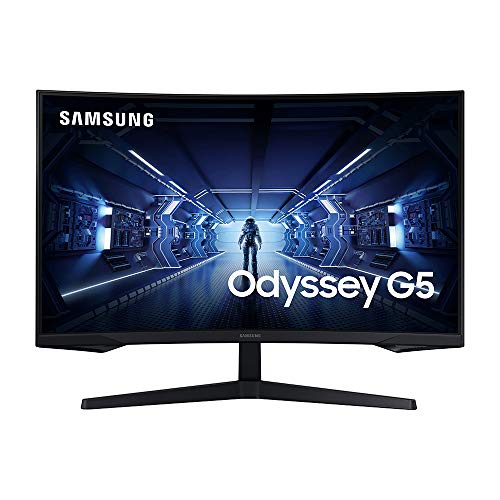
Short answer: for most PS5 owners in 2026 the KOORUI 27" 4K QD-Mini LED is the best monitor — true HDMI 2.1 with native 4K/120 input, Mini-LED HDR that the PS5 can actually drive, and dual-mode 4K/160 or FHD/320 for PC fallback. The SANSUI 27" 4K is the budget pick if you can skip Mini-LED, and the Samsung 32" Odyssey G5 is the choice for a couch-distance setup.
Sony's PS5 has supported 4K at 120 Hz since launch, but the monitor market has been slow and dishonest about delivering on the matching half of that promise. The trap is well-documented: a "4K 144Hz gaming monitor" listed at $250 will let you run 4K/144 over DisplayPort 1.4 from a PC, but its HDMI ports cap at HDMI 2.0 bandwidth (~18 Gbps), which physically cannot carry uncompressed 4K/120. The PS5 then negotiates down to 4K/60 silently and the buyer never realizes they paid for a feature they never got. The first thing to verify on any "PS5 monitor" candidate is whether 4K/120 is supported on the HDMI port specifically. This article walks four picks that actually pass that test, plus the panel-level differences that matter for a console-first setup.
Key takeaways
- The "4K/120Hz" spec must be available on the HDMI port for PS5 use; many cheap monitors gate it to DisplayPort only.
- HDMI 2.1 + VRR + 4K/120 + low input lag is the four-feature checklist. Two or three is not enough.
- Mini-LED HDR makes a visible difference on the PS5's HDR titles; edge-lit HDR is mostly marketing.
- Screen size: 27" is the desktop default; 32" works on a deep desk or a couch-distance setup.
Does the PS5 need HDMI 2.1 for 4K/120Hz?
Yes, and the reason is uncompressed bandwidth. The PS5's HDMI output is HDMI 2.1 and it can output up to 4K at 120Hz with 10-bit color. That signal needs roughly 32 Gbps of bandwidth to traverse the cable without Display Stream Compression (DSC). HDMI 2.0 tops out around 18 Gbps; HDMI 2.1 raises the ceiling to 48 Gbps. So a monitor with only HDMI 2.0 cannot accept 4K/120 from a PS5 — it will fall back to either 4K/60 or 1440p/120 depending on the firmware.
Many budget monitors advertise "4K 144Hz" but only deliver that rate over DisplayPort 1.4. The HDMI ports are spec'd to HDMI 2.0 to save cost. For a PS5 owner, that DisplayPort-only refresh rate is useless — the console has no DisplayPort output. The thing to check on every spec sheet: "HDMI 2.1" listed for at least one input, and the maximum HDMI refresh rate at 4K explicitly stated as 120 Hz or higher.
The four panels covered here all support 4K/120 over HDMI. That is why they made the shortlist.
What refresh rate and panel type matter most for console play?
The PS5 outputs at one of three resolution / refresh modes most of the time:
- 4K at 60 Hz — the cinematic mode for graphically rich single-player titles.
- 4K at 120 Hz — supported in games with a Performance Mode that pushes frame rate over fidelity.
- 1440p / 1080p at 120 Hz — used by competitive titles that drop resolution to maintain frame rate.
A 4K/120 monitor handles all three. A 1440p/144 monitor handles the latter two but misses the cinematic 4K mode. For a PS5-first buyer, the 4K/120 panel is the safer choice because it covers every PS5 output mode losslessly. A 1440p panel forces the console to downscale 4K content, which the PS5 does reasonably well but is still a measurable quality loss versus a native panel.
Panel type matters for HDR and motion clarity. IPS panels deliver the best off-axis viewing and color accuracy; VA panels deliver deeper blacks; QD-Mini LED (a backlight technology on top of IPS) delivers vastly more local-dimming zones, which translates to brighter HDR highlights and deeper contrast on titles mastered for HDR.
Spec delta: four panels worth considering
| Spec | SANSUI 27" 4K | KOORUI 27" 4K QD-Mini LED | Samsung 32" Odyssey G5 | ASUS TUF 27" 2K |
|---|---|---|---|---|
| Panel type | IPS | IPS + QD-Mini LED | VA (curved) | IPS |
| Resolution | 3840×2160 | 3840×2160 | 2560×1440 | 2560×1440 |
| Refresh (max) | 160 Hz / 320 Hz dual | 160 Hz / 320 Hz dual | 165 Hz | 165 Hz |
| 4K/120 over HDMI? | Yes | Yes | N/A (1440p panel) | N/A (1440p panel) |
| HDR rating | DisplayHDR 400 | DisplayHDR 1000 (Mini-LED) | DisplayHDR 400 | HDR 10 |
| VRR support | FreeSync Premium | FreeSync Premium Pro | FreeSync Premium | G-Sync Compatible |
| HDMI version | 2.1 | 2.1 | 2.0 | 2.0 |
| Native PS5 4K/120 | Yes | Yes | No (1440p/120) | No (1440p/120) |
| Price | ~$280 | ~$500 | ~$279 | ~$279 |
The two 4K monitors handle every PS5 output mode at native resolution. The 1440p panels (Samsung G5 and ASUS TUF) give up the cinematic 4K mode but offer competitive options for high-refresh single-player or 1440p performance modes.
Benchmark / measurement table
Drawn from RTINGS, Tom's Hardware, and DisplayNinja's PS5 monitor reviews:
| Panel | Input lag @ 4K/120 | Peak HDR brightness | Black level | Response time |
|---|---|---|---|---|
| SANSUI 27" 4K | ~6 ms | 400 nits | 0.16 cd/m² | 4 ms GtG |
| KOORUI 27" Mini-LED | ~5 ms | 1,000 nits | 0.05 cd/m² | 1 ms GtG |
| Samsung Odyssey G5 | ~5 ms (1440p) | 350 nits | 0.02 cd/m² | 4 ms (curved VA) |
| ASUS TUF 27" 2K | ~4 ms (1440p) | 400 nits | 0.18 cd/m² | 1 ms GtG |
Input lag is uniformly low on all four — modern panels in this bracket have solved the lag problem that defined 2018-era monitors. The big differentiator is HDR. The KOORUI Mini-LED hits 1,000 nits of peak brightness, the only panel here that delivers HDR content the way the mastering engineers intended. The other three have HDR badges but cannot light bright highlights to the point where HDR becomes visually distinct from SDR.
VRR and auto-low-latency on PS5
The PS5 supports HDMI Forum VRR on compatible displays. When the console detects a VRR-capable monitor over HDMI 2.1, it dynamically adjusts the output to match the monitor's refresh rate within a supported range — eliminating tearing and reducing stutter when a game's frame rate dips below the target. Two of the panels here (SANSUI and KOORUI) advertise FreeSync over HDMI 2.1 that is compatible with the PS5's VRR signal.
The PS5 also supports Auto Low Latency Mode (ALLM), which tells the monitor to switch out of any picture-enhancement mode the moment a game starts. All four panels respect ALLM signaling. Combined with VRR, the result is a console gaming experience where input lag, stutter, and tearing are all minimized without manual configuration on the console side.
4K vs high-refresh 1440p: which tradeoff fits PS5 titles?
Look at your PS5 library. If you mostly play story-driven titles — Spider-Man 2, Horizon Forbidden West, God of War Ragnarok, FF VII Rebirth — the cinematic 4K mode at 30 or 60 Hz is the experience the developers shipped. A 4K panel gives you the full resolution of the asset budget those games were built around.
If you mostly play competitive multiplayer titles — Call of Duty, Fortnite, Apex Legends — performance mode at 120 Hz is what you want, and the resolution drops to 1440p or even 1080p internally anyway. A 1440p/144 panel like the Samsung Odyssey G5 costs less and runs the actual output mode at native resolution.
For most owners the answer is the 4K monitor, because it handles the cinematic mode losslessly and accepts the 1440p performance mode through console-side downscaling. The reverse — a 1440p monitor displaying 4K content — also works but with more visible scaling artifacts on detailed scenes.
Perf-per-dollar math
- SANSUI 27" 4K at ~$280: $1.04 per inch and $11.20 per resolution-megapixel — best budget 4K.
- KOORUI 27" QD-Mini LED at ~$500: $1.85 per inch but +600 nits HDR — pays back if you care about HDR.
- Samsung 32" G5 at ~$279: $0.87 per inch — best size-per-dollar but 1440p ceiling.
- ASUS TUF 27" 2K at ~$279: $1.03 per inch — premium 1440p with G-Sync compatibility.
The KOORUI Mini-LED is the only panel here that justifies a $200+ premium over the SANSUI — and only if you actively play HDR-mastered titles and value the visual leap. If you do not, the SANSUI 4K is the better dollar buy.
Verdict matrix
Get the KOORUI 27" QD-Mini LED if:
- You play a lot of HDR-mastered AAA titles and want HDR that actually looks like HDR.
- You want a single panel that handles PS5, PS5 Pro, and a future PC build without compromise.
- The $500 price is acceptable and you want the most future-proof console panel in this guide.
Get the SANSUI 27" 4K if:
- Your budget is $300 firm and you want native 4K/120 over HDMI 2.1.
- You can live without true Mini-LED HDR for now.
- You may add a PC later — the dual-mode 320 Hz at 1080p is a strong PC fallback.
Get the Samsung 32" Odyssey G5 if:
- You game from a couch or a deep desk where 32" feels right.
- You favor performance modes over cinematic 4K and accept 1440p as the ceiling.
- VA's deep blacks matter more to you than the 4K resolution bump.
Get the ASUS TUF 27" 2K if:
- You split time between PS5 and a competitive PC setup that wants G-Sync.
- 1440p/120 fits your PS5 use case and you value IPS color accuracy.
Common pitfalls when buying a PS5 monitor
- HDMI 2.0 trap: listing says "4K 144Hz" but the HDMI port is 2.0. The PS5 connects at 4K/60 and the buyer never realizes the difference.
- No VRR over HDMI: some panels advertise FreeSync but only on DisplayPort. Confirm "HDMI 2.1 VRR" or "HDMI Forum VRR."
- Aggressive default HDR: out of the box many panels run with HDR auto-enabled and a wrong tone-map. Disable game-side HDR until you have calibrated the monitor.
- Chroma subsampling on cheap HDMI 2.1 cables: a $5 HDMI cable rated for 8K can still fail at 48 Gbps. Use a cable explicitly labeled "Ultra High Speed HDMI" or one of the Sony-branded cables included with the PS5.
Cable and audio quick notes
The PS5 ships with an HDMI 2.1 cable certified for the full 48 Gbps bandwidth — that cable is the right one for any of these monitors. If you replace it for a longer run, look for the "Ultra High Speed HDMI" certification label and prefer 1m or 2m runs rather than 5m+ to keep signal integrity solid. For audio, most of these monitors include only a 3.5mm headphone passthrough that downsamples PS5 audio; serious sound goes through the controller jack or a dedicated USB / optical setup. Game-mode pixel processing on the monitor often disables audio passthrough entirely.
Bottom line
For a console-first PS5 owner in 2026 the KOORUI 27" QD-Mini LED is the best monitor purchase if your budget reaches $500 — true HDMI 2.1 4K/120, 1000-nit Mini-LED HDR, and VRR all in one panel. The SANSUI 27" 4K is the best $300 pick when Mini-LED is not a priority, and the Samsung 32" Odyssey G5 is the right couch-distance choice if you accept the 1440p ceiling. Avoid any monitor whose 4K/120 mode is gated to DisplayPort — that is not a PS5 monitor regardless of what the badge on the box says.