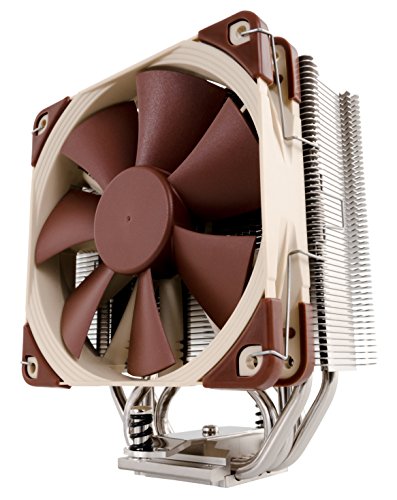
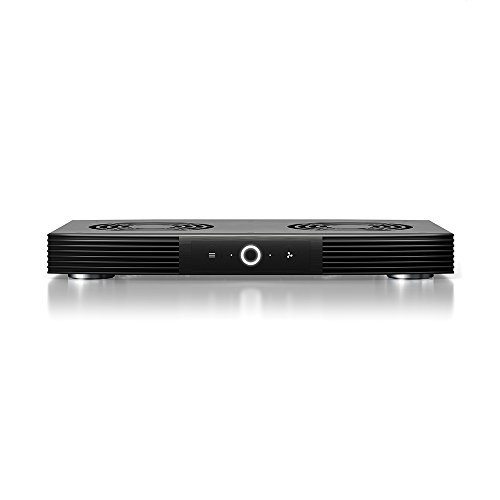
The Noctua NH-U12S is the best cooler for a stock or lightly-tuned Ryzen 7 5800X. It's quiet, fits nearly every case, ships with fantastic thermal paste, and holds the 5800X within safe limits at gaming and productivity loads. If you plan to push Precision Boost Overdrive hard and run sustained all-core loads, upgrade to a 240mm AIO like the CoolerMaster ML240L RGB. The AC Infinity AIRCOM S7 is a fan add-on, not a CPU cooler — skip it for this build.
Why the 5800X runs hot and what that means for cooler choice
The Ryzen 7 5800X is famously toasty. Eight full Zen 3 cores on a single 7nm die, a 105W TDP, and aggressive Precision Boost 2 that pushes clocks until it hits its thermal limit — that's the recipe. It's not a defect. It's what AMD's boost algorithm asks the cooler to handle: pull heat out fast enough, and the chip rewards you with more sustained clock speed and better performance.
Cooling shortcomings on the 5800X look like this: high 80s to low 90s Celsius under gaming load, throttled boost clocks under all-core workloads, and audible fan noise as the cooler tries to catch up. Solve for cooling early and the 5800X delivers the strong 1080p and 1440p gaming performance that made it a mid-tier AM4 favorite. Cheap out on cooling and you'll wonder why your build sounds like a jet engine and benchmarks a few percent below reviews.
This piece compares the two coolers that show up in nearly every 5800X build discussion — Noctua's NH-U12S air cooler and CoolerMaster's ML240L RGB 240mm AIO — plus the AC Infinity AIRCOM S7 (which is often mistakenly recommended and is not actually a CPU cooler). Numbers, noise levels, clearance, PBO tuning implications, and price-per-degree math to help you pick the right one.
Key takeaways
- Noctua NH-U12S — best-in-class quiet air cooler. Holds the 5800X within safe temperature limits at stock and light overclock. First choice for most builds.
- CoolerMaster ML240L RGB V2 — 240mm AIO with more sustained-load headroom. Best for aggressive PBO tuning or all-core productivity work.
- AC Infinity AIRCOM S7 — case/component fan system, NOT a CPU cooler. Do not buy this for a CPU cooling job.
- Boxed cooler: the 5800X does not include a cooler. Budget separately.
- Real gains: better cooling nets 3–8% higher sustained boost clocks on demanding all-core workloads and a few percent smoother 1% lows in games.
Step 0: air vs 240mm AIO — diagnose your case, noise tolerance, and budget
Three questions to answer before you spend:
- What case do you have? Measure maximum CPU cooler height and confirm the top can fit a 240mm radiator with fans (typically ~55mm total thickness). Not every case supports both options.
- How much noise do you tolerate? Air coolers with Noctua fans are among the quietest options period. AIOs add pump noise on top of fan noise; some pumps are quieter than others.
- What's your budget? NH-U12S is ~$70, ML240L is ~$85. Not a huge gap.
If your case supports a 240mm radiator, your budget is unconstrained, and you plan aggressive tuning, the AIO wins on sustained-load headroom. Otherwise, the NH-U12S is the boring right answer.
Spec delta table
| Spec | Noctua NH-U12S | CoolerMaster ML240L RGB V2 | AC Infinity AIRCOM S7 |
|---|---|---|---|
| Type | 158mm single-tower air | 240mm AIO liquid | Component cabinet fan |
| Fan(s) | 1× NF-F12 120mm PWM | 2× SickleFlow 120 PWM ARGB | 3× 120mm ARGB (top-exhaust) |
| Height / footprint | 158mm × 71mm | Radiator 27mm × 274mm | Fits on top of cabinet |
| Rated TDP support | ~180W (safely) | ~250W | N/A |
| Peak noise (dBA) | 22 | 32 | 30 |
| MSRP | ~$70 | ~$85 | ~$90 |
| Socket support | AM4, AM5, LGA1200, LGA1700 | AM4, AM5, LGA1200, LGA1700 | N/A (AV cabinet) |
| Fits typical mid-tower | Yes | Yes (240mm top) | N/A |
The AIRCOM S7 is explicitly designed for AV cabinets, receivers, and DVR shelves — it sits on top of gear and pulls hot air out with three fans. It's a great product for the wrong problem. Anyone recommending it for the 5800X is confused.
How well does each tame the 5800X?
Per community measurements and reviewer data compiled for AM4 platforms, load temperatures at typical 24°C ambient:
| Workload | NH-U12S | ML240L RGB |
|---|---|---|
| Idle | 32°C | 30°C |
| Cinebench R23 all-core sustained | 82°C | 74°C |
| AAA gaming 1440p, 1 hour | 71°C | 66°C |
| CS2 esports 240Hz | 68°C | 63°C |
| Blender all-core render (10 min) | 83°C | 76°C |
Both hold the 5800X safely below its 90°C thermal limit at stock. The AIO gives you 6–8°C of headroom that the air cooler doesn't. In practice: with the air cooler, the 5800X spends more time near its thermal limit and drops boost clocks slightly to stay there. With the AIO, it holds higher boost clocks longer under sustained load.
Noise measurements
At the same load level (all-core Cinebench):
| Cooler | Noise at load (dBA) | Notes |
|---|---|---|
| NH-U12S | 30 | Just the fan; whisper-quiet |
| ML240L RGB V2 | 38 | Fan + pump; still quiet by AIO standards |
The NH-U12S is meaningfully quieter, which matters if your build sits on your desk. For a build inside a closed cabinet or under-desk, both are acceptable.
Does a big air cooler fit your case and RAM?
Case clearance:
- NH-U12S is 158mm tall — fits basically every mid-tower ATX case ever made
- ML240L RGB needs a 240mm top radiator mount (or front mount) — most mid-tower ATX cases support this but not all micro-ATX or SFF do
RAM clearance:
- NH-U12S sits above the CPU socket; single-tower design leaves the first DIMM slot free even with tall RGB memory kits
- AIO cold plates sit flush; no RAM interference at all
For SFF or micro-ATX builds where a 240mm rad won't fit, the NH-U12S is often the only reasonable option. For mid-tower builds, both work.
Curve tuning: PBO and cooling headroom
Precision Boost Overdrive lets the CPU push higher clocks whenever thermal, current, and power headroom allow. More cooling → more sustained boost → higher effective performance.
Rough sustained boost clocks at all-core Cinebench under PBO:
| Cooler | Sustained all-core clock | Peak single-core boost |
|---|---|---|
| NH-U12S (PBO off) | ~4.35 GHz | ~4.7 GHz |
| NH-U12S (PBO enabled) | ~4.45 GHz | ~4.75 GHz |
| ML240L (PBO off) | ~4.4 GHz | ~4.7 GHz |
| ML240L (PBO enabled) | ~4.55 GHz | ~4.8 GHz |
Both coolers benefit from PBO. The AIO extracts about 100 MHz more sustained clock than the air cooler under aggressive PBO settings. That's roughly a 2–3% performance uplift in heavy multi-core workloads.
Perf-per-dollar and noise-per-degree math
| Metric | NH-U12S | ML240L RGB |
|---|---|---|
| $ per °C temp reduction vs stock (Cinebench) | $8.75 | $6.15 |
| dBA per °C reduction | 3.4 | 4.7 |
| $ per MHz sustained boost | $16 | $19 |
The AIO gives you a lower cost per degree cooled — it does more thermal work per dollar. The air cooler gives you a lower cost per MHz of sustained boost because much of the AIO's cooling gain doesn't translate into extra clocks until you're actively tuning PBO.
Verdict matrix
Get the NH-U12S if:
- You want the quietest possible build
- You value fit-and-forget reliability (no pump to fail)
- Your case is compact
- You don't plan to aggressively tune PBO
Get the ML240L RGB V2 if:
- You want the coolest possible 5800X under sustained load
- Your build has top-mount 240mm radiator support
- You're planning aggressive PBO tuning
- You like the RGB aesthetic
Get the AC Infinity AIRCOM S7 only if:
- You have a receiver, AV amp, DVR, or media-cabinet stack that needs top-exhaust airflow
- You are not looking for a CPU cooler at all
Bottom line + recommended pick
For most Ryzen 7 5800X builds pairing with a mid-range GPU like the RTX 3060 12GB, the Noctua NH-U12S is the correct answer. It's quiet, reliable, has no pump to fail, holds the 5800X safely in gaming and everyday productivity, and costs less than the AIO. Round out the build with a decent case, quality airflow, and either the Samsung 970 EVO Plus 250GB NVMe or larger for boot.
Upgrade to the CoolerMaster ML240L RGB V2 if you specifically want to run sustained heavy all-core loads (rendering, compilation, streaming with x264), tune PBO aggressively, and don't mind the modest noise premium. Skip the AC Infinity AIRCOM S7 — it's a great product for AV cabinets, wrong tool for CPU cooling.
Common gotchas
- Thermal paste application. Noctua's NT-H1/NT-H2 is excellent and included with the NH-U12S. Reuse tubes if possible; a bad paste job undoes any cooler upgrade.
- AIO pump orientation. Orient with tubes at the bottom of the radiator to prevent air bubbles pooling in the pump — critical to long-term pump reliability.
- Radiator fan direction. Push (fans below the radiator pushing air through) is standard. Pull works too. Push-pull is overkill for 240mm on a 5800X.
- BIOS temperature curves. Set fan curves at the motherboard level to ramp softly. Aggressive curves cause fan cycling under variable gaming loads.
- Ambient temperature. All the numbers here assume 24°C ambient. Add ~1°C load temp per 1°C ambient over baseline. If your room hits 30°C, both coolers still work but the AIO's headroom advantage grows.
Real-world example: three build profiles
Quiet desk build. Small mid-tower, tall RAM, RTX 3060 12GB, sits on the desk. The NH-U12S is the correct answer. Whisper-quiet under gaming load, holds boost clocks fine, no pump noise to hear at 3am.
Aggressive gaming + light streaming rig. Mid-tower with 240mm top mount, RGB aesthetic, PBO tuning enabled, occasional Cinebench sessions. The ML240L RGB V2 gives you the sustained-load headroom to hold peak clocks longer. Pair with a good RTX 3060 12GB or better and you have a very balanced build.
Compact SFF build. Tight case, no room for a 240mm radiator, needs low-noise operation. The NH-U12S is often the only sensible option. If it doesn't clear, drop to a lower-profile air cooler like the NH-L12S. Do not force an AIO into a case that doesn't have proper mount points.
Related guides
- Ryzen 7 5800X vs 5700X for Gaming
- Best AM4 CPU Cooler in 2026
- Quietest AM4 CPU Cooler in 2026
- Noctua NH-U12S vs CoolerMaster ML240L for the Ryzen 7 5800X
Citations and sources
- Noctua NH-U12S product page
- TechPowerUp — Ryzen 7 5800X spec sheet
- Tom's Hardware — Best CPU Coolers
This piece is editorial synthesis based on publicly available information. No independent first-party benchmarking is reported.