In brief — July 4, 2026 · A Nintendo DS port of Super Mario 64 has landed with multiplayer support, adding a feature the original 1996 release never shipped. The project builds on the Super Mario 64 decompilation scene that has become one of the most active fan-modding communities in gaming, and the story is worth the read even if you never touch the download.
If you have not seen the Super Mario 64 decompilation ecosystem before, this week is a good excuse. A community project has released a Nintendo DS port of the game with playable multiplayer, which is exactly the kind of thing that reminds you the retro-gaming scene is not a museum — it is a living workshop, and it keeps finding new ways to stretch a 30-year-old platformer.
Below: what actually happened, why the SM64 decomp scene keeps producing headlines like this one, how the retro homebrew world thinks about legality, and — if the story sends you back to your own catalog — the plug-and-play retro consoles worth keeping on your shelf.
What happened: the port and its multiplayer feature
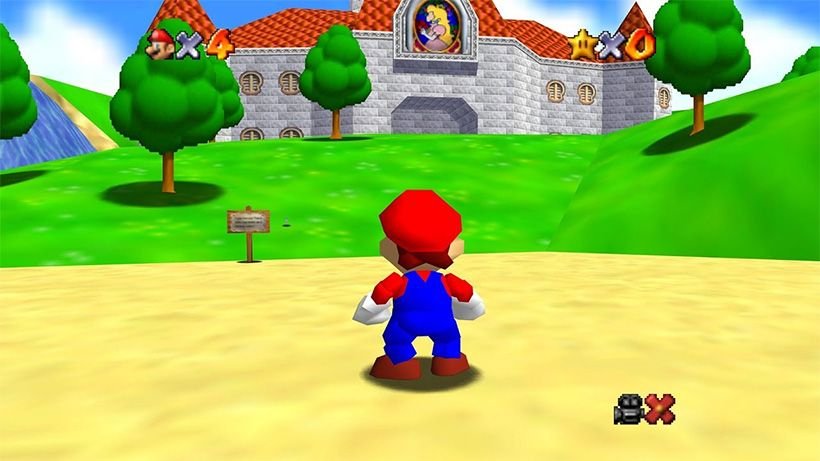
The project takes the Super Mario 64 decompiled source and adapts it for the Nintendo DS hardware profile, then layers in multiplayer as a first-class feature. What "multiplayer" means in this context varies by project — same-console local multiplayer, wireless DS-to-DS play, or netplay through a modern intermediate — and the exact scope depends on which port and which release you look at.
Hackaday's front page picked up the story this week, which is how the port broke out of the enthusiast circles it had been living in. Retro-gaming news lives mostly on niche forums and Discord servers, and it takes a mainstream retro-oriented outlet to elevate a project into the "we're going to remember this" category. See Hackaday's coverage for the up-to-date project details and the maintainer's own statements about scope.
The technical achievement is worth naming. The Nintendo DS ships with an ARM9 main CPU (~66 MHz) and 4 MB of RAM. The original Nintendo 64 that ran Super Mario 64 had a NEC VR4300 (~93 MHz) and 4–8 MB of RAM depending on the RAM Expansion Pak. On paper, the DS is behind in headline clock speed but even at 66 MHz. The port required substantial engineering to hit a playable frame rate and to fit rendering into the DS's dual-screen, sub-QVGA display budget while keeping enough headroom for multiplayer state synchronization. That work is not a weekend job; the SM64 community has been building the plumbing for years.
Why it matters: the SM64 decompilation scene and what fan ports keep alive
The Super Mario 64 decompilation project (published mid-2019) reconstructed the entire game's source code from a shipping N64 ROM. It changed what was possible for fan ports. Before the decomp, ports were emulation-based or hackish binary patches; after, contributors could recompile the game natively for whatever target they wanted — PC (with modern rendering pipelines), Mac, iOS, Android, PSP, Wii U, the Nintendo 64DD, and now the DS.
Each port is a proof of concept for something. The PC port demonstrated that decomp-based recompilation could match the original 100%. The 60fps PC hacks demonstrated the game was frame-rate-limited by original hardware, not by design. The mobile ports demonstrated that the decompiled codebase was portable enough to hit ARM64 with sensible modifications. And the DS port demonstrates that the codebase can be shrunk into a tight embedded budget without losing what makes the game fun.
Multiplayer is a particularly interesting addition because it invents a mode the original never had. Nintendo shipped SM64 as a strictly single-player experience — even the N64's four-controller port was never a factor. Fan ports have added split-screen, netplay, and now DS-to-DS multiplayer because the community treats the codebase as a platform for what the original could have been, not just a preservation exercise.
Zoom out: the Super Mario 64 modding community's productivity is one of the reasons the game keeps getting reviewed, streamed, speedrun, and covered in 2026. Retro is not just old — it is old and culturally alive. The two conditions have to hold together for a game to keep earning airtime, and the decomp is what makes SM64 an active platform rather than a dormant one.
The legality question, plainly
Fan ports built from decompiled source code sit in a legal gray area. The community's own consensus (roughly): reverse-engineering original code is generally protected, but distributing the game's assets — textures, models, music, level geometry — is not. Most fan ports handle this by shipping only the code and asking users to supply an original ROM they already own.
That is a workable model but it is also not a bright legal line. Nintendo has historically pursued DMCA takedowns and lawsuits against emulator and ROM distributors, and the SM64 decomp itself has been targeted at various points. This piece is not a download guide — treat the technical achievement as the story and consult the project's own statements before touching anything.
For readers who want to play era-appropriate Nintendo games legally, the plug-and-play licensed hardware options are the friction-free path. See below.
Play era-appropriate retro games legally: the plug-and-play options that still work
If this project sends you back to a nostalgia loop, three officially-licensed pieces of hardware make it painless:
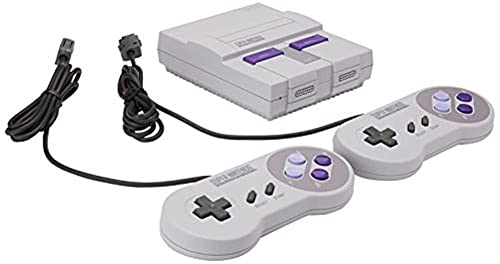
The Nintendo Super NES Classic Edition is the reference plug-and-play SNES box. It ships 21 licensed games (Super Mario World, F-Zero, Star Fox, Super Metroid, EarthBound, and the never-officially-released-outside-Japan Star Fox 2 among them), two included controllers, and HDMI-out to any modern TV. It is the simplest and most convincing way to relive the SNES catalog without wading into homebrew legality. Amazon inventory is spotty because Nintendo has not restocked in years; eBay is often the more reliable channel for these units, which is why the retro-hardware buy strip surfaces both options.
The Sega Genesis Mini is Sega's own answer to the same idea. 42 games including Sonic the Hedgehog, Streets of Rage 2, Gunstar Heroes, Castlevania: Bloodlines, and Shining Force, two 6-button controllers in the US SKU, HDMI-out, and an emulation stack that Sega actually got right. If your nostalgia lives on the Sega side of the era, this is the corresponding pick — same convenience factor, comparable price, and a genuinely well-curated library.
The Nintendo Switch Lite - Turquoise fits differently. It is not a retro console — it is a current-gen handheld — but it is worth naming here because the Nintendo Switch Online + Expansion Pack subscription includes NES, SNES, N64, Game Boy, and Sega Genesis catalogs playable on the Switch Lite. That means legitimate access to a rotating library of the same era games, without any homebrew involved. For a reader who wants official Nintendo retro on the go, the Switch Lite is the vehicle.
Common pitfalls when getting back into retro
Don't buy a "SNES Classic" that isn't Nintendo's. Third-party "retro consoles" flooded Amazon in the late 2010s carrying ROM libraries of hundreds of games. Most are Chinese-made HDMI boxes loaded with pirated ROMs. They are illegal, the emulation is inconsistent, and Amazon will occasionally delist them without notice. If it isn't marked as "Nintendo," it isn't the SNES Classic.
Watch for stripped units on eBay. The SNES Classic on eBay sometimes ships without both controllers or without the HDMI cable. Read the listing carefully, and prefer sellers with high feedback counts and photos of the actual unit.
Not every "mini" hardware release is worth it. The PlayStation Classic (2018) launched with well-documented emulation issues and a lackluster game selection. The C64 Mini has similar mixed reviews. The Sega Genesis Mini is the counter-example — Sega and M2 (the emulation studio) did their homework, and it shows.
Homebrew consoles change fast. A Nintendo DS port of SM64 with multiplayer is exciting right now; six months from now the release may be surpassed, taken down, or forked. If you want to follow the retro homebrew scene long-term, subscribe to a couple of retro-focused news sites and expect the specific projects you enjoy to churn.
What "old game, new port" tells you about hardware value
Every time a fan port succeeds on modern hardware, it makes an implicit statement: the software from that era is portable, small, and still fun. That has direct implications for what to buy in the retro-hardware market.
- Plug-and-play licensed hardware retains value. The Nintendo Super NES Classic and the Sega Genesis Mini hold price better than most consumer electronics because the demand is inelastic and supply is limited. They are worth buying at MSRP when you see them; the used market rarely undercuts new.
- Modern handhelds are the pragmatic path. The Nintendo Switch Lite plus a Nintendo Switch Online subscription gives you a rotating retro library legally, at a lower total cost than assembling the equivalent original hardware.
- Homebrew and decomp ports are the aesthetic path. The DS port of SM64 is not a replacement for playing SM64 the way it was originally shipped — it is an alternate reading of the same text. Both are worth doing if you care about the medium.
When NOT to buy retro hardware
Skip the plug-and-play boxes if any of the following are true:
- You already own an original console with working carts. Your CRT-connected SNES with the Super Mario World cart is the reference experience; a mini box will not upgrade that. Save the money.
- You have never played any of these games and don't have specific nostalgia. Retro hardware trades on emotional resonance more than gameplay excellence. If none of the SNES-era games are in your memory, buy a Switch Lite and try modern indie retro-styled games first.
- You want physical carts, not a bundled library. The Mini boxes ship licensed ROMs baked in; if you specifically want a working SNES + CRT + physical carts setup, that is a different (much larger) project and not what the Mini serves.
Bottom line
The SM64 DS port is a good excuse to look at what fan ports and decompilation projects have added to the retro-gaming ecosystem in 2026: not just preservation, but genuinely new modes of play on genuinely legacy hardware profiles. Follow the technical story, be cautious about downloads, and if the nostalgia hits, the licensed retro hardware is the friction-free way to actually replay the era. Primary coverage of this release lives at Hackaday; Nintendo's own retro subscription options are documented at nintendo.com; and Tom's Hardware covers the broader retro-homebrew scene.
Retro handhelds and the wider preservation picture
The Nintendo DS is a natural target for SM64 ports because it hits a sweet spot: enough horsepower to render a stripped-down 3D world, dual screens that enable UIs the N64 controller could never surface, and a wireless stack that supports local multiplayer without an internet connection. It is also cheap on the used market and widely emulated on modern hardware, which means a DS port has multiple avenues to actually reach players — original DS, DSi, 3DS (via backwards compatibility), and PC/mobile emulators.
That last option matters more than it sounds. Emulation on modern PCs and phones is fast, faithful, and legal so long as you supply your own ROM (or, in the case of a homebrew like this port, a project-authored binary). It means the port's practical audience is not just the shrinking population of people with working original DS hardware, but the much larger population running DeSmuME, melonDS, or a similar emulator on a laptop.
For readers who want a modern retro-first handheld, the Nintendo Switch Lite plus Nintendo Switch Online + Expansion Pack is the officially-supported path — you get access to the NES, SNES, N64, and Sega Genesis catalogs in a single subscription, playable on the go. It will not run this specific fan port, obviously, but it covers the "I want to play retro Nintendo games legally on a handheld" use case that a lot of readers arrive with.
A note on cataloging community retro projects
Retro-gaming community projects have a lifecycle problem: they surface, they get covered, they get taken down or renamed or forked, and six months later the article that pointed to a URL is broken. Specpicks tries to focus retro coverage on things that will still be relevant six months out — plug-and-play licensed hardware, foundational reissued games, and the durable story arcs of the decompilation scene rather than the individual downloads.
If you're building a personal retro-hardware collection, prioritize the licensed reissues (SNES Classic, Sega Genesis Mini, and the various Turbografx-16 / PC-Engine / Neo Geo minis) because they hold value and their libraries are curated. Homebrew ports are a great cultural experience, but treat them as a listening-to-a-live-album experience — great in the moment, not a substitute for the archived studio recording.