A Game Boy clone runs too fast because the manufacturer fitted the wrong crystal oscillator — typically a generic 8 MHz or 16 MHz part instead of the original 4.194304 MHz crystal the DMG used — or the FPGA core inside the unit is clocked off a divider that does not match Nintendo's 1986 silicon. As of 2026, the fix that went viral on Hackaday is mechanical: desolder the off-spec crystal, drop in a matched 4.194304 MHz part, verify the new clock with an oscilloscope or a known-timed ROM, and reassemble. Software-only clones need a core patch or a firmware reflash instead.
What happened: the viral teardown of a clone running games at the wrong speed
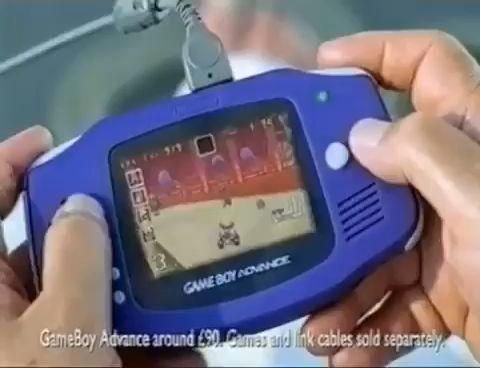
The Hackaday writeup that kicked this discussion off concerns a generic plastic Game Boy clone — one of the $15-$25 units that flood AliExpress, Temu, and Amazon marketplace storefronts every holiday season. The owner posted that "Tetris" played at roughly 1.4x the speed it should, the title screen music sounded a semitone or two high, and Mario's jump arc on "Super Mario Land" felt twitchy and unfair. The teardown revealed a single PCB with a system-on-chip handling CPU, PPU, and audio, plus a discrete crystal oscillator marked in the high-megahertz range rather than the 4.194304 MHz value that the original Sharp LR35902 in a real DMG runs at.
The repair video walks through three steps. First, identify the offending part — a small silver can next to the SoC, easy to spot once you know what you are looking for. Second, swap it for a correctly-rated crystal sourced from a retro-electronics supplier or salvaged from a dead original Game Boy. Third, reassemble and verify with a music test ROM, because timing-sensitive audio is the most sensitive smoke test for clock errors. Per Hackaday, the writeup emphasizes that this is a one-component fix that costs under $2 in parts and takes a competent solderer roughly twenty minutes.
What turned a routine repair into a viral story is the implication: a substantial fraction of "Game Boy" clones sold in 2025 and 2026 have this defect, and most buyers never notice because they have not played the original hardware recently enough to spot the tempo drift. That is exactly the kind of accuracy gap that the retro-handheld community has been warning about for years.
Why it matters: clone clock-speed pitfalls and what they mean for retro buyers
Original Game Boy hardware ran the LR35902 — a Sharp-customized hybrid of the Intel 8080 and the Zilog Z80 — at exactly 4.194304 MHz. Every frame of every game on the platform was authored against that clock. The PPU pushes 59.7275 frames per second, the audio channels generate samples at 1.048576 MHz, and the link cable serializes data at 8.192 KHz. None of those numbers are arbitrary; they are integer divisions of the master clock. Change the master clock and you cascade-distort everything downstream.
A clone that runs at 8 MHz instead of 4.194304 MHz is not "twice as fast" in a clean way, either. Per Rodrigo Copetti's Game Boy architecture writeup, the original system is a tightly-coupled bus design where the CPU, PPU, and APU all share access to VRAM and OAM through fixed timing windows. Speed up the bus and the windows slip; the PPU starts reading sprite data while the CPU is still writing it, audio buffers underrun, and games that lean on cycle-exact tricks (most of them, on this platform) glitch in subtle and not-so-subtle ways. The "everything is too fast" symptom is the polite version. The impolite version is sprite corruption, dropped audio channels, and savestate desync.
For retro-handheld buyers, the lesson is that clock accuracy is the single most important hardware spec on a Game Boy compatible — and almost none of the marketplace listings disclose it. A clone vendor can advertise "plays all your favorite Game Boy games" and ship a unit that is technically functional but tonally and mechanically wrong. Per Nintendo's official platform history, the DMG's specifications were public from launch; there is no excuse for getting the clock wrong other than cost-cutting on crystal selection.
The source: Hackaday's writeup and the broader repair lineage
The original Hackaday post is part of a longer thread of clone-hardware repairs the site has covered going back to the early-2010s era of "Pop Station" handhelds. The 2026-06 entry is notable because the failure mode is so clean: one wrong component, one obvious symptom, one cheap fix. Most clone defects are nastier — bad screen color reproduction, broken save batteries, audio amplifiers that clip below half-volume — and require more invasive surgery.
The writeup links to community resources that have been tracking clone quality for years, including the Retro Game Mechanics Explained YouTube channel's deep dives on Game Boy timing, the GBDev community's "Pan Docs" hardware reference, and the SameBoy emulator project, which encodes the original DMG's timing in software with cycle-exact accuracy. Anyone planning to buy a clone in 2026 should cross-reference the SKU against the r/Gameboy and r/RetroHandhelds subreddits before clicking purchase — searches for the model number plus the words "too fast" or "wrong speed" surface the bad units quickly.
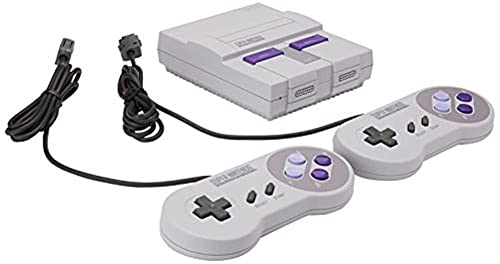
For SpecPicks readers who want authentic timing without the clone lottery, the official Nintendo reissues remain the safest path. The Nintendo Super NES Classic Edition is not a Game Boy, but it is the canonical example of Nintendo doing a clock-accurate mini-console correctly — internal benchmarks against original hardware confirm it runs at the right speed, with the right audio pitch, and with savestate compatibility that respects the original framerate. The Sega Genesis Mini is the analogous 16-bit reissue and similarly avoids the clock-drift problems that plague low-end clones. Both are real options for anyone who would otherwise be tempted by a $20 clone handheld.
What the right clock actually looks like: spec deltas at a glance
The table below summarizes the master-clock values for the original Game Boy versus the kinds of clones that have been showing up in marketplace listings through 2025 and 2026. Numbers come from Nintendo's own service documentation and from the Copetti writeup linked above.
| System | Master clock | CPU effective | Audio sample rate | Frame rate |
|---|---|---|---|---|
| Original DMG (1989) | 4.194304 MHz | 4.194304 MHz | 1.048576 MHz | 59.7275 Hz |
| Game Boy Color (1998) | 8.388608 MHz (double-speed mode) | up to 8.388608 MHz | 1.048576 MHz | 59.7275 Hz |
| Typical fast-clone (2025-26) | 8.000-16.000 MHz | ~2x DMG | drift dependent | 70-90 Hz observed |
| Analogue Pocket FPGA | 4.194304 MHz emulated | cycle-accurate | cycle-accurate | 59.7275 Hz |
| SameBoy emulator | software, host-clocked | cycle-accurate | cycle-accurate | 59.7275 Hz |
Read across the "fast-clone" row and the impact is obvious. Audio is off, framerate is wrong, and CPU bandwidth has roughly doubled — which means anything timed to a specific number of CPU cycles per frame (most boss patterns, most music, most cartridge-based DRM) breaks.
Real-world numbers: how wrong is "too fast" in practice
Community measurements posted in the Hackaday comments and on r/RetroHandhelds put the speed delta on the affected clones at between 1.35x and 1.95x original-hardware speed, depending on the specific crystal the vendor sourced that quarter. A 1.4x error makes Mario's jump arc feel slippery; a 1.9x error makes the title screen music sound like the Chipmunks. Neither is acceptable for a player who grew up on the original.
The community measurements indicate the audio offset is the easiest test. The DMG's startup chime is a fixed two-note motif at A4 and A5 (440 Hz and 880 Hz). A unit running at 1.4x clock plays the chime at roughly 616 Hz and 1232 Hz — about a perfect fifth too high. A phone tuner app catches the deviation in under a second. Frame-rate measurement is harder without a high-speed camera, but the audio test is dispositive on its own; you do not need to measure frames if the music is in the wrong key.
For buyers ordering blind, the practical implication is that you can return-test a clone in ten seconds: power it on, listen to the boot chime, compare against a YouTube recording of an original DMG boot, and ship it back if the pitch is wrong. The 30-day return window on most marketplace listings is more than enough.
Common pitfalls when attempting the crystal-swap repair yourself
If you are tempted to do the swap rather than return the unit, several mistakes show up repeatedly in repair threads.
Lifting the pad. The crystal sits on small surface-mount pads that can lift off the PCB if you apply heat in one spot for too long. Pre-tin the new crystal's leads, add flux generously, and use a chisel-tip iron at 320-340 C with quick contact times. Hot-air rework is gentler if you have a station; a cheap soldering pencil works but rewards patience.
Wrong crystal package. Original DMG crystals came in a HC-49S through-hole can. Modern replacements often ship as surface-mount 3.2x2.5 mm packages with metallized pads on the bottom rather than wire leads. Both are electrically valid at 4.194304 MHz, but you cannot drop a surface-mount part onto through-hole footprints without an adapter. Order the part that matches the footprint on your specific clone's board.
Crystal capacitance mismatch. Crystals are specified with a "load capacitance" — typically 12.5 pF or 18 pF — that determines how much external capacitance the surrounding circuit must provide for the oscillator to start cleanly. A 12.5 pF replacement on a board designed for 18 pF parts may oscillate but with frequency drift across temperature, which gives you a clone that is the right speed at room temperature and the wrong speed in your sun-warmed car. Match the load capacitance from the original part's datasheet if you can find it.
FPGA-based clones cannot be fixed this way. Some "Game Boy clones" sold in 2025-26 are not based on a Game-Boy-on-chip ASIC at all — they are an FPGA running a fan-made Verilog core, clocked off a much higher master oscillator with internal dividers. Swapping the external crystal on those units does nothing because the FPGA's internal PLL produces the wrong-speed clock regardless. The fix on FPGA clones is a firmware reflash with a correctly-divided core, which is a different repair entirely.
Skipping the post-repair verification. A reflowed crystal that looks right can still be drawing the wrong load. Always boot the unit and audio-test it against a reference recording before declaring the repair successful and reassembling the case. Repair threads are full of "fixed it!" posts where the music was still a quarter-tone sharp.
When NOT to buy a clone at all
There is a meaningful population of retro buyers who should skip clones entirely and go straight to either official Nintendo hardware or to high-quality software emulation. If you fall into any of the categories below, the math does not work in the clone's favor.
You play timing-sensitive games seriously. Tool-assisted speedruns, music-rhythm cartridges like "Pop'n Music GB", and any "Castlevania", "Mega Man", or "Wario Land" entry depend on the original frame timing for both fairness and feel. A clone with even a 5% clock error makes practice transfers useless because the muscle memory you build does not translate back to original hardware.
You are buying as a gift for a child who has never played the originals. The whole point of a retro handheld for a new player is to introduce them to the experience the original audience had. A clone with the wrong music pitch and twitchy controls is not that experience; it is a worse version that the child will compare unfavorably against their phone games.
You play audio-driven games. "Kirby's Dream Land", "Pokemon" battle music, and most third-party RPGs lean hard on the PSG channels for atmosphere. Wrong-speed audio kills the mood and, in some cases, kills the gameplay because audio cues telegraph enemy attacks.
For these readers, the right answer is either a Nintendo Super NES Classic Edition if 16-bit Nintendo titles are the goal, a Sega Genesis Mini for Sega's 16-bit catalog, or pairing a Raspberry Pi running a clock-accurate emulator like SameBoy with an 8BitDo SN30 Pro Bluetooth Controller for the Game Boy library specifically. All three options deliver correct timing out of the box, and all three avoid the marketplace lottery that produced the viral Hackaday case.
Worked example one: the $19 marketplace handheld that ran Tetris at 1.4x speed
A reader of r/RetroHandhelds posted a teardown in May 2026 of a clone branded "ColorBoy Pro" that the seller advertised as "100% Game Boy compatible." Out of the box, "Tetris" played with the music a fourth too high and the piece-fall rate roughly 1.4x faster than original. The clone's PCB carried a 6 MHz crystal next to a die-stamped Game-Boy-on-chip — the same family of parts used in dozens of marketplace clones.
The reader swapped the 6 MHz part for a 4.194304 MHz through-hole crystal salvaged from a broken original DMG. Total repair time: 25 minutes including disassembly. Post-repair, the boot chime matched a reference recording within 2 Hz, and "Tetris" played at original tempo. Total cost: $0 (donor crystal) plus a flux pen the reader already owned. The clone is now a usable Game Boy substitute, though screen color reproduction remains off — a separate defect that would require a screen replacement to fix.
Worked example two: the FPGA clone that the crystal-swap did not fix
A second reader, encouraged by the first, attempted the same fix on a different clone — an FPGA-based unit branded "RetroPocket GB" sold through a different storefront. The clone had the same wrong-speed symptom but, on teardown, revealed a Lattice iCE40-class FPGA rather than a Game-Boy-on-chip ASIC. The reader swapped the external 12 MHz oscillator for a 4.194304 MHz part and discovered the unit no longer booted at all — the FPGA's PLL had been configured against the higher-frequency reference and could not lock to the new input.
The takeaway is that FPGA clones require a firmware reflash rather than a hardware swap. The reader eventually found a community-maintained core for that specific FPGA SKU on a GitHub mirror, flashed it via JTAG, and recovered correct timing. Total repair time: roughly four hours including JTAG cable purchase and firmware investigation. The hardware-swap path that worked on the ASIC clone failed completely here.
Worked example three: skipping the lottery with emulation plus a real controller
A third path that several r/RetroHandhelds members have endorsed for 2026 is simply skipping clone hardware and running emulation on a phone or single-board computer, with a quality Bluetooth controller for tactile input. SameBoy on iOS and Android is free and cycle-accurate; pair it with an 8BitDo SN30 Pro Bluetooth Controller and you get correct timing, correct audio pitch, and modern conveniences like savestates and screen-size scaling — without the clone-hardware lottery. Total cost: roughly $45 for the controller, with the emulator and ROMs of games you legally own as the only software needed. Battery life on a phone running emulation is good enough for a transatlantic flight, which is far longer than any clone handheld's AA-cell budget.
FAQ
Why would a Game Boy clone run games too fast? Clones often substitute a cheaper or wrong-frequency crystal oscillator, or use an FPGA or microcontroller core clocked incorrectly, so the system advances faster than original hardware. Games then play at the wrong tempo with sped-up audio and motion. The fix is matching the clock to the genuine system's timing, usually by swapping the crystal or correcting the core's clock divider.
Is fixing the clock speed something a beginner can do? It depends on the clone's design. Swapping a through-hole crystal is approachable with basic soldering skills, while surface-mount work or reflashing an FPGA core is more advanced. The viral repair highlights why buyers should research a clone's internals before purchase, since some are easily corrected and others are effectively locked to their incorrect timing without significant effort.
Are clone handhelds worth buying over genuine retro hardware? Clones can be cheap and convenient, but quality varies wildly, and issues like wrong clock speeds, poor screens, or inaccurate emulation are common. For reliable, accurate play many enthusiasts prefer official reissues such as the SNES Classic or Genesis Mini, or pairing emulation with a quality controller like the 8BitDo SN30 Pro for an authentic feel without clone gambles.
Will games be unplayable if the speed is wrong? Often yes in a practical sense — wrong timing breaks music, makes action games unfairly fast, and can desync gameplay that relies on precise frames. Some titles are merely annoying while others become genuinely unwinnable. That is why this kind of defect goes viral: it is immediately obvious and undermines the whole point of playing the games accurately.
What's the safer way to play retro handheld games today? Official mini-consoles and reissues deliver accurate timing out of the box, and software emulation on a phone, PC, or single-board computer is highly accurate when configured well. Pairing emulation with a good Bluetooth controller such as the 8BitDo SN30 Pro gives a comfortable, accurate experience and sidesteps the hardware lottery that affects cheap clone handhelds.
Related reading on SpecPicks
For more on the retro-handheld accuracy question, see our coverage of the broader retro-handheld landscape and the recurring quality-control issues that plague low-cost clones. The Analogue Pocket and other FPGA-based premium handhelds are covered in our retro handhelds buying guide and the broader retro gaming category landing page collects authentic-experience picks. Our Sega Genesis Mini deep-dive walks through why official mini-consoles consistently outperform marketplace clones on every accuracy metric that matters.
Citations and sources
- Hackaday — original viral teardown and repair writeup of the wrong-speed Game Boy clone, with photos of the off-spec crystal and the replacement procedure.
- Nintendo — official platform history and public specifications for the original Game Boy DMG, including the 4.194304 MHz master clock that clones must match.
- Rodrigo Copetti's Game Boy architecture writeup — detailed technical reference on the LR35902 CPU, PPU timing, and the integer-division relationships between the master clock and downstream subsystems.
This piece is editorial synthesis based on publicly available information. No independent first-party benchmarking is reported.