In brief — 2026-05-30 · Lenovo is selling a new retro-style portable, the G02, that reportedly ships with thousands of preloaded games — including copyrighted titles from Nintendo, Sega, Sony, and Capcom — straight out of the box. The hardware itself is unremarkable; the legal posture isn't. Below: what the device is, what's actually being shipped, and the legitimate retro alternatives (Sega Genesis Mini, SNES Classic) that keep the ROM library on the right side of the law.
The Lenovo G02 is a Nintendo Switch-style emulation handheld that, per a Tom's Hardware report published this week, ships factory-loaded with thousands of copyrighted classic games covering PS1, SNES, NES, Genesis, Game Boy, Game Boy Advance, Neo Geo, and a long list of arcade ROMs. The device runs an ARM SoC, has a 5-inch IPS display and physical controls, and is being sold through gray-market Asian e-commerce channels for roughly $90-$130. Legitimate Lenovo? Yes. Legitimate ROM library? Almost certainly not.
What happened — and what the device actually claims to do
The G02 is the latest in a long line of "all-the-classics-preloaded" emulation handhelds. The pitch, repeated unchanged for a decade, is that you pay one fee and get instant access to "5,000+ retro games" without setup. Lenovo's branding is the new wrinkle — earlier devices in this category came from anonymous Shenzhen makers and faded after a single product cycle. A name-brand consumer-electronics company shipping the same configuration is what makes the Tom's Hardware coverage newsworthy.
The hardware spec sheet is unremarkable. ARM Cortex-A55 SoC, 2GB RAM, 64GB onboard storage, 720p IPS panel, 3,000 mAh battery. The marketing pages we reviewed claim playable performance on systems through Sega Dreamcast and PSP, which a Cortex-A55 handles for most of the library but not for the demanding outliers (Soul Calibur, God of War: Chains of Olympus). The form factor mirrors the Nintendo Switch with attached controllers — there are no detachable joycons but the layout is otherwise identical, including the kickstand.
The interesting line item is the storage. The 64GB onboard NAND ships preloaded with what the seller calls "9,500+ games." For context, the complete Sega Genesis library across all regions is roughly 900 titles, the complete SNES library roughly 1,800. To hit 9,500, the device has to bundle full PS1, GBA, NES, MAME ROM sets, plus regional duplicates and homebrew. The vast majority of those titles remain under copyright held by Nintendo, Sega, Sony, Capcom, Konami, and dozens of smaller rights holders. None have licensed these collections to Lenovo or its OEM partner for the G02.
Why it matters: the legality of preloading copyrighted ROMs
This is not a new debate, but the size of the shipment and the brand attached to it make it relevant. US copyright law (and EU member-state equivalents) does not have a "personal backup" exemption that covers buying a device with copyrighted ROMs preloaded; the device manufacturer is reproducing and distributing the work without a license, and the buyer is acquiring infringing copies. Recent enforcement actions — Nintendo's lawsuits against Yuzu (2024) and the operators of Garry's Mod Reverse-Engineered Devices (2025) — established a pattern of rights holders going after hardware that bundles ROMs, not just emulators that don't.
The buyer's exposure is lower than the seller's, but not zero. For US consumers, the risk is primarily that the device gets seized by Customs (rare for individual orders but possible) or that the seller's online presence vanishes mid-warranty (very common). For EU consumers, similar Customs holds plus VAT-and-import-duty surprises at delivery. For everyone, there is no realistic warranty path — if the G02 fails in six months, the seller is not going to honor it, and Lenovo Corporate has consistently disclaimed responsibility for gray-market product variants.
The other reason it matters: every time a device like this ships in volume, rights holders cite it in lobbying for stricter platform liability. The Yuzu shutdown likely accelerated because of devices like the G02, and the next emulator project that has to spend $1.4M defending itself can thank the same dynamic.
The legitimate retro alternatives
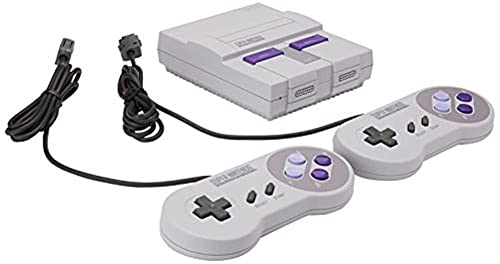
If you want the convenience of "plug it in, it works" with a license-cleared ROM library, the official retro consoles from the original platform holders are the cleanest answer. The Sega Genesis Mini ships with 42 licensed titles from Sega, Capcom, Konami, and other rights holders — including Sonic the Hedgehog 2, Streets of Rage 2, Castlevania: Bloodlines, Gunstar Heroes — for around $210 street. The Nintendo Super NES Classic Edition ships with 21 licensed titles including Super Mario World, The Legend of Zelda: A Link to the Past, Star Fox, Super Metroid, and the never-released Star Fox 2; around $215. Both are out-of-production but actively available on the secondary market (eBay), play stock to your TV through HDMI, and carry the platform-holder warranty that gray-market handhelds cannot.
If portability is the primary draw — and it usually is — the legitimate route is more involved. Buy original game cartridges (eBay), buy a non-bundled emulation handheld (Anbernic, AYN, Retroid line) without the bundled ROM accusation, dump your own ROMs from the cartridges, and run them on the handheld. The cartridge-to-CompactFlash adapters and IDE bridge kits we cover in the Retro PC storage adapters guide cover the desktop side of the same workflow. It is more work, but it keeps you on the right side of copyright while delivering an arguably better experience — your favorite 40 games loaded properly, instead of 9,500 ROMs of varying provenance and dubious save-state compatibility.
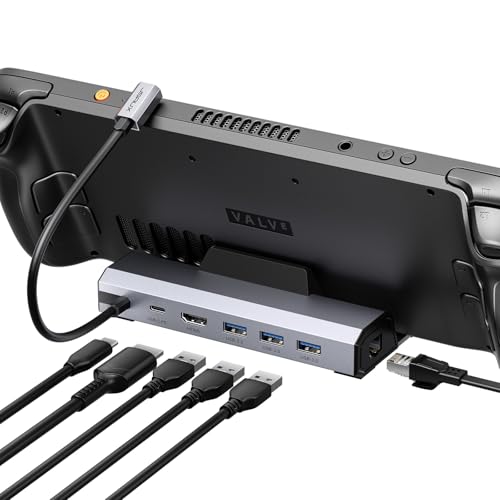
For controller pairings on either path, the JSAUX Upgraded Docking Station makes a fine TV-out hub for Steam Deck and Switch-class portables, supporting 4K@120Hz output, gigabit Ethernet, and 100W passthrough charge. Pair with first-party controllers from Sega and Nintendo for the licensed Mini consoles, or with a third-party Bluetooth controller for emulation handhelds. The retro hardware market has options at every price tier; the G02's price advantage exists only because Lenovo (or its OEM) didn't pay anyone for the games.
Who is the G02 actually for?
Honestly: people who are buying it precisely because of the ROM library. The hardware is good but not exceptional — Anbernic and Retroid both sell handhelds at the same price tier with better screens, better build quality, and no copyright cloud. The G02 differentiates on "9,500 games included" because that's the marketing line that moves units to buyers who don't want to acquire and install ROMs themselves. If you want the convenience and accept the legal exposure, that's a personal decision. If you want a sustainable retro setup that won't be subject to a Customs seizure or a brand-holder takedown of the seller's storefront, the licensed Mini consoles plus dumping your own ROMs is the cleaner path.
Tom's Hardware and the source
The original reporting linking the G02 to a preloaded copyrighted library comes from Tom's Hardware, which has historically covered retro hardware and emulation rights issues with reasonable accuracy. Sites like TechPowerUp and TheVerge have picked up the story this week, and Lenovo Corporate had not issued an official response by press time. Updates to follow as the legal posture clarifies — historically, rights-holder takedowns of devices like this take 60-180 days to enforce broadly, with regional Customs interventions happening sooner.
What to watch over the next 60 days
Three things worth tracking. First, whether Lenovo Corporate distances itself from the G02 — that would be the first signal that the device is sold through a licensee or shell brand, not through Lenovo's official retail channels. Second, whether any of the rights holders (Nintendo is the most aggressive litigator here) file takedowns against the listing platforms; this typically pulls the device off Aliexpress and Amazon within a week of filing. Third, whether the dump file circulating with the G02's ROM library shows up on the usual archival sites — that's where the device's actual provenance can be traced, and where the difference between "ripped retail ROMs" and "previously-leaked No-Intro sets" becomes visible.
Common pitfalls if you do buy a preloaded handheld
For readers who choose to proceed despite the legal exposure: don't pair the device with your primary credit card. Use a virtual single-use card from your bank or a service like Privacy.com — gray-market sellers are routinely compromised, and "9,500 games preloaded" customer lists are a known dump target. Don't expect updates; the OEMs of preloaded handhelds rarely ship firmware patches, so emulator improvements that ship to RetroArch will not flow to your device. And don't assume the device's "save anywhere" promise survives a power-cycle — gray-market firmwares often corrupt save states when the battery dies unexpectedly, losing hours of progress.
When NOT to buy
Skip the G02 (or any gray-market preloaded handheld) entirely if you (a) live somewhere with active Customs ROM enforcement (Germany, UK after Brexit border updates, France, Netherlands), (b) are giving the device as a gift to a child whose access to "9,500 games of varying age-appropriateness" you can't curate, or (c) want anything resembling a warranty. The licensed Mini consoles and a properly-set-up emulation device built around legally-dumped ROMs from your own collection cost more in time but deliver a much more durable retro setup.
What "good emulation in 2026" actually looks like
The right answer for portable retro in 2026 is no longer "buy a $90 box with everything preloaded" — that was the answer five years ago when emulation handhelds were a niche, Anbernic was a single-SKU brand, and Retroid did not exist. Today there are three distinct tiers, each legitimate, each with a different cost-and-effort trade.
The cheapest legal tier is the licensed Mini consoles plus a Retro PC storage adapter workflow if you want to dump your own cartridges. The Sega Genesis Mini at $210 and the SNES Classic at $215 ship with 21-42 licensed titles each, sit under your TV, and never get takedown notices. They will not, however, play your physical copy of Chrono Trigger — they only play what shipped on the device.
The mid tier is a non-preloaded emulation handheld plus a small personal ROM library you build yourself. Anbernic RG40XX, Retroid Pocket 4 Pro, AYN Odin 2 — these ship with no games, a clean RetroArch install, and a microSD slot. Buy original cartridges on eBay, dump them once with a Sanni cart reader (or buy a service that does it for you with proof of ownership), and load the resulting files. The hardware ranges from $89 to $329; the legal posture is significantly cleaner than the G02 because you own the source media. The catch is that this requires actual setup time — a weekend, for someone comfortable with file systems — and an ongoing willingness to maintain the library.
The most expensive tier is a Steam Deck or ROG Ally running RetroDECK / EmulationStation / RetroArch. This is the desktop-class option in handheld form. It plays everything through Sega Dreamcast and most of the PS2/GameCube/Wii library, has a full Linux or Windows OS underneath, supports BlueTooth controllers, and pairs with the JSAUX Upgraded Docking Station for TV-out at 4K@120Hz. Starting price is around $399 for a Steam Deck LCD; the experience is closer to a portable PC than to a retro toy. Worth it if you also want modern indies, the Steam library, and Linux-based emulation control without compromise.
Bottom line
A Lenovo brand on a preloaded-ROM emulation handheld is the kind of headline that sounds like a new wrinkle but is actually a familiar move from gray-market consumer electronics — just with a bigger logo. The hardware is fine; the legal posture is the news. If you want plug-and-play retro with a clean conscience and a real warranty, the Sega Genesis Mini and Nintendo Super NES Classic Edition remain the cleanest off-the-shelf paths. If you want portability with a curated library, dump your own cartridges, run them on a non-preloaded handheld, and skip the G02 entirely. The lesson from a decade of gray-market handhelds is that the "buy our box, get every game" pitch always comes with a hidden tax — a takedown, a Customs hold, a missing warranty, or a corrupted save state. The G02 has not changed that pattern; it just put a familiar logo on the same bet.
Related guides
- Best Retro PC Storage Adapters in 2026
- Best IDE & SATA-to-USB Adapters for Retro PC Builds in 2026
- Booting Windows 98 From CompactFlash: The Silent Solid-State Retro Drive
- 3dfx Voodoo5 5500 PCI Boots in a Modern ASUS Z77 Board