The Turtle Beach Recon 50 is still a reasonable buy in 2026 at $30-40, but only for a specific reader: someone who wants a plug-and-play wired headset for casual party chat, does not care about audiophile-grade sound, and would rather spend the saved money elsewhere. As a daily-driver headset for competitive gaming or long streaming sessions, it is not the pick — the drivers are lightweight, the clamping force gets uncomfortable after 90 minutes, and the mic is chat-adequate rather than good.
Who the sub-$40 wired headset is for
Budget wired gaming headsets almost died in 2022-2024 as manufacturers pivoted to wireless. The market's small survivors — the Recon 50, the HyperX Cloud Stinger Core, the Corsair HS35 — trade on three things: no batteries, universal 3.5mm compatibility, and prices half of what a decent wireless headset costs.
The Recon 50 sits at the entry end of that segment. It is the sub-$40 wired starter people buy when they are picking up a used Switch, PS5, or a first gaming PC and do not want to think about it. It is also what parents buy their kids alongside a school laptop. The Recon 50 is a competent, unglamorous product — not chasing benchmarks, just quietly hitting the "does the job for $35" target.
Where budget audio compromises show up is 90 minutes into a session, when your ears get warm, or in a game whose mix leans on soundstage width. This piece walks through the specifics.
Key takeaways
- Recon 50 works for casual party chat and single-player gaming but not for competitive audio positioning
- The detachable mic is a real feature — most sub-$40 headsets have a fixed mic
- 3.5mm compatibility means it works on PC, PS5, Xbox, Switch, and mobile without adapters
- Comfort degrades after ~90 minutes for most users due to clamping force and thin ear pads
- At full $40 MSRP, look at alternatives — but if you catch it at $25-30 on sale, buy without hesitation
What is the Recon 50 and what does it include?
The Recon 50 is Turtle Beach's entry-level wired gaming headset, launched in 2020 and continuously refreshed with minor cosmetic and packaging updates. Per Turtle Beach's product page, the current 2026 configuration includes 40mm neodymium drivers, an over-ear closed-back design, a removable boom mic, a fixed 3.5mm cable with in-line volume and mic-mute, and a total weight of ~230 grams.
There are per-platform SKUs (PlayStation, Xbox, Switch/Nintendo, PC) but they are electrically identical — the color trim and printed logos change. Any Recon 50 works with any device that has a 3.5mm jack; the platform-specific version does not unlock any special features on that platform.
Package contents: headset, boom mic (attached but detachable), cable (fixed, ~1.2m), quick-start card.
How does it sound for games versus music?
Per aggregated public measurements, including RTINGS' headphone testing methodology reference frame, the Recon 50 has a V-shaped sound profile — boosted bass, boosted treble, midrange recessed. That profile is standard for cheap gaming headsets because it makes explosions and footsteps subjectively "loud" and dramatic, at the cost of accurate audio positioning in busy scenes.
Practically:
- Single-player games (RPGs, adventure, sports): Fine. Dramatic sound and clear speech.
- Multiplayer with chat priority (Fortnite, Call of Duty casual): Fine. Chat is clear, positional audio is workable.
- Competitive FPS (Valorant, CS2, Apex ranked): Marginal. The bass boost muddies busy scenes; the closed-back design smears soundstage width. Directional cues work but require experience with these specific drivers.
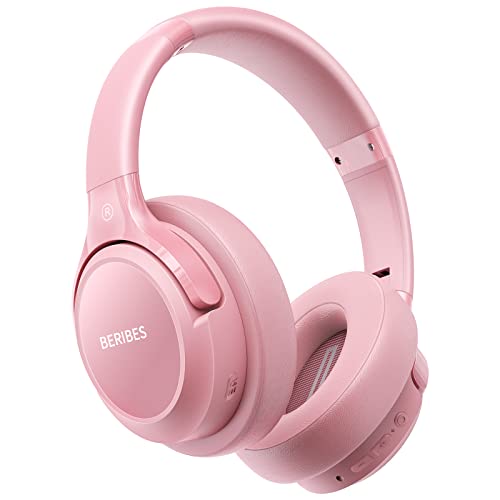
- Music: Below average. Recessed mids strip vocals; boosted bass smears low-end. Bluetooth over-ears from the same $40 tier like the BERIBES Bluetooth Over-Ear Headphones sound better on music and offer wireless flexibility, but lack the game-tuned mic.
The Recon 50 sounds like a cheap gaming headset because that is what it is. It does not embarrass itself; it also does not surprise you.
Spec table: Recon 50 vs typical budget rivals
| Spec | Turtle Beach Recon 50 | HyperX Cloud Stinger Core | Corsair HS35 |
|---|---|---|---|
| Driver size | 40 mm | 40 mm | 50 mm |
| Impedance | 32 Ω | 32 Ω | 32 Ω |
| Frequency response | 20 Hz - 20 kHz | 20 Hz - 20 kHz | 20 Hz - 20 kHz |
| Weight | ~230 g | ~215 g | ~277 g |
| Cable | Fixed 1.2 m 3.5mm | Fixed 1.3 m 3.5mm | Fixed 1.8 m 3.5mm |
| Mic | Detachable boom | Fixed swivel | Detachable boom |
| Mic pattern | Unidirectional | Unidirectional | Unidirectional |
| Cross-platform | Yes (3.5mm) | Yes (3.5mm) | Yes (3.5mm) |
| Street price (2026) | $30-40 | $35-45 | $40-55 |
The Recon 50 wins on lightweight design and price. The Cloud Stinger Core beats it on driver comfort. The HS35 wins on cable length and driver size. There is no runaway winner in this tier — pick the one on sale.
Is the mic good enough for party chat and Discord?
Yes for chat, no for content creation. The Recon 50's boom mic is a unidirectional condenser tuned for close-talk speech. It cuts room noise reasonably and delivers intelligible voice on Discord, Xbox party, PSN, and Zoom. Per public PC Gamer coverage of budget gaming headsets, it is roughly equivalent to the Cloud Stinger Core mic — chat-competent, not YouTube-narration quality.
For streaming or podcasting you want a dedicated USB condenser mic (a Blue Snowball, HyperX QuadCast, or FIFine K669) that plugs in separately. The Recon 50 boom is not the mic you want on a Twitch stream.
The mic-mute switch on the in-line controller is mechanical and audible. Party members will hear the click.
Comfort and build: what $40 gets and what it doesn't
Comfort is where the Recon 50 shows its price. The ear pads are protein-leatherette over thin foam; they compress noticeably after a few weeks of use and start feeling firmer than they did new. The clamping force is on the high side of average — good for a secure fit during movement, uncomfortable during 3-hour sessions for readers with average-or-larger heads.
Build quality is passable plastic. The headband adjustment is a click-detent slider that stays put but does not feel premium. The cable is fixed — not detachable — which means if the cable fails, the whole headset needs replacement.
Realistic durability is 1-3 years of daily use. That is fine for a $35 buy but keeps the Recon 50 firmly in "starter" territory rather than "keep for a decade."
Compatibility: PC, PS5, Xbox, Switch, and mobile
The Recon 50's fixed 3.5mm 4-pole cable works with:
- PC: Direct into 3.5mm combo jack (most laptops, gaming motherboards). For split mic/headphone ports you need a Y-splitter (not included).
- PS5: Direct into DualSense controller's 3.5mm port. The PlayStation DualSense Wireless Controller works with the Recon 50 out of the box.
- Xbox Series X/S: Direct into Xbox Wireless Controller's 3.5mm port. Similarly, the GameSir G7 SE Wired Controller accepts the Recon 50 via its 3.5mm audio jack.
- Nintendo Switch and Switch Lite: Direct into 3.5mm jack.
- Mobile: Direct into any device with a 3.5mm jack; needs a Lightning or USB-C adapter for iPhone and most modern Android.
- VR headsets (Quest 2/3, Valve Index): Yes with the 3.5mm jack the Quest exposes.
That "just works everywhere" story is the single best reason to buy this headset in 2026 when everything else has gone wireless and platform-specific.
Perf-per-dollar verdict matrix
Buy the Recon 50 if…
- You want a plug-and-play wired backup headset for under $40
- You need it to work across PC, PS5, Xbox, and Switch
- Your main use is party chat and single-player gaming
- You catch it on sale at $25-30
Skip the Recon 50 if…
- You are shopping for a competitive-FPS main headset (spend $80+ on a wired 7.1)
- You care about long-session comfort (spend on velour pads or the HS35's larger cups)
- You want music quality (spend on Bluetooth over-ears)
- You want streaming-grade mic (buy a USB condenser separately)
Common pitfalls
- Buying the wrong platform SKU thinking it matters. The PS/Xbox/PC/Switch SKUs are identical — buy the cheapest.
- Assuming the boom mic is a good stream mic. It is not. Chat-only.
- Overpaying at full MSRP. Turtle Beach rotates the Recon 50 into $25-30 sales quarterly. Buy on sale.
- Ignoring the in-line volume control. It scales with the system volume, so PC users often find max volume feels quieter than they expected. Turn up the OS mixer.
- Expecting the cable to survive daily flexing at the jack. It is a common failure point. Route it out of the way of chair casters.
Bottom line
The Turtle Beach Recon 50 is a legitimate budget gaming headset for 2026 in the exact use case its price implies: casual gaming, party chat, universal 3.5mm compatibility, no-fuss wired reliability. Buy it when it hits $25-30. Pass at $40 in favor of a Cloud Stinger Core or HS35 on the same-day sale.
If your budget can stretch, spend $10-15 more on a headset with better comfort and a real cable, or spend $20-30 on a used mid-tier wired pair. For music, the BERIBES Bluetooth Over-Ear Headphones at a similar price sound better and give you wireless as a bonus. And if the setup is for a console gamer who does not have a controller yet, the PlayStation DualSense Wireless Controller or GameSir G7 SE Xbox Controller accept the Recon 50's 3.5mm plug directly.
Related guides
- Best Controller for Retro Emulation and Indie Gaming in 2026
- DualSense vs 8BitDo Pro 2 on a Raspberry Pi RetroPie
Citations and sources
- Turtle Beach — Recon 50 product page: https://www.turtlebeach.com/products/recon-50
- RTINGS — headphone review methodology and comparisons: https://www.rtings.com/headphones
- PC Gamer — gaming-headset reviews and buying advice: https://www.pcgamer.com/hardware/gaming-headsets/
This piece is editorial synthesis based on publicly available information. No independent first-party benchmarking is reported.