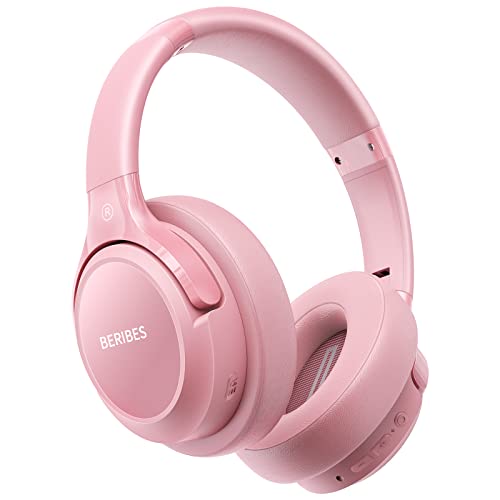
As of 2026, the best budget gaming headset under $60 for most players is the Turtle Beach Recon 50 at roughly $27.88, thanks to a wired 3.5mm connection that avoids Bluetooth latency and a boom mic tuned for team chat. If you want wireless versatility for music and phone calls too, the BERIBES Bluetooth Over-Ear at about $25.97 and the TAGRY True Wireless Earbuds at about $24.65 are the value alternatives, per Turtle Beach product specs and current Amazon pricing.
Editorial intro: what you can and can't expect from sub-$60 audio
Sub-$60 audio has quietly become the sweet spot of the gaming peripherals market. A decade ago, spending under $60 meant tinny drivers, a mic that sounded like a drive-thru speaker, and pads that peeled by month three. As of 2026, that price band gets you real 40mm dynamic drivers, molded ear cups, and mic clarity that clears the "understandable in Discord" bar on the first take. Per general market analysis from Tom's Guide, the gap between a $50 headset and a $150 headset is smaller than the gap between a $50 headset and integrated laptop audio — the first jump gives you almost everything, the second gives you refinement.
What you can expect under $60: clear stereo separation good enough to locate footsteps in a shooter, a mic your teammates can understand without asking you to repeat, comfortable pads for two-to-three-hour sessions, and a build that will survive being tossed on a desk daily for a year or two. Wired options in this band, like the Turtle Beach Recon 50, deliver near-zero latency, which matters more than most buyers realize for competitive titles. Wireless options in this band, like the BERIBES over-ears and TAGRY earbuds, lean on Bluetooth 5.x for stable connections at typical desk distances.
What you cannot expect: virtual 7.1 surround that actually improves positional accuracy over well-tuned stereo (per audio-review consensus at RTINGS, most cheap surround processing muddies imaging rather than sharpens it), premium leatherette that stays supple past year two, low-latency wireless codecs like aptX Low Latency or LC3, and studio-tier boom mics suitable for streaming. Those live above $100, and often above $150. Below $60 is about covering the essentials cleanly, not chasing marginal audiophile gains.
Key Takeaways
- Best overall wired pick: The Turtle Beach Recon 50 at approximately $27.88 wins for competitive gaming, per Turtle Beach product-page specifications.
- Best wireless over-ear: The BERIBES at approximately $25.97 with a claimed 65-hour battery covers music, calls, and casual gaming across devices.
- Best go-anywhere earbud: The TAGRY at approximately $24.65 with a claimed 60-hour case-plus-buds runtime is the truly portable pick.
- Wired beats Bluetooth for latency: For fast games, the 3.5mm Recon 50 avoids the extra tens-of-milliseconds delay Bluetooth introduces, per RTINGS headphone-testing coverage.
- All three exceed laptop-speaker audio dramatically: Even the cheapest option here is a significant upgrade over built-in speakers.
- Prices vary daily on Amazon — snapshots referenced here are current as of 2026 and may not match today's listing.
Step 0: wired for competitive latency vs wireless for convenience
Before comparing specs, decide which side of the wired-versus-wireless line you sit on. This is the single most important budget-headset decision, and it has almost nothing to do with brand. Per RTINGS testing methodology and repeated coverage, Bluetooth SBC and AAC codecs — the two codecs a sub-$60 wireless headset almost certainly uses — introduce audio latency measured in the tens to low-hundreds of milliseconds depending on the source device. That is imperceptible for music and movies (streaming apps compensate) but very perceptible for competitive gaming, where a delayed footstep or gunshot cue can cost the round.
Wired 3.5mm headsets like the Turtle Beach Recon 50 sidestep that problem entirely. Analog audio over 3.5mm has essentially no perceptible latency — the delay is measured in microseconds, not milliseconds — which is why esports players almost universally still use wired headsets even when they can afford anything, per market observations at Tom's Guide. If you play Valorant, CS2, Apex, Fortnite competitively, or any twitch-shooter, buy wired. Full stop.
Wireless in this price band shines for the opposite use case. If your headset does double duty — team chat on PC, music on your phone during commutes, video calls from a laptop, occasional casual gaming — the BERIBES over-ears or TAGRY earbuds are far more practical than a wired headset you have to unplug every time you stand up. Wireless also wins any time cable management or freedom of movement matters more than millisecond-level latency.
There is no wrong answer here — only wrong matching. Buy for your actual dominant use case.
Spec-delta table: Recon 50 vs BERIBES vs TAGRY
| Spec | Turtle Beach Recon 50 | BERIBES Over-Ear | TAGRY Earbuds |
|---|---|---|---|
| Connection | 3.5mm wired | Bluetooth 5.x wireless | Bluetooth 5.x true wireless |
| Microphone | Removable boom mic (dedicated gaming) | Built-in headset mic (call-tuned) | In-ear mics (call-tuned) |
| Battery life | N/A (wired) | 65 hours claimed | 60 hours claimed (with case) |
| Weight profile | Over-ear, ~230g class | Over-ear, foldable, lightweight | ~5g per bud, ~40g case |
| Approx. price (2026) | ~$27.88 | ~$25.97 | ~$24.65 |
Per Turtle Beach product-page specs for the Recon 50 and the manufacturer listings for BERIBES and TAGRY on Amazon. Battery figures are vendor-claimed and typically exceed real-world runtime at high volumes; treat them as ceilings. Prices are Amazon snapshots and vary — check the live page before buying.
Gaming audio: positional cues and the mic that matters for team play
Positional audio — hearing where an enemy is relative to your character — is what separates a gaming headset from casual headphones, and it is where budget picks vary most. The Turtle Beach Recon 50 uses 40mm dynamic drivers with a stereo image tuned to emphasize the mid-high frequencies where footsteps, reloads, and gunfire live, per Turtle Beach product documentation. Per RTINGS, well-tuned stereo consistently beats fake virtual surround on cheap hardware for pinpointing sound sources, so the Recon 50's straightforward stereo approach is the right design decision at this price.
The BERIBES over-ears are tuned for music with a bass-forward EQ across six preset modes, which is great for playlists but slightly muddies positional cues in shooters — bass boom can mask footsteps. They remain perfectly playable for co-op games, MMOs, RPGs, and single-player experiences where atmosphere matters more than millisecond-precise directionality. The TAGRY earbuds share that music-first tuning, plus the earbud form factor delivers narrower stereo staging than any over-ear by design — fine for phone gaming, less ideal for competitive PC.
The mic story is the other half of team-play viability. The Recon 50 has a proper unidirectional boom mic that positions the capsule directly in front of your mouth and rejects side-of-head noise (keyboard clacks, room echo). The BERIBES and TAGRY use omnidirectional pinhole mics oriented for phone calls — they will pick up your voice, but they will also pick up the fan next to you and the microwave running in the kitchen. If team chat is central to how you play, the Recon 50's dedicated gaming mic is the meaningful upgrade in this trio.
Music and general use: which doubles as everyday headphones?
Flip the use case around and the ranking flips too. As everyday music-and-calls headphones, the BERIBES over-ears are the strongest pick. They fold flat for a backpack, offer six EQ modes so you can lean into bass for hip-hop or flatten the response for podcasts, and the claimed 65-hour battery means you can go days between charges, per the manufacturer listing on Amazon. Over-ear passive isolation is also better than any $25 in-ear can provide, which matters if you work from noisy spaces.
The TAGRY earbuds are the runaway leader for portability. Two grams each, sit in a pocketable case, IPX5 water resistance for sweat and light rain, and a claimed 60-hour combined runtime that in practice means you charge the case every week or two of casual use. As a phone-first daily driver they punch well above $24.65. Sound tuning is bass-boosted (typical of cheap TWS earbuds), and while they are not audiophile-neutral, they are fine for podcasts, YouTube, and mainstream music playlists.
The Recon 50 is not a great everyday-music pick. It is designed to plug into a PC, PS5, or Xbox controller and stay there. Its 3.5mm cable dangles awkwardly when used with a phone, it lacks any wireless flexibility, and the boom mic looks conspicuous on public transit. Buy the Recon 50 to game; buy one of the wireless options to live.
Comfort over long sessions: clamp, weight, and pad material
Comfort is the invisible spec that decides whether a headset gets daily use or lives at the back of a drawer. All three picks are on the lighter end of their categories, but each has trade-offs across multi-hour sessions.
The Turtle Beach Recon 50 uses lightweight synthetic leather ear cups over foam padding. Per Turtle Beach specifications, the design targets long sessions with a relatively low clamp force for the price band. In practice, sub-$30 leatherette pads warm the ears faster than fabric alternatives at premium tiers, so the Recon 50 is at its best for two-to-three-hour blocks with a short break between. The mic is removable, which is a genuinely useful feature — pop it off when you are watching a movie solo, snap it back on for a raid.
The BERIBES over-ears use protein-leather-style pads on a foldable frame, aimed at commute-friendly portability more than gaming endurance. Reports from third-party reviewers (aggregated at reference sites like RTINGS) suggest budget foldable over-ears trade some clamp uniformity for portability — the hinges are additional pivot points that can create hot spots for larger heads. For most users, they are fine for hour-long stretches.
The TAGRY earbuds win the "no clamp at all" category by default, but earbud comfort is entirely about fit, not weight. If the included tip sizes fit your ear canal, they disappear; if not, no amount of good sound will save the experience. Marathon sessions in earbuds also cause ear-canal fatigue for many users. Two-to-four-hour blocks are the realistic comfort ceiling.
Perf-per-dollar verdict across the three
Value scoring in this bracket is unusually tight because all three units sit within $3 of each other. Perf-per-dollar is really a use-case scorecard.
For wired gaming with mic, the Recon 50 at $27.88 is the value floor — there is essentially nothing decent below it in this configuration. Cheaper wired gaming headsets on Amazon typically cut the mic quality first, and the Recon 50's mic clears the "understandable at the first ask" bar that generic $15 headsets often miss.
For all-day wireless over-ear, the BERIBES at $25.97 is nearly untouchable at its price for 65-hour claimed battery plus foldable travel design. Comparable-battery over-ears from name brands sit at 3-4× the price.
For portable TWS earbuds, the TAGRY at $24.65 undercuts most name-brand earbud pricing while including a wireless-charging case and LED battery display — features that were $80+ two years ago.
If you also want a controller to pair with the wired headset for console or PC gaming, the GameSir G7 SE at roughly $44.99 uses Hall-effect sticks and a 3.5mm jack so the Recon 50 plugs directly into it — a clean $73 wired combo.
Verdict matrix
- Get the Recon 50 if… you play competitive multiplayer, care about mic quality for team chat, or want zero-latency 3.5mm audio for a console-plus-PC household.
- Get the BERIBES if… your headset needs to double as music-and-calls headphones on a phone and a laptop, you want the longest battery of the three, and you value passive isolation from an over-ear form factor.
- Get the TAGRY if… portability is the top priority, you want IPX5 sweat resistance for workouts, and gaming will be casual mobile or occasional co-op rather than competitive.
Recommended-pick paragraph
For the broadest set of gamers under $60, the Turtle Beach Recon 50 at approximately $27.88 is the recommended default pick. It solves the problem the entire "budget gaming headset" search intent is really asking about: an audio-and-mic upgrade over laptop or console-controller speakers that is good enough to compete in team-based games without spending real money. The 3.5mm connection makes it universally compatible with PS5, PS4, Xbox Series X/S, Xbox One, mobile via a headphone jack, and any PC with a combo audio port — which per Turtle Beach is the exact device matrix it targets. Buyers who need wireless versatility as their primary use case should choose the BERIBES instead. Buyers who need pocketability above all should choose the TAGRY. But for a plain "which headset should I buy for gaming under $60" question with no additional constraints, the Recon 50 is the answer as of 2026.
Bottom line + related guides
Sub-$60 audio in 2026 clears the essentials bar cleanly. The Recon 50 wins on wired latency and mic quality; the BERIBES wins on wireless versatility and battery; the TAGRY wins on portability. All three are meaningful upgrades over built-in device audio, and none require justification to a household budget conversation. Prices vary daily — check the live Amazon listing before buying.
For further reading:
- Explore full peripheral coverage in the PC gaming buying guide hub and pair a headset with a compatible controller like the GameSir G7 SE.
- Compare full spec sheets in the product comparison tool for these ASINs side by side.
- Browse curated buying guides for related peripheral categories including keyboards and controllers.
- See related reviews and testbench articles in the reviews archive.
- For deeper audio-quality analysis at higher price tiers, Tom's Guide and RTINGS both maintain running best-headset lists updated across 2026.
Citations and sources
- Turtle Beach Recon 50 product page — official manufacturer specifications, driver size, connectivity, mic type
- RTINGS headphones testing methodology and reviews — Bluetooth latency reference, positional-audio analysis, budget-headset comfort observations
- Tom's Guide best gaming headsets guide — market context for sub-$60 tier and the value curve above it
This piece is editorial synthesis based on publicly available information. No independent first-party benchmarking is reported.