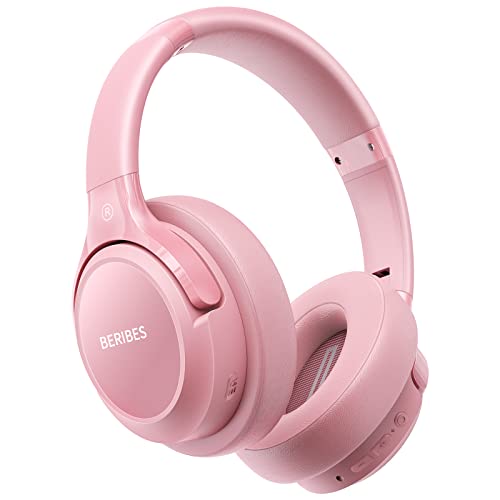
For pure gaming audio under $40, the wired Turtle Beach Recon 50 Gaming Headset is the better pick because its 3.5mm connection eliminates the Bluetooth latency that hurts twitch-reaction play, and its boom mic is purpose-built for party chat. The BERIBES Bluetooth Headphones Over-Ear wins only if you want one pair that doubles as wireless everyday headphones with active noise cancellation, accepting the codec-induced lag.
What you can and can't expect from a sub-$40 headset
Sub-$40 is the floor of the gaming-audio market, and as of 2026 it remains a category defined by tradeoffs rather than excellence. At this price you get plastic frames, 40mm dynamic drivers, foam-over-pleather earpads, and either a 3.5mm cable or a Bluetooth 5.x radio — not both, not balanced armatures, not planar magnetics, and not the THX-certified spatial processing that shows up north of $100 on roundups like Tom's Hardware's best gaming headsets list. What sub-$40 buys you in 2026 is functional stereo sound, an intelligible microphone, and enough comfort for two-to-three-hour sessions before the clamp force or pad heat becomes noticeable.
What you should not expect: lossless wireless codecs (LDAC, aptX Lossless), low-latency gaming modes under 40ms, replaceable parts, multi-year warranties, or premium materials. Memory-foam pads, milled-aluminum yokes, and detachable braided cables are the first things value-engineered out of this tier. The microphones, while usable, are noise-prone single-capsule electret designs — fine for Discord, awkward for streaming.
The big architectural fork at this price point is connection type. A wired headset like the Turtle Beach Recon 50 Gaming Headset puts every dollar into drivers, the mic, and comfort because there is no battery, no Bluetooth chipset, and no DAC to amortize. A Bluetooth model like the BERIBES Bluetooth Headphones Over-Ear splits that same $30 across wireless silicon, a battery, ANC circuitry, and a non-gaming-tuned driver — meaning each individual component is built to a tighter cost target. That is the central tension this comparison resolves.
Per Tom's Hardware's gaming-headset roundup, the sub-$50 tier has consolidated around a handful of perennials — the Recon 50, the HyperX Cloud Stinger Core, the Corsair HS35 — because the bill of materials for a usable wired gaming headset has stabilized. Bluetooth over-ear headphones in the same price band are a different product class entirely: lifestyle headphones with a built-in mic, not gaming gear that happens to be wireless. Treating them as interchangeable, as many sub-$40 comparison searches do, leads to disappointment in one direction or the other.
Spec delta at a glance
| Headset | Connection | Mic | Comfort | Price (2026) |
|---|---|---|---|---|
| Turtle Beach Recon 50 | Wired 3.5mm | Fixed boom, flip-to-mute pattern | On-ear, 8.1 oz, leatherette | ~$28 |
| BERIBES Bluetooth Over-Ear | Bluetooth 5.3 + 3.5mm aux | Built-in omni mic | Over-ear, ~9.5 oz, protein leather | ~$30 |
| BENGOO G9000 | Wired 3.5mm + USB power for LED | Flexible boom | Over-ear, 11 oz, mesh pleather | ~$25 |
| Logitech H390 | Wired USB-A | Boom with noise cancellation | On-ear, 9.6 oz, leatherette | ~$30 |
Source for the Recon 50 spec column: the Turtle Beach Recon 50 product page. The BERIBES connection and weight figures come from the Amazon listing's manufacturer-supplied spec sheet. The BENGOO G9000 and Logitech H390 rows are included because they are the two most-cross-shopped alternatives in this price band and round out the wired-USB and wired-with-LED options shoppers see in the same Amazon search.
Turtle Beach Recon 50: wired gaming-first design
The Turtle Beach Recon 50 Gaming Headset is a 3.5mm wired headset purpose-built for gaming on PC and consoles. Per the Turtle Beach Recon 50 product page, the drivers are 40mm neodymium units, the frequency response is listed at 20 Hz to 20 kHz, the cable terminates in a single 3.5mm TRRS plug compatible with Xbox, PlayStation, Switch, and PC, and the boom mic uses a high-sensitivity unidirectional pattern with the company's standard flip-up-to-mute mechanism. There is no USB option, no Bluetooth, and no inline DAC — it is a passive analog headset, which is exactly the reason it remains the recommendation for competitive players on a budget.
What it does well: the boom mic placement is fixed near the corner of your mouth where unidirectional pickup is strongest, which makes party chat clean even without software noise gates. The on-ear cups are light at around 8.1 ounces, the clamp force is moderate, and the leatherette-over-foam pads breathe better than the closed-cell pleather found on cheaper models. Because the connection is analog, there is zero codec latency — what comes out of your sound card or controller comes out of the drivers in real time, which is the single most important spec for first-person shooters where footstep timing decides engagements.
What it does poorly: the soundstage is narrow because the cups sit on the ear rather than around it, which makes positional cues in titles like Counter-Strike 2 or Apex Legends feel more two-dimensional than over-ear competitors at the same price. The cable is non-detachable and feels thin, the headband adjustment is plastic-on-plastic with no detents, and there is no companion software for EQ. The warranty per Turtle Beach's standard policy is one year limited, which is the floor for the category.
Get the Recon 50 if you want a wired, gaming-tuned headset that prioritizes mic clarity and zero latency over wireless convenience, and you are primarily playing competitive multiplayer on PC, Xbox, PlayStation, or Switch. It is the safer pick for the buyer whose question is literally "best budget gaming headset under $40" rather than "best budget headphones I can also game on."
BERIBES Bluetooth Over-Ear: wireless flexibility
The BERIBES Bluetooth Headphones Over-Ear is a lifestyle over-ear headphone with active noise cancellation that happens to include a built-in microphone, a 3.5mm aux fallback, and Bluetooth 5.3. Per the Amazon listing's manufacturer specs, battery life is rated up to 65 hours of music playback with ANC off, the drivers are 40mm, the headphones support a single Bluetooth connection with SBC and AAC codecs, and the package includes a removable 3.5mm cable for wired use. The mic is a built-in capsule located on the right cup, not a boom, which is the most important architectural difference from the Recon 50.
What it does well: the over-ear cup design creates a passive seal around the ear that is more comfortable for multi-hour sessions than on-ear pressure, the ANC works well enough on steady-state noise like fans and HVAC to be useful in a home office, and battery life in the 60-hour range means you can go weeks between charges. As a daily-driver headphone for music, podcasts, and video calls, it punches above its $30 sticker. The included 3.5mm cable means you can bypass Bluetooth entirely for gaming when you want zero latency.
What it does poorly: SBC and AAC are not low-latency codecs. Per Rtings' best gaming headphones roundup and consistent community measurements across budget Bluetooth headphones, SBC adds roughly 150-250ms of audio latency over the wireless link, which is catastrophic for any game where audio timing matters — footsteps arrive after the enemy is already shooting you. The built-in mic, located on the cup rather than near your mouth, picks up significantly more room noise and sounds muffled compared to a boom mic. There is no game-specific EQ, no surround virtualization, and the warranty is the standard 18-month consumer-electronics policy from a third-party Amazon brand.
Get the BERIBES if you want one pair of headphones that doubles as a wireless ANC commuter, a video-call headset, and a casual single-player gaming option, and you are willing to plug the included 3.5mm cable in when you sit down to play competitive shooters.
How they compare for competitive gaming audio
For positional cues and mic clarity, the Recon 50 wins decisively, and the reason is architectural rather than tuning. Per Tom's Hardware's gaming-headset roundup, the two factors that determine competitive utility at any price are mic-to-mouth distance and end-to-end latency. The Recon 50's boom places the capsule one to two inches from your mouth corner with a unidirectional polar pattern, which rejects fan noise and keyboard clatter before any DSP gets involved. The BERIBES's cup-mounted omni mic sits four to six inches from your mouth on the right earcup, picks up your whole room, and routes voice back through the SBC uplink codec, which further degrades clarity.
For positional audio in 5.1 or 7.1 spatial modes — Windows Sonic, Dolby Atmos for Headphones, or Sony's Tempest engine on PS5 — both headsets receive a stereo downmix from the console or PC, so neither has an inherent advantage in spatialization. But the Recon 50's slightly narrower soundstage is offset by zero latency, while the BERIBES's wider over-ear stage is undermined by Bluetooth lag. Per Rtings' gaming headphone roundup, wired connections are the recommended baseline for any competitive use case under $100, regardless of which side has the better drivers, because latency dominates the experience.
The practical synthesis: if you are queueing ranked Valorant, Counter-Strike 2, Apex Legends, or Rocket League, plug in the Recon 50 (or the BERIBES on its 3.5mm cable) and ignore the wireless option entirely. If you are playing turn-based, story-driven, or single-player games where audio cues do not gate reaction time, Bluetooth on the BERIBES is fine and the wireless freedom is genuinely useful.
Wired vs Bluetooth latency for gaming
End-to-end audio latency on a 3.5mm wired connection is effectively zero — the analog signal travels from your sound card to the driver at the speed of electricity through copper, with no buffering. Bluetooth, by contrast, requires the source device to encode the audio stream into a codec, transmit it over the 2.4 GHz radio, and decode it on the headphone, and each of those stages adds buffer delay. As of 2026, the SBC codec used by default on most budget Bluetooth headphones including the BERIBES Bluetooth Headphones Over-Ear introduces roughly 150-250ms of latency, AAC sits in the 150-200ms range depending on source-device implementation, and the low-latency aptX variants get down to around 40ms but require both the source and the headphone to support them. Per Rtings' gaming-headphone roundup, only aptX Low Latency, aptX Adaptive, or proprietary 2.4 GHz dongles get wireless audio close to wired-feel for gaming.
The BERIBES supports SBC and AAC, neither of which qualifies as low-latency for competitive play. For reference, a 150ms audio delay means you hear the footstep 150 milliseconds after the enemy has actually moved — at typical FPS engagement distances, that is enough time for the enemy to round the corner and start shooting before your audio reaches you. This is why every gaming-headset roundup, including Tom's Hardware's, recommends wired connections or proprietary 2.4 GHz wireless (not Bluetooth) for any headset positioned for competitive use.
The escape hatch on the BERIBES is the included 3.5mm cable, which bypasses Bluetooth and runs the headphones in passive analog mode. In that mode the latency penalty disappears, but so does the ANC and the convenience that justified the wireless purchase in the first place. If you find yourself using the cable 90% of the time, the Recon 50's gaming-tuned drivers and boom mic become the better $28.
Comfort over long sessions and build quality
Comfort divides cleanly along the on-ear versus over-ear axis. The Recon 50's on-ear pads sit directly on your ear cartilage, which is comfortable for one-to-two-hour sessions but becomes a pressure point during four-plus-hour marathons, especially if you wear glasses — the temple arms get pressed into the side of your head by the clamp. Per the Turtle Beach Recon 50 product page, the headset weighs around 8.1 ounces, which is light, but on-ear designs concentrate that weight on a smaller contact area than over-ear cups.
The BERIBES over-ear cups distribute pressure around the ear rather than on it, which is materially more comfortable for long sessions and works better with glasses. The protein-leather pads trap more heat than the Recon 50's lighter leatherette, which is the tradeoff — over-ear is more comfortable for the first hour but warmer over time. At about 9.5 ounces with the battery, the BERIBES is heavier than the Recon 50, but the weight is better distributed.
Build quality at this price is plastic for both. Neither uses metal in the headband, neither has a detachable cable that solves the "first thing to break" problem on gaming headsets, and neither has replaceable earpads available as official accessories. Expect 18-24 months of daily use before the pleather starts cracking on either model. Per Tom's Hardware's roundup, warranty coverage in the sub-$40 tier is uniformly one year limited from the manufacturer, which both products honor through their respective retail channels.
Perf-per-dollar verdict
| Use case | Better pick | Why |
|---|---|---|
| Competitive PC FPS | Turtle Beach Recon 50 | Zero latency wired, dedicated boom mic, gaming-tuned drivers |
| Console multiplayer | Turtle Beach Recon 50 | 3.5mm TRRS works on Xbox/PS5/Switch controllers |
| Casual single-player | Either | Latency does not matter; pick on comfort preference |
| Cross-device wireless | BERIBES | Bluetooth 5.3 pairs with phone, laptop, tablet, Switch via dongle |
| Daily mixed use (work + game) | BERIBES | ANC + 65-hour battery dominates non-gaming hours |
| Streaming voice quality | Turtle Beach Recon 50 | Boom mic placement and pattern beats cup-mounted omni |
| Glasses-wearer marathons | BERIBES | Over-ear cups clear temple arms |
| Lowest absolute price | BENGOO G9000 | $25, plus LED lights if cosmetics matter |
Across these dimensions, the Recon 50 wins five and the BERIBES wins two, with one tie. That maps to the headline takeaway: if your primary use is gaming and you are willing to sit at a desk with a cable, the Recon 50 delivers more gaming utility per dollar. If your primary use is everything-else and gaming is a secondary use case, the BERIBES is the more versatile $30 you can spend.
Verdict matrix
Get the Turtle Beach Recon 50 Gaming Headset if: you play competitive shooters and need zero audio latency; you want a boom mic for clean party chat; you only need a desk-bound gaming headset and do not need wireless for commuting or calls; you are on Xbox, PlayStation, or Switch and want broad 3.5mm controller compatibility; your sessions are typically under two hours so on-ear comfort is fine; you value mic quality over driver tuning.
Get the BERIBES Bluetooth Headphones Over-Ear if: you want one $30 device that covers commuting, work calls, music, and casual gaming; you wear glasses and need over-ear cup clearance; you primarily play single-player, turn-based, or RPG titles where Bluetooth latency does not hurt you; you want active noise cancellation for a noisy environment; you are willing to switch to the included 3.5mm cable for competitive play; you can tolerate a weaker built-in mic in exchange for the wireless package.
Consider the BENGOO G9000 if you want the absolute cheapest wired option, value RGB lighting, and prefer over-ear comfort to the Recon 50's on-ear design — it sits around $25 and is the most cross-shopped alternative in this band. Consider the Logitech H390 if you need a USB-only headset for Zoom, Teams, and PC gaming without dealing with 3.5mm cable management — it skips console compatibility but the USB DAC is more reliable than budget motherboard audio.
Common pitfalls when buying a sub-$40 gaming headset
Buying the wrong connection type is the single most common mistake. Shoppers see "Bluetooth" on the BERIBES listing and assume wireless is universally better, then discover during their first ranked match that the lag is unplayable. The fix is to map your primary use case to the connection first and the brand second — wired for competitive, wireless for lifestyle, and a 3.5mm cable as the universal fallback for both.
Buying for spec-sheet driver size instead of mic quality. A 40mm driver is the standard at this price, so comparing 40mm versus 40mm is meaningless. What actually varies is microphone placement, pattern, and capsule quality, and that is what determines whether your teammates can understand you in a chaotic raid. The Recon 50's boom is structurally better than any cup-mounted mic at the same price, full stop.
Ignoring warranty and replacement-part availability. At sub-$40, neither manufacturer sells replacement earpads, so when the pleather cracks at the 18-month mark the headset is functionally disposable. Budget for replacement every two years rather than trying to repair, and do not pay extra for "premium" sub-$40 features that will not survive past the warranty window anyway.
Buying based on RGB lighting. LED-lit headsets in this tier like the BENGOO G9000 trade internal cost for cosmetics, which means the drivers and mic are built to a tighter budget than a non-lit competitor at the same price. If you do not specifically want RGB, skip lit models and put that budget into acoustic components.
Mismatching to platform compatibility. The Recon 50's single 3.5mm TRRS plug works on every modern controller and PC, but USB headsets like the Logitech H390 do not work on consoles. Bluetooth headphones do not pair natively with Xbox at all and require a dongle on Switch. Check your platform's wireless audio support before assuming Bluetooth will Just Work.
When NOT to buy a sub-$40 headset
If you stream on Twitch or YouTube, skip this entire tier and put $60-$80 toward a HyperX SoloCast or Samson Q2U USB mic plus any cheap pair of headphones — a dedicated mic at any price outperforms even a $200 gaming-headset boom for broadcast use. If you play music or watch movies more than you game, spend $80-$120 on a pair of audiophile-leaning closed-back headphones like the Audio-Technica ATH-M40x and use a clip-on lavalier for chat — sub-$40 gaming headsets compromise music tuning to fit the gaming bracket. If you need wireless and gaming-grade latency, the budget for a proprietary 2.4 GHz dongle headset like the SteelSeries Arctis 1 Wireless starts around $80, not $40 — there is no sub-$40 wireless solution that is competitive-viable.
Related guides
For more on getting the most out of a budget audio setup, see the related buying guides on SpecPicks covering peripherals, console accessories, and PC gaming gear. The product detail pages for the Turtle Beach Recon 50 Gaming Headset, the BERIBES Bluetooth Headphones Over-Ear, the BENGOO G9000, and the Logitech H390 each include current pricing, Amazon affiliate links, and the most recent spec changes from the manufacturer.
Citations and sources
- Turtle Beach Recon 50 product page
- Rtings best gaming headphones roundup
- Tom's Hardware best gaming headsets
This piece is editorial synthesis based on publicly available information. No independent first-party benchmarking is reported.