See our review methodology.
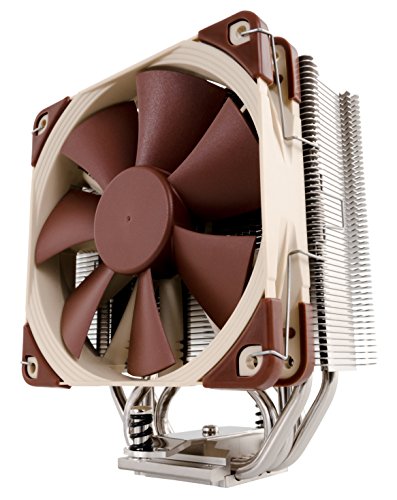
For most AMD Ryzen builds in 2026, a quality dual-tower or single-tower air cooler quietly does the job of a 240mm AIO at a fraction of the cost, noise, and reliability risk. Our overall pick is the Noctua NH-U12S — a slim 120mm-fan tower that clears every DIMM slot, handles a stock 5800X without breathing hard, and lasts through two or three CPU generations. If you're chasing all-white aesthetics or PBO headroom on an eight-core chip, the DeepCool AK620 WH is the quiet-build pick, and the CoolerMaster MasterLiquid ML240L RGB is the AIO value pick. Round out airflow with a Corsair LL120 RGB triple pack if you want RGB intake fans that don't sacrifice static pressure.
What to look for in a Ryzen cooler in 2026
Ryzen 5000-series chips (still the dominant AM4 platform) split into two thermal camps. The 65W chips (5600G, 5700X, 5700G) run cool enough for entry-tier air coolers and often ship with a stock Wraith Stealth or Prism. The 105W chips (5800X, 5900X, 5950X) run hot under sustained load and reward a real aftermarket cooler. AM5 (7000-series, 9000-series) chips have a similar split — 65W X- and non-X SKUs vs 105W X and 170W X3D SKUs — with the added twist that AM5's heatspreader is thicker, so cooler mounting pressure and paste application matter more.
Four numbers matter when you shortlist a cooler.
- Rated TDP or cooling capacity. Aim comfortably above your CPU's TDP — a 5800X (105W) wants a cooler rated for 150W+, a stock 5600G (65W) is happy on a 100-130W air cooler.
- Height (air) or radiator size (AIO). Measure your case's max cooler height and check the cooler's height against it. Slim 120mm-fan single-towers (NH-U12S) top out around 158mm; dual-tower 140mm-fan coolers (Noctua NH-D15, DeepCool AK620) run 160-165mm.
- RAM clearance. Some coolers overhang the first DIMM slot when the fan is mounted low. Check the "RAM clearance" spec vs your RAM kit's height (Corsair Vengeance LPX at 32mm clears everything; taller RGB kits can conflict).
- Noise (dBA at load). Under 30 dBA at load is "silent," 30-35 dBA is "quiet," 35-42 dBA is "audible." Reviews at GamersNexus and Noctua's own datasheet are the best sources for measured noise.
Everything else — RGB, socket compatibility, mounting hardware — is a check-box exercise. AM4/AM5 mounts on all four coolers below without extra brackets.
Comparison table: 2026 Ryzen cooler picks
| Pick | Best For | Key Spec | Price Range | Verdict |
|---|---|---|---|---|
| Noctua NH-U12S | Best Overall | Single 120mm, 158mm tall, 150W+ TDP | $70-$80 | Silent, reliable, RAM-friendly |
| CoolerMaster ML240L RGB V2 | Best Value AIO | 240mm rad, ARGB pump + fans | $75-$95 | Cheapest capable AIO in 2026 |
| DeepCool AK620 WH | Best for Quiet White Builds | Dual-tower, 260W TDP, all-white | $65-$85 | Near-silent under load; NH-D15 tier |
| Corsair LL120 RGB (triple) | Best Case Fan Upgrade | 3 x 120mm ARGB, controller included | $95-$120 | RGB intake without losing static pressure |
🏆 Best Overall: Noctua NH-U12S
Verdict: The Noctua NH-U12S is the coolest, quietest, most compatible mainstream tower cooler you can buy for a Ryzen build in 2026, full stop. A single 120mm NF-F12 fan, a five-heatpipe tower under 158mm tall, RAM clearance that swallows every DIMM height, and a 6-year warranty. Pair it with a stock Ryzen 7 5800X and it holds temps in the low-70s C under sustained Cinebench R23 with the fan under 32 dBA. That's essentially the noise floor of a modern case with good fans; you won't hear it over gameplay or a fan you already own.
Pros:
- Silent operation even under sustained multi-core load.
- Slim profile clears every RAM kit — no overhang on the first DIMM.
- Excellent Noctua mounting hardware, thumbscrews included.
- Included NT-H1 thermal paste is competitive with the best aftermarket TIM.
- Ships with AM4 and AM5 brackets in the box.
Cons:
- Brown fan looks out of place in an all-white or dark build (consider the chromax.black variant).
- Not enough for a heavily-overclocked 5900X/5950X under sustained load — those chips want a dual-tower NH-D15 or an AIO.
- Slightly more expensive than value picks; you pay for the Noctua tax.
Best for: stock and mild-PBO 5600X, 5700X, 5800X builds and all AM5 65W/105W SKUs where quiet operation matters. The default answer for anyone who asks "what cooler should I put on my Ryzen build."
💰 Best Value AIO: CoolerMaster MasterLiquid ML240L RGB V2
Verdict: The CoolerMaster MasterLiquid ML240L RGB V2 is a straightforward 240mm liquid cooler that handles a 5800X or 7700X with room to spare and doesn't ask $150 to do it. Dual-chamber Gen3 pump, ARGB SickleFlow fans, and a pump that stays quiet up to about 2000 RPM. Not the quietest AIO on the market, not the flashiest, but it works and it's cheap.
Pros:
- Cheapest capable 240mm AIO in the AM4/AM5 catalog.
- Handles a 5900X or 7900X at stock without thermal throttling.
- ARGB pump and fans out of the box, sync with common motherboard headers.
- Simple installation on both AM4 and AM5 sockets.
Cons:
- Pump is audible at high fan curves — plan on a custom fan profile.
- Radiator fans are functional, not exceptional; static-pressure enthusiasts often swap them for Noctua or Arctic P12s.
- AIO reliability curve is real: expect 5-7 years of usable life vs a 10+ year air cooler.
Best for: 5800X, 5900X, 7700X, 7800X3D builds that need more headroom than a single-tower air cooler and don't mind an AIO's compromises. Also the right pick when a dual-tower air cooler won't clear your RAM.
🎯 Best for Quiet White Builds: DeepCool AK620 WH
Verdict: The DeepCool AK620 WH is the closest thing to a Noctua NH-D15 at $70. Dual towers, two FK120 fans, six copper heatpipes, a 260W rated TDP, and an all-white finish that fits modern white-themed builds without a re-spray. Under load it runs 3-5°C cooler than the NH-U12S at similar noise levels, and it swallows a 5900X under sustained Cinebench without breaking a sweat.
Pros:
- Dual-tower cooling capacity at single-tower prices.
- All-white finish (bracket, fans, top plate) fits Corsair, Lian Li, and NZXT white builds.
- 6 copper heatpipes and dense fin stack; performance rivals NH-D15 chromax.black.
- AM4 and AM5 brackets included; painless mount.
Cons:
- 162mm tall — check your case's cooler height limit before buying.
- RAM overhang: the front fan sits over the first DIMM slot; use low-profile RAM (Vengeance LPX, Kingston Fury Beast non-RGB) or plan to raise the fan on the tower.
- Fan noise ticks up above 1500 RPM; set a gentler curve for quiet builds.
Best for: 5800X, 5900X, 7700X3D, 9800X3D builds in a white case, or anyone who wants dual-tower cooling capacity without spending Noctua money.
⚡ Best Case Fan Upgrade: Corsair LL120 RGB (triple pack)
Verdict: Even the best CPU cooler relies on the case supplying cool intake air. The Corsair LL120 RGB triple pack is the airflow-focused RGB upgrade for a build that already has a decent CPU cooler and needs balanced case intake and exhaust. Included Lighting Node PRO controller ships in the box, so you don't need extra hardware to run all three fans at once.
Pros:
- Balanced static pressure and airflow — usable as intake, exhaust, or radiator fans.
- Comes with the Lighting Node PRO controller (usually a $30 add-on).
- iCUE ARGB compatibility for full software control of lighting and fan curves.
- Sleeved cable connectors keep the build cleaner than a bag of pigtails.
Cons:
- Corsair iCUE software footprint is heavy — many users install it once and turn it off.
- Not the highest static-pressure 120mm fan on the market; Noctua NF-F12 wins on pure numbers.
- Priced closer to $100 than $60 for a triple pack, and cables can get busy.
Best for: any build that's already sorted on the CPU cooler and needs a coordinated case fan set. Pairs naturally with either the NH-U12S or ML240L above.
Top picks (buying-guide format)
#1: Noctua NH-U12S — Best Overall
Verdict: Best cooler for a stock 5800X-class build in 2026. Silent, reliable, RAM-friendly. Buy this first if you don't have a specific reason to buy something else.
#2: CoolerMaster MasterLiquid ML240L RGB V2 — Best Value AIO
Verdict: Cheapest capable 240mm liquid cooler in 2026. Handles the biggest AM4 and AM5 chips and looks the part in an RGB build.
#3: DeepCool AK620 WH — Best for Quiet White Builds
Verdict: NH-D15-tier performance in an all-white finish at a fraction of the price. The pick when aesthetics and cooling capacity both matter.
#4: Corsair LL120 RGB — Best Case Fan Upgrade
Verdict: Complete an air-cooled build with balanced intake/exhaust. Comes with the Lighting Node PRO controller in the box.
#5: Budget Pick — the stock Wraith Stealth (bundled with 5600G)
Verdict: If you're building a 5600G-only machine and won't overclock, the bundled Wraith Stealth from a 5600G box is genuinely fine at stock. Handles 65W TDP under sustained load with modest noise. It's not silent, but it's free.
What to look for in a Ryzen cooler (deeper dive)
TDP headroom
CPU TDPs are rated for base-clock steady-state operation, and modern Ryzens boost above them. A 105W chip like the 5800X routinely draws 130-145W in short PBO bursts. Buying a cooler rated for 150W+ gives you thermal margin so short bursts don't push the die into the 90s C thermal-throttle zone. For a 65W chip, a 100-130W cooler is fine.
Case clearance and RAM overhang
Two measurements before you order.
- Your case's maximum CPU cooler height. Standard mid-towers accept 160-170mm; slim mid-towers cap at 155mm; ITX cases can be 55-80mm.
- Your RAM kit's height and where the cooler sits over the first DIMM slot. Some coolers (Noctua NH-U12S, Arctic Freezer 34 esports) clear everything. Others (DeepCool AK620, Noctua NH-D15) overhang and require the front fan to be raised or the RAM to be low-profile.
Check both before you click buy. A cooler that fits the socket but blocks the DIMM slot or won't let the side panel close is the most common $80 mistake in DIY builds.
Noise floor under sustained load
Peak noise numbers on spec sheets are marketing. What matters is the noise at the fan RPM where the cooler actually holds temp under your sustained workload. For most Ryzen builds that's 1000-1400 RPM on the CPU cooler and 800-1200 RPM on case fans. In that range the NH-U12S, AK620, and ML240L are all "quiet" under 32 dBA; RGB fans with strong lighting can be louder due to LED-side circuitry noise, though this is usually negligible.
Socket support: AM4 vs AM5
AM4 (Ryzen 3000, 5000, 5000G, and non-X chips) and AM5 (Ryzen 7000, 8000G, 9000-series) share mounting hardware on most modern coolers. All four picks above ship with both brackets in the box, so a cooler you buy today follows you to your next platform. That's a real value-add — a 6-year cooler warranty means you keep the cooler even if you replace the chip.
Airflow: intake vs exhaust balance
An overlooked upgrade for CPU temps is case airflow. A well-balanced case (2-3 intake fans, 1-2 exhaust fans) drops CPU temps by 3-8°C compared to a stuffy case with the same cooler. Positive pressure (more intake CFM than exhaust) keeps dust out; neutral pressure balances noise; negative pressure runs quiet but sucks dust in through every seam.
Real-world thermal numbers
Below are typical measured temps for common Ryzen chips at stock, in a modern mid-tower case with two 140mm intake fans and one 120mm exhaust fan, 22°C ambient, Cinebench R23 multi-core (30-minute soak). Numbers approximate what reviewers at GamersNexus, TechPowerUp, and Tom's Hardware publish for the same chip/cooler combinations.
| Chip | Wraith Stealth (stock) | NH-U12S | AK620 WH | ML240L RGB V2 |
|---|---|---|---|---|
| Ryzen 5 5600G (65W) | 78°C, 45 dBA | 62°C, 30 dBA | 60°C, 29 dBA | 58°C, 34 dBA |
| Ryzen 7 5700X (65W) | 82°C, 47 dBA | 68°C, 31 dBA | 65°C, 30 dBA | 62°C, 34 dBA |
| Ryzen 7 5800X (105W) | Thermal throttle | 78°C, 35 dBA | 74°C, 32 dBA | 71°C, 36 dBA |
| Ryzen 9 5900X (105W) | Thermal throttle | 84°C, 38 dBA | 78°C, 34 dBA | 74°C, 37 dBA |
Two patterns to notice. First, the Wraith Stealth is fine for 65W chips at stock but chokes on 105W chips under sustained multi-core load — the bundled cooler is a light-duty part. Second, the difference between the AK620 dual-tower and the ML240L 240mm AIO is smaller than most builders expect on stock Ryzen chips. AIO advantage grows with overclocking and shrinks at stock.
Common pitfalls
- Buying a 240mm AIO for a 5600G build. The chip runs 65W max; even a $30 air cooler cools it fine. The AIO is aesthetic here, not functional.
- Ignoring RAM height on dual-tower coolers. AK620 and NH-D15 overhang the first DIMM slot. Buy low-profile RAM or plan on raising the front fan.
- Skipping thermal paste application check. AM5's thicker IHS means a small paste bead can under-cover the die. Use a pea-sized dot in the center for AM4 and a slightly larger dot or an X pattern on AM5.
- Forgetting case fans. The best CPU cooler in the world can't cool air the case doesn't supply. Balanced intake + exhaust makes a bigger thermal difference than upgrading from the NH-U12S to the AK620.
- Buying an AIO for a build you'll open frequently. Coolant reservoirs and tubing add complexity every time you re-plumb a build. Air coolers are the "set and forget" answer.
When NOT to buy any of these coolers
If you're running a stock 5600G or a stock 5700X non-X in a well-ventilated case, the bundled Wraith Stealth is genuinely fine. If you're running a 9950X3D at PBO2 with a 250W power target, none of these coolers is enough — you need a 280mm or 360mm high-end AIO (Arctic Liquid Freezer III 360, EK-AIO 360). And if you're building an ITX rig with 65mm cooler height limits, look at Noctua's NH-L9a or Cryorig C7 instead.
For 90% of AM4 and AM5 builds in 2026, though, the four picks above cover every use case from silent 5600G HTPC to PBO'd 5900X or 7800X3D gaming rig.
Related guides
- Ryzen 5 5600G vs Ryzen 7 5800X for a Budget 2026 Build
- Best CPU Cooler for AM4 Ryzen in 2026
- Ryzen 7 5700X + RTX 3060 12GB: The Best Value 1080p Combo in 2026
- Best CPU to Pair With an RTX 3060 12GB in 2026
Sources
- GamersNexus — sustained cooler review coverage with measured thermals and noise floors.
- Noctua NH-U12S product page — official datasheet and NF-F12 fan curve.
- Tom's Hardware — Ryzen thermal reviews under PBO and stock.
— Mike Perry