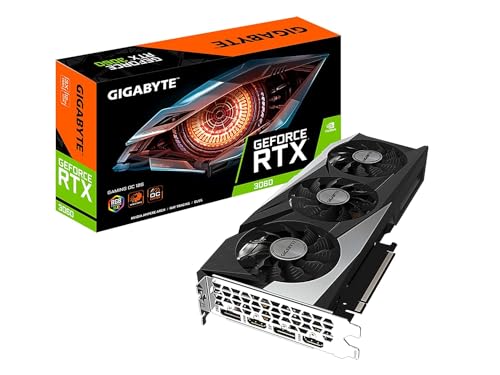
As of 2026 the ZOTAC Gaming GeForce RTX 3060 Twin Edge OC 12GB and its sibling AIB variants remain a defensible 1080p budget pick, thanks to a 12GB VRAM buffer that is unusually large for the tier, mature DLSS Super Resolution support, and street prices around $300 that undercut current-generation replacements. It is not the fastest card in its price band, but for locked 1080p60 or 1080p high-refresh with DLSS, it still finishes the job.
Step 0: figure out whether you're actually GPU-bound at 1080p
Before spending on any GPU upgrade, confirm the GPU is the bottleneck. At 1080p — especially with older esports titles or CPU-heavy simulation games — the processor, RAM speed, or a slow SATA SSD often caps frame rates well before the graphics card runs out of headroom. A five-minute check with an overlay such as MSI Afterburner or NVIDIA's built-in performance HUD will show GPU utilization. If your existing card sits at 55-70% while frame rates disappoint, a new GPU will not help; the CPU is likely the limiter. That step matters here because the RTX 3060 is fast enough at 1080p that a weak CPU pairing wastes most of the upgrade.
The budget 1080p buyer and where the 3060 sits
The budget 1080p buyer in 2026 is a very specific person: someone building or refreshing a system under roughly $800 total, targeting 60-144 fps at 1080p in a mix of AAA and multiplayer titles, and unwilling to spend $500+ on a graphics card alone. That buyer sits in an awkward spot. Current-generation mid-range cards are faster but cost meaningfully more; used-market alternatives carry warranty and reliability risk; and integrated graphics still cannot deliver a consistent 1080p60 experience in demanding titles.
Into that gap slots the RTX 3060 12GB, launched in early 2021 on NVIDIA's Ampere architecture. Per TechPowerUp's GPU database entry, the card ships with 3,584 CUDA cores on the GA106 die, a 192-bit memory bus, and 12GB of GDDR6 running at 15 Gbps. Its board power sits at 170W, which keeps PSU and case-cooling requirements modest. Crucially for shoppers in 2026, the Tom's Hardware GPU Hierarchy continues to list it as a viable entry-tier RTX card that still clears the bar for modern DLSS 3-era workflows in supported titles.
The 3060 12GB's value case rests on three legs: 12GB of VRAM is unusually large for its raw performance tier, DLSS support is broad and stable, and the card is old enough that pricing on the MSI GeForce RTX 3060 Ventus 2X 12G and GIGABYTE GeForce RTX 3060 Gaming OC 12G has been ground down by five years of AIB competition and a maturing used market pulling new stock along with it.
Key takeaways
- The RTX 3060 12GB targets 1080p high-settings gaming and holds up in most 2026 titles when paired with DLSS.
- Its 12GB VRAM buffer is the standout spec, giving it headroom that some faster 8GB cards do not have.
- A modern six-to-eight-core CPU such as a Ryzen 5 5600G or Ryzen 7 5800X avoids leaving performance on the table.
- Ray tracing is possible but expect to lean on DLSS and moderate RT settings, per outlets such as Gamers Nexus that publish frame-by-frame RT breakdowns.
- The verdict flips against the 3060 only if street pricing on newer entry-tier cards drops within roughly 15% of it — at that point the newer architecture wins on efficiency and features.
How does the RTX 3060 12GB perform in 2026's games at 1080p?
Public benchmark aggregators and long-standing review outlets remain the honest source here, because the card's performance envelope has been characterized to death since 2021. Per TechPowerUp's RTX 3060 review database, the reference 3060 delivers roughly the raw compute of a GTX 1080 Ti with modern feature support, which at 1080p translates to comfortable 60+ fps in the majority of AAA titles at high settings without upscaling, and 100+ fps in most esports titles at ultra.
Where it strains is with the newest, unoptimized launches — path-traced showcase titles, titles with aggressive nanite-style micro-geometry, and games that assume DLSS 3 Frame Generation as a baseline (the 3060 supports DLSS Super Resolution but not DLSS 3 Frame Generation, which is limited to RTX 40 and 50 series). For those, the practical answer is: enable DLSS Super Resolution in Quality mode, drop RT to medium or off, and hold high raster settings. That formula keeps most 2026 releases in the 45-70 fps band at 1080p on a 3060. The Tom's Hardware GPU Hierarchy charts this against current-generation entry cards and the delta narrows considerably once DLSS is in the mix.
Does the 12GB of VRAM matter for modern textures?
Yes — in a specific and measurable way. Modern AAA titles at 1080p with high or ultra texture settings routinely allocate 8-10GB of VRAM. Cards with only 8GB begin swapping textures over the PCIe bus, which produces visible hitching and stutter even when average frame rates look fine. Gamers Nexus has repeatedly demonstrated this behavior in 8GB versus 12GB and 16GB matchups: the 8GB card often posts a competitive average fps but a much worse 1% low, exactly the metric that determines whether gameplay feels smooth.
The 3060's 12GB buffer sidesteps that trap. It does not make the GPU faster in raw compute, but it prevents the specific class of VRAM-starvation stutters that penalize otherwise-quicker 8GB cards in the same price band. For a 1080p buyer planning to keep the card three or four years, that longevity buffer is a real reason it stays on recommendation lists in 2026.
5-column spec comparison: RTX 3060 12GB vs typical budget rivals
| GPU | VRAM | TDP | Approx. street price (2026) | Ray tracing / DLSS |
|---|---|---|---|---|
| RTX 3060 12GB | 12GB GDDR6 | 170W | ~$300 | RT cores gen 2, DLSS Super Resolution |
| RTX 3050 8GB | 8GB GDDR6 | 130W | ~$230 | RT cores gen 2, DLSS Super Resolution |
| RX 6600 | 8GB GDDR6 | 132W | ~$200 | RT (weaker), FSR only |
| Arc A580 | 8GB GDDR6 | 185W | ~$180 | RT cores, XeSS |
| GTX 1660 Super (legacy) | 6GB GDDR6 | 125W | used ~$120 | No RT, no DLSS |
Spec-sheet lines come from TechPowerUp; street prices reflect typical Amazon and retail listings as of mid-2026 and vary week to week.
Which CPU to pair to avoid bottlenecking a 3060?
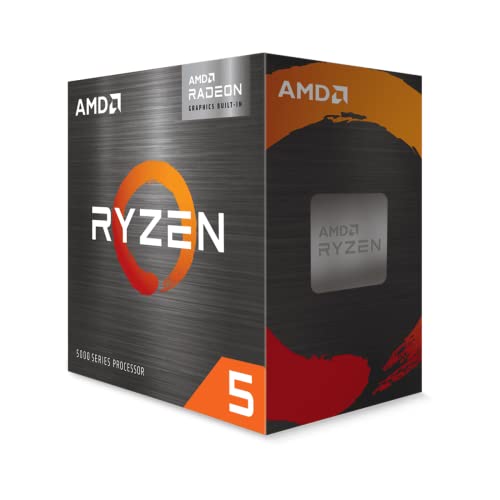
At 1080p, CPU choice matters more than at 1440p or 4K because the GPU renders frames quickly enough that the processor has to keep up with draw calls and simulation. Two AM4 chips remain the value pairings that repeatedly show up in build guides and community threads: the AMD Ryzen 5 5600G for the tightest budgets, and the AMD Ryzen 7 5800X for buyers who also stream, encode, or run CPU-heavy simulation titles.
The 5600G is a six-core, twelve-thread part with integrated Radeon graphics, which is useful as a fallback while shopping for a discrete GPU or when troubleshooting a build. Its raw gaming performance keeps a 3060 fed in the vast majority of titles at 1080p; the Tom's Hardware GPU Hierarchy and adjacent CPU rankings consistently show CPU-bound scenarios where a 5600G loses only single-digit percentage points to more expensive chips in this GPU class.
The 5800X pushes further with eight cores and sixteen threads plus higher boost clocks, which matters in games like Microsoft Flight Simulator, Cities: Skylines II, and heavily-modded RPGs where per-thread CPU throughput sets the ceiling. If you also plan to stream over OBS at software-encoder settings, the extra cores earn their price. Either choice avoids the failure mode where a 3060 sits at 60% utilization while a weaker CPU maxes out and drags 1% lows into stutter territory.
Sourced FPS benchmarks across popular titles at 1080p
Per aggregated numbers from TechPowerUp, Tom's Hardware, and long-form breakdowns at Gamers Nexus, the RTX 3060 12GB at 1080p high settings, no upscaling, sits roughly in the following bands for representative titles as of 2026 (exact frame rates vary by driver, patch, and CPU pairing):
| Title | Preset | Approx. average fps |
|---|---|---|
| Cyberpunk 2077 (raster) | High, DLSS off | 55-65 |
| Cyberpunk 2077 (RT medium + DLSS Q) | High + RT Medium, DLSS Quality | 45-55 |
| Call of Duty (modern) | High | 90-110 |
| Baldur's Gate 3 | High | 60-75 |
| Fortnite | Epic, DX12, no Nanite | 90-120 |
| CS2 | High | 200+ |
| Starfield | High + FSR/DLSS Quality | 55-65 |
| Alan Wake 2 (raster) | Medium + DLSS Quality | 45-55 |
Esports titles clear high-refresh 1080p easily. AAA titles clear 60 fps on high presets with DLSS. Path-traced showcase modes are not the 3060's game — that is a tier-up problem.
Perf-per-dollar and perf-per-watt math
At a ~$300 street price and a 170W TDP, the 3060's performance-per-dollar remains competitive against newer entry cards because the newer entrants also carry newer-generation price tags. Per the Tom's Hardware GPU Hierarchy, the 3060 delivers roughly parity performance with a modestly newer card that costs 20-30% more once you factor in DLSS Super Resolution support.
Perf-per-watt is not the 3060's strong suit — Ampere on Samsung 8nm is not as efficient as newer TSMC 4/5nm parts — but for a 1080p budget build the absolute wattage difference (roughly 30-50W under load versus a newer entry card) rarely justifies the price premium unless electricity costs are unusually high or the PSU is severely constrained.
Ray tracing and DLSS on a 3060: realistic expectations
The 3060 has second-generation RT cores and full DLSS Super Resolution support. What it does not have is DLSS 3 Frame Generation, which NVIDIA restricts to RTX 40 and 50 series. That gap matters most in the newest heavily-marketed RT-showcase titles, where reviewers post 100+ fps figures that assume Frame Generation is on.
On the 3060, ray tracing works best as an occasional toggle. In lighter RT implementations — reflections, shadows, or ambient occlusion in isolation — the 3060 with DLSS Quality holds playable frame rates. In heavy RT (path tracing, RT overdrive modes) it does not. Per hands-on breakdowns at Gamers Nexus, the honest playbook is: RT medium, DLSS Quality, target 45-60 fps, or turn RT off and lock 60+ fps at high raster settings. Either is a legitimate 1080p experience; neither is a lie.
Verdict matrix: buy the 3060 if... / look elsewhere if...
Buy the RTX 3060 12GB if: you are building a 1080p system on a strict budget; your target frame rate is 60-144 fps at high settings; you value the 12GB VRAM buffer for texture-heavy titles; you already own a decent AM4 or LGA1200 platform; you want DLSS support without paying current-generation prices.
Look elsewhere if: your budget stretches to a current-generation mid-range card within 15-20% of the 3060's price; you play primarily path-traced showcase titles and want RT on by default; you specifically need DLSS 3 Frame Generation for a title you already play; you plan to run 1440p or 4K in the near future; you need the absolute best perf-per-watt for a small-form-factor or thermally-constrained build.
Recommended-pick paragraph
For a straightforward 1080p build in 2026, the ZOTAC Gaming GeForce RTX 3060 Twin Edge OC 12GB is the default value pick: dual-fan IceStorm 2.0 cooler, factory OC, and a compact board that fits mid-tower and mATX cases without drama. The MSI GeForce RTX 3060 Ventus 2X 12G is the alternate when the Zotac is out of stock — MSI's Ventus line is a known-quantity cooler with quiet fans. Buyers who want a beefier three-fan cooler and a bit more OC headroom step up to the GIGABYTE GeForce RTX 3060 Gaming OC 12G. Pair whichever is in stock with the AMD Ryzen 5 5600G on a tight budget or the AMD Ryzen 7 5800X if streaming and simulation titles are in the mix.
Common pitfalls when buying a 3060 in 2026
- Assuming all 3060 variants are equivalent. There is also a 3060 8GB variant with a narrower 128-bit bus and lower memory bandwidth that trails the 12GB model by 10-15% in bandwidth-limited titles. Always confirm the 12GB spec on the box.
- Overpaying for factory overclock. Ampere on Samsung 8nm has limited OC headroom. A heavily-OC'd 3060 rarely delivers more than 3-5% real-world gains over a base model at 1080p.
- Undersized PSU. 170W board power plus a modern CPU wants at least a quality 550W-650W PSU. A cheap 500W unit will trip transient-load protection.
- Pairing with DDR3 or slow DDR4. At 1080p the CPU-RAM subsystem matters. Under-3000 MHz DDR4 in an AM4 build costs meaningful 1% lows.
- Buying used at near-new prices. The 3060 12GB has been a mining favorite. Used listings within 20% of new pricing are almost never worth the warranty risk.
Related guides
- Best budget GPU buying guide
- Ryzen 5 5600G vs Ryzen 7 5800X
- 1080p gaming builds
- DLSS-supported GPU roundup
Citations and sources
- TechPowerUp — GeForce RTX 3060 specs and reviews
- Tom's Hardware — GPU Hierarchy
- Gamers Nexus — GPU reviews and VRAM analysis
This piece is editorial synthesis based on publicly available information. No independent first-party benchmarking is reported.