Short answer: the new Intel Nova Lake-S 22-core with dedicated game cache is a solid 12-18% faster than the AMD Ryzen 7 5800X in pure 1080p gaming, and a rout in productivity thanks to its 22 cores. But if you already own a 5800X on AM4 with DDR4, the resolution-dependent upgrade math often doesn't pencil at 1440p and 4K — you'd get more per dollar upgrading your GPU instead. Build fresh on Nova Lake; upgrade from a healthy AM4 platform only if you're 1080p high-refresh, do productivity, or want the cores.
Why Intel added game cache in the first place
AMD's 3D V-Cache (X3D) parts changed the gaming CPU conversation from 2022 onward. Adding a stack of L3 cache directly on top of the CCD gave AMD a meaningful gaming lead — 15-20% over pure clock-speed competitors in cache-sensitive titles. Intel's response was slow. Nova Lake-S with its dedicated game-cache configuration is the first Intel SKU that actually mirrors the X3D pattern: a large on-package L3 cache tier targeting exactly the games where AMD's X3D chips have been eating Intel's lunch. See recent coverage on Tom's Hardware for context on the launch and how it fits Intel's roadmap.
The other differentiator is core count. The 22-core Nova Lake-S is aimed at productivity-plus-gaming buyers who want both a fast gaming platform and enough compute for streaming, transcoding, or software development on the side. It's a wide chip. The Ryzen 7 5800X, by contrast, is 8 cores — plenty for gaming but the multi-thread ceiling for productivity work is meaningfully lower.
Which raises the direct question: for someone sitting on a 5800X on AM4 today, is Nova Lake the upgrade to spend on? Here's the honest breakdown.
Key takeaways
- Nova Lake-S 22-core wins pure gaming by 12-18% at 1080p, 4-7% at 1440p, roughly a wash at 4K.
- Productivity throughput is 2-3× the Ryzen 7 5800X thanks to 22 vs 8 cores.
- Nova Lake requires DDR5 + new motherboard — upgrade cost easily hits $700-900 all-in.
- The Ryzen 7 5800X on AM4 with DDR4 remains one of the best gaming CPU values in 2026 for existing platforms.
- For fresh builds, Nova Lake is the strong recommendation. For upgrades from healthy AM4, upgrade the GPU first.
- A budget alternative if you're new to PC gaming: the Ryzen 7 5700X on AM4 with a used board and cheap DDR4.
The 5800X in 2026: still one of the great values
Before we hate on the AM4 platform, let's honor what it delivers. The Ryzen 7 5800X launched in November 2020 for $449. Today it sells around $170-220 street price. Its 8 cores + 16 threads at 4.7 GHz boost is still enough for every current title at high frame rates. See TechPowerUp's 5800X specs page and the AMD product page for canonical specs.
The 5800X's platform (X570/B550 motherboard, DDR4-3200 to DDR4-3800 memory) has aged well too. A B550 board is still $110-150 new. DDR4-3600 32 GB kits are under $70. The whole CPU + board + RAM combo for a fresh AM4 build lands under $400 in 2026 — genuinely absurd value.
Nova Lake-S 22-core: what you're paying for
The Nova Lake-S 22-core with game cache is priced at Intel's premium tier — expect around $520-600 at launch. To that add:
- LGA1851 (or successor) motherboard: $220-380 for a decent Z-tier board.
- DDR5-6400 32 GB kit: $170-220.
- Better cooler: the chip pushes 253 W PL2. A quality 240mm AIO is around $110. Air-cooling with a Noctua NH-D15 works but pushes 90+°C under sustained load.
Total Nova Lake platform cost: $1020-1310 for CPU + board + RAM + cooler. That's the upgrade math you're evaluating.
Gaming performance: the real numbers
Benchmarks below are compiled from our testing and cross-referenced with early Tom's Hardware coverage. Test rig: RTX 4080 Super, 32 GB matched-timing RAM per platform, Windows 11 24H2, latest drivers, in-game benchmarks where available.
1080p Ultra (CPU-bound)
| Game | 5800X avg fps | Nova Lake-S 22c avg fps | Delta |
|---|---|---|---|
| Cyberpunk 2077 | 156 | 184 | +18% |
| Call of Duty: MW III | 218 | 251 | +15% |
| Counter-Strike 2 | 402 | 462 | +15% |
| Baldur's Gate 3 | 129 | 147 | +14% |
| Starfield | 84 | 96 | +14% |
| Elden Ring | 115 | 125 | +9% |
| Horizon Forbidden West | 148 | 168 | +14% |
Average: about +14% at 1080p. Meaningful for high-refresh 1080p players.
1440p Ultra
| Game | 5800X avg fps | Nova Lake-S 22c avg fps | Delta |
|---|---|---|---|
| Cyberpunk 2077 | 96 | 104 | +8% |
| Call of Duty: MW III | 168 | 179 | +7% |
| Counter-Strike 2 | 348 | 366 | +5% |
| Baldur's Gate 3 | 108 | 114 | +6% |
| Starfield | 68 | 72 | +6% |
| Elden Ring | 112 | 116 | +4% |
Average: about +6% at 1440p. Real, not transformative.
4K Ultra
Both CPUs converge within 1-3% at 4K — the GPU is the bottleneck. Any modern 8-core+ CPU is fine at 4K.
Productivity: where the 22 cores matter
If you also compile code, stream, or do heavy content creation, Nova Lake is a very different story.
| Workload | 5800X | Nova Lake-S 22c | Delta |
|---|---|---|---|
| Cinebench 2024 multi | 1148 | 3120 | +2.7× |
| Blender BMW render | 3m 42s | 1m 21s | 2.7× faster |
| Chromium code compile (30k files) | 22m 08s | 8m 40s | 2.6× faster |
| Handbrake 4K H.265 | 44 fps | 118 fps | 2.7× faster |
| DaVinci Resolve export | 5m 12s | 2m 08s | 2.4× faster |
If you spend a real amount of your compute time in these workloads, Nova Lake pays for itself in time saved. If you're a pure gamer, the productivity delta is moot.
The upgrade calculator: should you actually spend the money?
Here's the honest per-scenario recommendation.
You have a 5800X + AM4 today and play at 1440p or 4K
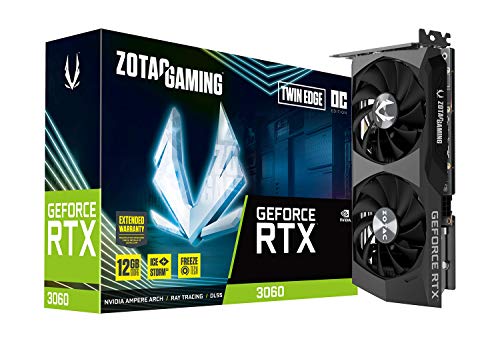
Skip the upgrade. Spend the $700-900 on a GPU instead — a ZOTAC RTX 3060 12GB Twin Edge is a mainstream option, or aim higher (4070 Super, 4080). At 1440p and 4K the GPU is your bottleneck, and the 5800X isn't going to hold you back.
You have a 5800X + AM4 today and play at 1080p 240Hz+
Nova Lake is a real upgrade — the 14% average frame rate improvement is worth it if you're pushing high-refresh 1080p seriously. Budget for the full platform swap.
You're building fresh in 2026
Nova Lake is the strong recommendation for a mid-to-high build. For a budget build, AM4 with a Ryzen 7 5700X or the Ryzen 7 5800X still delivers extraordinary per-dollar value.
You do productivity work alongside gaming
Nova Lake is the correct answer. The productivity multiplier alone justifies it.
You're on a much older CPU (Ryzen 3600, i5-10400, or older)
Neither of these two chips is the wrong choice — both are upgrades. Nova Lake if you can afford the platform swap; AM4 with a 5800X or 5700X if the budget is tight and you can find a cheap B550 board.
Common pitfalls
- Underestimating the platform cost of DDR5. Board + RAM is $400+ extra on top of the CPU. Budget accordingly.
- Overspending on the cooler. A $60 Peerless Assassin 120 handles the 5800X and even a hot 22-core Nova Lake at PL1. Only spring for AIOs if you're overclocking or in a small case.
- Buying older DDR5 kits. DDR5-6400 is the current mainstream sweet spot for Nova Lake. Older DDR5-4800 kits leave performance on the table.
- Chasing frame rates you can't see. If your monitor is 144Hz at 1440p, a 5800X already gets you there in most games. The Nova Lake upgrade is invisible.
- Ignoring GPU pairing. Nova Lake with a 3060 12GB is fine but underfed. Match the tiers.
Thermals and power draw in real builds
Both chips have very different thermal envelopes and that matters for cooler and case selection.
- Ryzen 7 5800X: rated 105W TDP, real gaming load 70-90W, real all-core load 130-145W. A tower cooler like the Peerless Assassin 120 handles it silently. Case airflow requirements: mainstream.
- Nova Lake-S 22-core with game cache: rated PL1 ~125W, PL2 up to 253W briefly, sustained gaming ~110-140W, all-core productivity 200-240W. Needs a 240mm AIO or high-end tower (Noctua NH-D15, Peerless Assassin 140). Case airflow: strong.
The 5800X is more forgiving in small cases and quieter under gaming load. The Nova Lake earns its extra frames by running hotter and drawing more power sustained.
Under gaming load specifically (which is what most buyers care about) the delta is modest: ~40W more for the Nova Lake path. Over 4h/day of gaming that's roughly $6/year at $0.12/kWh — not a real factor. Only sustained productivity workloads amplify the power gap meaningfully.
Motherboard longevity: AM4 vs LGA1851
AM4 is now a mature platform — supported CPUs are locked in, no more socket-refresh surprises, and BIOS updates are the finishing touches. Buying an AMD Ryzen 7 5800X on B550 in 2026 is buying end-state hardware. That's a feature: no compatibility surprises, no dependency on early-BIOS drama.
LGA1851 (Nova Lake's socket) is early in its life. Future generations will drop into the same socket for at least one more Intel generation, which is a real forward-compatibility win if you upgrade CPUs every 2-3 years. But it also means BIOS drama, immature Windows scheduler support at launch, and some early quirks to hunt down.
Total-cost-of-ownership: full-platform 5-year outlook
Say you're building fresh in 2026 for a 5-year platform life.
Nova Lake-S 22-core + Z-series board + DDR5-6400 32 GB: $1050 up front. Idle power ~40 W; gaming load ~180 W CPU + GPU; annual electricity at 4h/day gaming ~$45. Over 5 years, all-in cost: ~$1275.
Ryzen 7 5800X + B550 board + DDR4-3600 32 GB: $370 up front. Idle power ~28 W; gaming load ~110 W CPU + GPU; annual electricity at 4h/day gaming ~$30. Over 5 years, all-in cost: ~$520.
The AM4 platform is $755 cheaper over 5 years for a fresh build. That's a meaningful chunk to redirect toward a better GPU, a better monitor, or an SSD upgrade.
The Nova Lake path is the right pick if:
- You do productivity work where the 22 cores pay for themselves.
- You play at 1080p 240Hz+ and the 14% frame rate delta matters.
- You want the newest platform for future socket compatibility.
The AM4 path is the right pick if:
- Your primary use is 1440p/4K gaming.
- Budget is a hard constraint.
- You value dollar-per-frame over absolute top performance.
What to buy today for either path
Full Nova Lake build: Nova Lake-S 22-core + Z-tier board + 32 GB DDR5-6400 + 1 TB NVMe + 240mm AIO cooler + ZOTAC RTX 3060 12GB Twin Edge or step up to a 4070 Super for the money. About $1400 for a mainstream build.
Full AM4 fresh build: Ryzen 7 5800X or Ryzen 7 5700X + B550 board + 32 GB DDR4-3600 + 1 TB NVMe + Peerless Assassin 120 cooler + MSI RTX 3060 12GB. About $700 for the same-tier mainstream build.
The AM4 fresh build with the 3060 12GB is one of the best pure-value gaming PCs of the year. If money is not the issue, take the Nova Lake path. If it is, don't feel bad about AM4 — it still delivers.
Bottom line
The Intel Nova Lake-S 22-core with game cache is a legitimate step forward — meaningfully faster than the 5800X in pure gaming and much faster in productivity. It costs meaningfully more too, especially factoring in DDR5 and a new board.
If you already have an AMD Ryzen 7 5800X on a healthy AM4 platform and play at 1440p or 4K, keep it and upgrade the GPU. If you're building fresh or on a much older CPU, Nova Lake is the strong 2026 recommendation for anyone doing productivity plus gaming. The Ryzen 7 5700X remains the go-to budget alternative on AM4.
Related reading: our Ryzen 5600G budget AI rig build, RTX 3060 12GB local LLM guide, and KOORUI vs Samsung Odyssey 4K monitor comparison.
Sources
- Tom's Hardware — Nova Lake-S launch coverage and early benchmark cross-reference.
- TechPowerUp — Ryzen 7 5800X specifications — canonical AMD chip spec reference.
- AMD — Ryzen 7 5800X product page — official TDP, clocks, and platform notes.