Which is the best CPU cooler for a Ryzen build in 2026 — air or AIO?
For most Ryzen 7000 and 9000 desktops, a premium tower air cooler like the Noctua NH-U12S or the DeepCool AK620 WH is the correct choice — quieter than an AIO under equivalent load, cheaper, and free from the pump-failure risk that eventually retires every liquid cooler. Step up to a 240mm AIO like the Cooler Master MasterLiquid ML240L RGB V2 only if you are running a 9950X or 7950X3D at sustained all-core loads (production rendering, code compilation on 16 cores), or if you specifically want the case-airflow benefits of a top-mounted radiator. For a mid-range Ryzen like the Ryzen 7 5800X, a mid-tier air cooler is silent, sufficient, and boring in the best possible way.
Top picks — the buying-guide summary
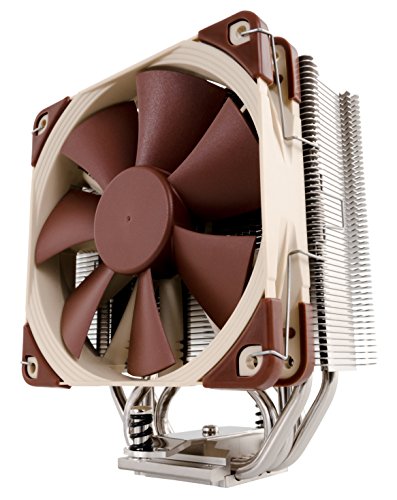
#1: Noctua NH-U12S — best all-round Ryzen air cooler
Verdict: Best build-once-forget-forever pick for Ryzen 7 5800X, 7700X, 9700X, and non-X3D 9600X-class builds. USD 75 street. 158 mm tall (fits every mainstream mid-tower case). 6-year warranty. NF-F12 fan is one of the quietest in the industry at rated RPM.
The NH-U12S is the reference "second cheapest thing you can buy that will still be good in 5 years." Noctua's tolerances on fin machining and mounting hardware are the standard the industry gets compared to. At 158 mm tall it fits every mid-tower case (including small mid-towers where a Noctua NH-D15 will not) and every RAM kit with a normal-height heat spreader. Runs a 5800X at all-core Cinema4D loads at ~72°C under a 21°C ambient, at fan speeds low enough that you cannot hear the cooler over case fans.
The one small drawback is the brown-and-cream aesthetic, which some builders love and some hate. If aesthetics matter to you, the Noctua NH-U12S redux (black) is functionally identical for USD 10 less.
#2: DeepCool AK620 WH — best dual-tower air for a 9950X
Verdict: Best "I need more headroom than the NH-U12S but not an AIO" pick. USD 85 street. Dual-tower design with 6 heat pipes and dual 120mm fans. Handles a 9950X or 7950X3D at 260W sustained. White finish for aesthetic builds.
The AK620 (WH is the white variant) is a genuinely competitive dual-tower design that has closed the gap on Noctua's flagship NH-D15 while being noticeably cheaper. On a 9950X pushing 240W in an all-core rendering load it runs about 4°C warmer than the NH-D15 at the same fan speed, which is a smaller difference than the price gap suggests. If you want dual-tower cooling on Ryzen 9 SKUs but do not want to pay flagship prices, this is the pick.
Height 162mm — fits most mid-towers but check your case's rated CPU cooler clearance carefully. RAM clearance is 46 mm under the front fan, which handles Corsair Vengeance-height DIMMs but conflicts with tall RGB heat spreaders. Verify RAM height before buying.
#3: Cooler Master MasterLiquid ML240L RGB V2 — best budget AIO for high-power Ryzen
Verdict: Best 240mm AIO under USD 100. Handles a 9950X or 7950X3D at 240W sustained. USD 90 street. Aggressive RGB (Cooler Master SickleFlow ARGB fans). AM5/AM4/LGA1700 compatible.
If your case has a natural top or front 240mm mount and you have a strong reason to go liquid — usually aesthetics, sometimes case airflow, occasionally an all-core sustained-load workload where the AIO's larger effective surface area helps — the ML240L RGB V2 is the honest budget pick. Cooler Master's third-generation pump is quieter than the original ML240L and the ARGB implementation is subtle enough that it does not feel gaudy in a normal build.
Two caveats. First, this is a liquid cooler; treat the pump as a wear item on a 5–7 year timeline. If you plan to keep the build for 10 years, an air cooler will outlive it. Second, the SickleFlow fans that ship with the ML240L are audibly louder than Noctua's NF-F12 fans; if silence is your priority, budget USD 30 to swap them for Noctua fans.
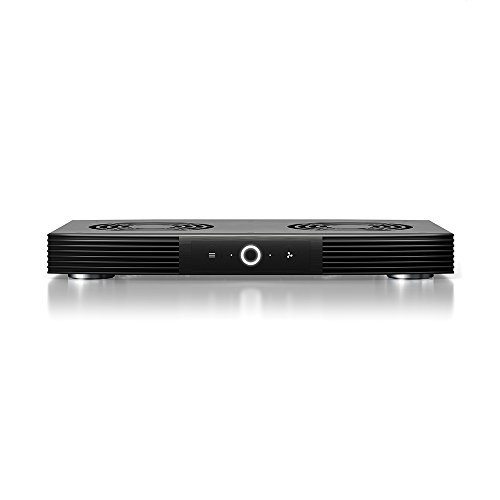
#4: AC Infinity AIRCOM S7 — audio-cabinet exhaust fan, not a CPU cooler
Verdict: Not a CPU cooler at all — the AIRCOM S7 is a top-exhaust fan system for AV cabinets holding receivers, amps, and set-top boxes. Included here only because it appears in some CPU-cooler search lists erroneously. If you found this via a "best AM5 cooler" search, skip this row.
Genuinely useful for its intended job — quieting a hot AV cabinet — and worth mentioning explicitly so nobody buys it hoping to cool a Ryzen 9. For the actual "quiet CPU cooler" job, buy the NH-U12S.
Key takeaways for Ryzen cooling in 2026
- Ryzen 5 (5600G, 7600X, 9600X) at stock: a good tower air cooler like the Noctua NH-U12S is overkill in a good way. Silent, no upgrade path needed.
- Ryzen 7 (5800X, 7700X, 7800X3D, 9700X): premium single-tower air is enough. NH-U12S or AK620 are both correct.
- Ryzen 9 non-X3D (7950X, 9950X): dual-tower air like the AK620 or a 240mm AIO. Both work; choose based on aesthetics and case.
- Ryzen 9 X3D (7950X3D, 9950X3D): dual-tower air is quieter and equally capable. AIO is not required — X3D SKUs have lower TDPs than non-X3D siblings.
- Small form factor (mini-ITX): low-profile air like the Noctua NH-L12S. Do not use a 240mm AIO in a case that cannot properly mount one.
Why air vs AIO is a real question in 2026
Ryzen 7000 and Ryzen 9000 are the first generations where the top-tier consumer SKUs (7950X, 9950X, and their X3D variants) genuinely push what a big air cooler can handle. Under an all-core Blender load a 9950X will happily pull 260W and hit its thermal wall — that is the design point, and AMD's Precision Boost 2 uses the wall as a control signal. The question for a builder is not "can air cool it" — modern dual-tower air can — but "which cooler quiets the fan curve enough to be pleasant to live with."
At the same time, entry AIOs have gotten cheaper and pumps have gotten quieter. A USD 90 240mm AIO in 2026 is meaningfully quieter than a USD 90 240mm AIO in 2022, and the pump-failure rates on the current generation of AIOs are noticeably lower than three years ago. So "just buy an air cooler" is not automatically correct — for high-power builds in restrictive cases, an AIO is a legitimate choice.
For 90 percent of Ryzen builds — 5-series and 7-series SKUs, or a 9-series in a decent case — a good tower air cooler is the correct call. Cheaper, quieter, longer-lived, easier to install, and every review site's benchmarks agree.
Head-to-head spec table
| Cooler | Height | RAM clearance | Fan | Rated TDP | Warranty | Street price 2026 |
|---|---|---|---|---|---|---|
| Noctua NH-U12S | 158 mm | 65 mm | 1× NF-F12 PWM | 180 W | 6 years | USD 75 |
| DeepCool AK620 WH | 162 mm | 46 mm | 2× FK120 PWM | 260 W | 3 years | USD 85 |
| Cooler Master ML240L V2 | (radiator 27 mm) | n/a | 2× SickleFlow 120 ARGB | 250 W | 2 years | USD 90 |
Read the table with attention to warranty. Noctua's 6-year warranty is a real signal — they design coolers to still be running in 2032. The 2-year AIO warranty reflects the pump-as-wear-item reality of liquid cooling.
Air vs AIO — the real decision matrix
Choose air when: you want the quietest overall build, you plan to keep the system 5+ years, you are on a budget, your case has good enough airflow that top-of-case radiator placement is unnecessary, or you value the "no pump = no risk" argument.
Choose 240mm AIO when: your case has a good top or front radiator mount but a crowded VRM area that a big air tower would interfere with, you have a 9950X or 7950X3D on sustained all-core loads, you want the case-airflow benefit of exhausting hot air out of the top of the case, or aesthetics matter enough to justify the price and the noise.
Choose 280mm+ AIO when: you have a 9950X on a serious production workload (blender rendering multi-hour jobs, sustained code compilation), or you are running a workstation Ryzen 7000 Pro / Threadripper. Not our recommendation for a gaming build.
Never choose: a stock cooler for a 9600X or above. AMD's Wraith Spire is fine for a Ryzen 5 5600G at stock; every other current-gen SKU wants an aftermarket cooler.
Practical install notes
Mounting. Both the NH-U12S and AK620 use the standard AM4/AM5 backplate. Do not use a third-party contact frame unless you have a specific reason — modern Ryzen mounting has been stable since the AM4 launch.
TIM. Whatever the cooler ships with is fine. Do not bother with premium thermal paste for a 1–2°C delta on a build you will run for years. If you have leftover Kryonaut, use it; if not, the Noctua NT-H1 or DeepCool's included paste is perfectly adequate.
Fan curves. Set a quiet-first fan curve — 30 percent below 65°C, ramping to 60 percent by 80°C. Zero-RPM below 40°C is a legitimate choice on a fanless idle setup. The default fan curves on many motherboards ramp too aggressively for a modern cooler's capabilities.
Case airflow matters more than the cooler. A silent build is 80 percent case airflow and 20 percent cooler. If your case cannot pull cool air in from the front and exhaust it out the back and top, no cooler will save you. Two intake fans in front and one exhaust in the back is the correct starting configuration for a normal mid-tower.
Do not use "high-pressure" static-pressure fans on a tower cooler. Static-pressure fans are for radiators. Tower-cooler fans want higher airflow at moderate pressure. The Noctua NF-F12 is a hybrid design that works on both; the DeepCool FK120 is airflow-tuned.
Common pitfalls
RAM clearance forgetting. The AK620 has 46 mm RAM clearance. Tall Corsair Vengeance RGB DIMMs are ~46–52 mm. Verify before ordering. The NH-U12S has ~65 mm which fits every consumer RAM height.
AIO orientation. For a top-mount 240mm AIO in a normal mid-tower, mount the radiator with the pump on the CPU end and the tubes going down (away from the pump). Mounting tubes going up traps air in the pump and creates the gurgle-noise complaint you see on reviews.
AIO pump death. All AIOs eventually die at the pump. Realistic lifespan is 5–8 years for a well-maintained current-gen AIO. If the CPU suddenly starts throttling with no fan noise change, check the pump.
Ambient temp assumptions. Reviewers benchmark at 21°C ambient. Real rooms in summer are 27–30°C. Add 5–8°C to any reviewed CPU temp for your worst-case use.
Old case with limited clearance. Cases sold before 2018 sometimes have 150–155 mm CPU cooler clearance. The NH-U12S at 158 mm technically does not fit some of these. Measure your case before ordering.
When to skip this entire discussion and buy a stock cooler
If you are building around a Ryzen 5 5600G as a budget office PC or a media center, the boxed AMD Wraith Spire is sufficient. Do not overthink cooling on a sub-90W part in a non-gaming role. The stock cooler is silent enough for a media center at idle, adequate under load, and included in the box. Spend the USD 75 elsewhere.
For any other Ryzen SKU you might reasonably buy in 2026, an aftermarket cooler is worth the money.
Bottom line — the buying-guide summary
For a Ryzen 5 or Ryzen 7 build in 2026, buy the Noctua NH-U12S. It is quiet, cheap enough, small enough to fit any case, and will still be running in 2032. For a Ryzen 9 non-X3D or an all-core-heavy workload, buy the DeepCool AK620 WH or a 240mm AIO like the Cooler Master ML240L RGB V2 if your case argues for liquid. For a mini-ITX build, buy a low-profile air cooler instead of anything on this list — the recommendations here assume a mid-tower with room to breathe. And ignore the AC Infinity AIRCOM S7 unless you actually have an AV cabinet — it is included here only because it turns up in ambiguous searches.
The right cooler for a Ryzen build in 2026 is boring, quiet, and 4 years of build-and-forget away from the last time you thought about it.
Related guides on SpecPicks
- Storage for the same build: our best budget SATA SSD for a Steam game library covers the second-shelf drive tier.
- Cross-cluster local-LLM angle: if this build is running local LLMs, our per-model GPU VRAM requirements for local LLMs in 2026 piece covers the GPU choice.
Citations and sources
- Noctua NH-U12S product page: Noctua — NH-U12S product page
- DeepCool AK620 product page: DeepCool — AK620 product page
- Cooler Master ML240L V2 product page: Cooler Master — MasterLiquid ML240L RGB V2