Best Hardware for Running MoE LLMs Locally in 2026
Sparse models reordered the buying list: memory capacity first, memory bandwidth second, cores last.
By Mike Perry, Founder & Editor-in-Chief · Published 2026-09-09 · Updated 2026-09-25 · 16 min read
Sparse MoE models reordered the local-inference buying list: memory first, cores last. Five ranked picks for a 2026 desktop MoE rig, with specs.
Quick Answer
Start with a 12 GB GPU and 32 GB of dual-channel system RAM. A 12 GB card holds a 20–35B-total sparse mixture-of-experts release at a 4-bit quantization, and the RTX 3060 12GB delivers that capacity at 360 GB/s on a 170 W board (TechPowerUp). Buy memory capacity before cores.
The shift to sparse mixture-of-experts releases quietly rewrote the local-inference buying guide, and most hardware advice has not caught up. Under the dense-model regime the rule was simple and monotonic: parameters and VRAM moved together, and compute moved with them. A bigger model was slower and needed more memory in roughly the same proportion, so you bought the biggest card you could afford and ran the biggest model that fit.
MoE breaks that coupling. A release with 30B total parameters that routes each token through 3B of them computes like a small model and stores like a large one. The practical effect is that raw compute stopped being the binding constraint for most desktop builds. What binds instead is memory — first VRAM, for how much of the expert set stays resident, then system RAM bandwidth, for whatever spills over. A card that is twice as fast at matrix math but has the same VRAM will not run a model the slower card cannot. A machine with more memory channels will beat a machine with more cores on the offload path, every time.
That reordering is what this guide is built around. Every pick below is chosen for memory behavior first and throughput second, which is why our Best Overall is not the fastest GPU in the catalog — it is the cheapest one that holds the model class most people actually run, entirely in VRAM, without drama.
Median generation throughput at 7–9B models (Llama 3.1 8B, Qwen 3 8B), Q4 quantization, from community-reported runs SpecPicks tracks. Each row pools runs from different sources, runtimes and models in that class, so the rows are not a matched head-to-head; where the article compares cards on the same rig, its own figures are the like-for-like result. Street price is the second-lowest listing priced within the last 24 hours at 0.5–2× launch MSRP, so no single listing sets it, and a street figure well above MSRP says so in its cell; where too few listings pass that check the cell shows a dash and the launch MSRP, which is not comparable with the street figures. Rows marked for comparison are not the cards this article is about — they are included so the throughput column has something to be read against.
Step 0: which MoE tier are you actually targeting?
There are two MoE tiers and they need different machines. Decide which one you are in before you read a single pick.
Tier 1 — sparse 20–35B total. Releases in the Qwen3-30B-A3B and gpt-oss-20B mold: tens of billions of total parameters, a few billion active per token. At Q4_K_M these land in the 12–19 GB range, which means a 12 GB card runs the smaller ones fully resident and a 16–24 GB card runs the whole tier comfortably. This is where local MoE actually became practical for ordinary desktops, and it is where the overwhelming majority of readers belong.
This is right when: you want interactive chat and coding assistance on a machine that also does other things, and you want the model fully in VRAM. It isn't worth it if: your workload genuinely needs frontier-scale breadth of knowledge, which no 30B model provides regardless of architecture.
Tier 2 — 100B-plus total. The large open MoE releases. These are hundreds of gigabytes at any usable quantization and require multi-GPU servers, large unified-memory boxes, or a many-DIMM CPU server that will load them and run them slowly. Nothing in this guide addresses that tier, and the honest advice is that a desktop budget does not reach it — we walked through why in the DeepSeek V3 VRAM requirements piece.
This is right when: you have a compliance or reproducibility requirement that forbids an API. It isn't worth it if: you are optimizing for output quality per dollar — the API wins that comparison by a wide margin at desktop volumes.
Verdict: 12 GB of GDDR6 at 360 GB/s on a 170 W board — the cheapest card that holds a sparse 30B-class release at Q4 without offload.
Specs: 12 GB GDDR6 · 192-bit bus · 360 GB/s bandwidth · 3,584 CUDA cores · 170 W board power (TechPowerUp)
Pros
12 GB is the capacity floor for keeping a Tier 1 MoE resident, and this is the least expensive way to get it with CUDA support.
170 W board power means a quality 550–650 W supply handles it, and a 24/7 inference box does not become a space heater.
Compact twin-fan board fits mainstream cases where triple-fan cards do not — which matters if you later add a second card.
Mature CUDA support: every back-end in the llama.cpp ecosystem has had years to optimize for Ampere.
Cons
360 GB/s is modest by 2026 standards; generation speed on a fully resident model is bandwidth-bound, and you will feel that against a Blackwell card.
12 GB leaves little headroom for long context — the KV cache grows independently of the weights and it is what breaks first.
No FP8 acceleration, so you cannot exploit the native precision some newer releases ship in.
At 12 GB and 360 GB/s, this card sits exactly on the useful boundary for Tier 1 MoE work. A 20B-total sparse release at Q4_K_M is roughly 12 GB of weights, and a 30B-total one is roughly 18 GB — so the smaller half of the tier is fully resident here and the larger half needs either a lower quantization or partial offload. That is a real limitation and worth being clear about. What makes it the Best Overall anyway is the arithmetic on the other side: it is the only 12 GB CUDA card selling at this price, its 170 W draw makes an always-on box cheap to run, and MoE's low compute-per-token profile means the bandwidth deficit costs you less here than it would on a dense model of the same size. Our full model-fit map for this card is in the RTX 3060 12GB local LLM guide.
Prices change frequently — check the current listing before buying.
Verdict: The same 12 GB GA106 silicon in a different cooler — buy whichever of the two is cheaper on the day.
Specs: 12 GB GDDR6 · 192-bit bus · 360 GB/s bandwidth · 3,584 CUDA cores · 170 W board power (TechPowerUp)
Pros
Identical memory configuration to the Best Overall pick, so identical model-fit behavior.
Dual-fan Ventus cooler is a known-quantity design with a long service record.
Frequently undercuts or overshoots the ZOTAC by enough to make the choice purely a price question.
Cons
Board length differs from the ZOTAC — measure your case, especially if a second card is in your future.
Acoustics under sustained inference load differ from the ZOTAC's, and sustained is the operative word: an inference box runs the card near its power limit for hours, not the minutes a gaming session imposes.
Same 12 GB ceiling and same 360 GB/s bandwidth — nothing here fixes a Tier 1 model that does not fit.
The honest framing on the two RTX 3060 picks is that they are the same product for our purposes. Silicon, VRAM, bus width and board power are identical, so any model that runs on one runs identically on the other. The differences are physical: cooler design, board length, fan curve under a sustained load, and how each behaves in a restricted-airflow case. The two are set side by side in the ZOTAC Twin Edge vs MSI Ventus comparison. For a single-card build, buy the cheaper one. For a dual-card build, buy on board length first — see the dual RTX 3060 24GB build guide.
Prices change frequently — check the current listing before buying.
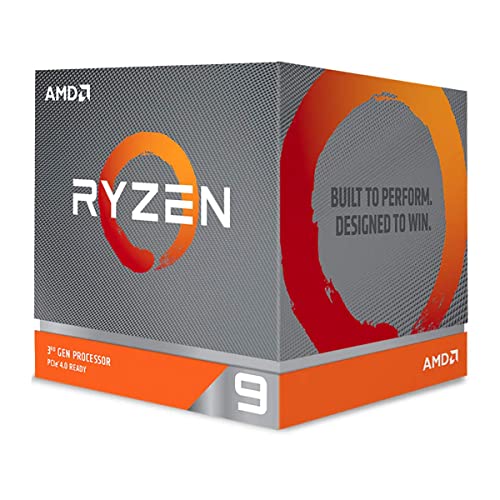
Verdict: Eight cores is comfortably past the knee of the dual-channel DDR4 curve — the right host for the experts that will not fit in VRAM.
Specs: 8 cores / 16 threads · 3.8 GHz base, up to 4.7 GHz boost · 32 MB L3 · 105 W TDP · AM4, dual-channel DDR4 (AMD, TechPowerUp)
Pros
Enough threads to saturate a dual-channel memory subsystem, which is where CPU-side inference actually tops out.
Strong single-thread performance keeps the GPU fed on the resident path, so it is not just an offload part.
AM4 remains the cheapest mature platform for a dedicated inference box — boards and DDR4 are inexpensive.
32 MB of L3 helps the small, cache-friendly tensors that MoE routing touches repeatedly.
Cons
Dual-channel DDR4 is the ceiling, and no CPU choice inside AM4 raises it — an eight-channel server platform is a different league.
105 W TDP with no bundled cooler on most SKUs; budget for cooling on a 24/7 box.
PCIe 4.0 rather than 5.0, which is irrelevant for a resident model and marginal even for offload.
The reason this is the offload pick rather than the highest-core-count part is that offloaded MoE layers are bound by memory bandwidth, not arithmetic. Every token that routes to an expert living in system RAM streams that expert's weights across the memory bus, and once you have enough threads running to keep both DDR4 channels busy, additional cores are waiting on memory rather than doing work. Eight cores clears that threshold on this platform with room to spare. The offload-host question is broken down in the i7-9700K vs Ryzen 7 5800X comparison.
Prices change frequently — check the current listing before buying.
Verdict: Twelve cores for batch work and for a box that runs other services alongside the model — not a tokens-per-second upgrade.
Specs: 12 cores / 24 threads · 3.8 GHz base, up to 4.6 GHz boost · 64 MB L3 · 105 W TDP · AM4, dual-channel DDR4 (TechPowerUp)
Pros
24 threads absorb batch jobs, embedding pipelines, and document preprocessing without starving the inference process.
64 MB of L3 is double the 5800X's, which helps mixed workloads sharing the box.
Comfortable headroom for a machine that also runs a media server, a database, or containers alongside the model.
Same AM4 socket, so it drops into inexpensive existing boards.
Cons
Twelve cores on the same dual-channel memory subsystem returns very little for single-stream inference — the bandwidth ceiling has not moved.
Higher idle power draw than the 5600G, which is a real annual number on a 24/7 host.
Zen 2 single-thread performance trails Zen 3, so the 5800X is faster at the things that are actually latency-sensitive.
No gaming advantage over the 5800X, so do not buy this for a dual-purpose machine.
The counter-case deserves to be stated plainly: if your box does nothing but serve one model to one person, this is the wrong pick and the 5800X is better. What buys the extra cores is concurrency of a different kind — running a batch summarization job while the interactive model stays responsive, or hosting other services on the same hardware. That is a legitimate reason and a common one for homelab builds, but it is a workload-shape reason, not a throughput reason.
Prices change frequently — check the current listing before buying.
Verdict: 65 W and six Zen 3 cores — the cheapest sane host for a machine that is powered on every hour of the year.
Specs: 6 cores / 12 threads · 3.9 GHz base, up to 4.4 GHz boost · 16 MB L3 · 65 W TDP · integrated Radeon graphics · AM4 (TechPowerUp)
Pros
65 W TDP and low idle draw make it genuinely cheap to leave running 24/7.
The integrated Radeon GPU drives displays and handles desktop compositing, which frees the entire 12 GB of your discrete card for model weights — a real and often-overlooked win.
Zen 3 cores, so single-thread performance is close to the 5800X despite the lower price.
Ships with a bundled cooler, which trims the total build cost further.
Cons
Six cores is on the edge for offload-heavy work; if you routinely spill experts to system RAM, the 5800X is the better host.
16 MB L3 is half the 5800X's and a quarter of the 3900X's.
PCIe 3.0 x8 to the discrete GPU slot on this SKU — irrelevant for a resident model, but it does slow the initial load and any offload traffic.
The iGPU is useful for display output, not for inference. It shares system memory bandwidth with the CPU and has no meaningful acceleration for LLM workloads. Do not buy this expecting to run models on the integrated graphics.
Where its iGPU stops being useful is worth being explicit about, because it is a common misconception: the integrated Radeon graphics is a display adapter and a light video-encode engine in this context. Its value to an inference build is entirely indirect — it takes over desktop duties so your discrete card's VRAM is 100 percent available to the model, which on a 12 GB card is worth several hundred megabytes you would otherwise lose to the compositor.
Prices change frequently — check the current listing before buying.
This is the mistake that costs the most money. A sparse model's active-parameter count tells you how fast it computes; its total parameter count tells you how much memory it occupies. The router selects a different expert subset for every token, so any expert can be needed at any step and the full set has to be somewhere fast. Size your card against total parameters at your intended quantization, then treat the active count as the reason you can get away with a slower card than a dense model of that size would demand.
System RAM capacity and channel count
32 GB of dual-channel memory is the entry point and 64 GB is the comfortable target. Capacity determines whether an oversized model loads at all; channel count determines how fast the offloaded portion runs. Populating both channels is not optional — a single-DIMM configuration halves your bandwidth and is the most common self-inflicted bottleneck in budget builds. On AM4 you cannot go past two channels, so if your workload is fundamentally offload-heavy, that platform ceiling is your real constraint.
CPU cores for offloaded layers
Enough to saturate your memory channels, and no more. On dual-channel DDR4 that is roughly six to eight cores. Beyond that, additional cores wait on DRAM. Buy extra cores because the box does other work, not because you expect more tokens per second.
Model-library storage
Weights are read once per load and then live in memory, so drive speed changes startup time and nothing else. Buy capacity. The Crucial BX500 1TB rates up to 540 MB/s sequential read, which loads an 18 GB Tier 1 checkpoint in roughly 35 seconds cold and effectively instantly once the OS page cache holds it. Keeping two quantizations of three models is comfortably 100 GB, so a terabyte is the sensible floor. The NVMe-versus-SATA tradeoff is broken down in the storage comparison.
PSU headroom and 24/7 acoustics
A 170 W card and a 105 W CPU is a modest system, and a quality 650 W unit covers it with room for a second GPU later. The consideration people miss is duration: an inference box holds a sustained load for hours, where a gaming machine imposes bursts. That changes which fan curve you want and makes case airflow more important than peak cooling capacity. Our 24/7 rig cooling comparison covers the air-versus-AIO decision for exactly this duty cycle.
As an Amazon Associate, SpecPicks earns from qualifying purchases; we also earn on qualifying eBay purchases via the eBay Partner Network. Prices shown were last tracked at crawl time and may vary — check the listing for the current price.
📹 Watch a review
I had given up on AMD… until today - Ryzen 9 3900X & Ryzen 7 3700X Review — Linus Tech Tips on YouTube
Frequently asked questions
What is a mixture-of-experts model and why does it change what I buy?
An MoE model routes each token through a small subset of its total parameters, so a release with tens of billions of total parameters may only compute with a few billion per token. That makes it fast on modest compute but no smaller in memory, because the router can call any expert at any step. The practical effect is that you shop for memory capacity and bandwidth first and raw compute second — the reverse of dense-model advice.
Do I need more VRAM or more system RAM for MoE models?
Both, in that order. VRAM decides how much of the expert set stays resident and therefore how fast generation runs; system RAM decides whether the model loads at all once you exceed the card. A 12 GB card paired with 32 GB of dual-channel system memory is the sensible entry point, because it lets you hold the sparse 20-35B-class releases in VRAM and still offload the occasional larger model without swapping to disk.
Is a 12 GB GPU still enough in 2026?
For the sparse models most people actually run day to day, yes. A 12 GB card holds a 20-35B-total MoE release at a 4-bit quantization with usable context, which is the tier that made local inference practical for ordinary desktops. Where 12 GB stops working is long context — the KV cache grows independently of the weights — and dense models above roughly 14B. If either of those describes your workload, buy VRAM, not cores.
Does CPU core count actually matter for offloaded layers?
Less than people expect. Memory bandwidth sets the ceiling on CPU-side inference, and once you have enough cores to saturate your memory channels, additional cores return very little. An eight-core part on dual-channel memory is close to the practical knee of that curve for desktop platforms. Twelve cores help with batch processing and with running other services on the same box, which is a real reason to buy them — just not a tokens-per-second reason.
Where should model weights live — SATA SSD or NVMe?
Weights are read once per load and then live in memory, so drive speed affects startup time rather than tokens per second. A large SATA SSD is the cost-effective home for a multi-model library, and the difference against NVMe is measured in seconds of load time, not in inference performance. Buy capacity over speed here, and keep at least one alternate quantization on hand so you can switch tiers without re-downloading.