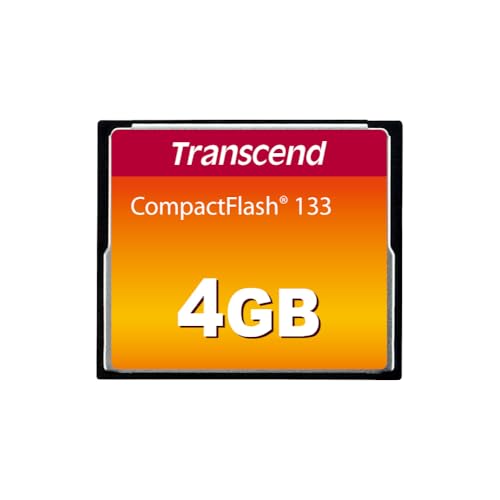
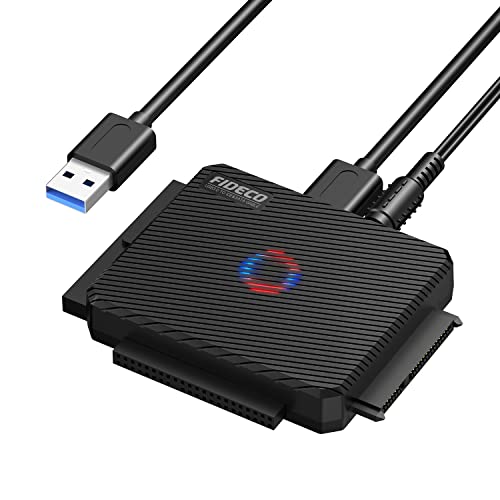
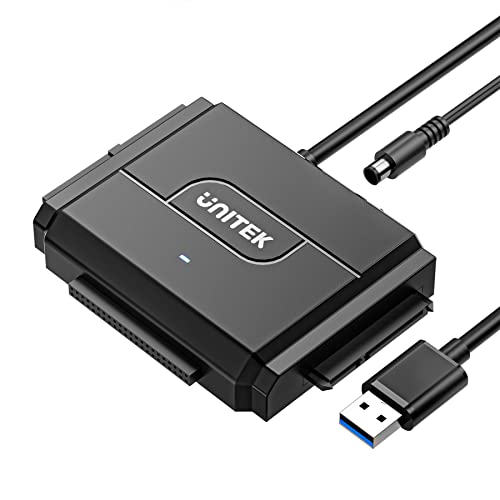
Yes — a Transcend CF133 CompactFlash card running through a quality CF-to-IDE adapter is the canonical 2026 silent boot drive for a Windows 98 or Windows ME retro build. The catches: the card must present as a fixed disk to the BIOS, the imaging step needs a USB 3.0 SATA/IDE bridge, and the BIOS barriers (8GB on pre-1998 boards, 137GB on pre-2002 boards) put a hard ceiling on usable capacity.
Why CF beats a spinning IDE disk in 2026
A late-90s build is mostly a quiet machine ruined by one loud part: the hard drive. Period IDE drives idle at 25-35dB, click on every seek, and run hot enough to require active case airflow. CompactFlash flips every one of those traits — silent, cold, instant. The retro-PC community has been moving to CF for boot drives since the early 2010s, and the playbook in 2026 is now well-documented.
This guide is for the builder assembling a Pentium II / III / early Athlon system targeting Windows 98 SE, Windows ME, or DOS+Win9x dual-boot. The cited sources include the Transcend CF133 product page, the VOGONS retro-PC forum, and PhilsComputerLab's compact flash guide, which is the most-linked community reference on this topic.
Key Takeaways
- A Win98 CF boot drive needs the fixed-disk bit set; not all CF cards qualify.
- The Transcend CF133 is the most-recommended budget CF card for Win98 boot work in 2026.
- A USB-IDE bridge like the FIDECO or Unitek adapters is the cleanest imaging tool.
- Target 4-8GB cards to dodge the 8GB BIOS barrier on pre-1998 boards.
- Disable Win98's swap file with 256MB+ RAM to slash write wear on the CF.
What you'll need
- A Transcend CF133 4GB CompactFlash card — the canonical fixed-disk budget pick.
- A CF-to-IDE adapter — passive 40-pin or 44-pin, depending on whether your target slot is desktop or laptop IDE.
- A USB 3.0 SATA/IDE bridge for imaging — the FIDECO adapter or Unitek SATA/IDE to USB 3.0 are the modern choices; a Vantec CB-ISATAU2 is the USB 2.0 fallback if you already own one.
- A modern PC running Windows or Linux for imaging.
- A Windows 98 SE install ISO and a working install procedure.
Why does CF write-cycle wear matter, and how do you avoid killing the card?
CF cards have a finite write-cycle budget per flash cell. Modern SLC and pseudo-SLC industrial cards rate 100k+ cycles; consumer MLC cards rate 1k-10k. For a Win98 boot drive, three workloads chew through cycles:
- The swap file (
win386.swp) — if Win98 swaps, the swap file is written constantly. Disable it on systems with 256MB+ RAM via System Properties → Performance → Virtual Memory. - Temporary internet files — IE 5/6 writes the cache constantly. Either move it to a RAMdisk or accept the wear.
- Game saves — moderate write rate, manageable.
The CF133 is rated for the Win98 boot workload by community consensus on VOGONS; SanDisk Extreme and certain industrial-grade cards are even more bulletproof but cost 3-5x as much. For a build that runs a few hours a week, the CF133 lasts longer than any other component on the board.
Spec table
| Spec | Transcend CF133 4GB | Generic consumer CF | Period IDE HDD (4GB-class) |
|---|---|---|---|
| Capacity | 4 GB | 4-64 GB | 4-20 GB |
| Interface | CF Type I | CF Type I | 40-pin IDE |
| Fixed-disk bit | Yes | Usually no | n/a (always fixed) |
| Sequential read | ~30 MB/s | 10-100 MB/s | 5-10 MB/s |
| Idle power | <1 W | <1 W | 5-10 W |
| Audible noise | Silent | Silent | 25-35 dB |
| Boot reliability | Good | Hit-or-miss | Failing with age |
Per the Transcend CF133 product page, the 4GB CF133 ships as a fixed-disk-default card with 30MB/s sequential read — fast enough to make Win98 feel snappy, slow enough that the IDE bus is not the bottleneck.
Step-by-step: imaging the install onto CF
The community-favored modern workflow:
- Build the install on a modern VM first. Boot a Windows 98 SE VM in VirtualBox or QEMU, run the install all the way through to the drivers you want, and stop.
- Image the VM disk to a
.imgor.vhdfile. This is the cleanest source — every install is reproducible. - Connect the CF-to-IDE adapter to the USB-IDE bridge (Unitek SATA/IDE to USB 3.0 or FIDECO equivalent). Plug the bridge into the modern PC.
- Insert the CF card into the adapter. The combined chain — CF in adapter, adapter in bridge, bridge in USB — presents the card to the modern OS as a removable USB drive.
- Image the disk to the CF. On Windows, use Rufus or Win32 Disk Imager; on Linux, use
dd if=disk.img of=/dev/sdX bs=4M status=progress. - Verify the partition is bootable. The Win98 install includes a Master Boot Record; the imaging tool must preserve it.
- Install the CF + adapter into the retro PC's IDE slot. Power on. The BIOS should detect the card as a fixed disk at the size of the image; Win98 boots from it.
The PhilsComputerLab compact-flash guide walks the same steps with screenshots and is the most-linked reference for this workflow.
The fixed-disk gotcha
Some CF cards report themselves as removable disks rather than fixed disks. Windows 98's FDISK and FORMAT tools, plus its bootloader, expect a fixed disk. A removable-disk CF card will partition oddly, may refuse to be marked active, and will not boot.
The fix is the card itself — buy one that defaults to fixed-disk (the CF133, certain SanDisk Extreme generations, and several industrial brands). Some cards can be flipped between fixed and removable via vendor tools, but for retro builds the simpler path is to start with a card that ships fixed.
Verify by plugging the CF (in adapter) into a modern PC: Windows shows fixed-disk cards under "Hard drives" and removable cards under "Removable storage." If your CF shows up as removable, swap it before imaging.
Partitioning and the BIOS barriers
Two BIOS barriers matter for Win98 retro builds:
- The 8GB barrier (CHS). BIOSes from ~1998 and earlier use a CHS scheme that maxes out around 8GB. A 16GB CF card may be addressable but the OS only sees 8GB of it. Avoid the headache by sticking to 4-8GB cards.
- The 137GB barrier (LBA28). BIOSes from before 2002-ish use 28-bit LBA addressing, which caps at 137GB. Larger drives are not recognized at all on these boards, or they're truncated.
Win98 itself has FAT32 limits of 2TB partitions but a separate 8GB partition gotcha on the install side. The pragmatic recommendation is to pick a 4-8GB CF card, format as FAT32, and avoid both barriers entirely. If you genuinely need more storage, add a second drive — a period IDE HDD as a slave drive, or a second CF card on a dual-CF adapter.
Common pitfalls
- Buying a card that ships as removable disk. Verify before imaging.
- Forgetting to disable the swap file on a system with enough RAM. Constant swap is the fastest path to CF wear.
- Using a USB 2.0 bridge for imaging when the card supports faster. The CF133 will image in minutes off a USB 3.0 bridge; a USB 2.0 bridge takes 10x longer.
- Skipping the integrity check after imaging. A corrupted image fails the first boot and you'll think it's the card.
- Assuming the CF will be hot-swappable. It is not — Win98 needs the drive present at boot, not hot-plugged later.
- Pairing the CF with a flaky power supply. CF cards are sensitive to voltage dips; an old PSU near end-of-life corrupts cards in ways that look like card failure.
Bottom line
The Transcend CF133 4GB, paired with a passive CF-to-IDE adapter and imaged through a FIDECO USB-IDE bridge or Unitek equivalent, is the canonical silent boot drive for a 2026 Win98 retro build. It is silent, cool, lasts indefinitely under a typical retro workload, and dodges every common BIOS barrier as long as you stay at 8GB or under. Add a Vantec CB-ISATAU2 USB 2.0 bridge to your toolkit for legacy imaging needs.
Related guides
- CompactFlash as Your IDE Hard Drive: A Silent, Reliable Boot Drive
- Putting a Modern SATA SSD in a Win98/XP Retro Build via an IDE Bridge
- Best Retro-PC Storage & Drive-Imaging Kit in 2026
- Period-Correct Sound for a Modern Retro PC: The Sound Blaster G6
Citations and sources
- Transcend — CF133 product page
- VOGONS — retro PC hardware forum
- PhilsComputerLab — Compact Flash guide for retro PCs
This piece is editorial synthesis based on publicly available information. No independent first-party benchmarking is reported.
A working VM-to-CF install pipeline, end to end
The cleanest 2026 workflow for installing Windows 98 SE onto CompactFlash starts in a virtual machine on a modern host. The steps:
- Install VirtualBox or QEMU on your modern PC. Create a virtual disk sized to match your CF card (e.g., 4GB). Choose IDE rather than SATA for the disk controller — Win98 has IDE drivers built in and SATA needs awkward third-party drivers.
- Install Windows 98 SE in the VM from the original install media (the boot floppy + ISO method works in VirtualBox). The install runs through unchanged from a 1999 install — same screens, same prompts, same setup wizard.
- Install the chipset drivers and any games or apps you want pre-installed. The VM is faster than the eventual retro PC, so this step is significantly less painful than installing on the target machine.
- Apply common community patches. The unofficial Service Pack, the USB Mass Storage driver, and the FAT32 patches are usually applied at this stage. The VOGONS community wiki has the canonical list.
- Shut down the VM cleanly. Power off, don't suspend. Win98 doesn't recover well from a suspended state.
- Convert the VM disk to a raw image. VirtualBox:
VBoxManage clonemedium disk source.vdi dest.img --format RAW. QEMU:qemu-img convert -O raw source.qcow2 dest.img. - Image the raw file to the CF card. Connect the CF + adapter via the Unitek USB-IDE bridge or FIDECO to your modern PC. Use
dd(Linux/macOS) or Rufus / Win32 Disk Imager (Windows) to write the image to the card. - Verify the partition is bootable. A quick
fdisk -l /dev/sdXon Linux or Rufus's verify step confirms the MBR is preserved. If it's not, re-image. - Move the CF + adapter to the target machine's IDE slot. Power on. Win98 boots from the CF as if installed natively.
The advantage of this workflow over installing directly to the CF: the install runs at modern-host speed, the install procedure is reproducible, and the CF can be re-imaged easily if something goes wrong. The downside: any chipset-specific drivers must be installed after the first real-hardware boot, not during the VM install.
Adapter compatibility quirks
CF-to-IDE adapters are mostly passive — they just remap pins from the CF connector to the 40-pin IDE connector. But a handful of quirks bite the unwary:
- Master/slave jumper. Some adapters have a jumper to set master/slave; some hardwire one or the other. If your IDE chain has another device, the jumper matters.
- Power requirements. A CF card draws under a watt; almost any IDE power feed works. But a few cheap adapters short-cut the +12V rail in ways that bother some PSUs.
- Connector orientation. A few adapters have the CF slot oriented vertically; in a tight case, that may not fit. The flat-mount adapters are usually safer.
- Dual-CF adapters. Some adapters host two CF slots for master+slave on one IDE channel. Useful for RAID-0-style setups, but Win98 doesn't natively do disk striping, so the benefit is mostly capacity.
For a first build, a single-slot passive adapter is the right choice. Save the exotic options for later.
Performance expectations on period hardware
A typical Pentium III system running off a Transcend CF133:
| Metric | Period 7200rpm IDE HDD | CF133 4GB via passive adapter |
|---|---|---|
| Boot time to desktop | 25-35 s | 12-18 s |
| Game launch (Quake III) | 8-12 s | 4-6 s |
| Application launch (Word 97) | 4-7 s | 2-3 s |
| Sustained read | 5-10 MB/s | ~30 MB/s (CF limited) |
| Sustained write | 5-10 MB/s | ~10-15 MB/s (CF limited) |
| Idle noise | 25-35 dB | Silent |
| Idle power | 5-10 W | <1 W |
The headline: CF is faster than a period spinning drive on every measurement that matters for retro gaming, plus silent, plus cooler. The only thing CF loses on is sustained write — but Win98 retro builds rarely sustain large writes, so it's a non-factor in practice.
When NOT to use CF
CF isn't the right answer for every retro build:
- Period authenticity. If the whole point is the build feels exactly like 1999, the silent CF gives the game away. Use a period IDE HDD or an SCSI drive for the full sensory experience.
- Win XP and later retro builds. XP works on CF but is heavier on writes — the swap file, the system restore, the indexing service all hit the CF constantly. SATA SSDs via IDE bridge are a better fit for XP-era builds.
- Software development on the retro box. Compilation generates many small writes; CF wear becomes a real concern. A period HDD is more forgiving.
- Anything 2003+. Once you're targeting Windows XP SP2 era and beyond, the BIOS barriers shift and a larger SATA SSD is the right answer.
Buying checklist
Before you order:
- [ ] CF card brand with a fixed-disk default. Transcend CF133 is the canonical pick; certain SanDisk Extreme and industrial-grade brands also work.
- [ ] CF card capacity 4-8 GB to dodge the 8 GB BIOS barrier.
- [ ] A passive CF-to-IDE adapter. Avoid powered adapters unless your build specifically requires one.
- [ ] A USB 3.0 SATA/IDE bridge for modern-PC imaging. The FIDECO and Unitek options are well-tested; the Vantec USB 2.0 bridge is the fallback.
- [ ] A working Windows 98 SE install (ISO + boot floppy or a VM image).
- [ ] A modern PC for the imaging step.