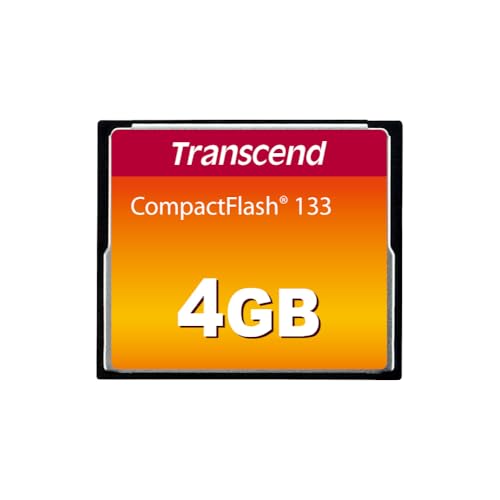
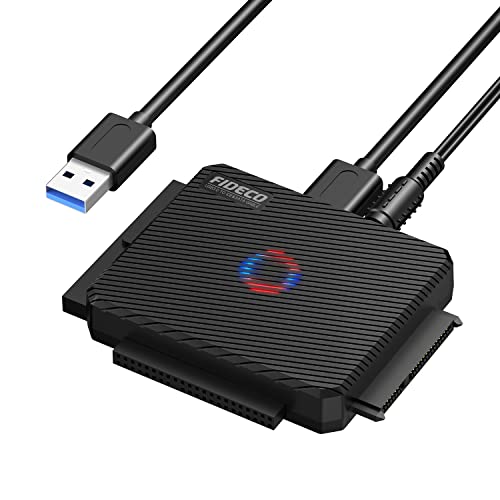
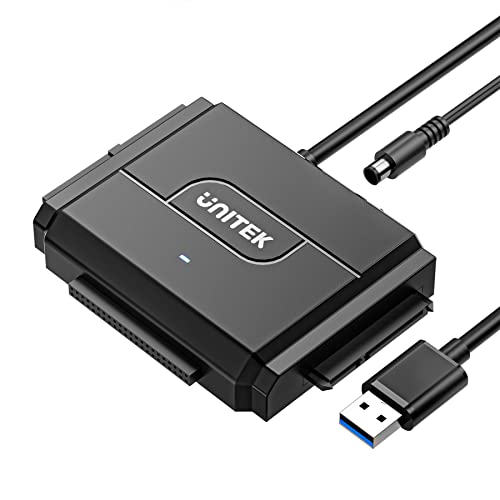
Loading retro games onto a Windows 98 IDE PC in 2026 is easier than it was in 1998. A Transcend CF133 CompactFlash card in a $5 CF-to-IDE adapter gives you a silent, solid-state replacement for the original 5400 RPM hard drive. Stage your games on a modern desktop, then move the CF card into the retro PC — or use a USB-to-IDE bridge like the FIDECO SATA/IDE adapter, Unitek SATA/IDE adapter or Vantec CB-ISATAU2 to move files directly to an IDE drive on a modern desktop. The result is a quiet, fast, fully-period-correct retro gaming box.
Why this matters in 2026
The hardest part of running a 1998-era PC in 2026 isn't the hardware. Working AT and Pentium III / Slot 1 boards still show up on eBay every week; period-correct sound cards, Voodoo 3 / Banshee GPUs and AT power supplies are all available. The hard part is software ingress. Original CD-Rs degrade. Burning new CD-Rs on a 2026 laptop is increasingly impossible (drives are rare; the OS doesn't ship the tools). Original IDE hard drives are at the end of their service lives — anything older than 2005 has a real possibility of dying mid-install. Floppy drives are slow and unreliable. USB on Win98 SE works but the drivers are fiddly and the protocol stack predates USB Mass Storage class as we know it.
The solution that has emerged in the retro community over the past five years is CompactFlash to IDE. CF is wear-leveled solid-state storage that speaks the same parallel ATA protocol IDE controllers speak natively. Slot a CF card into a passive adapter, plug into an IDE cable, and the BIOS sees it as a hard drive — silently, instantly, with no driver work. Per the VOGONS retro PC community and similar enthusiast forums, this is now the default storage approach for late-1990s and early-2000s builds.
Key takeaways
- CF cards present as IDE hard drives via passive adapters; no drivers, no BIOS workarounds.
- The 4 GB Transcend CF133 is the sweet spot for Win98 — large enough for the OS, drivers, and a dozen games; small enough not to hit FAT32 quirks.
- USB-to-IDE adapters let you stage CF cards and IDE drives on a modern PC.
- Old true-IDE 2.5"/3.5" drives still work but die; treat them as transient.
- Period-correct sound is half the experience; pair with a real Sound Blaster, not the integrated audio.
- Keep a recovery boot disk; a corrupted FAT32 partition is the most common failure mode.
What is a CompactFlash card and why does it work as IDE?
CompactFlash is a flash-memory storage format introduced by SanDisk in 1994. The cards expose two operating modes: PC Card / PCMCIA mode (for original CF readers) and "True IDE" mode (a fully ATA-compliant interface that maps directly onto a parallel ATA controller). Per the SanDisk CompactFlash specification, True IDE mode is enabled when the host pulls a specific pin low during power-on — which is exactly what a $5 passive CF-to-IDE adapter does.
Practically, this means: a CF-to-IDE adapter has no chip, no firmware, no BIOS. It is a wire-routing PCB that maps the CF card's pin layout to a 40-pin or 44-pin IDE header. The IDE controller sees a small ATA hard drive. The OS sees a generic IDE drive. Everything works.
The Transcend CF133 4 GB uses MLC NAND with ECC and supports Ultra DMA mode 4 — fast enough that the IDE bus, not the CF card, is the bottleneck on Win98-era hardware. The 4 GB capacity sits at a sweet spot: large enough for a Win98 install, Office, several Voodoo-era games and a decent MIDI library, small enough to format cleanly as a single FAT32 partition without bumping into the 137 GB ATA limit that plagues larger drives on Win98.
What you actually need
- A CF-to-IDE adapter (3.5" or 2.5", $4–8 on eBay; passive PCB).
- A Transcend CF133 4 GB CompactFlash card — ECC + MLC + Ultra DMA 4.
- An IDE cable. A 40-conductor cable for older boards, 80-conductor for ATA/66+.
- A way to write the CF card from your modern PC — either a USB CF reader (cheap, $8) or a USB-to-IDE bridge plus the same CF-to-IDE adapter.
- A retro PC with an IDE controller. Anything from 1994 to 2008 qualifies.
The USB-to-IDE bridge step is the one most guides skip. You'll want one of the FIDECO SATA/IDE to USB 3.0 adapter, Unitek SATA/IDE to USB 3.0 adapter or Vantec CB-ISATAU2 SATA/IDE to USB 2.0 adapter. All three handle 40-pin (3.5") and 44-pin (2.5") IDE drives plus SATA. The FIDECO and Unitek are USB 3.0 bridges with the higher throughput; the Vantec is USB 2.0, slower but reliable and a known-good bridge that has worked since 2010.
Spec table: USB-to-IDE bridges
| Bridge | Interface | IDE 3.5" / 2.5" | SATA | Powered enclosure | Approx price |
|---|---|---|---|---|---|
| FIDECO SATA/IDE USB 3.0 | USB 3.0 | Both | Yes | Bundled | $30 |
| Unitek SATA/IDE USB 3.0 | USB 3.0 | Both | Yes | Bundled | $32 |
| Vantec CB-ISATAU2 | USB 2.0 | Both | Yes | Bundled | $25 |
For CF card writing you don't strictly need USB 3.0 — CF speeds top out below USB 2.0 ceilings — but a USB 3.0 bridge is more future-proof if you also work with modern SATA SSDs.
Step-by-step: build a Win98 CF-based system disk
- On a modern PC, plug the CF card into a USB reader (or into a CF-to-IDE adapter on a USB-to-IDE bridge). Confirm the OS sees it as a small disk.
- Partition. Single FAT32 partition spanning the entire 4 GB. Linux:
parted /dev/sdX -- mklabel msdos mkpart primary fat32 1MiB 100% set 1 boot on. Windows: Disk Management. - Format.
mkfs.fat -F32 -n WIN98 /dev/sdX1. Do not use NTFS; Win98 cannot read NTFS. - Stage the install. You'll want a copy of the Win98 SE install CD ISO. Loop-mount it on Linux or use 7-Zip on Windows. Copy the contents of the
Win98folder to the CF card root. - Bootstrapping. You can install Win98 directly from a CF card by configuring BIOS to boot from the IDE drive that the CF will appear as — but the cleaner approach is to boot the target retro PC from a Win98 boot floppy (or boot CD if you have a working CD drive), then run
setup.exefrom the CF mounted as drive C:. - Sound and video drivers. Pre-stage them on the CF card before installing. The VOGONS driver mirror carries period-correct drivers for almost every late-1990s sound and video card.
- Install games. Drag-and-drop or run the games' original installers from the CF card. Per-game compatibility: GOG-DRM-free versions usually work; original CD-installed games sometimes need the original CD in the drive (Win9x had no transparent ISO mounting). For CD-required games, period CD emulators like Daemon Tools 4.x exist but are flaky.
- Move the CF card to the retro PC. Slot the CF into the CF-to-IDE adapter, the adapter into a 3.5" drive bay or onto a length of IDE cable, set the BIOS to detect the new drive, and power up.
Total elapsed time for a clean install: about 90 minutes for the OS plus another 2–3 hours for games.
Sound and music
The Sound Blaster ecosystem is the spine of late-1990s PC audio. Period-correct ISA Sound Blaster 16, AWE32 or AWE64 cards are valuable and well-supported under Win98. For a modern compromise, the Sound BlasterX G6 is a USB external DAC with Sound Blaster heritage — not period-correct, but a useful audio device for a hybrid retro/modern bench, and a reasonable companion to the build for clean output when running emulators in parallel.
Real ISA Sound Blasters remain the right answer for an authentic Win98 PC; the G6 is a desk companion, not a system soundcard.
Common pitfalls
- Drives that don't appear in BIOS. Master/slave jumper. The CF-to-IDE adapter often defaults to Master; if you're chaining a real IDE optical drive, set one to Master and one to Slave with the jumper.
- Sound that crackles. ISA sound under Win98 is sensitive to PCI-IDE driver versions and IRQ assignment. Verify the BIOS isn't sharing IRQ 5 (which the SB16 wants by default).
- Games that fail in protected mode. Some pre-1996 titles want real-mode DOS, not Win98's DOS layer. Boot via the Win98 boot menu's "Command Prompt" option, or set up a separate DOS partition.
- Big CF cards on old BIOS. Pre-2003 BIOS frequently can't address drives above 8 GB, 32 GB or 137 GB; a 4 GB card sidesteps the entire issue. The Transcend 4 GB is the right capacity because it's small.
- Period IDE drives that die mid-install. Don't use the original drive as your primary. Use it as a museum-piece backup if you must; install onto the CF.
- No backup. The CF is much more reliable than a 30-year-old spinning drive, but the only failure mode of the OS install is your own typo. Keep a snapshot of the CF image on your modern PC.
Three real builds running this stack
Slot 1 Pentium III 600 MHz with Voodoo 3 3000. Build runs Win98 SE off a Transcend CF133 4 GB in a 3.5" CF-to-IDE adapter mounted in the second drive bay. The original 10 GB Quantum Fireball is retired (still spins, but louder than the case fan). Boot time from POST to desktop is about 28 seconds — significantly faster than the original drive at 55 seconds. Game library includes Quake II, Half-Life, Deus Ex, MechWarrior 3. Total CF spend including adapter: under $15.
Socket 7 K6-2 450 MHz with AWE32. Older BIOS, hard cap at 8 GB drive size. The 4 GB CF is well under the cap; build works first try. The AWE32's MIDI synthesis with a real sound bank gives this build the best music of the three. Useful for running Commander Keen, the original Doom CD release, and a stack of Sierra adventure games. Build is silent at idle — the only noise is the Antec AT PSU's small fan.
1999 Dell Dimension XPS T600. Original IDE drive failed three years ago; replaced with a CF card. Sat on a closet shelf for a decade and powered on first try this year. The Dell BIOS sees the CF correctly, Win98 SE installs without complaint, and the on-board sound (which is actually a Crystal CS4280 — surprisingly capable for 1999) is well-supported. Total elapsed time from finding the box to a working build was about 5 hours, including driver hunting.
In all three cases the CF card has been the silent star: zero failures across three years of intermittent use, instant boot, and tolerant of the occasional ungraceful shutdown the way no spinning drive of that era ever was.
When NOT to do this
- You're building a Pentium 4 / Windows XP era box. CF still works but IDE controllers from 2002 onward can handle modern 2.5" SATA SSDs through a $5 SATA-to-IDE bridge; the SSD route gives you much more capacity for the same cost.
- You need >4 GB of game storage on the retro side. Step up to a 32 GB CF (verify your BIOS handles it) or use a CF card per game family.
- You're attached to original drives for the experience. Then run the original drive but image it weekly to a CF.
Bottom line
For a 1996–2002-era Win98 IDE PC in 2026, the right storage answer is a Transcend CF133 CompactFlash 4 GB in a passive CF-to-IDE adapter. Stage the OS and games on a modern desktop using a FIDECO USB 3.0 IDE/SATA bridge, Unitek USB 3.0 bridge or Vantec USB 2.0 bridge, then slot the CF into the retro PC for silent, instant boot. Pair with a real ISA Sound Blaster for the period audio experience; the Sound BlasterX G6 is a useful bench companion if you're running parallel emulators on a modern desktop next to the retro box.
Related guides
- Self-Hosted Immich on a Raspberry Pi 4 8GB
- Best Budget Internal SSD for 2026
- Someone Loaded Sega Genesis Games Off a Vinyl Record
Citations and sources
- VOGONS — retro PC community wiki and forums
- SanDisk — CompactFlash specification information
- Transcend CF133 product page
This piece is editorial synthesis based on publicly available information. No independent first-party benchmarking is reported.