Building an authentic 1999 GeForce 256 plus Pentium III plus Windows 98 SE rig in 2026 is more accessible than the era's mystique suggests, but every step requires choices about authenticity versus reliability. Per Wikipedia's GeForce 256 entry, NVIDIA's first "GPU"-branded card paired with a Pentium III running Windows 98 SE defines the late-1990s gaming PC stack. This guide walks through the build with honest tradeoffs.
Why 1999 is the right era to recreate
1999 is the inflection year where hardware-accelerated 3D moved from "nice to have" to baseline. NVIDIA's GeForce 256 introduced hardware transform and lighting to the consumer market. Intel's Pentium III crossed 600 MHz for the first time. Windows 98 SE shipped as the gaming-OS-of-record. DirectX 7 standardized 3D APIs around the new GPU model.
The result is a hardware stack that is both historically significant and demonstrably playable - games from the era still hold up, the hardware is still findable, and the build experience teaches the foundational rules that shape modern PC gaming.
Key takeaways
- The build hinges on patient eBay hunting for the GeForce 256 itself - everything else is reproducible from period parts or modern compromises.
- CF-via-IDE adapter is the canonical 2026 storage choice; original HDDs are too unreliable.
- Period-correct sound is doable with ISA Sound Blaster cards but USB DAC fallback is acceptable.
- Windows 98 SE is the right OS choice; install from a CD image via USB and modern tools.
- Quake III Arena is the canonical hardware T&L showcase title - install it first.
The parts list
CPU: Pentium III (Slot 1 or Socket 370)
Target a 600-1000 MHz Pentium III. Slot 1 variants ("Katmai" generation up to 600 MHz, "Coppermine" 500-1000 MHz) match the GeForce 256's launch timeframe. Socket 370 Coppermine and Tualatin variants are more reliable for build-out because socketed CPU support is simpler and motherboard availability is better.
Avoid Tualatin chips - they need motherboard support most period-correct boards lack and they postdate the GeForce 256's prime era.
Motherboard: Intel 440BX or Intel 815
The Intel 440BX chipset is the canonical 1999 enthusiast pick. Officially rated for 100 MHz FSB but widely overclocked to 133 MHz. Intel 815 (released mid-2000) is the period-correct successor with native 133 MHz FSB and AGP 4x support.
Avoid via Apollo Pro chipsets unless desperate - driver compatibility for the GeForce 256 line was historically uneven on VIA boards.
GPU: GeForce 256 (the central piece)
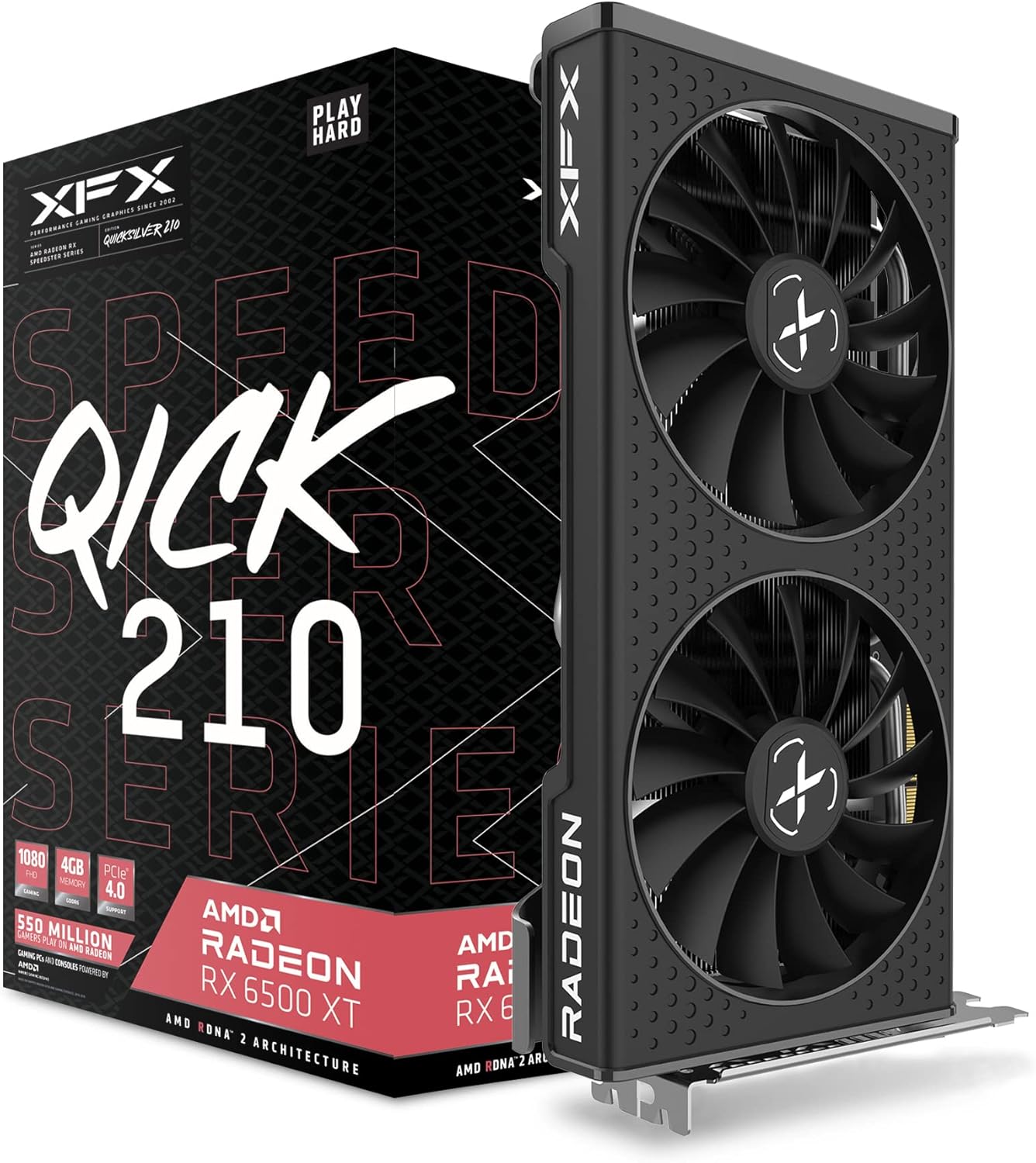
Original NVIDIA reference cards, ASUS, Creative Labs, ELSA, and Hercules board partners all shipped GeForce 256 variants. DDR variants (GeForce 256 DDR) outperform SDR variants meaningfully at higher resolutions. AGP 2x or AGP 4x interface; the cards are physically AGP only.
Working examples on eBay run $40-150 depending on variant and condition. Watch for capacitor health - 25-year-old electrolytics fail. Reflowing or recapping is sometimes needed.
RAM: 128-512 MB PC-100 or PC-133 SDRAM
Period-correct PC-100 or PC-133 SDRAM in 128 MB or 256 MB modules. Windows 98 SE has known issues with over 512 MB RAM (the "Microsoft Q253912 limitation") - keep total RAM at or below 512 MB or apply known workarounds.
Storage: CompactFlash via IDE adapter (modern compromise)
This is the most important departure from strict authenticity, and the right one. Original 1999 IDE hard drives - 10-40 GB Quantum Fireball, Maxtor DiamondMax - are increasingly unfindable in working condition. They were unreliable when new; 25-year-old units survive only by luck.
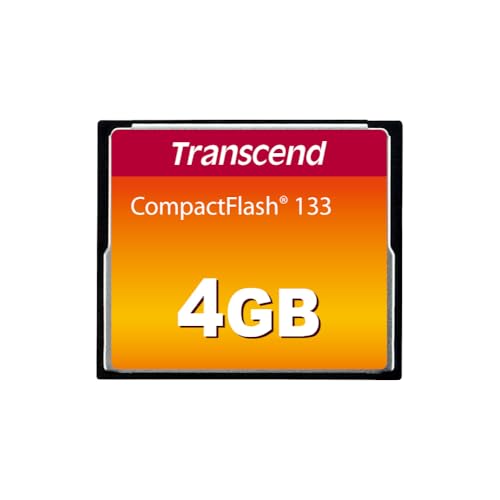
The modern compromise: a Transcend CF133 4 GB CompactFlash card installed in an IDE-to-CF adapter (sold as a passive PCB). The adapter slots into a 3.5" drive bay, presents as a standard IDE drive to the BIOS, and the CF card is silent, low-power, and reliable.
For larger storage, modern CF cards in 16-32 GB capacities work identically.
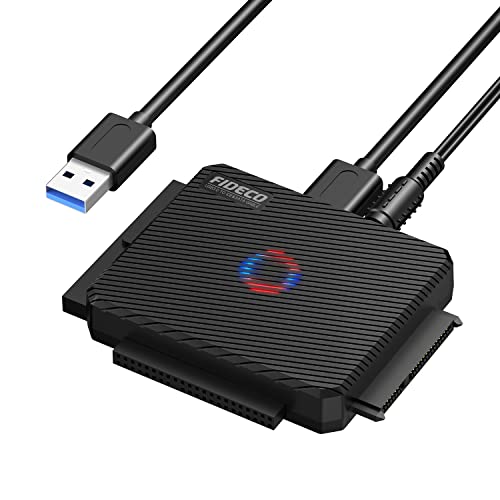
For build-out, a SATA/IDE to USB 3.0 adapter like the FIDECO adapter lets you image a Win98 SE installation onto the CF card from a modern PC. The Vantec SATA/IDE to USB 2.0 adapter is the budget alternative.
Sound
For maximum authenticity: a Sound Blaster Live! or Sound Blaster AWE64 ISA card. These are still findable on eBay but require an ISA slot - most 1999 motherboards have one or two.
For modern fallback: a USB DAC like the Creative Sound BlasterX G6 connected to an available USB port. The G6 is not period-correct but provides clean audio without dealing with ISA driver headaches.
Case and power
Period-correct beige cases (Antec, Enlight, Aopen) are widely available secondhand. A clean ATX power supply rated 250-300 W is plenty - the Pentium III plus GeForce 256 combination draws under 100 W under load.
Optical drive
A CD-ROM or CD-RW drive in IDE form factor. DVD drives work but are not period-correct. Internal IDE optical drives can be found on eBay for $20-30.
Build-out workflow
The 2026-friendly install workflow:
- Source parts. GeForce 256 and motherboard come first because they are the constraints.
- Bench-test components. Assemble outside the case to confirm POST, RAM detection, BIOS access.
- Install Windows 98 SE on the CF card. Use a modern PC plus the SATA/IDE to USB adapter to install Win98 SE onto the CF card from an ISO. Boot the CF card on the retro rig once installation completes.
- Install drivers in order. Chipset drivers first (Intel INF), then GeForce 256 reference driver (NVIDIA 81.98 is a known-good Win98 SE driver), then sound card driver, then USB drivers if needed.
- Set DirectX. DirectX 7.0a is period-correct; DirectX 9.0c is the late-Win98-SE upper limit and offers broader game compatibility. Choice depends on the target game library.
- Verify hardware T&L. Run 3DMark2000 to confirm the GeForce 256's hardware T&L pipeline is active. Software T&L mode is a sign of driver misconfiguration.
Period-correct game library
The titles that justify the build:
| Game | Year | Why it matters |
|---|---|---|
| Quake III Arena | 1999 | The canonical hardware T&L showcase title |
| Unreal Tournament | 1999 | DirectX 7 launch showcase |
| Need for Speed: Porsche Unleashed | 2000 | Best racing demo of era hardware |
| Deus Ex | 2000 | Best showcase of Pentium III-era physics |
| System Shock 2 | 1999 | Best atmospheric demo of the era |
| Half-Life | 1998 | Highly compatible, runs incredibly smoothly on this hardware |
| Diablo II | 2000 | 2D but runs perfectly on this stack |
| MechWarrior 3 | 1999 | Stresses both CPU and GPU |
| Roller Coaster Tycoon | 1999 | 2D, runs better here than on modern hardware |
| 3DMark2000 | 2000 | The canonical hardware T&L benchmark |
Spec table: build cost estimate (USD, 2026 eBay pricing)
| Component | Description | Cost |
|---|---|---|
| Pentium III 700-800 MHz | Coppermine, Socket 370 | $25-45 |
| Intel 440BX or 815 motherboard | period correct | $35-75 |
| 256-512 MB PC-133 SDRAM | matched pair | $25-50 |
| GeForce 256 (32-64 MB) | DDR variant preferred | $50-130 |
| Original IDE CD-ROM/DVD drive | beige | $15-30 |
| Antec/Enlight ATX case | period correct | $30-65 |
| 300 W ATX PSU | period correct or modern equivalent | $25-60 |
| CompactFlash 4-16 GB | Transcend or SanDisk | $15-35 |
| IDE-to-CF adapter | passive PCB | $10-15 |
| Floppy drive (optional) | for boot disks if needed | $10 |
| Sound Blaster Live! or AWE64 | ISA card, optional | $15-35 |
| Period-correct keyboard and mouse | PS/2 connector | $30-60 |
| CRT monitor (optional) | 17-19 inch, the era's flavor | $50-200 |
| Total estimated build (LCD, no CRT) | ~$285-635 | |
| Total with CRT | ~$335-835 |
Common pitfalls
- Buying a Tualatin Pentium III without verifying motherboard support. Most 1999 boards do not support Tualatin without a hardware mod.
- Using original HDDs. 25-year-old mechanical drives fail. Use CF-via-IDE.
- Skipping the chipset driver install. Windows 98 SE without the Intel INF driver will misidentify hardware.
- Trying to install over 512 MB RAM. Win98 SE has hard limits without specific patches.
- Overpaying for a GeForce 256 with bad caps. Inspect the board for bulged capacitors before buying.
- Using a modern PSU with auto-shutdown features. Many modern PSUs have low-load shutdown protection that triggers on a Pentium III-era system. Use a period PSU or a basic modern one without "eco" features.
Tuning for the era
The interesting part of the build is restraining yourself to era-appropriate settings. Running Quake III Arena at 800x600 with all hardware effects enabled is the right experience for this hardware - pushing 1600x1200 is technically possible but the card stutters at high resolutions. The GeForce 256 was designed for hardware T&L at moderate resolutions, not high-resolution rasterization. Match the workload to the silicon.
Common pitfalls in the install
- Driver order matters. Chipset before GPU before sound. Reversing the order causes Windows 98 SE to crash on next boot.
- AGP aperture size in BIOS. Set to at least 64 MB for the GeForce 256 to behave on demanding titles.
- Disable on-board video in BIOS if present. Some Intel 815 boards have integrated graphics that fight with the AGP card.
- Mouse interrupt sharing. PS/2 mouse and ISA sound card can fight for IRQs on some boards; check BIOS.
When to give up on period authenticity
If sourcing a working GeForce 256 takes more than a month or pushes the budget past comfort, consider stepping forward one generation to a GeForce 2 GTS or GeForce 3 Ti - both are dramatically easier to find, run on the same software stack, and the gaming experience differs only at the edges. The GeForce 256's significance is historical; the gameplay is reproducible on its successors.
Bottom line
A 1999 GeForce 256 + Pentium III + Windows 98 SE build in 2026 is a reasonable weekend-or-two project for a builder with eBay patience. The total spend lands in the $300-600 range for a complete LCD-display setup, with the GeForce 256 itself being the unpredictable cost line. Use modern storage via CompactFlash and IDE adapters, SATA/IDE to USB cables, and adapter PCBs to bypass HDD reliability issues, and either chase a Sound Blaster Live! or fall back to a USB DAC. The result is the rig that defined where PC gaming went next - and remains genuinely playable today.
Citations and sources
- Wikipedia - GeForce 256 - canonical reference for the card's specifications and historical significance.
- Wikipedia - Pentium III - reference for CPU specs and the Coppermine/Tualatin generations.
- Wikipedia - Windows 98 - reference for the era's OS and SE-specific limitations.
This piece is editorial synthesis based on publicly available information. No independent first-party benchmarking is reported.