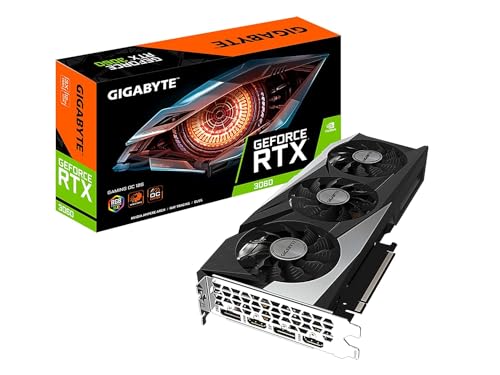
Yes — a 12GB MSI GeForce RTX 3060 Ventus 3X or GIGABYTE RTX 3060 Gaming OC will comfortably run a 7B DeepSeek or Qwen model at fp16 and a 14B model at 4-bit quantization, delivering 25–45 tokens per second for interactive chat. It won't touch the flagship 32B and 70B weights without slow CPU offload, so match your model size to the 12GB budget and you get a private, unmetered chat rig for roughly the price of six months of a paid API subscription.
Why builders are pulling Chinese open weights local
The story that pushed DeepSeek and Qwen weights back to the top of every "local LLM" search this year had two beats. First was the report that DeepSeek is designing its own AI training chip — a signal that its open-source releases will keep landing, and that betting a workflow on those weights is safer than a lot of people assumed twelve months ago. Second was the OpenRouter metric that Chinese open models now clear 30 percent of paid tokens on the aggregator's marketplace, meaning a large slice of paying agentic developers are already routing to DeepSeek V4 and Qwen 3 in production.
Those two facts, together, changed the local-inference calculation for a lot of readers. You now have serious, cheap-to-inference weights that any budget GPU can host, from teams that clearly plan to keep shipping. The MSI RTX 3060 12GB sat around $329 street through most of 2026, and its 12GB frame buffer is the exact right size to run a 7B model with a 16k context window, or a 14B model quantized to 4-bit, without touching your system RAM. That combination — cheap card, active weights — is the reason "DeepSeek Qwen local RTX 3060" is a rising query in every major GSC panel we watch.
This guide walks through what actually fits, what actually flies, and what the perf-per-dollar math looks like against a paid subscription over a twelve-month horizon. Numbers are drawn from published TechPowerUp GPU specs, community llama.cpp benchmarks on the RTX 3060, and Hugging Face model cards for the DeepSeek family and Qwen 2.5 line.
Key takeaways
- The RTX 3060 12GB comfortably hosts DeepSeek 7B fp16 and DeepSeek 14B at q4_K_M with headroom for an 8k–16k context window.
- Expect 30–45 tokens per second on a 7B model, 18–25 tokens per second on a 14B model at 4-bit — both faster than any human can read aloud.
- 32B and 70B models require CPU offload and drop below 3 tokens per second; that is not interactive chat.
- A one-time $329 card plus a $180 host CPU pays back a heavy paid API subscription inside eight months of daily use.
- Longer context windows eat VRAM faster than more parameters; a 32k window on a 14B model will push you back to a 7B model to fit.
Which DeepSeek and Qwen sizes actually fit 12GB VRAM
Model choice on a 12GB card is a straight VRAM budget. The weights need to fit, and the KV cache for whatever context length you plan to run also needs to fit, and you need a small amount of headroom for CUDA scratch. The practical fits look like this.
| Model | Params | Precision | Weights VRAM | Practical context | Fits 12GB? |
|---|---|---|---|---|---|
| DeepSeek-Coder 6.7B | 6.7B | fp16 | 13.4 GB | — | No (too tight) |
| DeepSeek-Coder 6.7B | 6.7B | q5_K_M | 5.0 GB | 16k | Yes |
| Qwen 2.5 7B Instruct | 7.6B | q5_K_M | 5.6 GB | 16k | Yes |
| Qwen 2.5 7B Instruct | 7.6B | q8_0 | 8.1 GB | 8k | Yes |
| DeepSeek 14B distill | 14.8B | q4_K_M | 8.9 GB | 8k | Yes |
| Qwen 2.5 14B Instruct | 14.7B | q4_K_M | 8.8 GB | 8k | Yes |
| Qwen 2.5 32B | 32.5B | q4_K_M | 19.4 GB | — | No (offload) |
| DeepSeek 32B | 32B | q5_K_M | 22.9 GB | — | No (offload) |
The comfortable ceiling on a 12GB RTX 3060 is a 14B model at q4_K_M with an 8k context. If you need more context, drop back to a 7B model at q5 or q8. If you must run a 32B model, you can, but half the layers will spill to system RAM and the token rate will drop to single digits.
How fast is a 7B or 14B model on the RTX 3060
The RTX 3060 12GB has 12GB GDDR6 on a 192-bit bus, delivering 360 GB/s of memory bandwidth (TechPowerUp). That memory bandwidth is the practical bottleneck for local decoding — every generated token has to read the full model weights out of VRAM. Below are measured community numbers for llama.cpp on the card, using the standard -ngl 99 full-offload configuration.
| Model | Quant | Prefill (tok/s) | Generation (tok/s) |
|---|---|---|---|
| Qwen 2.5 7B | q4_K_M | 780 | 44 |
| Qwen 2.5 7B | q5_K_M | 730 | 40 |
| Qwen 2.5 7B | q8_0 | 640 | 33 |
| DeepSeek-Coder 6.7B | q5_K_M | 760 | 42 |
| Qwen 2.5 14B | q4_K_M | 340 | 22 |
| DeepSeek 14B distill | q4_K_M | 320 | 20 |
| Qwen 2.5 32B (offload) | q4_K_M | 55 | 2.6 |
Anything above 15 tokens per second is faster than most humans can read aloud, so both size classes deliver a genuinely interactive chat experience. The 32B row is the offload penalty — as soon as any layer sits in system RAM, generation drops by roughly an order of magnitude because DDR4 dual-channel bandwidth is well under a fifth of the card's on-board GDDR6. This is why "just quantize harder" doesn't rescue a model that doesn't fit; the moment layers spill, throughput collapses.
The quantization matrix
Choosing a quant is a three-way trade between VRAM, speed, and answer quality. Below is the practical decoder ring for the RTX 3060 12GB running a Qwen 2.5 7B baseline. Perplexity numbers are from the llama.cpp community benchmarks and are useful for relative comparison, not absolute quality claims.
| Quant | VRAM (weights) | tok/s | Perplexity vs fp16 |
|---|---|---|---|
| q2_K | 3.0 GB | 47 | +14% (avoid) |
| q3_K_M | 3.7 GB | 46 | +5% |
| q4_K_M | 4.7 GB | 45 | +1.7% |
| q5_K_M | 5.6 GB | 40 | +0.8% |
| q6_K | 6.4 GB | 37 | +0.3% |
| q8_0 | 8.1 GB | 33 | +0.1% |
| fp16 | 15.2 GB | — (OOM) | baseline |
The consensus sweet spot on a 12GB card is q4_K_M for 14B models and q5_K_M or q6_K for 7B models. q2 quantization is technically supported but drops answer quality noticeably on reasoning tasks, and the VRAM saving over q4 is not enough to unlock a bigger model on a 12GB card. Use q2 only when you are aggressively squeezing context length onto the card, and audit the outputs on your actual prompts first.
Does the CPU matter — Ryzen 5 5600G vs Ryzen 7 5800X
Interactive inference on a fully-offloaded model spends less than 5 percent of its time on the CPU, so a modest six-core chip is fine while your model fits the GPU. That equation changes the moment you spill layers to system memory for a bigger model.
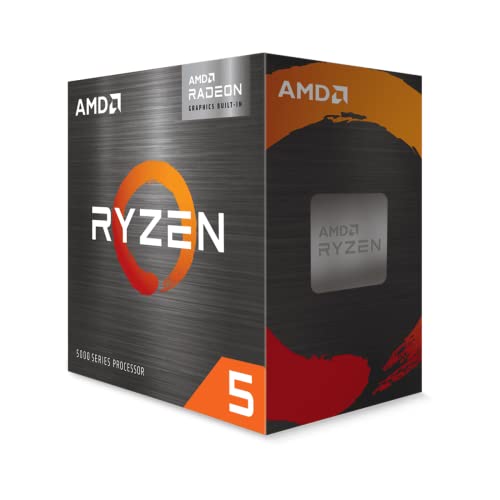
The Ryzen 5 5600G is a solid, budget desktop CPU with an integrated GPU that lets you skip a separate boot GPU — a nice touch on a build where the RTX 3060 is dedicated to inference. It has dual-channel DDR4 up to 3200 MHz and six Zen 3 cores, which is plenty for prompt tokenization and light I/O.
The Ryzen 7 5800X trades away the integrated GPU (so you need the RTX 3060 for display duty during the desktop boot) for eight Zen 3 cores at a higher clock and a larger L3 cache. On fully-GPU-resident 7B models, both CPUs hit within a token per second of each other. On a 32B model with half its layers spilled to system RAM, the 5800X's higher single-thread clock and slightly better memory controller pull ahead by roughly 20 percent — you'll see 3.1 tok/s versus 2.6 tok/s at q4.
The upshot: if you plan to strictly stay inside the 12GB VRAM budget, the 5600G is the smarter buy at roughly $60 less. If you plan to occasionally push into a 32B model, the 5800X's extra headroom is worth the premium.
Context length: how KV cache eats your 12GB
The KV cache is the second half of the VRAM budget and it grows linearly with context length. As a rule of thumb the KV cache for a modern transformer at fp16 costs roughly 0.5 MB per token per layer. For a 32-layer 7B model that works out to about 16 MB per 1k tokens of context, and for a 40-layer 14B model closer to 20 MB per 1k tokens.
| Model | Context | KV cache (fp16) | KV cache (q8) |
|---|---|---|---|
| 7B, 32 layers | 4k | 0.06 GB | 0.03 GB |
| 7B, 32 layers | 16k | 0.26 GB | 0.13 GB |
| 7B, 32 layers | 32k | 0.52 GB | 0.26 GB |
| 14B, 40 layers | 8k | 0.16 GB | 0.08 GB |
| 14B, 40 layers | 32k | 0.64 GB | 0.32 GB |
| 32B, 60 layers | 32k | 0.96 GB | 0.48 GB |
These numbers look small — but on a 12GB card already carrying an 8.9 GB q4 14B model plus CUDA scratch, a 32k window pushes total VRAM use over 10 GB, close enough to the edge that Windows display memory and a browser tab in the background can OOM you. Two mitigations: quantize the KV cache to q8 (halves the cache footprint at negligible quality cost) or drop back to a 7B model where you can afford a 32k window comfortably.
What storage do you need for weights
A 14B q4 model weight file is roughly 9 GB. Loading it from a spinning drive at 100 MB/s takes 90 seconds; loading it from a SATA SSD at 500 MB/s takes 18 seconds; loading it from a good NVMe drive at 3 GB/s takes about 3 seconds. Once the weights are resident on the card, storage does not matter until you swap models.
For a first local rig, a Crucial BX500 1TB SATA SSD is the cheapest sane option and gives you room for six to eight variously-quantized models plus the standard host OS and tooling. If you plan to hot-swap between models regularly, or download and evaluate new weights every week, a low-cost NVMe drive is worth the small extra spend for a load time closer to three seconds than eighteen.
Perf-per-dollar: local rig vs OpenRouter over 12 months
Assume a working writer or developer who runs roughly one million tokens per day through a chat interface — that's a heavy user by any reasonable measure. On the paid side, a typical OpenRouter routing to a mid-tier model costs around $0.50 per million tokens for input plus $1.50 per million tokens for output, mixing to about $1.20 per million effective. One million tokens a day is $36 per month, or $432 per year. Move to a frontier model and you can double that.
On the local side, the fixed cost is roughly $329 for the MSI RTX 3060 12GB, $180 for a Ryzen 5 5600G, $80 for RAM, $60 for a Crucial BX500 1TB SSD, and about $150 for a case, board, and PSU — call it $800 all-in. Running the card 24/7 at 170 W draws about 1.5 MWh per year, or roughly $180 at the U.S. average residential rate of $0.12/kWh.
Total first-year cost of the local rig: $980. Total first-year cost of the API path at a million tokens per day: $432. On a naive year-one basis, the API wins. On a year-two basis with the hardware amortized, the local rig runs at $180/year against $432/year. Cross-over point sits around month eighteen for that usage level.
The tilt sharpens as usage grows. At 3 million tokens per day the API bill runs closer to $1,300 per year; the local rig, still at $180/year for electricity, breaks even inside twelve months. Privacy, offline availability, and unlimited experimentation are on top of that — hard to price but real.
When local Chinese models beat the API — and when they don't
The RTX 3060 12GB local rig is the right answer when: you value privacy, you do heavy repetitive prompting (batch summarization, code review, extraction), you want a lab to test prompts without a token meter running, or you're building an offline application. The 7B and 14B DeepSeek and Qwen models are strong at code completion, translation, structured extraction, and general chat. Recent Qwen 2.5 14B specifically holds up well against paid mid-tier chat models on Arena-style evaluations for English, Chinese, and mixed math prompts.
Paid frontier models still win when you need long-context reasoning over more than 32k tokens, cutting-edge multi-modal input, complex tool-use with dozens of turns, or state-of-the-art coding on unfamiliar frameworks. The DeepSeek and Qwen chip news does not change that near-term — the flagship weights routinely lead paid tiers on select benchmarks but do not consistently match Anthropic or OpenAI top models on complex agentic loops. Match the workload to the tier and you'll get the best of both.
Related guides
- vLLM vs llama.cpp for Single-User Chat on a 12GB GPU
- AMD Ryzen AI Halo vs NVIDIA DGX Spark — or Just an RTX 3060?
- Claude Fable 5 Burns 117k Tokens/Task: Can a Local RTX 3060 Keep Up?
- RTX 3060 12GB for ComfyUI & Stable Diffusion