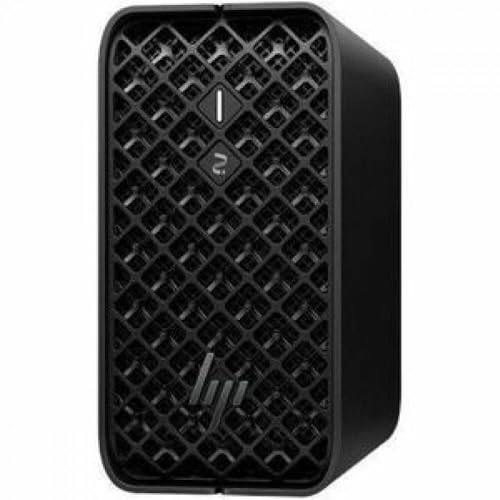
Ryzen AI Max 385 Mini PC: What It Actually Is
The Ryzen AI Max 385 is one of four processors in AMD's Ryzen AI Max 300 series (codename "Strix Halo"), a family built around bringing workstation-class unified memory bandwidth into a compact form factor. Where a typical mini PC pairs a laptop-class CPU with a small integrated GPU and a couple of SO-DIMM slots, the Ryzen AI Max 385 uses Zen 5 CPU cores, an RDNA 3.5 integrated GPU, and AMD's XDNA2 NPU sharing a single wide memory pool — the same basic recipe Apple popularized with unified memory on its M-series chips, adapted to x86.
That architecture is why mini PCs built around the 385 get marketed as small local-AI boxes rather than ordinary compact desktops. The chip sits below the flagship Ryzen AI Max+ 395 covered in SpecPicks' Ryzen AI Max+ 395 LLM performance breakdown, giving up CPU cores and GPU compute units in exchange for a lower price point.
Where the 385 Sits in AMD's Strix Halo Lineup
AMD's Ryzen AI Max 300 series product page lists four SKUs. CPU core counts scale cleanly down the stack; GPU configuration is where the real differentiation happens — only the top two chips get the full 40-compute-unit Radeon 8060S graphics, per AMD's spec sheet.
| Model | CPU cores/threads | Architecture | iGPU | NPU |
|---|---|---|---|---|
| Ryzen AI Max+ 395 | 16C/32T | Zen 5 | Radeon 8060S (40 CU, RDNA 3.5) | XDNA2, up to 50 TOPS |
| Ryzen AI Max+ 390 | 12C/24T | Zen 5 | Radeon 8060S (40 CU, RDNA 3.5) | XDNA2, up to 50 TOPS |
| Ryzen AI Max 385 | 8C/16T | Zen 5 | Cut-down RDNA 3.5 iGPU, fewer CUs than the 8060S | XDNA2, up to 50 TOPS |
| Ryzen AI Max 380 | 6C/12T | Zen 5 | Cut-down RDNA 3.5 iGPU | XDNA2, up to 50 TOPS |
AMD publishes the NPU figure — up to 50 TOPS — as a family-wide number rather than a per-SKU one; CPU and GPU core counts are what actually separate the 385 from the 390 and 395. For a closer look at how the top two chips perform on inference workloads, see the Ryzen AI Max local LLM benchmarks roundup and AMD Ryzen AI Max for local LLMs.
The Unified Memory Architecture Advantage
The detail that matters most for the Ryzen AI Max 385 isn't clock speed — it's memory. Strix Halo chips use LPDDR5X soldered directly to the package across a 256-bit bus, and that pool of RAM is addressable by the CPU, GPU, and NPU alike. Vendors building 395-class systems have shipped configurations up to 128GB, according to AMD's published specifications; 385-based mini PCs are more commonly offered in lower-capacity 32GB or 64GB configurations to hit a lower price point, since the 385 targets a different buyer than the flagship.
| Memory configuration | Practical use case |
|---|---|
| 32GB unified | Smaller local models (roughly 7B–13B parameters), general productivity, on-device AI features |
| 64GB unified | Mid-size models (roughly 14B–30B parameters), depending on quantization |
| 96GB–128GB unified (390/395 configs) | Larger models (30B+ parameters) split across shared memory |
That matters specifically for local large language model inference, because model size is bounded by available memory far more than by raw compute on a chip like this. A model that would need a discrete GPU with 24GB+ of VRAM to load on Nvidia hardware can instead draw from the Ryzen AI Max's shared pool — with the tradeoff being LPDDR5X bandwidth rather than GDDR6X or HBM bandwidth. SpecPicks' Ryzen AI Max LLM test writeup and the Ryzen AI Max+ 395 LLM inference piece dig into that bandwidth tradeoff in more detail for the higher-tier chips; the 385's narrower configuration options mean the same tradeoff applies at a smaller scale.
AI and Local LLM Performance: What to Expect
AMD positions the entire Ryzen AI Max 300 series around on-device AI — Copilot+ PC-style features, local inference, and Stable Diffusion-class image generation without a cloud round-trip. The XDNA2 NPU is the same silicon block across all four SKUs, so day-to-day AI-accelerated tasks (webcam background effects, on-device transcription) should behave similarly regardless of which Ryzen AI Max chip is in the box.
Where the 385 diverges from its bigger siblings is GPU-accelerated inference — running an LLM through the integrated Radeon graphics via ROCm or Vulkan rather than through the NPU. Fewer compute units mean lower throughput than a 390 or 395 system running the same model at the same quantization. Community benchmark threads (notably on r/LocalLLaMA) consistently show token-generation throughput scaling with GPU compute unit count across the Strix Halo family, though exact tokens-per-second figures vary by model size, quantization, and llama.cpp/ROCm build — enough that any single number quoted without those variables attached should be treated skeptically. For side-by-side context against a discrete-GPU alternative, see Ryzen AI Max vs. RTX 40 Series.
Mini PC Form Factor: Cooling and Expansion
Strix Halo's configurable TDP window is wide by AMD's own spec sheet — vendors can tune it anywhere from roughly 45W up toward 120W depending on chassis and cooling budget. Mini PC builds around the Ryzen AI Max 385 generally land on the lower end of that range, since a sub-2-liter chassis has far less thermal headroom than a full tower. That's a meaningfully different design target than a desktop Ryzen build like the ones compared in Noctua NH-U12S vs. MasterLiquid ML240L for a Ryzen 7 5800X — there's no cooler swap or fan-curve tuning available on a sealed mini PC, so sustained multi-core workloads will throttle to whatever the vendor's chassis was designed to dissipate.
Because the GPU is integrated and the memory is soldered, there's no discrete GPU upgrade path and no user-replaceable RAM on most Ryzen AI Max mini PCs — the memory configuration you buy is the one you keep. Storage is typically expandable through one or two M.2 PCIe slots, and most vendors include dual 2.5GbE networking as a differentiator over laptop-derived competitors.
Ryzen AI Max 385 vs. Traditional Mini PCs and Alternatives
Against an Intel-based mini PC or a mini PC with a low-power discrete GPU, the Ryzen AI Max 385's case rests almost entirely on the unified memory story — a conventional mini PC with 32GB of soldered RAM and no discrete GPU can't load a 30B-parameter model at all, while a similarly priced Ryzen AI Max 385 box configured with enough shared memory can, even if inference is slower than a desktop Nvidia card. If the workload is general productivity, browsing, and office tasks rather than local AI, a cheaper conventional mini PC will do the job for less money.
For builders who want a dedicated always-on inference box rather than a general-purpose mini PC, it's also worth comparing against a small always-on server build, such as the tradeoffs discussed in Ryzen 5 5600G vs. Ryzen 7 5700X for a 24/7 LLM server — a cheaper conventional CPU paired with a discrete GPU can outperform integrated-graphics inference on models that fit within that GPU's VRAM.
Who Should Buy a Ryzen AI Max 385 Mini PC
- Developers who want to run mid-size local LLMs (roughly 14B–30B parameters depending on memory configuration and quantization) without a discrete GPU or a full tower build.
- Buyers who value a small footprint and low idle power over maximum inference throughput — the 390 and 395 outperform the 385 on GPU-bound AI workloads per AMD's own compute-unit specifications.
- Anyone prioritizing Copilot+ PC-class on-device AI features (transcription, image generation, background effects) where the NPU — not the GPU — does the work, since the NPU is identical across the whole 300 series.
It's a weaker fit for gaming-first buyers (a cut-down RDNA 3.5 iGPU with fewer compute units than the 8060S won't match a discrete GPU at any resolution) and for buyers who specifically need 64B+ parameter local models, where the extra memory headroom and GPU throughput of a 390 or 395 configuration matters more.
Buying Considerations
- Memory configuration is the single most important spec. Because RAM is soldered and shared across CPU/GPU/NPU, buy for the largest model you actually intend to run locally, not for general headroom.
- Check the vendor's configured TDP, not just the chip name — two mini PCs with the same Ryzen AI Max 385 can perform differently under sustained load depending on how aggressively each vendor tuned cooling and power limits.
- Confirm ROCm/driver support for your intended inference stack before buying if GPU-accelerated local LLM inference (rather than NPU-only features) is the goal — AMD's software support for Strix Halo's integrated GPU is newer and less mature than Nvidia's CUDA ecosystem.
Setup Accessories
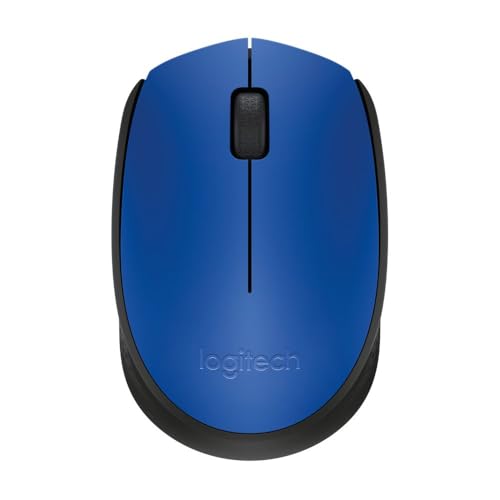
A mini PC arrives without peripherals. A basic wireless mouse such as the Logitech M170 covers day-to-day use, and a USB-C adapter is worth keeping on hand for mini PCs that ship with a mix of USB-C and USB-A ports.
Citations and sources
- https://www.amd.com/en/products/processors/laptop/ryzen/ai-max-300-series.html
- https://en.wikipedia.org/wiki/Zen_5
- https://en.wikipedia.org/wiki/RDNA_(microarchitecture)
- https://www.amd.com/en/technologies/xdna.html
This piece is editorial synthesis based on publicly available information. No independent first-party benchmarking is reported.