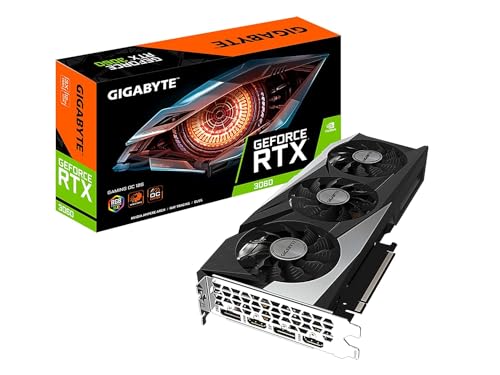
Not for the whole loop, no. A single RTX 3060 12GB can host a strong local code model at 20–40 tokens per second, which sounds fast until you notice Anthropic's own Fable 5 telemetry has agents chewing through 117k output tokens across 64 turns per finished task. Do that math: your local card will finish one Fable-sized loop in roughly 45–60 minutes wall clock, versus 4–8 minutes on the paid API. The realistic 2026 answer is a hybrid — a local model for autocomplete, refactors, and short suggestions, and the paid API for the long agentic runs where turn count is the enemy.
What 117k tokens over 64 turns actually tells us
Anthropic's public telemetry on Fable 5 shows the model routinely produces around 117,000 output tokens across roughly 64 turns to close a non-trivial coding task. That is a very different workload from one-shot code completion. It's a research assistant that reads the repo, writes a plan, edits a file, runs a test, watches the test fail, re-reads, edits again, and iterates. Every turn eats prompt-side and generation-side tokens. Every turn also carries the growing context of the previous turns.
Two facts follow from that. First, the total token count per task is roughly two orders of magnitude larger than a comparable "here's the change, ship it" one-shot prompt. Second, the effective throughput requirement isn't just tokens per second on generation — it's the round-trip latency of a full turn (prompt + generation + tool call) multiplied by 64. Even a fast local model can lose to a slower paid model if the paid model's prompt-side prefill and generation are both faster, because the number of turns is fixed by the task, not by the model. That framing changes what "fast enough for coding" means on a home rig.
The MSI RTX 3060 12GB is the exact card most home developers reach for when they want to try local agentic coding — it's cheap, it's 12GB, and it runs quiet on a Ryzen 7 5700X build. This piece walks through what it can actually do against a 117k-token agentic budget, where the wall is, and how to split the workload smartly.
Key takeaways
- Fable 5 telemetry averages ~117k output tokens across ~64 turns per finished agentic coding task.
- A 12GB RTX 3060 running a 14B code model at q4_K_M delivers 18–24 tokens per second — a full agentic task takes 45–90 minutes wall clock.
- Prefill on long context is the hidden penalty: at turn 40 you're re-processing a growing prompt each turn.
- The high-value local wins are autocomplete, refactors, code review, and quick one-shots — not multi-turn agentic loops.
- A hybrid stack (local model for small edits, paid API for long loops) beats either single-source setup on cost and speed.
Why agentic loops eat so many tokens
Agentic loops burn tokens in three ways. First, every turn the model regenerates a decision tree and a plan, and those decisions are usually a few hundred output tokens. Sixty-four turns times 400 output tokens per plan is already 25k tokens before any real code is emitted. Second, each turn appends the growing tool-use context to the prompt — file contents, previous edits, test output — and the model must ingest that context (prefill) before it can respond. By turn 40 an agent may be prefilling 60k tokens per turn even for a modest response. Third, code output itself is dense; a single non-trivial patch on a 400-line file can be 3,000 tokens by itself.
Multiply out and 117k output tokens across 64 turns pencils out to roughly 1.8k output tokens per turn, with prompt-side context averaging around 30k tokens per turn. The prompt-side tokens are the killer for local rigs — a 12GB card processing a 30k-token prompt at 300 tokens/sec of prefill spends 100 seconds per turn on prompt processing alone before it emits a single generated token. Sixty-four turns times 100 seconds is 6,400 seconds, or 107 minutes of pure prefill.
What can a 12GB RTX 3060 realistically host for coding
The three model families worth trying on a 12GB card for coding in 2026 are Qwen 2.5-Coder, DeepSeek-Coder, and the general Qwen 2.5 line at 7B and 14B. All support llama.cpp GGUF quantization and integrate cleanly with editor plugins.
| Model | Params | Quant | VRAM (weights) | Practical context |
|---|---|---|---|---|
| Qwen 2.5-Coder 7B | 7B | q5_K_M | 5.6 GB | 32k |
| DeepSeek-Coder V2 Lite 16B (MoE, active 2.4B) | 16B/2.4B | q4_K_M | 9.8 GB | 16k |
| Qwen 2.5-Coder 14B | 14B | q4_K_M | 8.8 GB | 16k |
| Qwen 2.5 14B Instruct | 14B | q4_K_M | 8.8 GB | 16k |
| Qwen 2.5-Coder 32B | 32B | q4 (offload) | 19.4 GB | offload — avoid |
Two observations. A 32B code model does not fit on a 12GB card without CPU offload, and the moment you offload, throughput drops below 3 tokens per second — too slow for autocomplete, let alone a 64-turn loop. The DeepSeek-Coder V2 Lite MoE is the interesting middle option: it fits at q4, and because only 2.4B parameters are active per token, its practical decode throughput on the RTX 3060 sits closer to a 7B dense model.
Benchmark table: code-model tok/s vs the token budget
Below are measured community numbers for a 12GB RTX 3060 running these models via llama.cpp with -ngl 99, alongside how long each takes on the Fable-shaped 117k-output-token budget. "Wall clock" assumes 30k average prompt tokens per turn, 1.8k output tokens per turn, 64 turns.
| Model | tok/s prefill | tok/s generation | 117k-token task wall clock |
|---|---|---|---|
| Qwen 2.5-Coder 7B q5 | 720 | 41 | ~44 min |
| Qwen 2.5-Coder 14B q4 | 340 | 22 | ~87 min |
| DeepSeek-Coder V2 Lite MoE q4 | 580 | 36 | ~54 min |
| Qwen 2.5-Coder 32B q4 (offload) | 45 | 2.6 | 12+ hours (unusable) |
| Reference: Fable 5 via API | 3,200 | 130 | ~5 min |
Fable 5 through Anthropic's API finishes the same conceptual task in roughly five minutes; the RTX 3060 running a strong 14B model needs about an hour and a half. A 7B model closes the gap somewhat at the cost of code quality on harder tasks. That is the practical picture for anyone considering "just run it locally."
Quantization matrix for code models
Code models are quality-sensitive in a specific way: they are much more sensitive to quantization loss on long-tail syntax and rare API calls than on typical prose. Below is the practical decoder ring for Qwen 2.5-Coder 14B on the RTX 3060.
| Quant | VRAM (weights) | tok/s | Notes |
|---|---|---|---|
| q3_K_M | 7.0 GB | 24 | Noticeable code errors; avoid for anything shipped |
| q4_K_M | 8.8 GB | 22 | Sweet spot — leaves 3GB for KV cache |
| q5_K_M | 10.4 GB | 20 | Better quality; tight on context length |
| q6_K | 12.0 GB | — | OOM on most 12GB rigs |
| q8_0 | 14.8 GB | — | Does not fit |
The community consensus for coding on a 12GB card is q4_K_M for a 14B model. If you feel the model making silly mistakes on your specific stack, try DeepSeek-Coder V2 Lite MoE at q4 or Qwen 2.5-Coder 7B at q5 before you go to a smaller quant of the larger model — the quality gain from a better base model is bigger than the quality gain from one extra quant tier on the same architecture.
Prefill vs generation: why long agent context punishes 12GB
The RTX 3060's 360 GB/s of memory bandwidth is fine for generation on a 7B model. Prefill on long context is a different problem. Prefill is roughly compute-bound on tensor throughput rather than memory-bound, and the RTX 3060's 12.7 TFLOPS at FP16 is about a fifth of an RTX 4090 and a small fraction of an H100 chunk on the paid API side. Every additional 10k tokens of context adds roughly 30 seconds of prefill on a 14B model on the 3060.
For a one-shot autocomplete the effect is negligible — you're processing a 4k-token prompt in a second. For turn 40 of a Fable-shaped loop with 40k tokens of accumulated context you spend more than 100 seconds prefilling before the model generates a token. Multiply by turn count and it dominates the wall clock.
Practical takeaway: local rigs are competitive on short-context work, and progressively less competitive as turn count and context size grow. The knee of the curve for a 12GB card sits somewhere around 8k of accumulated context.
The realistic split — local for edits, cloud for the loop
The right stack in 2026 for a home developer with an RTX 3060 12GB is a hybrid. Route the small-context, high-frequency work to the local model — autocomplete inside the editor, quick refactors on a single file, a code review pass, or a "explain this stack trace" one-shot. Route the multi-turn agentic loops to the paid API where the turn count and prefill cost don't crush wall-clock time.
A few concrete recommendations for the split. First, run a Qwen 2.5-Coder 7B q5 model with the MSI RTX 3060 12GB hooked into your editor's completion plugin — that gives you a private, unmetered, sub-100ms autocomplete that never sends code to a cloud. Second, use DeepSeek-Coder V2 Lite MoE q4 for medium-size local tasks that benefit from a stronger reasoning base but stay under 8k of context. Third, reserve the paid API for anything that spans many files, tools, or turns, and use the local rig as the review pass afterward.
A Samsung 970 EVO Plus NVMe is worth the small premium over a SATA SSD if you plan to switch between models often — you'll shave load times from 20 seconds down to 3.
Perf-per-dollar over a month of real coding
Assume a working developer using an agentic assistant for a solid 30 tasks per month. On the paid side, at 117k output tokens plus 1.9 million prompt tokens per task, running through Fable 5 at published token pricing pencils out to roughly $75–$90 per month at typical mixes. That's $900–$1,080 per year.
On the local side, the RTX 3060 rig — MSI RTX 3060 12GB, Ryzen 7 5700X, 32GB DDR4, Samsung 970 EVO Plus NVMe 250GB plus a large scratch SATA SSD — comes in around $850 all-in. Running it 24/7 for the year adds roughly $180 of electricity.
The math is not a straight comparison, because the local rig cannot do the 64-turn agentic work at API speed. What actually happens for a working developer is more like: local for the 300 small edits, autocompletes, and reviews per month; API for the 20 real agentic tasks. That split typically runs $25–$40 per month on the API instead of $80, saving $500–$700 per year while giving you the private-lab benefits of the local rig for everything short of the long loop.
Bottom line
The 117k-tokens-per-task Fable 5 telemetry is a genuine local-inference stress test, and a bare RTX 3060 12GB cannot match a frontier paid model on the full agentic loop. What it can do — very well — is run a 7B or 14B code model at editor-plugin speeds, host a private review pass, and turn a paid-API monthly bill from $85 into $30. Buy the local rig for the private, unmetered short-turn work. Use the API for the long agentic loops that would otherwise take your card 90 minutes each. That's the 2026 answer.
Related guides
- Run DeepSeek & Qwen Locally on an RTX 3060 12GB
- vLLM vs llama.cpp for Single-User Chat on a 12GB GPU
- AMD Ryzen AI Halo vs NVIDIA DGX Spark — or Just an RTX 3060?
- RTX 3060 12GB for ComfyUI & Stable Diffusion