
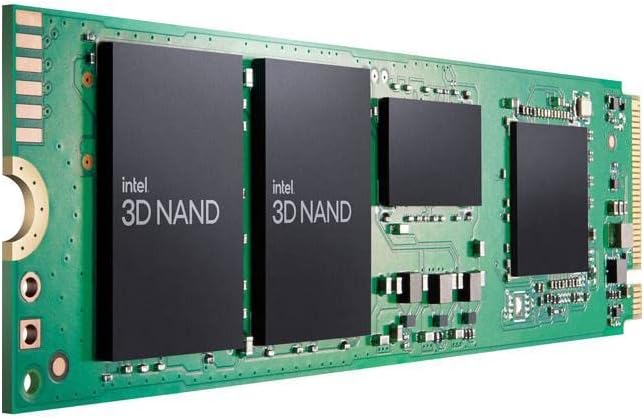
Intel 670p Series M.2 2280 2TB PCI-Express 3.0 x4 QLC Internal Solid State Drive (SSD) SSDPEKNU020TZX1
Bottom line: The Intel 670p Series M.2 2280 2TB PCI-Express 3.0 x4 QLC Internal Solid ($319.99 on Amazon as of 2026-10-21 16:14 UTC): 2TB capacity fits Windows plus a large Steam library on one drive; main trade-off: QLC NAND slows on sustained writes once the SLC cache fills.
As an Amazon Associate, SpecPicks earns from qualifying purchases. Full disclosure →
*Price sourced from Amazon.com. Last updated 2026-10-21. Price and availability subject to change.
Pros & Cons
Pros
- ✓ 2TB capacity fits Windows plus a large Steam library on one drive
- ✓ Up to 3500 MB/s sequential read saturates a PCIe 3.0 x4 slot
- ✓ 2700 MB/s sequential write, near double the prior 660p generation
- ✓ Standard M.2 2280 fits most desktop boards and laptops
Cons
- ✗ QLC NAND slows on sustained writes once the SLC cache fills
- ✗ PCIe 3.0 x4 only, no benefit from a Gen 4 or Gen 5 slot
- ✗ 3500 MB/s read trails current Gen 4 drives at similar capacity
- ✗ No heatsink included, so tight M.2 slots may need airflow
Manufacturer description
The Intel 670p 2TB (SSDPEKNU020TZX1) is a PCIe NVMe 3.0 x4 drive in the standard M.2 2280 form factor, built around Intel QLC 3D NAND. It rates up to 3,500 MB/s sequential read and 2,700 MB/s sequential write, roughly double the sequential read of the prior 660p generation, which is enough headroom to saturate a Gen 3 slot and cut game load and project-file open times against a SATA drive. Two terabytes is the practical sweet spot here: it holds a Windows install plus a large Steam or Epic library without the constant uninstall shuffle that 1TB owners deal with, and QLC NAND is what makes…
SpecPicks Verdict
SpecPicks scored Intel 670p Series M.2 2280 2TB PCI-Express 3.0 x4 QLC Internal Solid… using a rating × review-volume × price-fit model applied to published specs and reviews across the ssds & storage category. Compare with similarly-priced alternatives in the ssds & storage category before committing. Judge it on the specification table and the price rather than on sentiment: check the figures that decide your use case, then put it side-by-side with two or three close alternatives in the Compare tool before clicking through.
Common buyer scenarios for ssds & storage of this kind: matching it to an existing build, replacing a failing part, or upgrading from a previous-generation equivalent. Check the spec table below against your current setup — particularly socket / form-factor / power-rating fields — and confirm compatibility on the retailer's listing before purchase. Prices and stock are set by the retailer and may have moved since this page was last updated.
Frequently Asked Questions
How fast is the Intel 670p 2TB?
Up to 3,500 MB/s sequential read and up to 2,700 MB/s sequential write over a PCIe NVMe 3.0 x4 interface. Intel lists the read speed as nearly double the previous generation.
Will the Intel 670p fit my laptop or motherboard?
It uses the M.2 2280 form factor and a PCIe NVMe 3.0 x4 interface, which Intel describes as compatible with a wide variety of desktop computers, laptops, and other devices. Confirm your system has a free M.2 2280 NVMe slot.
Is 2TB enough for a gaming PC?
Yes for most builds. 2TB holds a Windows installation plus a large modern game library, so you avoid uninstalling titles to make room. It works as either a single boot drive or a secondary game volume.
What does QLC NAND mean for performance?
The 670p uses Intel QLC (Quad Level Cell) 3D NAND, which is how it reaches 2TB at this price. QLC is fast for everyday reads and gaming, but sustained large writes can slow once the drive's write cache is exhausted.
Is the Intel 670p worth it over a PCIe 4.0 drive?
If your system only has PCIe 3.0 slots, a Gen 4 drive gains you nothing and the 670p's 3,500 MB/s read already maxes the link. On a Gen 4 board, a Gen 4 drive will read faster.
Key Features
- 2B Storage Capacity
- M2. 2280 Form Factor
- PCIe NVMe 3.0 x4 Interface
- Up to 3500 MB/s Sequential Read Speeds. Up to 2700 MB/s Sequential Write Speeds. Intel QLC 3D NAND
Full Specifications
| Brand | Intel |
|---|---|
| Color | 2TB |
| Model Name | 670p Series SSD |
| Read Speed | 3500 megabytes_per_second |
| Unit Count | 1 Count |
| Form Factor | M2 |
| Media Speed | 2700 megabits_per_second |
| Model Number | SSDPEKNU020TZX1 |
| Built-In Media | ssd |
| Item Type Name | Internal SSD Drive |
| Hard-Drive Size | 80 MB |
| Mfr Part Number | SSDPEKNU020TZX1 |
| Number of Items | 1 |
| Special Feature | Portable |
| Hardware Platform | PC, laptop |
| Installation Type | Internal Hard Drive |
| Compatible Devices | Desktop, Laptop |
| Data Transfer Rate | 48 gigabits_per_second |
| Enclosure Material | NAND flash memory |
| Additional Features | Portable |
Ready to buy?
Intel 670p Series M.2 2280 2TB PCI-Express 3.0 x4 QLC Internal Solid State Drive (SSD) SSDPEKNU020TZX1 is listed on Amazon. Price, availability, shipping and returns are set by Amazon and its sellers — check the listing for current terms. SpecPicks earns a small commission on qualifying purchases — thank you for supporting independent review work.
*Price sourced from Amazon.com. Last updated 2026-10-21. Price and availability subject to change.
Related SSDs & Storage



More guides & deep dives from the SpecPicks archive
Browse all articles & guides →- RTX 4070 Super vs RX 7800 XT — Which to Buy in 2026
- How to Build a Windows 98 Retro PC in 2026
- Best 1440p Gaming GPUs in 2026
- The Complete Voodoo5 5500 AGP Driver Guide (2026 Edition)
- Best Retro Handhelds in 2026 — From $35 to $500
- Emulation Hardware in 2026: FPGA, Software, and Cart-Reader Ecosystems
- Best Budget Gaming PC Build 2026 — ~$1,000 ($800 on Sale)
More reviews from the SpecPicks archive
Browse all reviews →- Custom Steam Controller Startup: Reviving OG Big Picture Mode
- Tesla Capped AI Spend at $200/Week — Build a Local Inference Box for Less
- Crucial BX500 vs Samsung 870 EVO for Budget & Retro Builds
- DeepSeek on the US Entity List: What It Means for Local Inference
- Gemma-4-Harmonia-31B Uncensored on RTX 3060 12GB: Quantization, VRAM, and tok/s
- BOSGAME VTA-439: A Linux-Friendly Ryzen AI 9 HX 470 Mini PC
- Best Gaming CPU Coolers Under $100 in 2026
- Best 4K Monitor for an RTX 3060 12GB: KOORUI vs Samsung Odyssey
- G4-Meromero 31B: Running the Uncensored Gemma 4 Finetune on a 12GB RTX 3060
- Build a RetroPie Arcade on a Raspberry Pi 4 8GB in 2026
- Ryzen 7 9800X3D vs Ryzen 9 9900X: Which Zen 5 CPU Wins in 2026?
- Panther Lake NPU vs RTX 3060 12GB for Local LLM Inference
- Steam Deck Sleep Mode: Should You Leave It Plugged In?
- Local LLM Agent Infrastructure: 2026 Hardware Guide
- PebbleOS Comes to the Raspberry Pi RP2350: What the Port Means for Tinkerers
- GameSir G7 SE vs DualSense for PC Gaming: Which Controller Wins?
- Microsoft's Copilot Goes Agentic — Run Your Own Agent Locally on an RTX 3060
- Is the KOORUI 27" 4K QD-Mini LED Worth It for RTX 3060 Gaming?
- CompactFlash as a Win98 Boot Drive: The 2026 Setup Guide
- Best Gaming Desk Setup Essentials in 2026: 5 Picks
- Genesis Mini vs SNES Classic vs a Pi RetroPie in 2026
- KOORUI 27" QD-Mini LED vs Samsung Odyssey: Best 4K Pick
- Steam Controller (2026) Scores 83/100 in Early Reviews
- Retro Windows XP: SSD Upgrade via IDE Adapter (2026 Guide)
Earliest SpecPicks reviews
Browse full archive →- Best GPU for Llama 3.1 8B (2026)
- Best GPU for Qwen 3 14B (2026)
- Best GPU for Qwen 3 32B (2026)
- Best GPU for Llama 3.1 70B (2026)
- Best GPU for DeepSeek-R1 32B (2026)
- Best GPU for Llama 3.1 405B (2026)
- How to run Llama 3.1 8B on NVIDIA GeForce RTX 5090
- How to run Qwen 3 14B on NVIDIA GeForce RTX 5090
- How to run Qwen 3 32B on NVIDIA GeForce RTX 5090
- How to run Llama 3.1 70B on NVIDIA GeForce RTX 5090
- How to run DeepSeek-R1 32B on NVIDIA GeForce RTX 5090
- How to run Llama 3.1 8B on NVIDIA GeForce RTX 4090