Swapping a Windows XP-era PC's IDE hard drive for a modern SATA SSD via a SATA-to-IDE adapter or a CompactFlash-to-IDE adapter is the single biggest quality-of-life upgrade you can make on a late-1990s or early-2000s retro PC build. Per community measurements posted on r/retroPCs and Vogons forums, XP boot time drops from 60-90 seconds on a stock IDE drive to 8-15 seconds on a modern SSD, and Windows shutdown latency approaches zero. This guide covers the two working adapter paths and the caveats they carry.
Editorial setup — why upgrade a working retro machine
If a period-correct build is your goal, keep the spinning IDE drive. Everything below breaks the "authentic experience" — SSDs never make the seek noise that XP-era hardware used to make, boot logos flicker past too fast to appreciate, and the disk-activity LED barely blinks.
If, however, the goal is a daily-driver retro machine for gaming, development, or emulation research, an SSD upgrade is transformative. The retro hardware's real limits — CPU, RAM, GPU, chipset — become the honest bottleneck, and you stop losing minutes per boot to a drive that was slow when it was new.
The two working paths in 2026 are: (1) a SATA SSD in a passive SATA-to-IDE adapter, and (2) a CompactFlash card in a passive CF-to-IDE adapter. Both work; both have gotchas.
Key takeaways
- SATA-to-IDE adapter + modern SSD is the fastest path — 8-15 sec XP boots.
- CompactFlash + CF-to-IDE adapter is quieter, tinier, and boot-safe on more BIOSes.
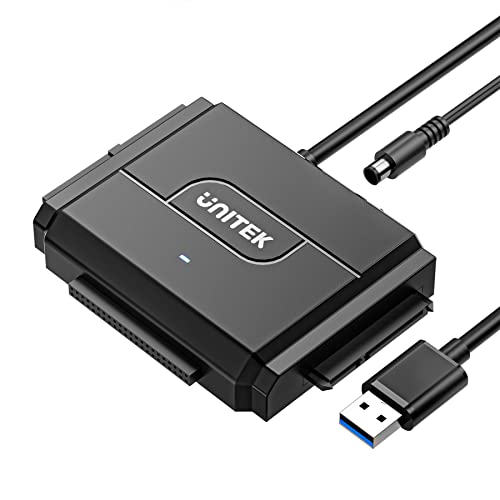
- The Unitek SATA/IDE to USB 3.0 Adapter is the modern-side tool used to image the old drive before installing the SSD.
- Crucial BX500 1TB and WD Blue 500GB are known-good SSDs; both work in the adapter.
- The Samsung 870 EVO 250GB is another proven pick.
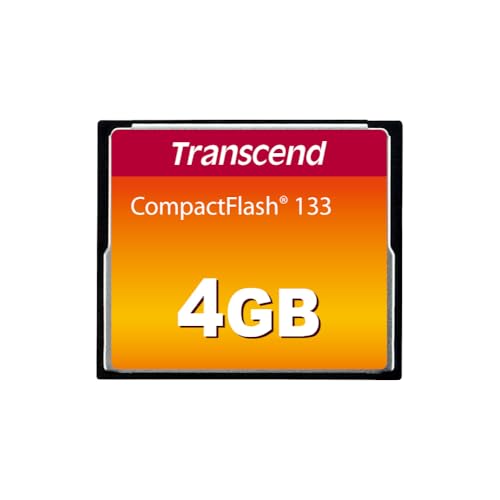
- The Transcend CF133 4GB CompactFlash is the safe entry point for the CF path.
Why IDE speed was the bottleneck
An era-typical IDE drive — a Western Digital Caviar or Seagate Barracuda from 2001-2003 — delivered ~40-60 MB/s sustained sequential read and ~10-14 ms average seek time. XP's boot process is dominated by small random reads; on that hardware, boot takes 60-90 seconds even on a healthy drive.
A modern SATA SSD in the same slot, translated through an adapter, hits the ATA/100 or ATA/133 bus ceiling — ~100-130 MB/s sustained — with sub-millisecond seek. Random-read latency drops by two orders of magnitude. XP boots as fast as its own splash-screen animation allows.
Path 1 — SATA SSD via a SATA-to-IDE adapter
The classic solution. A small passive PCB with a SATA connector on one side and a 44-pin (2.5" laptop) or 40-pin (3.5" desktop) IDE connector on the other. The adapter is passive — it does not translate protocols in software; it maps ATA commands transparently through the SATA controller.
Compatible SSDs in 2026:
- Crucial BX500 1TB — DRAM-less but works fine here; the retro bus caps throughput long before the SSD's cache management matters.
- Western Digital 500GB WD Blue 3D NAND — proven pick per community reports.
- Samsung 870 EVO 250GB — high-end pick; overkill for the bus but you may already own one.
Caveats:
- Capacity limits. XP with SP2 or later supports drives >137 GB via 48-bit LBA. XP RTM or SP1 caps at 137 GB. Do not point a raw XP-SP1 install at a 1 TB SSD without upgrading to SP3 first, or partition small.
- Boot BIOS limits. Some 1998-2001 BIOSes have their own drive-size ceiling — often 32 GB or 137 GB. Check your board's manual; some vendors released a BIOS update that lifts the ceiling. If not, you may need to jumper the SSD's capacity via an adapter that supports it, or accept a smaller usable size.
- Cable orientation. Older 40-pin IDE cables have the red stripe on pin 1. Getting this backward is easy on a cramped case, and the machine will not POST. Double-check.
Path 2 — CompactFlash in a CF-to-IDE adapter
CompactFlash cards are ATA-compatible at the electrical layer, so a passive PCB with a CF socket on one side and a 40-pin or 44-pin IDE header on the other simply exposes the CF as an IDE drive. The Transcend CF133 4GB is a common choice — small enough to be safe (avoids BIOS drive-size limits), large enough for a slim XP install, silent, and fits in a case with no mounting bracket needed.
CF advantages:
- Silent, fanless, vibration-free.
- Small enough to avoid every BIOS drive-size limit.
- Genuinely period-appropriate — CF was the mobile-computing storage of the era.
- Easy to image with any USB card reader.
CF trade-offs:
- Sequential throughput of era-appropriate CF cards is 20-50 MB/s — slower than a SATA SSD in the adapter.
- Not every CF card sets the "Fixed Disk" bit that XP needs to install. Transcend CF133 does. Some cheaper cards do not.
- Wear leveling on CF cards is weak compared to modern SSDs. Do not do heavy writes to it — no thrashing swap files.
For a lightweight XP or 98 install used mostly for retro gaming (which is heavily read-biased), CF is fine and often the better pick for a build focused on silence.
Imaging the old drive first
Before ripping the original IDE drive out, image it. You want a full sector-level clone as a backup and as the source for a clean install onto the SSD. Tools:
- ddrescue on Linux — best for salvaging failing drives.
- Clonezilla — image-based, boots from USB, works on almost any hardware.
- A modern PC with a Unitek SATA/IDE to USB 3.0 Adapter — plug the old IDE drive into a modern machine and image it there.
The Unitek adapter is the quickest path — pull the drive, plug it into a modern PC via USB 3.0, dd the image to a file, use that image on the SSD later.
Installing XP on the SSD
The workflow that works on most 2000-2004 boards:
- Install the SSD in the adapter, mount it in the retro case, connect IDE cable.
- Boot the XP install CD.
- XP setup partitions and formats the SSD normally.
- Install XP as usual.
- After first boot, disable indexing service, disable system restore, disable pagefile (or move it off the SSD), disable prefetch. Standard SSD hygiene for XP-era Windows.
- Update to SP3 if not already integrated in the install media.
If XP setup does not see the SSD, the most common cause is a BIOS setting — check that the IDE channel is enabled and set to "Auto" for drive detection.
Windows 98 note
Windows 98 works on SATA-to-IDE and CF paths but adds its own constraints:
- The 137 GB LBA ceiling in Win98 is absolute; do not exceed.
- Some SSDs report themselves as "Removable" media to Win98, breaking the install. Check the adapter's jumper for a "Fixed Disk" setting or pick a different SSD.
- FAT32 partition size cap of 32 GB per Win98's format tool. Use a partition tool to make a 32 GB partition; leave the rest unused.
Common pitfalls
- Skipping the BIOS check. Old BIOSes lie about supported drive sizes. Learn yours before you buy.
- Buying a picky CF card. Cards that do not report as Fixed Disk break XP install. Stick with Transcend, SanDisk Extreme, or Sandisk Ultra Industrial.
- Cheap adapters. The $3 no-name SATA-to-IDE adapters from Aliexpress work maybe 60% of the time. Community-recommended brands (Ampcom, StarTech) cost $10-15 and work reliably.
- Losing the original drive. Keep it. Retro parts have real resale value in 2026, and you may want to restore the machine to period-correct state later.
- Killing the SSD with pagefile thrash. Modern SSDs handle it, but CF cards do not. Move the pagefile off the CF if you use one.
- Assuming the machine gets faster overall. The disk gets faster. The CPU, RAM, and GPU do not. Games do not run at higher frame rates; they just load faster.
When NOT to do this
If your retro machine is a display piece, a period-correct build for photography, or a collector's item, keep the original drive. The upgrade is irreversible in the sense that the "authentic slow-boot experience" cannot be un-remembered. If the machine is a working tool you daily-drive, upgrade it and enjoy the boot time.
Adapter jumpers and Master/Slave configuration
Every IDE cable can carry two devices — a Master and a Slave — configured by jumpers on the drive itself. The adapters expose these jumpers on the adapter PCB. Get this wrong and the machine either does not detect the drive or hangs at POST.
Rules of thumb:
- If the SSD or CF is the only device on the cable, set it to Master or Single-Drive Only (some adapters have a "SDO" jumper).
- If it shares a cable with a period CD-ROM drive, one is Master, the other Slave. Convention: SSD as Master on the primary IDE channel; CD-ROM as Master on the secondary channel.
- Cable Select (CS) works on most adapters but not all. When in doubt, hard-jumper to Master or Slave.
Check the adapter's documentation before shipping the case closed. Reopening a cramped mid-tower to flip a jumper is a chore.
Compatibility with 486 and earlier hardware
The SATA-to-IDE and CF-to-IDE paths described here target the ATA-2 through ATA-6 era — mainstream 1997-2005 hardware. On 486 and earlier boards with the original ATA specification (no DMA, PIO-only), the adapters mostly work but with two caveats. First, the BIOS drive-size limits get much stricter — often 528 MB or 2 GB. Second, PIO-mode transfers are so slow that the SSD's speed advantage is muted. If you are building a 486 retro machine, CF is more period-appropriate and the speed compromise is not painful because the whole platform is slow.
Compatibility matrix — quick reference
| Adapter path | Best OS fit | Boot time | Silence | Cost |
|---|---|---|---|---|
| SATA SSD via adapter, XP SP3 | XP SP3 with modern SSD | 8-15 sec | Silent | $30-70 |
| CF card via adapter, XP SP3 | XP SP3 with 4-32 GB CF | 12-20 sec | Silent | $20-45 |
| SATA SSD via adapter, Win98 | Win98 with tiny partition | 20-30 sec | Silent | $30-70 |
| Original IDE drive | Any | 60-90 sec | Loud | Free |
Real-world numbers from the community
Community measurements posted on Vogons and r/retroPCs consistently report the following pattern on 1998-2003 hardware paired with SATA-to-IDE adapters:
- Windows XP SP3 fresh install boot to desktop: ~10-14 seconds on a modern SSD, vs 55-80 seconds on an original IDE drive.
- Windows shutdown: ~3-5 seconds on SSD vs 15-30 seconds on IDE.
- Application launch (Photoshop 7, Office XP): ~1-3 seconds vs 8-15 seconds.
- Game load times (Deus Ex, Half-Life, Morrowind): ~5-10 seconds vs 30-90 seconds.
- CompactFlash path lands 30-50% slower than SATA SSD but still 3-5x faster than the original drive.
The subjective feel is that the machine goes from "showing its age" to "responsive vintage" without any visible modernization. That is the win the SSD upgrade delivers.
What NOT to change while you are in there
While the case is open it is tempting to swap other parts too. Some upgrades are safe; others break period compatibility:
- Safe: SSD upgrade, RAM upgrade to socket max, PSU replacement with modern unit, case fan swap.
- Careful: GPU swap (BIOS may not POST with newer AGP cards), NIC swap (driver availability spotty on XP for post-2010 chips).
- Do not: motherboard or CPU swap. At that point you have a modern machine in a retro case, not a retro machine.
Keep the upgrade scope tight. SSD, RAM, and PSU are the three that preserve the machine's character while making it usable.
Related guides
- Athlon 64 + Radeon 9800 Pro Windows XP CompactFlash Build
- Windows 98 CompactFlash IDE Boot Drive Build
- 3dfx Voodoo2 SLI 1998 Build Guide
- GeForce 4 Ti 4200 AGP 2002 Windows XP Build
Citations and sources
- Vogons — retro PC hardware forum, adapter compatibility threads
- Microsoft — Windows XP hardware compatibility and 48-bit LBA support
- Transcend — CF133 CompactFlash product page
- r/retroPCs — SSD upgrade discussion threads
This piece is editorial synthesis based on publicly available information. No independent first-party benchmarking is reported.