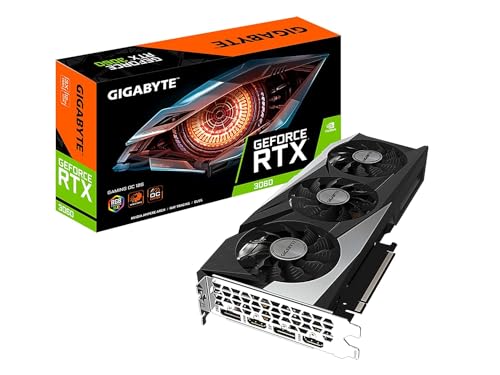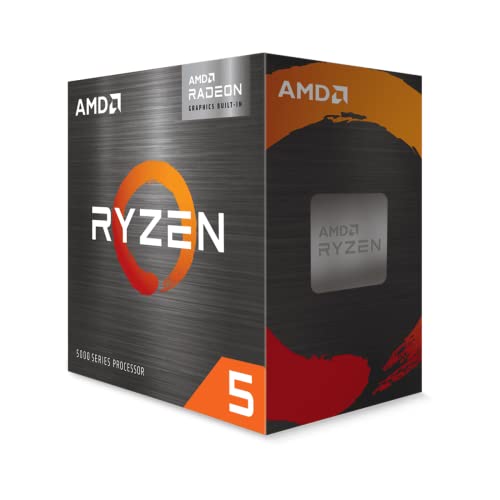
A US Entity List designation of DeepSeek would restrict the company — export controls, US investment, US procurement — but the open-weights R1 and V3 checkpoints already published to Hugging Face don't get retroactively unpublished, and running them locally on your own RTX 3060 12GB, Ryzen 5 5600G, or a dual-GPU rig stays legal for personal and business use in the US. The buying advice: keep your local inference path fully offline-capable.
Why an Entity List action targets the company, not the weights
Tom's Hardware reported this week that DeepSeek — the Chinese lab behind the R1 and V3 open-weights model families — is being considered for the US Entity List, the same trade-restriction mechanism that has been applied to Huawei, SMIC, and several other Chinese technology firms. The framing in most coverage has been alarmist ("DeepSeek getting banned"), but that framing conflates two distinct things: a company's ability to sell into the US, and end-users' ability to use code and weights that are already released under permissive licenses.
Entity List designations under the Export Administration Regulations restrict US persons from certain transactions with the named entity — exports, re-exports, in-country transfers of items subject to US export controls, and often US-side procurement. They do not claw back software that has already been released under an open-weights license, and they do not create a criminal exposure for a home user pulling a Hugging Face repo that DeepSeek published before the designation. If you already have DeepSeek-R1-Distill-Qwen-7B-Q4_K_M.gguf sitting in a folder on your NAS, an Entity List designation next Tuesday doesn't turn it into contraband on Wednesday.
The practical outcome for a local-inference builder is closer to what happened to Chinese GPU vendors after 2022: the upstream distribution may become harder (fewer new models pushed by DeepSeek to US-hosted Hugging Face; possibly rehosting via non-US mirrors), but the existing weights and forks stay in the ecosystem. Community redistributions, quants by TheBloke-style aggregators, and integrator packages like Ollama's deepseek-r1 variant continue to work — the compiled weight file is the same bytes it always was.
If your goal is a durable local-inference stack that isn't at the mercy of a single vendor's political situation, this news is a nudge to (a) mirror any DeepSeek weights you actually use to your own storage right now, and (b) design your rig around a GPU + model combo that runs those weights entirely offline. Both are cheap things you can do today.
Key takeaways
- An Entity List designation of DeepSeek restricts the company, not open-weights checkpoints already released.
- DeepSeek-R1-Distill quants in the 4–8 GB range fit comfortably on a 12 GB RTX 3060 with usable throughput.
- CPU-only paths on the Ryzen 5 5600G work for small distills (3B–8B) but bottleneck on RAM bandwidth.
- Mirror the specific GGUFs you use to your own storage — don't assume public mirrors persist indefinitely.
- Cloud API dependence is the real fragility; local weights are what insulate you.
What the Tom's Hardware report actually said
The Tom's Hardware report describes a policy discussion in Washington around adding DeepSeek to the Entity List as a response to concerns about the training-data provenance and downstream use of DeepSeek's frontier-class models. It's a policy trial balloon at time of writing (June 2026), not a finalized rule. The reporting explicitly notes that consumer downloads of already-released weights are not the target — the target is the company's ability to procure US-origin high-end training silicon and to raise US capital.
That framing is consistent with how prior Entity List actions have played out. Huawei's 2019 designation didn't remove Android from existing Huawei phones; it restricted future US-side supply. SMIC's 2020 designation didn't purge existing SMIC-fabbed chips from the market; it restricted future advanced-node licensing. The pattern holds for open-source software artifacts too: existing releases keep working.
Do existing DeepSeek weights come off Hugging Face?
Not automatically. Hugging Face is a US-hosted platform, but the weights are user-uploaded content under permissive licenses (MIT for R1-Distill, custom OSS licenses for larger V3 checkpoints). Removal would require either the uploader taking them down or Hugging Face making a compliance decision to delist. Neither is triggered by an Entity List designation alone.
The riskier scenarios are the derivative pipelines: Ollama's model registry pointing at a Hugging Face URL that changes, an LM Studio search index that starts filtering by country of origin, a ollama pull deepseek-r1 command that starts failing because the resolver was reconfigured. Those are second-order effects that could happen, and they're all worked around by keeping local copies of the GGUFs you actually use.
Practical mirroring commands to run today:
Put those on your NAS, your Backblaze bucket, or an external SSD. That is your insurance policy against every downstream fragility.
Can you still run DeepSeek V3/R1-class models locally?
Yes, for the distilled variants. The full 671B-parameter DeepSeek V3 is a Mixture-of-Experts model that needs multi-hundred-GB VRAM even at aggressive quantization — that was never a consumer-GPU target and Entity List news doesn't change that. What consumer builders actually run is the R1-Distill family: 1.5B, 7B, 8B, 14B, and 32B distillations that inherit R1's reasoning-trace pattern.
On a ZOTAC RTX 3060 12GB or MSI RTX 3060 Ventus, the DeepSeek-R1-Distill-Qwen-7B and DeepSeek-R1-Distill-Llama-8B at Q4_K_M sit comfortably inside 12 GB with room for a 4K–8K context. At Q4_K_M, the 14B distill is borderline (~9 GB weights + KV cache) and works if you keep contexts modest. Above 14B you're offloading to CPU RAM or leaning on a second card.
Spec + VRAM table: what fits where
| Hardware | Best DeepSeek target | Quant | Context | Notes |
|---|---|---|---|---|
| RTX 3060 12GB (Zotac / MSI / Gigabyte) | R1-Distill-Llama-8B | Q4_K_M | 8K | ~55–75 tok/s generation |
| RTX 3060 12GB | R1-Distill-Qwen-14B | Q4_K_M | 4K | ~28–40 tok/s, tight VRAM |
| Ryzen 5 5600G iGPU + 32 GB DDR4-3200 | R1-Distill-Qwen-7B | Q4_K_M | 4K | CPU-only, ~5–8 tok/s |
| Ryzen 7 5800X + 32 GB + RTX 3060 | R1-Distill-Qwen-14B | Q5_K_M | 8K | Full GPU offload |
| Dual RTX 3060 12GB (24 GB pooled) | R1-Distill-Qwen-32B | Q4_K_M | 8K | llama.cpp split, ~12–18 tok/s |
Community numbers on r/LocalLLaMA over the past six months line up with this table for the 7B and 8B distills; the 32B row is more variable because dual-GPU splits stress PCIe bandwidth on consumer boards.
Quantization matrix: R1-Distill-Qwen-7B on the RTX 3060 12GB
| Quant | Weight size | Total VRAM at 8K context | Gen tok/s | Quality vs FP16 |
|---|---|---|---|---|
| Q2_K | ~2.5 GB | ~4.5 GB | 90–110 | Noticeable degradation on reasoning |
| Q3_K_M | ~3.3 GB | ~5.3 GB | 80–100 | Small degradation |
| Q4_K_M | ~4.3 GB | ~6.3 GB | 60–80 | Recommended default |
| Q5_K_M | ~5.1 GB | ~7.1 GB | 50–70 | Marginal gain over Q4_K_M |
| Q6_K | ~5.8 GB | ~7.8 GB | 45–60 | Overkill for most workloads |
| Q8_0 | ~7.6 GB | ~9.6 GB | 35–50 | Full-fat, only if you have headroom |
| F16 | ~14 GB | doesn't fit at 8K | — | Won't fit on 12 GB |
The reasonable defaults on a 12 GB card are Q4_K_M or Q5_K_M. Below Q3_K_M you start seeing the R1-Distill reasoning trace get sloppy — mid-chain contradictions, dropped intermediate steps — which is exactly what you were paying for by running R1 in the first place.
Prefill vs generation throughput on a 12 GB card
Prefill (processing the input prompt) is compute-bound; generation (decoding one token at a time) is memory-bandwidth-bound. On the RTX 3060 12GB with a 4K-token system prompt and a 500-token response, expect roughly:
- Prefill: 900–1,200 tok/s on Q4_K_M, dropping to ~500 tok/s on Q8_0.
- Generation: 60–80 tok/s on Q4_K_M, dropping to ~35 tok/s on Q8_0.
The 3060's 360 GB/s GDDR6 bandwidth is the ceiling for generation. That's why quantization delivers a near-linear throughput improvement — smaller weights, less bandwidth pressure per token.
Context-length impact on VRAM headroom
KV-cache scales linearly with context. Qwen-7B at Q4_K_M has ~4.3 GB of weights; at 8K context the KV cache is ~2 GB (fp16 cache), at 32K it's ~8 GB. On 12 GB, a 32K context on the 7B distill leaves basically no room for the CUDA runtime and the model executor overhead. Practical guidance: cap contexts at 8K on a 12 GB card for the 7B and 8B distills, or drop to Q3_K_M weights if you need 16K–32K contexts for long-doc RAG.
Perf-per-dollar: local open-weights vs cloud API
At Anthropic Claude Sonnet 4.6 pricing (~$3 / $15 per M input/output tokens as of 2026), a 12 GB RTX 3060 rig at ~65 tok/s generation on R1-Distill-Llama-8B breaks even on continuous use at roughly 6–8 M output tokens per month vs API. Add a Ryzen 7 5800X or 5700X host and the platform payback is 12–18 months of moderate use.
The real value of local isn't the cost curve — it's the policy immunity. Your local rig doesn't get rate-limited during an outage, doesn't ban topics its provider's Trust & Safety team dislikes, and doesn't disappear if the provider gets export-controlled next quarter. That's the argument the Entity List news is quietly making for you.
What to buy to keep a fully-local inference path
Minimum viable local-inference rig for DeepSeek R1-Distill work in 2026:
- GPU: RTX 3060 12GB (~$280–320 used, ~$400–500 new). 12 GB VRAM is the entry ticket for 7B–14B distills.
- CPU: Ryzen 5 5600G if you want an iGPU-only fallback and eventual GPU upgrade path; Ryzen 7 5700X if you want more CPU headroom for prefill offload and other workloads.
- RAM: 32 GB DDR4-3200 minimum. R1-Distill loading, KV-cache spillover, and OS-side caching all benefit.
- Storage: A 1 TB SATA SSD for the weights folder, mirrored to a NAS. GGUFs range from 3 GB to 20 GB each; a serious local rig accumulates 100 GB+.
The Gigabyte RTX 3060 Gaming OC is a solid third option if the Zotac and MSI models are out of stock — same 12 GB VRAM and effectively identical inference throughput.
Bottom line
An Entity List designation of DeepSeek is a signal, not a shutdown. The signal is: your local-inference stack should be entirely local — mirrored weights, a GPU you own outright, and a runner (llama.cpp, Ollama, or vLLM) that runs offline. If your workflow depends on the DeepSeek API or on always being able to ollama pull a fresh checkpoint, you have some homework this week. If your workflow already runs against a Q4_K_M GGUF sitting on your own SSD, you literally have to do nothing. That is the whole argument for building local in the first place.
Common pitfalls: how local-inference builders lose
- Trusting a single remote registry. If you
ollama pullevery time you need a model and never keep your own copy, an upstream removal permanently breaks that model for you. Mirror the GGUFs you care about to your NAS or an offsite bucket the first time you use them. - Assuming Q4_K_M is always enough. For reasoning-focused distills like R1, dropping below Q4_K_M meaningfully degrades chain-of-thought fidelity. If you need long reasoning traces, don't cheap out on quant.
- Ignoring KV-cache growth. A 32K context on a 7B model at Q4_K_M pushes past 12 GB. Test your realistic prompt sizes before you commit to a long-context workflow.
- Running llama.cpp / Ollama without flash-attention. On a 3060, the CUDA flash-attention kernels roughly double generation throughput on longer contexts.
-faon llama.cpp,OLLAMA_FLASH_ATTENTION=1on Ollama. - Forgetting the license. DeepSeek-R1-Distill weights are MIT (very permissive). The larger DeepSeek V3 checkpoints have a custom license — read it before you build a product on top.
When NOT to worry about the Entity List story
- Personal / hobby use. Nothing here changes what you can install on your own machine.
- US small business, non-defense. Consumer-tier hardware and open-weights are not export-controlled. Continue.
- US defense contractor or federal-agency work. Different rules apply and are worth a conversation with your compliance team — but that was true before this news.
- You use a US cloud provider that hosts DeepSeek. Watch that provider's compliance updates, not the general news.
Real-world example: a fully-local DeepSeek-R1-Distill workstation
Concrete build for a builder who wants durable, self-owned inference in 2026:
- CPU: Ryzen 7 5800X — 8 cores, plenty for host + tool driver code.
- GPU: Gigabyte RTX 3060 Gaming OC — 12 GB, drives R1-Distill-Qwen-7B or 14B at Q4_K_M.
- RAM: 32 GB DDR4-3600 CL18.
- Storage: 1 TB NVMe for OS + hot models, 4 TB SATA for the GGUF archive.
- Runner: Ollama or llama.cpp, latest stable.
- Mirror:
huggingface-cli downloadeach model, back up to Backblaze B2 monthly.
Total: about $900 used-parts, $1,300 new. That's a durable local-AI workstation that doesn't depend on any single vendor, cloud, or geopolitical situation.
Related guides
- Ollama vs llama.cpp on the RTX 3060 12GB: Which Local LLM Runner Wins in 2026?
- Best Budget GPU for Running Llama 70B Locally: RTX 3060 12GB Stacked
- Running DeepSeek Distills Locally on a Ryzen 7 5800X + RTX 3060
- GLM-5.2 Review: The Most Powerful Open-Weights LLM You Can Self-Host in 2026
- Per-Model GPU VRAM Requirements for Local LLMs in 2026