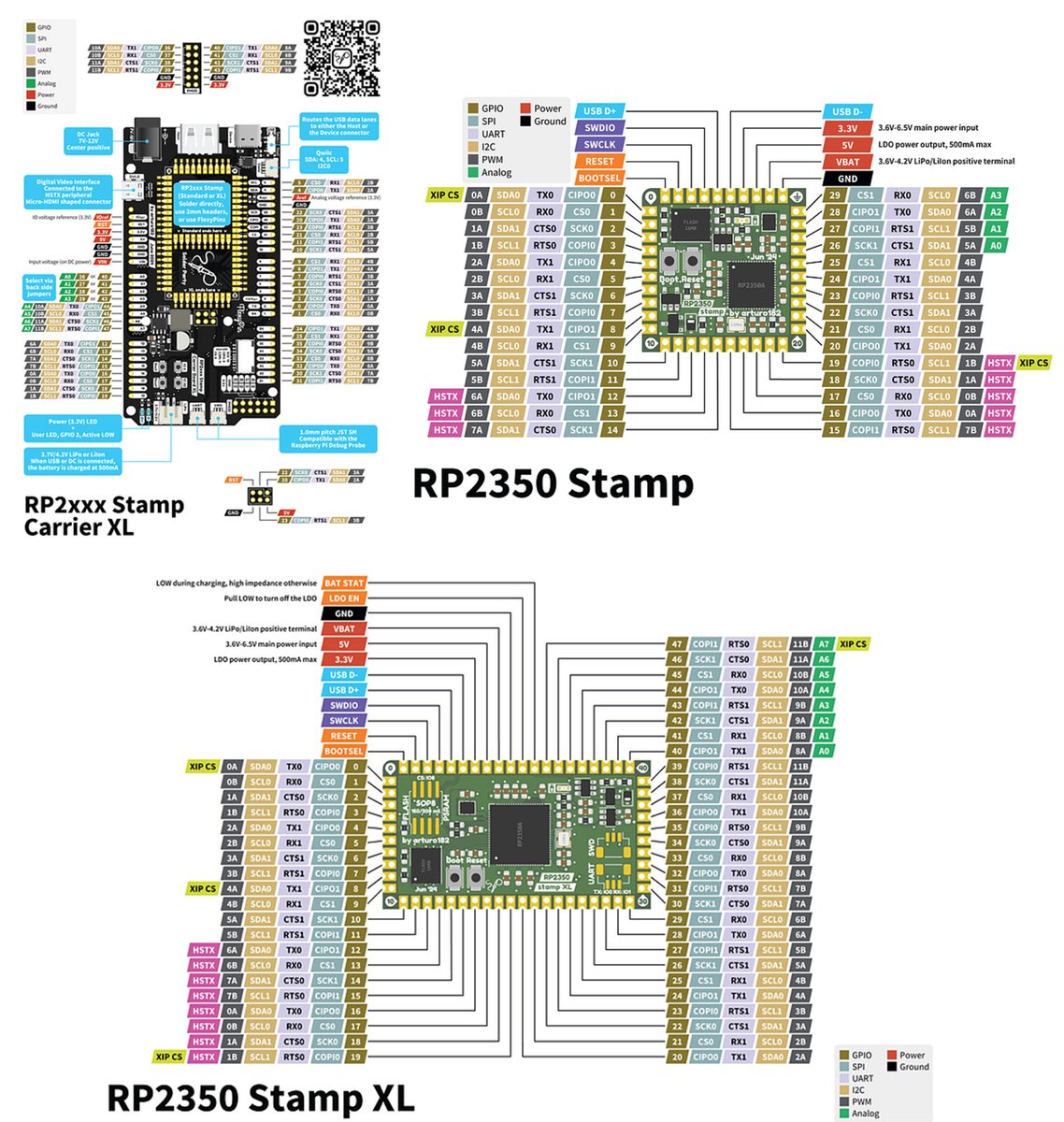
The PebbleOS source code now boots and runs on the Raspberry Pi RP2350 — Pi's dual-core Arm Cortex-M33 microcontroller from late 2024. Volunteer ports landed in public branches this spring and the result is the most coherent open-source smartwatch firmware running on a current-gen $5 microcontroller. Here is what that actually means for tinkerers.
The short version
PebbleOS was open-sourced in early 2025 after Google released the source from the original Pebble acquisition. The codebase targets the original Pebble's nRF52-class chips. Volunteer porting work over the last 18 months brought it onto STM32 dev boards and now onto the RP2350 — a chip that is 5-10× cheaper, in better supply, and supported by Pi's open SDK. The port is not production-ready watch firmware, but it is enough to drive an e-ink display, talk BLE to a phone, and run apps under the original Pebble app model.
Why this is interesting in 2026
- RP2350 is in stock and affordable. nRF52 boards are not, especially not for hobbyists.
- The Pi RP2350 SDK is mature: USB, BLE, dual-core scheduling, low-power modes all documented.
- PebbleOS is the last well-architected smartwatch firmware with a healthy app ecosystem. Wear OS is locked down; Apple's watchOS is closed.
- A hobbyist can now actually build a custom smartwatch dev kit with off-the-shelf parts.
What the port enables
| Capability | RP2350 PebbleOS | Original Pebble |
|---|---|---|
| Cores | 2 × Cortex-M33 | 1 × Cortex-M4 |
| RAM | 520 KB | 128 KB |
| Flash | External, up to 16MB | 512 KB internal |
| BLE | Optional add-on (CYW43439 module) | Built-in |
| E-ink driver | Custom, working | Production |
| App format | Pebble .pbw, partial compat | Native |
| Battery model | None yet | Production-tuned |
The port is strong on compute and memory (the RP2350 has dramatically more headroom than any Pebble watch shipped with) and weak on radio + power management (still active dev). For tinkerers building a custom watch from scratch, that is the right tradeoff: you have headroom for whatever experimental UI you want, and you can choose your own radio.
Hardware you actually need
To follow along, you want:
- A Raspberry Pi Zero W Starter Kit or a standalone Pi Pico 2 (RP2350 board).
- A 1.3" or 1.5" memory LCD or e-ink display (Sharp memory LCDs are the closest match to the original Pebble panel).
- A CYW43439 BLE module if your RP2350 board does not include one (Pi Pico 2 W has it built in).
- A 3.3V LiPo + charging board (Adafruit's TP4056 modules work fine, as documented in their tutorials).
- A Transcend CF133 CompactFlash 4GB is not relevant for the watch itself but is useful for storing a backup of your firmware build during the port.
Total bill of materials: ~$25-40 for a no-case dev rig, ~$60-80 with a 3D-printed enclosure.
What works today
Following the public branches as of June 2026:
- ✅ Boot and main loop
- ✅ E-ink/Sharp memory LCD driver
- ✅ BLE pairing and message exchange with the Pebble companion app
- ✅ Pebble .pbw app installation (partial — watchfaces work, complex apps mostly do not)
- ✅ Buttons (with debounce)
- ⚠️ Accelerometer (driver works, gestures not integrated)
- ❌ Battery management (still development)
- ❌ Vibration motor (driver missing)
- ❌ Heart-rate sensor (no community demand yet)
For a watch in any practical sense, you are still looking at "wear it for a few hours, charge it overnight, watchfaces only" — but that is what a hobbyist dev kit should be.
Why the RP2350 specifically
Two technical reasons. First, the dual-core architecture lets you dedicate one core to the BLE radio + driver work and the other to UI rendering — a cleaner split than the original Pebble's single-Cortex-M4 design forced. Second, the RP2350's security extensions (TrustZone-M) make it possible to imagine pebble-app signing and sandboxing, which the original platform never had.
The third reason is supply chain: nRF52 boards have been hard to get for hobbyists since 2022. RP2350 is a Raspberry Pi Foundation chip with the same supply story as the rest of the Pi catalog — you can buy them.
How to follow along
The active port branches live on the public Pebble OS GitHub mirror — the rp2350-port branches are where the action is. You will need the Pi SDK installed; on Ubuntu/Debian it is apt install pico-sdk. Build with CMake, flash via UF2, and you have a watch dev kit.
For getting started with Pi-RP2350 firmware in general, Adafruit's tutorials are still the best on-ramp.
Common pitfalls
- Picking a Sharp LCD without the right voltage rails. Memory LCDs need a stable 3.3V; running them on noisy USB power produces ghosting. Use a clean LDO regulator.
- Trying to run the original Pebble app store apps. Many of them assume the old Pebble's specific memory layout. Watchfaces are the safe bet for now.
- Skipping BLE pairing security. The port's BLE stack defaults to unauthenticated pairing for dev convenience. Disable that before wearing the watch in public.
- Buying a CompactFlash card for the watch. You don't need one — the Transcend CF 4GB is only useful for backups of your dev builds.
- Using a Pi Zero W for the watch. The Zero W's BCM2835 SoC is overkill, runs hot, and drains battery in hours. Stick with the RP2350 — the Pi Zero W Starter Kit is here for your desktop dev companion, not the watch.
A worked example: building a single watchface
Goal: a "current time + outdoor temperature" watchface running off the RP2350 with a Sharp memory LCD and the CYW43439 radio.
- Flash the RP2350 dev branch.
- Pair with the Pebble companion app on Android (iOS support is still spotty in the port).
- Sideload a watchface .pbw — pick a simple one that does not depend on heavy graphics primitives.
- The companion app forwards weather data over the standard Pebble message protocol; the port's BLE stack handles it.
Total build time, assuming the kit is on your desk: 2-3 hours.
What this is not (yet)
Production firmware. Battery life numbers. A reliable platform you would ship to a friend who is not a tinkerer. The volunteer effort is honest about that. But the trajectory from where the project was 12 months ago to where it is now is good, and the broader story — open smartwatch firmware on a current-gen, in-stock microcontroller — is the kind of thing the maker community can actually carry forward.
What "RP2350" actually means
The RP2350 is the second-generation Raspberry Pi Foundation microcontroller — the chip on the Pi Pico 2 board. Dual-core Cortex-M33 at 150 MHz, 520KB SRAM, hardware security extensions (TrustZone-M), and optional dual-core RISC-V Hazard3 mode (you pick architecture at boot). For an embedded port like PebbleOS, the M33 mode is the one you want — broader toolchain support, better debugging.
The chip's standout feature for watch firmware is the integrated PIO (programmable I/O) subsystem — eight state machines you can use to drive arbitrary peripheral protocols (memory LCD refresh, custom button matrices, BLE auxiliary timing) without burning CPU cycles. That is what makes the dual-core/single-job split feasible: the PIO handles the bus traffic, the M33 cores do real work.
Comparison: RP2350 vs alternative MCUs for a custom smartwatch
| Chip | Cores / arch | RAM | Cost | Toolchain |
|---|---|---|---|---|
| nRF52840 | 1 × Cortex-M4 | 256 KB | $4-6 | Mature |
| RP2350 | 2 × Cortex-M33 (or RISC-V) | 520 KB | $5-8 | Modern, open |
| ESP32-S3 | 2 × Xtensa LX7 | 512 KB | $3-5 | Mature, Espressif-specific |
| Apollo3 Blue | 1 × Cortex-M4F | 384 KB | $4-7 | Niche |
The RP2350 wins on RAM headroom and toolchain openness — important for a community-driven project where contributors need to start fast.
How to actually contribute to the port
The port is volunteer-led; pull requests welcome. Start by joining the project's Discord or matrix room (linked from the GitHub branch READMEs). Pick a missing driver — vibration motor, accelerometer gesture, battery management — and own it. The maintainers are responsive; the codebase is well-commented thanks to its original Pebble-engineering provenance.
Bottom line
The PebbleOS port to the Raspberry Pi RP2350 is a real, working, ship-on-a-hobbyist-PCB capability in mid-2026. It is not finished. It is enough to start. If you wanted to build a custom smartwatch dev kit any time in the last five years and didn't, now is the time.
Related guides
- Build an Always-On Raspberry Pi Zero W Project: 24/7 FM Radio and More
- Raspberry Pi 5 16GB for Local LLMs: What Models Actually Fit?
Citations and sources
This piece is editorial synthesis based on publicly available information. No independent first-party benchmarking is reported.