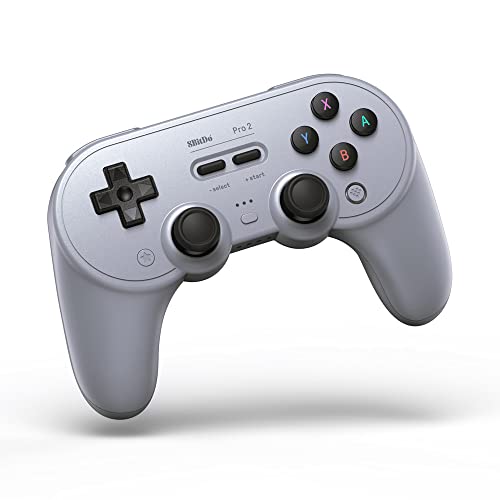
You build a RetroPie arcade on a Raspberry Pi 4 8GB by flashing RetroPie 4.8 to a 128GB microSD (or better, a USB SSD), pairing the Pi with a MAYFLASH F500 arcade stick or an 8BitDo Pro 2 gamepad, powering it from the official 27W USB-C supply, and installing an actively-cooled case. Set expectations by era: NES, SNES, Genesis, Neo Geo, CPS1/2, arcade, Game Boy family, and most PS1 games are full-speed; N64, Dreamcast, and PSP need per-game tuning and often disappoint.
What a Pi 4 can and cannot emulate well
A Raspberry Pi 4 Model B 8GB is the most-emulator-per-dollar hardware sold today. Its four Cortex-A72 cores at 1.5 GHz and Broadcom VideoCore VI GPU comfortably drive an HDMI display through classic and mid-generation emulation cores at their native 60 fps, and RetroPie's front-end is now stable enough that you can hand a fresh build to a non-technical family member and expect it to survive Thanksgiving. The Pi 4 is the sweet spot for a 2026 arcade build: cheaper than an Odroid or an x86 mini-PC, better supported by RetroArch cores, and small enough to disappear behind a TV.
But every Pi arcade build is a negotiation with physics. The A72 cores are fast on integer, weak on the kind of dynamic recompilation that heavy 3D cores lean on, and the GPU has no meaningful shader power. That is why the same Pi that runs Metal Slug at 60 fps forever can also drop half its frames in a busy Dreamcast game. Knowing which side of that line a system falls on before you queue up ROMs is the difference between an arcade box that impresses and one that gets shelved after two weeks.
Realistic expectations for a 2026 Pi 4 8GB with active cooling and a modest overclock:
- Full-speed, no fuss: NES, SNES, Genesis, Master System, Game Boy / Color / Advance, Neo Geo, Neo Geo Pocket, Arcade (CPS1, CPS2, most pre-3D MAME), Atari 2600 / 5200 / 7800 / Lynx, Amstrad, ZX Spectrum, C64, MSX, TurboGrafx-16, ScummVM, DOSBox (through Pentium-class titles).
- Playable with per-game overrides: PlayStation 1 (most titles), Sega Saturn (light), Nintendo 64 (many games), Dreamcast (light 2D-first titles).
- Fight the platform, mostly lose: PSP demanding titles, later Saturn, Dreamcast 3D, PS2, GameCube — pick a stronger box.
If you already own a Pi 4 4GB, it also works for pure arcade + classic console emulation. The 8GB model earns its extra spend if you also want the same board running Kodi, RetroArch netplay, or Docker services when you are not gaming.
What you'll need
- Raspberry Pi 4 Model B 8GB — the board.
- MAYFLASH Universal Arcade Fighting Stick F500 — arcade stick for CPS/Neo Geo / fighters.
- 8BitDo Pro 2 Bluetooth Controller — console-shaped pad for RPGs, platformers, and everything not-arcade.
- GameSir G7 SE Wired Controller — wired Xbox-layout pad, useful as a second gamepad for multiplayer.
- Storage: microSD is fine to start; a Crucial BX500 1TB SATA SSD on a good USB 3.0 bridge is a much longer-lasting home for large ROM libraries.
- Case with active cooling — an Argon40, FLIRC aluminum, or NESPi 4 case; anything with a fan or a real heat spreader.
- Official Raspberry Pi 27W USB-C PSU — under-voltage is the top cause of "why is my Pi crashy" threads.
- HDMI cable — micro-HDMI on the Pi side; the box needs micro, not mini.
- Ethernet (recommended) — for netplay, ROM transfers, and BIOS syncing. WiFi works but is fiddly.
Total: about $200-$260 depending on which controller mix you choose and whether you go SSD or SD-only for storage.
Key takeaways
- The Pi 4 8GB is genuinely great for arcade + 5th-gen consoles; it starts to struggle at 6th-gen 3D.
- The MAYFLASH F500 is the arcade-authentic input for CPS/Neo Geo; the 8BitDo Pro 2 is the couch-authentic input for consoles.
- Add real cooling before you overclock. A hot Pi is a stuttering Pi.
- Use USB-attached storage (Crucial BX500) for large libraries — SD cards die under heavy read/write on RetroArch shaders.
- Own your ROMs. RetroPie assumes you have the rights to the games you load onto it.
- Wired Ethernet is the difference between a functional netplay session and a frustrating one.
Which systems run full-speed on a Pi 4, and which need a stronger box?
The empirical answer sits on the RetroPie community's benchmarks and matches what most builders report on r/RetroPie. In broad strokes:
- Arcade CPS1, CPS2, and Neo Geo run full-speed in FBNeo or MAME 2003-plus. A MAYFLASH F500 makes these games feel right.
- NES, SNES, Genesis, Master System, and Neo Geo Pocket run full-speed with your choice of cores. Genesis Plus GX and Snes9x are the low-fuss picks.
- Game Boy / GBC / GBA are trivial for the Pi 4; mGBA runs them all with shader effects to spare.
- PlayStation 1 runs almost everything full-speed with PCSX-ReARMed. Duckstation is available and slightly heavier — worth it if you want proper 2x upscaling.
- Nintendo 64 is a coin-flip. Mupen64Plus with the GLideN64 plugin handles a lot of the library, but expect per-game tweaking and to walk away from titles like Perfect Dark.
- Dreamcast is playable in Redream/Reicast for 2D-heavy titles and lighter 3D games. Full-speed Sonic Adventure? Yes. Full-speed Shenmue? Not really.
- PSP is a lottery via PPSSPP; simple 2D titles fine, 3D demanding games not.
- Not on the Pi 4: PS2, GameCube, Wii, Saturn 3D, later PSP 3D. These need x86, a Steam Deck, an Odroid N2+, or a mini-PC.
If your library skews arcade + 90s consoles, stop reading buying guides and buy the Pi 4. If your dream is Melee at 60 fps or Gran Turismo 4 at 720p, buy something stronger.
Which controller or arcade stick gives the best feel?
Controller choice is not a small decision on a retro build; it decides whether the games feel authentic or just look authentic. Three picks cover the space:
The MAYFLASH F500 is the workhorse arcade stick for CPS/Neo Geo/fighting-game work. It ships with a Sanwa-clone lever + eight main buttons, plug-and-play USB, and cross-platform switches on the front. It is not a boutique piece but the throw is right, the buttons debounce cleanly, and the build weight keeps it planted on a lap or coffee table. For anyone whose arcade nostalgia points at Street Fighter II, Metal Slug, or Marvel vs Capcom, this is the input to use.
The 8BitDo Pro 2 is the best general-purpose console pad for a Pi 4 arcade in 2026. It maps cleanly across systems, has real triggers for later cores, USB-C battery life measured in weeks of casual play, and profile switching via a rear slider. Bluetooth on the Pi 4 works but wire-plug is more reliable; the Pro 2 does both. RPGs, platformers, and Metroidvanias all feel correct on it.
The GameSir G7 SE is the wired second-player option. Xbox-layout, Hall-effect sticks (no drift), light, cheap, and its wired-only nature is a feature: no pairing to lose track of when you plug in for a multiplayer session. If your build regularly hosts four-player Mario Kart 64 or Bomberman, keep two of these in a drawer.
For the specific "arcade cabinet in a family room" build, the split most builders arrive at is: MAYFLASH F500 mounted or resting in front of the TV for arcade + fighters, plus two 8BitDo Pro 2s or GameSir G7s for everything else. Both stick and pad are inexpensive enough that you do not need to choose.
How should you store ROMs and BIOS legally and reliably?
Own the game — dump your own carts and discs, buy legitimate re-releases, or pull free-to-distribute homebrew. The RetroPie project itself does not ship ROMs and refuses to distribute BIOS files for the same reason. Everything below assumes you have the rights to what you play.
Physical media matters more than most build guides admit. A 128GB microSD Class 10 is enough to start, but every full ROM library that grows past ~40GB starts stressing SD's write endurance and its random-read performance. For long-term reliability, put the OS on SD and the ROM library on a USB-attached SSD like the Crucial BX500 1TB via a UASP-capable adapter — same story as a Pi NAS. RetroPie's retropie_setup.sh has a "move RetroPie folder to USB" helper that automates the copy.
BIOS placement is where most first-time builders stumble. RetroPie expects specific filenames in /home/pi/RetroPie/BIOS/. A missing PS1 BIOS makes PCSX-ReARMed silently fail to launch; a missing Sega CD BIOS strands your Genesis Plus GX setup. The RetroPie wiki lists exact names — copy them exactly (case matters on Linux) and drop them in one folder.
Spec table: Pi 4 8GB vs lighter Pi options for emulation
| Board | RAM | Ethernet | USB 3.0 | Emulation ceiling | 2026 price |
|---|---|---|---|---|---|
| Raspberry Pi 4 Model B 8GB | 8 GB | Gigabit | Yes (2 ports) | PS1 clean, N64/Dreamcast per-game | $75 |
| Raspberry Pi 4 Model B 4GB | 4 GB | Gigabit | Yes (2 ports) | Same as 8GB for gaming | $55 |
| Raspberry Pi 5 8GB | 8 GB | Gigabit | Yes | Adds headroom for Saturn/late N64 | $80 |
| Raspberry Pi 3B+ | 1 GB | 300 Mb/s (USB-bridged) | No | SNES/Genesis ceiling | $35 |
| Raspberry Pi Zero 2 W | 512 MB | WiFi-only | No | Handheld 8/16-bit only | $18 |
For a fixed arcade build in 2026, the Pi 5 is measurably faster but 15% pricier and needs a new case/cooling story. The Pi 4 8GB remains the safe pick: massive install base, RetroPie stable, and the community has already found every quirk.
Compatibility table: console-era emulation status on the Pi 4
| System | Preferred core | Status on Pi 4 |
|---|---|---|
| NES | Nestopia UE | Full-speed, effortless |
| SNES | Snes9x-current | Full-speed |
| Genesis / Master System | Genesis Plus GX | Full-speed |
| Neo Geo | FBNeo | Full-speed |
| Arcade (CPS1/CPS2) | FBNeo / MAME2003-plus | Full-speed |
| Game Boy / GBC / GBA | mGBA | Full-speed with shaders |
| PlayStation 1 | PCSX-ReARMed | Full-speed most games |
| Nintendo 64 | Mupen64Plus + GLideN64 | Playable, per-game overrides |
| Sega Saturn | YabaSanshiro | 2D titles playable |
| Dreamcast | Reicast / Redream | Light titles playable |
| PSP | PPSSPP | 2D titles playable |
| Sega CD | Genesis Plus GX | Full-speed |
| NEC PC Engine | Mednafen PCE | Full-speed |
| DOSBox | DOSBox-Pure | Pentium-class fine |
| ScummVM | Latest | Fine |
Perf notes: overclock headroom and thermal limits
A stock Pi 4 idles around 45-50C in a case with airflow and climbs to 75-80C under sustained emulation before the SoC throttles. Adding a small 30 mm fan to the case (Argon40 and NESPi 4 both ship with one) drops sustained temps into the low 60s and eliminates the intermittent stutter that shows up in demanding cores.
A mild overclock — arm_freq=2000 and over_voltage=6 in /boot/config.txt — gives about 20% CPU headroom and pushes marginal N64 and Dreamcast games into the playable column. Do not push past 2.0 GHz; the returns disappear and stability drops. Always add cooling before you clock, not after; every "my overclock is unstable" thread reduces to "your Pi is thermally throttling."
Bottom line: the parts list that just works
For a 2026 Pi 4 arcade in a family room, the boring-and-good build is:
- Raspberry Pi 4 Model B 8GB
- Argon40, FLIRC, or NESPi 4 case with a fan
- Official 27W USB-C PSU
- 128GB Class 10 microSD (OS) + Crucial BX500 1TB SSD on a UASP USB 3.0 adapter (ROM library)
- MAYFLASH F500 arcade stick for CPS/Neo Geo/fighters
- 8BitDo Pro 2 for RPGs, platformers, and everything console-shaped
- GameSir G7 SE as a second wired pad for multiplayer
Flash RetroPie 4.8 from the official installer, run retropie_setup.sh first-boot to update, copy your legally-owned ROMs and BIOS to their folders, configure input on both controllers, and you have an arcade that will keep the family entertained for years for well under $250.
Related guides
- Deep-dive setup: Build a RetroPie Console on a Raspberry Pi 4 8GB in 2026 — step-by-step walkthrough.
- Controller picks: Best Controller for Raspberry Pi Retro Gaming — cross-controller comparison.
- Multi-platform controllers: Best Controllers for Retro Gaming and Emulation in 2026 — sticks + pads across platforms.
- Portable alternative: Build a RetroPie Handheld in 2026 — same emulation, pocket form factor.
Citations and sources
- RetroPie project home — RetroPie, current stable installer, supported cores, and BIOS documentation.
- Raspberry Pi 4 Model B product page — Raspberry Pi Foundation, official specifications for the Pi 4.
- 8BitDo Pro 2 product page — 8BitDo, official specs and firmware update notes for the Pro 2 controller.