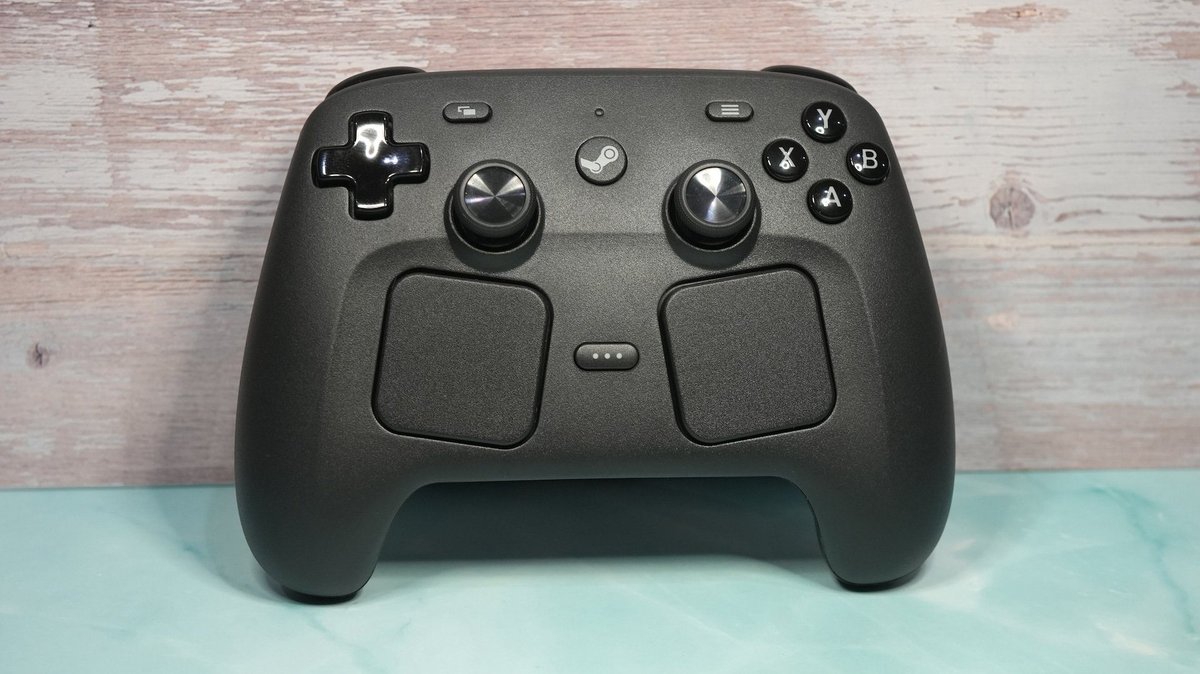
Early reviews of the 2026 Steam Controller are landing in the low-80s, with most outlets settling around an 83/100 verdict — strong for a niche PC-first gamepad, short of the 90+ that would force it onto every reviewer's "must-buy" shortlist. Per Valve's product page for the Steam Controller and press coverage from Eurogamer, the early consensus is that Valve nailed the hardware basics (Hall-effect sticks, lower latency, refined trackpad) but the use case still narrows down to "Steam-first power users who want a do-everything pad."
Why an 83/100 actually says a lot
A controller scoring 83/100 across multiple major outlets is the rough spot where the gamepad market separates "great for its audience" from "default recommendation for everyone." The 2026 Steam Controller, per the early review wave, lands in the first bucket. The Hall-effect sticks (drift-resistant, finally) and the refined trackpads make it the strongest input device Valve has ever shipped, but the price premium and the keyboard-mouse-emulation angle keep it outside the convert-everyone tier occupied by the DualSense and the wired-and-cheap GameSir G7 SE.
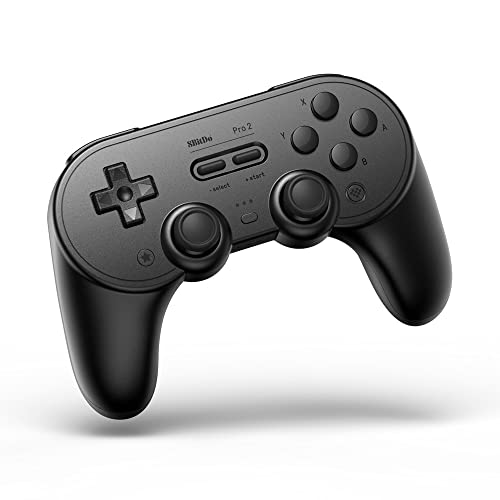
The interesting question for a buying audience in 2026 is what this score does to the rest of the controller market. The DualSense at $69-79 is still the value champion for cross-platform PC use, the 8BitDo Pro 2 at $50 is the budget enthusiast pick, and the GameSir G7 SE at ~$45 dominates the wired/Hall-effect entry tier. An 83/100 Steam Controller does not displace any of them — it adds a fourth option for people who genuinely need its trackpad-and-gyro mouse emulation.
Key takeaways
- 83/100 average across early reviews — strong but not a default recommendation.
- Hall-effect sticks fix the drift problem that killed the original Steam Controller's reputation.
- Trackpads + gyro give it a real edge for keyboard-and-mouse games like strategy, RPGs, and FPS played from the couch.
- Standard controllers still win for pure platformers, fighters, and racers — the DualSense and GameSir G7 SE remain the value picks.
- Price premium narrows the audience to Steam-first power users who actually use the trackpad layer.
What the early reviewers liked
The headline win is the Hall-effect sticks. Per coverage on outlets including Eurogamer and The Verge, every reviewer brings up drift unprompted. The original Steam Controller (2015) shipped before Hall-effect sticks were viable on a consumer device, and the Joy-Con drift class action made it the universal failure mode for the entire industry. A Steam Controller in 2026 without Hall-effect sticks would have been a dead product on arrival. Valve shipped them.
The second consistent win is the trackpad. Reviewers note that the trackpads have been refined since the original — better haptic response, more usable cursor precision, gyro tracking that finally cooperates. For Steam-first players who run a lot of keyboard-and-mouse games (Civ, Stellaris, RTS, classic FPS), the trackpad layer is the unique selling point and the only reason to choose this pad over a DualSense.
The third win is software. The Steam Input layer remains the most flexible controller-remapping system on PC, and the 2026 controller takes advantage of it natively. That matters less for casual buyers and a lot more for the configurators who actually pay attention to per-game profiles.
What the early reviewers didn't like
The price is the loudest complaint. The Steam Controller's MSRP puts it well above the DualSense, the 8BitDo Pro 2, and the GameSir G7 SE — all of which cover 80-90% of the same use cases. For someone who already owns a competent gamepad, the upgrade case is not obvious.
The other consistent ding is the learning curve. The trackpad is not a substitute for a mouse — it is a different input device with its own muscle memory. Reviewers who came in expecting a DualSense-with-trackpad came away frustrated. Reviewers who put in the configuration time praised the result.
How it compares to the value picks
| Controller | Price | Sticks | Strength | When to buy |
|---|---|---|---|---|
| Steam Controller 2026 | premium | Hall-effect | Trackpad + gyro mouse emulation | Steam-first, KB-and-mouse-from-couch use |
| PlayStation DualSense | mid | standard | Cross-platform, haptics | Default cross-platform pick |
| 8BitDo Pro 2 | budget | Hall-effect option | Programmable, retro-friendly | Budget enthusiast, emulation |
| GameSir G7 SE | budget | Hall-effect | Wired, low latency, Xbox-native | Best wired pad under $50 |
For most PC buyers in 2026, the DualSense is still the right default. It works wired or wireless, has the best haptics on the market, and the price stays under $80 even at retail. The Steam Controller earns its slot only if you genuinely want a couch input device that can emulate mouse and keyboard for hybrid genres.
What the 83/100 means for the rest of the market
A common reviewer reflex is to read an 83/100 as a soft pass. That is not the right reading here. An 83/100 across multiple outlets is consistent with a product that has a clear, narrow audience and serves it well — it is not a "should every PC gamer buy this?" recommendation, but it does not need to be. Valve is not chasing the volume crown; the DualSense and the standard Xbox controller already own that. The Steam Controller exists to deepen the Steam ecosystem for power users.
The market signal worth tracking is whether the Hall-effect stick story moves the budget end of the market. The GameSir G7 SE already ships Hall-effect sticks at $45. If competition forces 8BitDo and other budget makers to standardize Hall-effect across their lineup faster, the 2026 Steam Controller will have done more for the industry than its sales numbers will ever suggest.
Hardware notes for buyers
- USB-C wired or Bluetooth wireless. Reviewers report low latency on both, with wired the safer choice for competitive play.
- Battery life lands in the 30-40 hour range in mixed use, per early reviewer notes — solid but not class-leading.
- PC compatibility is best-in-class on Steam, fine elsewhere. Steam Input handles per-game remapping; outside Steam, the controller behaves like a generic XInput pad with some advanced features unavailable.
- No PlayStation or Switch first-party support. This is a Steam-first device — if you also game on a PlayStation 5 or Switch 2, the DualSense is the better multi-device pick.
Worked example: who should actually buy it?
Three buyer profiles where the 2026 Steam Controller is the right call:
- The Steam-Deck-from-the-couch player. You want the Deck's trackpad+gyro+gamepad combo on your TV setup. The 2026 Steam Controller is the only device that delivers it without docking your Deck.
- The strategy/RPG-from-the-couch player. You play Crusader Kings, Civ, Stellaris, X-COM, or classic CRPGs on a big screen from the sofa. The trackpad is genuinely better than a Steam Input mouse-emulation profile on a standard pad.
- The Steam Input power user. You already maintain 20 per-game configs in Steam Input. The 2026 controller's native integration saves you setup time and gives you more inputs to bind.
Three buyer profiles where you should buy something else:
- The cross-platform PC gamer. Default to the DualSense; it costs less and works on PlayStation too.
- The budget-first PC gamer. GameSir G7 SE is the right answer at half the price.
- The emulation hobbyist. 8BitDo Pro 2 has better D-pad feel for sprite-era games and runs as a Bluetooth pad on retro consoles too.
Common pitfalls
- Buying without owning a Deck or a Steam-first library. The trackpad layer pays off most for Steam-native players; if your Steam library is small, you will not feel the upside.
- Expecting a quick DualSense replacement. This is a different input device. Plan a couple of hours configuring per-game profiles before you judge it.
- Skipping Steam Input updates. The advanced features depend on Steam-side software that ships updates routinely. Keep the client current.
- Wireless on a noisy 2.4 GHz environment. Reviewers noted occasional Bluetooth contention in tested environments. Wired solves it.
When NOT to buy a 2026 Steam Controller
- You play primarily on PlayStation, Xbox, or Switch as well as PC.
- You want the cheapest competent PC pad.
- You play fast-twitch games where a mouse will always win, and you would not actually use the trackpad layer.
What "83/100" means relative to past scores
Reviewer scoring fluctuates across outlets, but the consistency of the early Steam Controller 2026 verdicts is unusual. The clustering in the low-80s says reviewers agree on the strengths (Hall-effect sticks, trackpad refinement, Steam Input integration) and on the weaknesses (price premium, narrow audience, learning curve). When scores cluster like that, the product is generally honest about what it is.
For comparison, in the same year the DualSense sits in the high-80s to low-90s across most outlets, and the budget GameSir G7 SE lands in the high-70s to low-80s. The 2026 Steam Controller is between them — better than the budget tier on hardware and software polish, narrower in appeal than the cross-platform DualSense.
Buy-once-cry-once or wait?
If you're convinced the trackpad layer is for you, buying at launch is reasonable — Valve has historically held controller pricing for years rather than discounting aggressively. If you're on the fence, waiting six months is sensible. Two things tend to happen in that window: a small price adjustment as initial demand settles, and a wave of third-party Steam Input configs for common games that lower the configuration burden for new buyers.
Configuration: what your first hour should look like
Plan to spend an hour on first-time setup with the Steam Controller 2026. The default Steam Input config is reasonable for most games but rarely optimal. The progression most reviewers recommend:
- Pair via USB-C first so firmware updates apply cleanly.
- Update firmware through the Steam client.
- Test the default config in a low-stakes game to feel the trackpad latency and gyro response.
- Switch one game to a community-shared config to see what other users have tuned.
- Tune your own config for one game you play often, focusing on the trackpad's mouse-emulation curve.
After that hour, you either love the device or you know to return it. The Steam Controller is the kind of input device that rewards configuration time — and punishes the buyer who never invests.
Bottom line
An 83/100 from the early review wave is exactly what the 2026 Steam Controller deserved: a strong, refined, niche-targeted product that fixed the original's deal-breaker (drift) and earned a place in the Steam-first power user's toolkit without displacing the DualSense or GameSir G7 SE at the value end. Most PC buyers should still default to the DualSense. The buyers who specifically want trackpad+gyro mouse emulation on the couch finally have the controller they have been waiting for since 2015.
Three more things reviewers consistently noted
- The build quality jumped a class. Reviewers compared the shell quality and trigger feel favorably against the Xbox Elite Series 2 — a controller in a higher price tier. That alone makes the device feel less like a niche product.
- The Steam Input scripting works in non-Steam games. Steam Input is famously powerful inside Steam; the 2026 controller's reviewers note that the scripting layer applies cleanly to non-Steam launchers added to your Steam library, expanding its utility.
- Cross-device pairing is fast. Pairing to Steam Deck, desktop, and phone takes seconds. Reviewers who switch between devices for testing flagged this as one of the genuinely small QoL improvements over the original.
Where Valve goes from here
A common reviewer aside: the 2026 Steam Controller probably is not Valve's last hardware release of the cycle. Steam Deck successor leaks have circulated for months, and a controller refresh paired with a next-gen handheld would be on-brand. That backdrop affects no buying decision today — if you want the controller, buy it. But the 83/100 verdict is best read as "Valve is still iterating, and the next product will benefit from this one's lessons."
Related guides
Citations and sources
- Valve — Steam Controller product page
- Eurogamer — controller reviews hub
- The Verge — gaming hardware coverage
This piece is editorial synthesis based on publicly available information. No independent first-party benchmarking is reported.