Prices may vary; verify current pricing at the retailer.
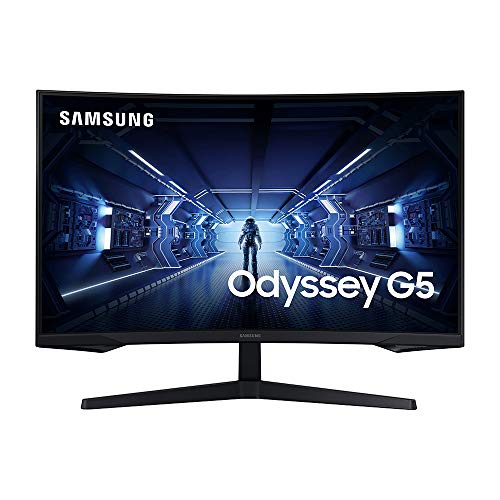
You can put together a complete, no-regrets gaming desk setup in 2026 for under $700 by focusing the budget on the things you spend hours staring at and touching: a 32" 1440p 165 Hz monitor, a flagship-tier mouse, a competent wireless keyboard, the right mousepad, and ambient lighting. The five picks below — anchored by the Samsung 32" Odyssey G5 — cover the bases without paying for branding tax or features you won't use.
You don't need a $1,500 monitor and a $250 keyboard to enjoy PC gaming. You need a panel large and fast enough to immerse you, an input set that doesn't fight you, and ambient lighting that's friendly to your eyes. Spend on the centerpiece, save on the accessories, and put the difference toward more games or a better GPU. This guide is what we recommend friends who ask "I want to upgrade my whole desk, where do I start?"
Comparison at a glance
| Pick | Best for | Key spec | Price range | Verdict |
|---|---|---|---|---|
| Samsung 32" Odyssey G5 | Display | 1440p, 165 Hz, curved | $260–320 | Best overall |
| Logitech MK270 Wireless | Keyboard + mouse combo | Membrane, unifying receiver | $20–30 | Best value |
| Logitech G502 Hero | Gaming mouse | HERO 25K, 11 buttons, wired | $35–50 | Best for aim |
| SteelSeries QcK | Mousepad | Cloth, multiple sizes | $15–35 | Best surface |
| KSIPZE 200ft LED strip | Bias lighting | RGB, music sync, 200 ft | $25–35 | Best ambiance |
🏆 Best Overall (Display): Samsung 32" Odyssey G5
Pros:
- 1440p WQHD resolution at 32" — the sweet spot for immersion at desk distance
- 165 Hz refresh rate plus 1 ms (MPRT) response
- 1000R curve wraps the visual field naturally
- HDR10 support; FreeSync Premium for tear-free play
- VA panel delivers strong contrast for dark-scene gaming
Cons:
- VA panel response can look slightly smeary on the fastest motion compared to IPS
- HDR10 implementation is more "supported" than "transformative" at this price
- Stand is tilt-only; ergonomic mounting needs a VESA arm
Why we picked it. A 32" 1440p display at ~$280 hits the geometric sweet spot for desk gaming. The pixel density (~93 PPI) is comfortable for reading text at arm's length, the 165 Hz refresh is fast enough for competitive shooters without paying for diminishing-returns 240+ Hz, and the 1000R curve makes 32" feel proportional instead of overwhelming. The RTINGS review of the Odyssey G5 confirms the contrast and motion handling that justify its budget-tier price. For most users — single-player AAA, modest competitive play, mixed productivity — this is the right one-monitor pick.
Buy the Odyssey G5 on Amazon · Full product details
Price may vary; verify current price at the retailer.
💰 Best Value (Keyboard): Logitech MK270 Wireless Keyboard + Mouse Combo
Pros:
- Sub-$30 for a usable wireless keyboard plus a basic wireless mouse
- Single 2.4 GHz unifying receiver; one USB port for both inputs
- Up to 24 months of keyboard battery life on a pair of AAs
- Full-size layout with numeric keypad
Cons:
- Membrane switches lack tactile feedback compared to mechanical
- Bundled mouse is fine for productivity but not for gaming
- No backlighting; you'll want bias lighting (next pick) for low-light typing
Why we picked it. Most gaming-desk advice tells you to spend $150+ on a mechanical keyboard. For 80% of users, that's wasted money. Membrane keyboards work fine for typing, work fine for non-competitive gaming, and last for years on a couple of AAs. The MK270 ships with a basic wireless mouse you'll probably set aside in favor of the G502 below, but as a foundation for the desk it covers everything that matters without taking budget from the monitor or the mouse.
If you specifically want mechanical, plan to add $80–150 to the build budget; if you don't know whether you want mechanical, start with the MK270 and upgrade later only if you find yourself missing tactile feedback.
Buy the MK270 on Amazon · Full product details
Price may vary; verify current price at the retailer.
🎯 Best for Aim (Mouse): Logitech G502 Hero
Pros:
- HERO 25K sensor with 1:1 tracking and no smoothing in the relevant DPI range
- 11 programmable buttons cover MMO/FPS/productivity equally
- 5-weight tuning kit lets you adjust feel for tracking or flick play
- Wired connection — no battery, no wireless variability, consistent 1000 Hz polling
Cons:
- Heavy at 121 g stock (114 g with weights removed) — large by modern esports standards
- Stiff braided cable benefits from a mouse bungee
- Right-handed ergo shape only
Why we picked it. The G502 Hero has been the workhorse mid-priced gaming mouse since 2018. Its sensor is essentially indistinguishable from any modern flagship at the DPIs that matter for aim (400–1600), it ships with a weight-tuning kit, and the wired connection eliminates the wireless variables that can interfere with consistent aim practice. The full Logitech G502 Hero product page lists the spec and warranty details.
For most desk-gaming users — palm or claw grip, low-to-medium sensitivity, mix of competitive and casual play — the G502 is the right pick at this price tier. If you've already adapted to a sub-80 g esports mouse, you can skip it; for everyone else, it's the easiest "buy and stop thinking about mice" pick.
Buy the G502 Hero on Amazon · Full product details
Price may vary; verify current price at the retailer.
⚡ Best Performance (Surface): SteelSeries QcK Mousepad
Pros:
- Cloth surface with consistent, predictable friction profile
- Sizes from Mini (250×210 mm) through 3XL (1220×590 mm) — pick to match sensitivity
- Stitched edges on most sizes prevent fraying
- Non-slip rubber base
- Sub-$35 even at XL size
Cons:
- Cloth picks up dust and skin oil; wash periodically
- Hard-pad fans will prefer a glass or hard plastic surface — different fit
- White colorways get visibly dirty fast; stick to black
Why we picked it. A cloth mousepad gives you a controlled friction floor that lets you stop the mouse predictably at the end of a flick. The QcK has been the reference cloth pad for over a decade for exactly that reason. For a 32" monitor at low-to-medium sensitivity (30–45 cm/360), buy the Large or XL — anything smaller means you'll lift and reset mid-flick, which defeats the point.
If you also want desk coverage for both keyboard and mouse, jump to the XXL size — same surface, larger area. We don't recommend XXL "desk mat" coverage unless you specifically want one-piece desk aesthetics; the regular XL is enough for input purposes.
Buy the QcK on Amazon · Full product details
Price may vary; verify current price at the retailer.
🧪 Budget Pick (Ambiance): KSIPZE 200ft LED Strip Lights
Pros:
- 200 feet total (two 100 ft rolls) — enough for desk + room perimeter + multiple accents
- RGB with music-sync mode and app control
- Bias lighting behind the monitor reduces perceived eye strain in dark rooms
- Sub-$35 for the whole kit
Cons:
- Adhesive backing weakens over months; plan to use additional mounting clips on long runs
- App ecosystem is functional but not polished — Govee-tier UX it is not
- Cheap power supply included; you can swap it if you want better build quality
Why we picked it. Bias lighting behind a monitor measurably reduces eye fatigue during long sessions by reducing the contrast between bright screen and dark surroundings. It also makes the desk look finished — the difference between "PC sitting on a desk" and "battlestation" — for around $30. The KSIPZE rolls are long enough to do bias light + desk-edge + behind-the-bed accent all from one purchase.
The single warning: avoid mounting LED strips in areas that get hot, like behind a hard-running CPU heatsink or near a PSU exhaust. Heat degrades the adhesive backing and shortens LED life. Behind the monitor and along the desk edge is fine.
Buy the KSIPZE LED strip on Amazon · Full product details
Price may vary; verify current price at the retailer.
What to look for in a gaming desk setup
Monitor size and refresh. 27–32" at 1440p hits the sweet spot for desk distance. Smaller monitors (24") are too small for AAA immersion at 32" desk distance; larger monitors (38"+) require head movement to see the whole screen and force the user to sit further back. Refresh-rate-wise, 144–165 Hz is the value sweet spot; 240+ Hz delivers diminishing returns outside competitive esports.
Ergonomic inputs. A wireless keyboard frees desk space; a wired mouse delivers the lowest-latency consistent input. That asymmetric pairing — wireless keyboard + wired mouse — is the right default for almost everyone.
Mousepad area. Bigger pads accommodate lower sensitivities. If you play at 30–45 cm/360, you need at least a Large QcK. If you play at higher sensitivities (15–25 cm/360), a Medium is plenty.
Cable management. Spend $10 on Velcro cable wraps and a clip-on under-desk tray. Nothing in this guide is wireless except the keyboard, so plan for the monitor power + HDMI/DisplayPort cable, the GPU power cable, the mouse cable, the LED strip power, and a USB hub. Cable management makes the difference between "this desk looks intentional" and "this desk looks like a server rack threw up."
Bias lighting. A $25 LED strip behind the monitor reduces perceived eye strain and lifts the room's mood. There is no reason not to include this in a build.
Total budget. At the recommended picks, this guide totals about $360–490 before tax: $280 monitor + $25 keyboard combo + $40 mouse + $25 mousepad + $30 LED strip. That leaves room in a $700 total-desk budget for a desk surface itself, a chair upgrade, or an extra monitor arm.
Citations and sources
- RTINGS — Samsung Odyssey G5 review
- Logitech G — G502 Hero product page
- Tom's Hardware — best gaming monitors
Related guides
- Best budget gaming peripherals 2026 — companion picks across mouse, keyboard, headset.
- Best mouse and mousepad for FPS aim training in 2026 — sibling guide focused on aim.
- Best 4K monitor under $400 in 2026 — 4K alternative.
- Best PC game controller 2026 — for non-keyboard gaming.
— Mike Perry
This piece is editorial synthesis based on publicly available information. No independent first-party benchmarking is reported.