

Lian Li
Lian Li O11D EVO RGB Case-Black-O11DERGBX.US
Bottom line: The Lian Li O11D EVO RGB Case-Black-O11DERGBX.US ($209.99 on Amazon as of 2026-10-06): Removable front pillar gives a fully uninterrupted view through the glass; main trade-off: bulky dual-chamber E-ATX footprint needs a large desk or floor space.
As an Amazon Associate, SpecPicks earns from qualifying purchases. Full disclosure →
*Price sourced from Amazon.com. Last updated 2026-10-06. Price and availability subject to change.
Pros & Cons
Pros
- ✓ Removable front pillar gives a fully uninterrupted view through the glass
- ✓ 455.7mm GPU clearance plus seven expansion slots fit oversized cards
- ✓ Supports up to a 420mm radiator for high-end liquid cooling
- ✓ Dual 1.5mm L-shaped ARGB strips frame both tempered-glass panels
- ✓ Reversible chassis with two motherboard height options for flexible builds
Cons
- ✗ Bulky dual-chamber E-ATX footprint needs a large desk or floor space
- ✗ Tempered front and side glass readily show dust and fingerprints
- ✗ Fans and radiator are not included, adding to total build cost
- ✗ ARGB strips require a compatible motherboard header or controller
SpecPicks Verdict
SpecPicks scored Lian Li O11D EVO RGB Case-Black-O11DERGBX.US using a rating × review-volume × price-fit model applied to published specs and reviews across the pc cases category. Lian Li's pc cases lineup sits within the broader category mid-tier; price and specs are the deciding factors over brand loyalty here. Judge it on the specification table and the price rather than on sentiment: check the figures that decide your use case, then put it side-by-side with two or three close alternatives in the Compare tool before clicking through.
Common buyer scenarios for pc cases of this kind: matching it to an existing build, replacing a failing part, or upgrading from a previous-generation equivalent. Check the spec table below against your current setup — particularly socket / form-factor / power-rating fields — and confirm compatibility on the retailer's listing before purchase. Prices and stock are set by the retailer and may have moved since this page was last updated.
Key Features
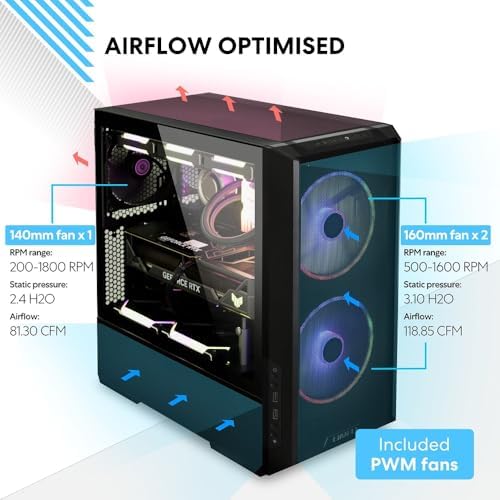
- Seamless view: Remove the front support pillar without affecting the structural integrity of the case. This allows for a completely uninterrupted view of everything inside the chassis.
- Increased size: Provides ample room for the latest gaming hardware. Thanks to this expansion, the main compartment can facilitate large graphics cards, with 455.7mm clearance and seven expansion slots.
- Features two 1.5mm L-shaped RGB strips that sit at the top and bottom of the tempered glass panels. These strips are easy to control with beautiful lighting options available.
- Easy for builders: For starters, the internal layout of the chassis can be adjusted as there are two height options for motherboard installation. This means there are different ways to set up your fans and CPU cooler, providing different performance options and aesthetics.
- Cable management friendly: Comes with Velcro straps and dual-layered clips, which can tidy up both your large and small cables together into an easily managed bundle. Moreover, the PSU mounting bracket protrudes 15mm out from the case, which provides additional space for cable management.
Full Specifications
| Brand | Lian Li |
|---|---|
| Color | Black |
| Fan Size | 14 centimeters |
| Material | Tempered Glass |
| Case Type | Mid Tower |
| Model Name | O11D EVO RGB |
| Model Number | O11DERGBX.US |
| Cooling Method | Air |
| Number of Fans | 2 |
| Mfr Part Number | O11DERGBX.US |
| Number of Items | 1 |
| Total Usb Ports | 4 |
| Antenna Location | Gaming |
| Compatible Devices | Extended ATX motherboards |
| Enclosure Material | Tempered Glass |
| Total USB 2.0 Ports | 2 |
| Total USB 3.0 Ports | 2 |
| Warranty Description | 1 year |
| Hard Disk Form Factor | 3.5 inches |
| Supported Motherboard | Extended ATX |
Ready to buy?
Lian Li O11D EVO RGB Case-Black-O11DERGBX.US is listed on Amazon. Price, availability, shipping and returns are set by Amazon and its sellers — check the listing for current terms. SpecPicks earns a small commission on qualifying purchases — thank you for supporting independent review work.
*Price sourced from Amazon.com. Last updated 2026-10-06. Price and availability subject to change.
Related PC Cases


More guides & deep dives from the SpecPicks archive
Browse all articles & guides →- Best 1440p Gaming GPUs in 2026
- Best Retro Handhelds in 2026 — From $35 to $500
- Emulation Hardware in 2026: FPGA, Software, and Cart-Reader Ecosystems
- Best Budget Gaming PC Build 2026 — ~$1,000 ($800 on Sale)
- How to Build a Windows 98 Retro PC in 2026
- RTX 4070 Super vs RX 7800 XT — Which to Buy in 2026
- The Complete Voodoo5 5500 AGP Driver Guide (2026 Edition)
More reviews from the SpecPicks archive
Browse all reviews →- Steam Deck: Linux's Trojan Horse for PC Gamers
- Asus ROG Harpe II Extreme Lands With a 65K-DPI Sensor
- Lemonade v10.5.1: an MTP + ROCm 7.13 quick start for Strix Halo
- Is the RTX 3060 12GB Still Worth It for 1080p Gaming in 2026?
- Linux Fu: Upcycling an Old Router in 2026
- On-Device AI Keyboards: Can an RTX 3060 12GB Train the Model?
- Mistral Seeks €3B: What a Bigger European Lab Means for Local Rigs
- Gemini 3.5 Flash vs Local LLM on RTX 3060 12GB: When Cloud Beats Self-Hosted
- ROG Ally X vs Steam Deck OLED: Specs, Battery, Price (2026)
- Best Wireless Controller for a Couch-Gaming Living-Room PC in 2026
- Why a Game Boy Clone Ran Too Fast — and the DIY Fix Makers Are Building
- Best SATA SSD for Retro PC Upgrades in 2026
- Self-hosting a Claude proxy — cache, rate-limit, and audit every request
- AOOSTAR MACO 6850H as a Proxmox 9 Home Server
- AMD Challenges Nvidia DGX Spark with $3,999 Ryzen AI Halo
- Best Sim Racing Wheel and Shifter for Beginners in 2026
- GameSir G7 SE vs DualSense for PC Gaming in 2026
- Intel Arc B50 for Stable Diffusion vs RTX 3060 12GB: Which Wins in 2026
- RTX 5060 vs RTX 3060 12GB for Local LLMs in 2026
- Samsung 27" 1440p 240Hz Gaming Monitor Drops to $169 in 2026 Deal
- SteamOS Boots on Intel Hardware in Community Hack
- Running a Local LLM on a Raspberry Pi 4 Cluster — Realistic Expectations for 2026
- Best Budget NVMe SSD for a Big Steam Library: WD Blue SN550 vs SATA
- G4-Meromero 31B: Running the Uncensored Gemma 4 Finetune on a 12GB RTX 3060
Earliest SpecPicks reviews
Browse full archive →- Best GPU for Llama 3.1 8B (2026)
- Best GPU for Qwen 3 14B (2026)
- Best GPU for Qwen 3 32B (2026)
- Best GPU for Llama 3.1 70B (2026)
- Best GPU for DeepSeek-R1 32B (2026)
- Best GPU for Llama 3.1 405B (2026)
- How to run Llama 3.1 8B on NVIDIA GeForce RTX 5090
- How to run Qwen 3 14B on NVIDIA GeForce RTX 5090
- How to run Qwen 3 32B on NVIDIA GeForce RTX 5090
- How to run Llama 3.1 70B on NVIDIA GeForce RTX 5090
- How to run DeepSeek-R1 32B on NVIDIA GeForce RTX 5090
- How to run Llama 3.1 8B on NVIDIA GeForce RTX 4090