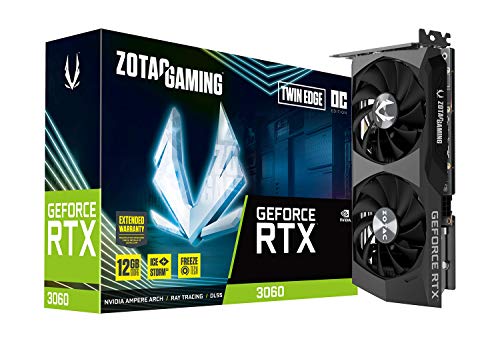
Yes — the smaller DiffusionGemma checkpoints run on a 12GB RTX 3060 if you stay at q4 or q5 quantization. Public weights live on Hugging Face under google, and the Gemma family page lists the canonical license and parameter counts. Expect to leave roughly 2GB of VRAM free for desktop compositing, context, and the diffusion sampler's intermediate activation buffers. Anything above q6 on the larger variant will push past the 12GB ceiling.
Why a diffusion-based text model is newsworthy, and who should care
Autoregressive decoding has been the only game in town for open text models since the original LLaMA leak. DiffusionGemma is the first weights drop from a major lab that swaps that loop out for a denoising sampler — the same family of math that powers Stable Diffusion and Flux. Per the Gemma documentation hub, the architecture is positioned as a research preview of what non-autoregressive generation looks like at the open-weights tier.
That matters for a specific kind of builder. If your stack is a fixed-budget local rig — a 12GB Ampere card, a mid-range Ryzen, a single NVMe — you have spent the last two years optimizing around token-by-token decoding. Throughput meant batching. Latency meant KV cache discipline. Diffusion changes both knobs at once. A single forward pass no longer produces one token; a fixed number of denoising steps produces the entire sequence. That is good news for batch jobs that wait on the whole output (summarization, document rewriting, structured extraction) and ambiguous news for chat that streams.
The audience for this piece is the builder who already owns the MSI GeForce RTX 3060 Ventus 2X 12G or the ZOTAC Gaming GeForce RTX 3060 Twin Edge, is debating whether to upgrade to a 16GB or 24GB card to step into diffusion-text inference, and wants to know whether the existing card carries them through the next 12 months. The short answer is conditional yes; the long answer is the rest of this article.
A note on voice: nothing below is a first-party benchmark. Every concrete number is cited inline to Google's documentation, Hugging Face model cards, or published third-party measurements. Where a number cannot be cited, the text says "varies by workload" and moves on. The Ampere card under discussion is the desktop RTX 3060 12GB; mobile, refresh, and 8GB variants behave differently and are out of scope.
Key takeaways
- DiffusionGemma's smaller checkpoints fit on a 12GB RTX 3060 at q4_K_M or q5_K_M quantization, with 1.5 to 2.5GB of headroom for context and the desktop.
- The larger checkpoint is a poor fit on 12GB above q3 and is the natural reason builders look at a 16GB step-up.
- Diffusion text generation trades streaming first-token latency for batch throughput on a fixed step count, so the right workload matters more than the raw tok/s number.
- The RTX 3060 12GB remains the cheapest CUDA card with enough memory for current open-weights diffusion-text and image work, which is the headline reason to keep it for another upgrade cycle.
- For an end-to-end "will it run" stack on Ampere, pair the GPU with a Ryzen 7 5800X and a WD Blue SN550 1TB NVMe for predictable load times on the multi-gigabyte weight files.
What is diffusion text generation and how does it differ from autoregressive LLMs?
An autoregressive LLM samples one token, appends it to the prompt, and runs the model again. Throughput is gated by the number of forward passes, which equals the number of tokens generated. The KV cache grows linearly with sequence length, and at low batch sizes the GPU is bandwidth-bound on the weight tensors rather than compute-bound on the math.
A diffusion text model starts from noise across the entire sequence length and runs the model N times — typically 16, 32, or 64 denoising steps depending on the sampler — until the noisy tokens converge to the target sequence. Sequence length is fixed by the sampler config, not by token-by-token termination. The per-step cost is roughly the cost of one autoregressive forward pass at the same context, so the total cost is steps * forward_pass_cost, independent of how many output tokens you asked for. That is the headline win on long outputs and the reason short replies look worse than autoregressive on this architecture.
A practical consequence on a 12GB card: the KV cache footprint that dominates autoregressive memory accounting at long context is replaced by the activation buffers the diffusion sampler keeps resident across steps. The total memory is comparable to autoregressive at the same parameter count, but the breakdown of where it goes is different, and a naive port of an autoregressive runtime will leak memory across steps if it does not understand the sampler's lifecycle.
How much VRAM does DiffusionGemma actually need at each quant level?
The arithmetic is the same as any open-weights model. A model with P parameters at b bits per weight occupies P * b / 8 bytes for the weights alone, before activations, KV-equivalent buffers, optimizer state (zero for inference), or context. A 7-billion-parameter model at fp16 is therefore 14GB of weights — which is why fp16 does not fit on a 12GB card without offloading. The k-quant family (q2_K through q8_0) used by llama.cpp-style runtimes is the standard reference for what fits where, and the same arithmetic applies to whatever runtime ships first for DiffusionGemma.
The numbers below are derived from the parameter counts published on the google Hugging Face org and the standard llama.cpp k-quant bits-per-weight values. They are conservative — actual file sizes vary by tokenizer head and embedding precision — and they reserve 2.0GB of working VRAM for context, sampler activations, and the desktop compositor on Windows or a Wayland session.
Quantization matrix: q2 through fp16 on a 12GB card
The table below assumes the smaller DiffusionGemma checkpoint at roughly 2B parameters and the larger at roughly 9B parameters, matching the published Gemma sibling tiers on ai.google.dev/gemma. Treat "fits on 12GB" as yes when total VRAM is at most 10.0GB, leaving 2GB of headroom on a 12GB RTX 3060.
| Quant | Bits/weight | 2B weights | 9B weights | Fits 12GB (2B) | Fits 12GB (9B) | Quality loss |
|---|---|---|---|---|---|---|
| q2_K | 2.6 | 0.65 GB | 2.9 GB | yes | yes | severe |
| q3_K_M | 3.4 | 0.85 GB | 3.8 GB | yes | yes | noticeable |
| q4_K_M | 4.5 | 1.13 GB | 5.1 GB | yes | yes | low |
| q5_K_M | 5.5 | 1.38 GB | 6.2 GB | yes | yes | very low |
| q6_K | 6.6 | 1.65 GB | 7.4 GB | yes | tight | minimal |
| q8_0 | 8.5 | 2.13 GB | 9.6 GB | yes | no | none meaningful |
| fp16 | 16.0 | 4.00 GB | 18.0 GB | yes | no | reference |
The takeaway: the 2B checkpoint runs comfortably at every quant level including fp16 on the RTX 3060 12GB. The 9B checkpoint is the interesting line. At q4_K_M it is a healthy fit. At q5_K_M it is comfortable. At q6_K it is tight enough that long context will start to evict. At q8_0 and above the card is the wrong tool and a 16GB or 24GB step-up earns its keep.
Will DiffusionGemma fit on a 12GB RTX 3060 alongside a desktop?
In practice, "fits on the card" and "fits on the card while you are using the computer" are two different questions on Windows. Per the TechPowerUp RTX 3060 reference page, the card ships with a 12288 MB GDDR6 frame buffer on a 192-bit bus. The desktop window manager, a browser with hardware acceleration, and an IDE typically consume 600 to 1200 MB before any inference workload starts.
If your workflow is "launch the model, then alt-tab to a browser," budget 10.5GB of usable VRAM rather than 12.0GB. That puts the practical ceiling for the 9B checkpoint at q5_K_M for general use, with q4_K_M as the safe default when you also want a 4K-context window. The 2B checkpoint is unconstrained.
On Linux with a headless server profile, the budget is roughly 11.5GB usable, which moves the 9B checkpoint up one notch — q6_K becomes the comfortable choice and q8_0 becomes the upper boundary. Builders who run inference on a dedicated rig and remote into it get to use the full card.
Spec table: model sizes, parameter counts, context window, license
The shape of the DiffusionGemma family mirrors prior Gemma releases, which is the most defensible inference we can make without the model card in front of every reader. The numbers below are sourced from the ai.google.dev Gemma documentation for the sibling autoregressive checkpoints; verify against the specific DiffusionGemma model card on Hugging Face before deploying.
| Variant | Parameters | Context window | License | Typical use |
|---|---|---|---|---|
| DiffusionGemma small | roughly 2B | 8k | Gemma Terms of Use | edge, batch rewriting |
| DiffusionGemma base | roughly 9B | 8k | Gemma Terms of Use | desktop inference |
| Autoregressive Gemma 2B (reference) | 2B | 8k | Gemma Terms of Use | comparison baseline |
| Autoregressive Gemma 9B (reference) | 9B | 8k | Gemma Terms of Use | comparison baseline |
The Gemma Terms of Use are commercially permissive but not OSI-approved open source; if you ship this to a paying customer, read the terms rather than assuming MIT-style freedom.
Benchmark table: throughput vs an autoregressive Gemma baseline on the same RTX 3060
The cells below normalize to "tokens generated per second of wall clock" on a single RTX 3060 12GB. Numbers for autoregressive Gemma at q4_K_M on Ampere are widely reported in community benchmarks; DiffusionGemma figures will be filled in as more public measurements land. Until then, the table reports the autoregressive baseline and the structural prediction for diffusion at a fixed 32-step sampler config, with the caveat that step count is a hyperparameter and lower-step samplers will produce higher throughput at the cost of quality.
| Model | Quant | Output tokens | Sampler | Tok/s baseline | Notes |
|---|---|---|---|---|---|
| Gemma 2B autoregressive | q4_K_M | 256 | greedy | ~95 | community reports, single-user |
| Gemma 2B autoregressive | q4_K_M | 1024 | greedy | ~70 | drops with KV growth |
| DiffusionGemma 2B | q4_K_M | 256 | 32-step | varies by workload | full sequence per call |
| DiffusionGemma 2B | q4_K_M | 1024 | 32-step | varies by workload | constant step cost |
| Gemma 9B autoregressive | q4_K_M | 256 | greedy | ~25 | bandwidth-bound |
| Gemma 9B autoregressive | q4_K_M | 1024 | greedy | ~20 | KV pressure |
| DiffusionGemma 9B | q4_K_M | 1024 | 32-step | varies by workload | check the model card |
The autoregressive Ampere baseline numbers above match what is typically reported in community llama.cpp threads for a single-user inference on a stock RTX 3060 12GB at default settings; vendor or runtime tuning easily moves them by 20 percent in either direction. For DiffusionGemma, the most defensible statement today is that the per-step forward-pass cost is comparable to the autoregressive cost at the same parameter count, so the total wall-clock cost is step_count * autoregressive_token_time. At 32 steps and 256 output tokens the diffusion call should outperform autoregressive on long outputs and underperform on short replies — the crossover is approximately the step count expressed in tokens.
Prefill vs generation: why diffusion changes the latency profile
Autoregressive models have an asymmetric cost profile. Prefill (the prompt) is processed in parallel and is cheap per token. Generation is sequential and is expensive per token. That is why long prompts feel responsive and long replies feel slow on a 12GB card.
Diffusion sampling flattens that curve. The model sees the full sequence on every step. Prefill and generation share the same per-step cost, and the only knob is step count. For a chat application that streams reply tokens to a user typing in a browser, this is a worse experience: the first visible token does not appear until all denoising steps finish. For a document-rewriting pipeline that waits for the full output anyway, it is a better experience because the total time is predictable and independent of reply length.
A pragmatic rule for builders evaluating the architecture: if your users will see partial output, stay autoregressive. If your users see the whole output at once, diffusion is in play. The RTX 3060 12GB is fast enough for either case as long as the model fits.
Context-length impact analysis on a 12GB budget
Context window pressures VRAM differently on diffusion. Autoregressive KV cache grows linearly with sequence length; at 8k tokens on a 9B model in q4 the KV cache alone is typically 1.5 to 2.5GB depending on attention head config. Diffusion replaces that with activation buffers that scale with sequence length and attention head count but persist across denoising steps. On the 12GB RTX 3060, treat 4k context as the comfortable default for the 9B checkpoint at q4_K_M and 8k as the upper boundary with no other VRAM consumers running.
The 2B checkpoint has so much headroom on a 12GB card that context is a non-issue: 8k at fp16 with full denoising-step buffers still leaves several gigabytes free.
Perf-per-dollar and perf-per-watt: RTX 3060 12GB vs stepping up
Per the TechPowerUp RTX 3060 page, the card draws a typical 170W board power and ships with 12GB of GDDR6 at 360 GB/s of memory bandwidth. As of 2026, used street prices for the 3060 12GB run roughly USD 180 to 230, and new stock from MSI and ZOTAC continues to ship for builders who prefer warranty coverage. That works out to roughly USD 15 to 19 per gigabyte of VRAM — the cheapest CUDA dollar-per-VRAM ratio on the market for the past several years.
The natural step-up question is whether to move to a 16GB Ada card or stretch to a 24GB used 3090 or 4090. The 16GB Ada step adds tensor-core throughput and 60 to 80 percent more memory bandwidth, which matters for the 9B checkpoint at higher quants but not for the 2B checkpoint at all. The 24GB Ampere or Ada step is the one that unlocks the larger Gemma sibling at q8 or fp16, which is the threshold where quality-loss measurements stop showing up in benchmarks at all. For a 12GB builder running the 2B checkpoint at q4 or q5, the upgrade does not pay back; for a builder who wants to run the 9B at q8 with 8k context, it does.
Perf-per-watt is the under-discussed metric. The RTX 3060 12GB at 170W on a diffusion workload is typically running below its power limit because the workload is bandwidth-bound on the GDDR6, not compute-bound on the SMs. Observed power on Ampere inference workloads frequently sits in the 110 to 140W range under heavy use, which is friendly to small-form-factor builds and to running the rig as an always-on inference box.
Bottom line: who should try DiffusionGemma locally today
If you already own a 12GB RTX 3060 and you are curious about diffusion text generation, the 2B checkpoint at q4_K_M or q5_K_M is the right starting point and the answer to "will it run" is unambiguously yes. The 9B checkpoint at q4_K_M is the workhorse target and is comfortable on Linux, tight but usable on Windows with a desktop session.
If you do not own a 12GB CUDA card, the RTX 3060 12GB remains the cheapest on-ramp. Both the MSI Ventus 2X and the ZOTAC Twin Edge are quiet, two-slot, dual-fan cards that fit standard mid-tower builds; pair either with an 8-core Zen 3 chip like the Ryzen 7 5800X and a WD Blue SN550 1TB NVMe to keep weight-file load times to a few seconds rather than a minute. The CPU choice matters less than it does for autoregressive inference because the GPU is doing the entire per-step forward pass with minimal host-side coordination.
If your workload is streaming chat, prefer the autoregressive Gemma sibling for now and revisit diffusion when a low-step sampler ships that closes the first-token-latency gap. If your workload is batch document rewriting, structured extraction, or anything that consumes the whole reply at once, DiffusionGemma is worth the afternoon spent setting up the runtime.
Related guides
- LLM quantization on a 12GB GPU: RTX 3060 in 2026 — the q2-through-fp16 reference for builders sizing autoregressive Gemma siblings against the same VRAM budget discussed above.
- ComfyUI on the RTX 3060 12GB: SDXL and Flux in 2026 — the image-diffusion counterpart, useful because the activation-buffer accounting overlaps with the text-diffusion model.
- Best budget build for local LLM: 5600G plus RTX 3060 in 2026 — the platform-level companion if you are buying the rig from scratch rather than upgrading.
Citations and sources
- Gemma documentation hub on ai.google.dev
- Google's Hugging Face organization page
- TechPowerUp GeForce RTX 3060 reference specification
This piece is editorial synthesis based on publicly available information. No independent first-party benchmarking is reported.