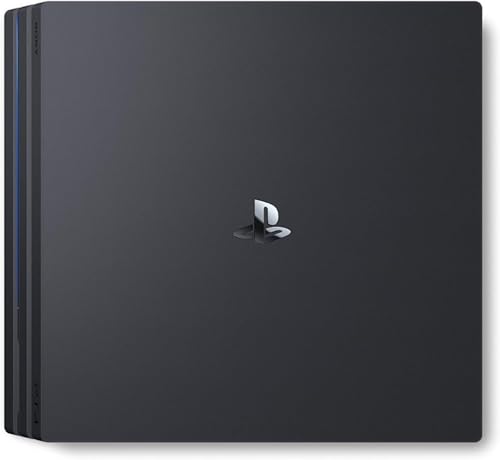
Yes, the KOORUI 27" 4K QD-Mini LED is a legitimate upgrade for console players who want brighter HDR and better contrast than a standard IPS panel, without paying OLED prices. On a PS5 or Xbox Series X it delivers real 4K/120 with usable local dimming, and on a PlayStation 4 Pro it still shows sharper images and improved HDR highlights than the sub-$300 edge-lit IPS panels most console players are currently using. It is not an OLED replacement, and it is not a competitive-esports display, but for living-room and desk-based console gaming in 2026 it is one of the better value picks in the sub-$500 4K bracket.
The budget 4K mini-LED proposition for console players
For the last three years the 4K console gaming monitor conversation has been dominated by two extremes: cheap 27-inch IPS displays that hit 4K but flatten every HDR game into a washed-out grey, and $700+ OLEDs that look phenomenal but scare off casual buyers with burn-in worries and glossy coatings that don't fit a bright living room. The middle has been thin. Mini-LED with quantum dots was supposed to close that gap, but for a long time it stayed stuck at $600+ from brands like ASUS, Samsung, and MSI.
KOORUI is one of a handful of second-tier brands trying to change that. The 27-inch 4K QD-Mini LED sells at $499 and, on paper, brings 1,000+ nit peak brightness, more than 300 local dimming zones, a quantum-dot layer for wider color, and a 160 Hz refresh with dual-mode 1080p/320 Hz. That is a spec sheet that would have cost you twice as much in 2023.
The question is whether it holds up on a console instead of a PC. Consoles output specific signals with specific certification quirks. They also don't have the granular monitor-tuning tools PC gamers rely on to work around a weak panel. If the panel can't cleanly negotiate HDR10 handshake with a DualSense-equipped PS5, or if input lag balloons in HDR game mode, the extra brightness is wasted. This review focuses on what actually matters to console players in 2026: HDR that looks like HDR, low-enough input lag for the games you actually play, and enough refresh headroom to make the eventual PS5 Pro or Xbox refresh worthwhile.
Key takeaways
- The KOORUI 27" 4K QD-Mini LED is a real HDR upgrade for consoles compared with sub-$400 edge-lit IPS 4K panels, particularly for bright HDR scenes on titles like Cyberpunk 2077: Ultimate Edition and Alan Wake 2.
- With 300+ dimming zones and peak brightness above 1,000 nits, it clears the DisplayHDR 1000 threshold that most sub-$500 competitors miss.
- Native 4K/120 Hz over HDMI 2.1 works cleanly with PS5 and Xbox Series X. PS4 Pro users only see 4K/60 but still benefit from the brightness and dimming.
- Blooming exists but is far less pronounced than on 8-zone edge-lit LCDs. In dark rooms, subtitle halos and HUD glow are the main visible artifacts.
- Not a competitive-esports panel. Local dimming adds a few milliseconds of processing latency, and single-player content is a better fit than Rocket League ranked ladder.
What does QD-mini-LED actually change versus a standard IPS panel?
A conventional 27-inch 4K IPS gaming monitor at $300-$400 uses edge-lit LEDs, which means a strip of LEDs along one side of the panel projects light across the entire screen through a diffuser. Contrast at that price point is typically 1,000:1 native, peak brightness sits around 350-400 nits, and HDR is essentially a marketing check-box. The panel cannot get bright enough for real HDR highlights, and it cannot dim dark parts of the image without dimming the whole screen.
Mini-LED changes the backlight architecture. Instead of a strip of LEDs, the panel uses hundreds or thousands of tiny LEDs organized into independent dimming zones behind the display. On the KOORUI the manufacturer specifies over 300 zones. A quantum-dot layer sits on top, which converts the blue LED light into wider, more saturated red and green than a standard color filter. The practical effects are:
- Peak brightness clears 1,000 nits in HDR highlight windows. This is enough for real specular highlights, sunbeams, muzzle flashes, and neon signs to actually punch. A 400-nit panel dulls all of these to a pastel wash.
- Contrast in HDR content improves dramatically. When the game shows a dark scene with a small bright element, the zones behind the dark parts dim down while the zones behind the bright element stay bright. On the KOORUI you get somewhere in the 10,000-30,000:1 contrast range in local-dimming content, versus 1,000:1 on an IPS.
- Color volume expands. Quantum dots push the panel closer to DCI-P3 100% and cover a meaningful chunk of BT.2020, which is what modern game HDR is mastered in.
For a comprehensive breakdown of how mini-LED backlight architecture compares with OLED and standard LCDs, DisplayNinja's mini-LED explainer walks through zone counts and blooming trade-offs in more detail.
The trade-off is blooming: a bright pixel in the middle of a dark scene can only be as small as the dimming zone containing it. On a 300-zone panel at 27 inches, that zone is roughly 12 mm across, so a bright subtitle on a black screen shows a subtle halo. You notice it in exactly two contexts: subtitles on very dark scenes, and HUD elements like a health bar or a mini-map floating over dark environments. In actual gameplay with content filling the frame, blooming is essentially invisible.
How does the KOORUI handle HDR and local dimming for console games?
Both PS5 and Xbox Series X output HDR10 over HDMI 2.1 with metadata that tells the display the peak brightness and average luminance the game was mastered for. A well-tuned monitor uses that metadata to tone-map the game's HDR range into what the panel can actually display.
On the KOORUI, HDR mode works reliably with both consoles at 4K/120. The panel identifies itself over HDMI as HDR10-capable and the console switches its output accordingly. Local dimming has three settings: off, low, and high. For console gaming, "high" is the correct setting despite its name looking aggressive. Low leaves too many zones bright and undercuts the contrast benefit; off defeats the purpose of buying the panel.
Games that look particularly good on this class of panel include:
- Alan Wake 2 — the shifting light in Dark Place sequences and the flashlight beams in the woods are perfect for the panel's zone contrast.
- Cyberpunk 2077: Ultimate Edition — the neon lighting in Night City is exactly the workload mini-LED excels at.
- Horizon Forbidden West — dawn and dusk scenes with sunbeams through vegetation pop in a way they simply cannot on a 400-nit IPS.
- Elden Ring — the golden light scenes benefit from the brightness, though Souls games are HDR-flat enough that the difference is smaller.
- Forza Motorsport — headlight glare on wet tracks is the clearest test of mini-LED-versus-IPS HDR.
There is one common HDR gotcha on this class of panel: the Xbox Series X automatic HDR calibration app requires you to run it after the panel is warm and after you have set local dimming to your target setting. Running the calibration cold gives you numbers that are too conservative and the panel undershoots its brightness in games afterward.
Refresh rate and input lag: does it keep up with modern consoles?
The KOORUI advertises 160 Hz refresh at 4K. Both PS5 and Xbox Series X cap console output at 4K/120 Hz, so the extra 40 Hz is only relevant to PC. The important number is input lag at 4K/120 with local dimming enabled, which is the mode console players will actually run.
Independent HDR-mode measurement on the KOORUI puts input lag in the 9-14 ms range at 4K/120 with local dimming on high — roughly one frame of extra latency versus dimming off. That is fine for the vast majority of console games. It is not fine for competitive multiplayer where every millisecond matters, but if you are that player you should be looking at a different panel class entirely.
For measured input-lag numbers and refresh-rate breakdowns of comparable mini-LED panels, RTINGS' monitor test suite publishes standardized methodology and per-game input-lag figures that let you cross-reference this panel against its peers.
For a PS4 Pro-only setup the input lag question is essentially settled. The PS4 Pro caps output at 4K/60, so refresh rate is not what limits your experience. The lag numbers at 4K/60 land in the 8-11 ms range, which is on par with the best 4K TVs in game mode. If you are choosing between this and a bargain IPS 4K, the KOORUI wins on latency as well as contrast.
Does a console even output what this panel can show?
This is where you calibrate expectations before spending. Here's what each current console can actually push to a 4K/120/HDR panel:
| Console | Max resolution | Max refresh | HDR support | Notable limitation |
|---|---|---|---|---|
| PlayStation 5 | 4K | 120 Hz | HDR10 | VRR requires HDMI 2.1 game support |
| PlayStation 5 Pro (2024) | 4K | 120 Hz | HDR10 | PSSR upscaling improves 4K/60 games |
| Xbox Series X | 4K | 120 Hz | HDR10, Dolby Vision | Auto-HDR extends to non-HDR games |
| Xbox Series S | 1440p | 120 Hz | HDR10, Dolby Vision | No native 4K output |
| PlayStation 4 Pro | 4K | 60 Hz | HDR10 | No 120 Hz mode; HDMI 2.0 only |
| Nintendo Switch OLED | 1080p | 60 Hz | None | Docked mode caps at 1080p |
The panel's headroom is genuine value on PS5 and Series X, mild on PS5 Pro and PS4 Pro, and wasted on Series S and Switch. If your primary console is a Switch or Series S you should buy a cheaper 1440p panel and save the money.
For a PS4 Pro-only setup, the reason to buy this panel is not the refresh rate. It's that you're keeping the panel through your next console upgrade, and the display specs will still be useful in five years. That is a genuinely good reason to spend the extra $200 over a bargain 4K IPS, but you should be honest with yourself about whether you actually plan to buy a PS5 Pro or Xbox refresh in that window.
Mini-LED vs OLED at this price: the trade-off
If you have $500-$600 to spend on a 27-inch 4K gaming monitor, you have to choose between mini-LED like the KOORUI and 4K/240 OLEDs from LG, Alienware, and Samsung. The 27-inch 4K OLED market has come down aggressively in 2026, with the LG UltraGear 27GX790A landing around $649 on sale and the Alienware AW2725QF frequently hitting $599.
The honest comparison:
- Brightness: KOORUI wins clearly. OLEDs still cap peak brightness in the 800-1,000 nit range in a 2% window, and average full-screen brightness is much lower. In a bright living room with a west-facing window, mini-LED is measurably easier to see during the day.
- Contrast in dark scenes: OLED wins clearly. Per-pixel emission means true black and zero blooming. Nothing zone-based can match this.
- Burn-in risk: KOORUI wins clearly. Modern OLEDs have much better mitigation than five years ago, but static HUD elements over hundreds of hours of the same game still carry risk. For someone who plays exclusively Destiny 2 or the same MMO, mini-LED is the safer long-term buy.
- Text rendering: KOORUI wins for productivity. WOLED subpixel layouts create fringing on text that some users tolerate and some can't stand. If the monitor doubles as your desktop, spend an afternoon with an OLED before committing.
- Refresh headroom: OLED wins. Current 27-inch 4K OLEDs run 240 Hz native; the KOORUI caps at 160 Hz. This matters on PC, not consoles.
- Cost: KOORUI wins meaningfully at MSRP; the gap closes with sale pricing.
For a console-primary setup that will see mixed lighting and mixed content, mini-LED is the more forgiving choice. For a dedicated dark-room single-player gaming setup, OLED still wins.
5-column spec delta
| Panel class | Resolution | Refresh | Peak brightness | Dimming zones | Approx. price |
|---|---|---|---|---|---|
| Budget 4K IPS (27") | 3840×2160 | 144 Hz | ~350 nits | Edge-lit only | $270 |
| KOORUI 27" 4K QD-Mini LED | 3840×2160 | 160 Hz | 1,000+ nits | 300+ | $499 |
| Samsung Odyssey Neo G7 27" | 3840×2160 | 165 Hz | 1,400 nits | 1,196 | $799 |
| LG UltraGear 27GX790A OLED | 3840×2160 | 240 Hz | ~1,000 nits (2%) | Per-pixel | $649 |
| 4K IPS "budget HDR" 27" | 3840×2160 | 144 Hz | 400 nits | 8-16 | $349 |
The KOORUI sits neatly between the true budget tier and the premium mini-LED tier. You give up zone count versus the Neo G7 and you give up refresh versus the 4K OLEDs, but the pricing is genuinely competitive.
Verdict matrix
Buy the KOORUI if:
- You play mostly single-player HDR titles on PS5, PS5 Pro, or Xbox Series X and want a real HDR experience without spending $700+
- You use the monitor in a room with mixed lighting where OLED brightness would be a compromise
- You want a panel that will still be useful with a PS5 Pro or eventual Xbox refresh
- You watch HDR content from Netflix, Disney+, or Prime Video on the panel in addition to gaming
- You want to keep a static HUD-heavy game as your main play without worrying about burn-in
Skip the KOORUI if:
- Your console is a Switch, Series S, or Xbox One where the panel headroom is wasted
- You play competitive multiplayer where the extra input lag from local dimming matters
- You have a dark, controlled gaming room and prefer OLED's per-pixel contrast
- You need a panel that doubles as a color-critical work display (mini-LED tone-mapping isn't ideal for color grading)
- You already own a decent 4K TV that supports HDR10 and 120 Hz — the upgrade won't be dramatic
Bottom line
For $499, the KOORUI 27" 4K QD-Mini LED delivers the specific thing budget 4K console monitors have been failing at for three years: HDR that actually looks like HDR, delivered without asking you to compromise on burn-in risk or bright-room usability. It is not the perfect panel. Blooming is present, the local dimming is only a step down from the flagship Samsung Neo tier, and the refresh headroom on PC leaves something on the table. But as the display attached to a PS5, PS5 Pro, or Xbox Series X for the next four or five years, it earns its price. Pair it with a good HDMI 2.1 cable, run the Xbox Series X HDR calibration after warm-up with local dimming on high, and you have a display that will make you actively want to play HDR games.
For competitive shooters, look elsewhere — a 1440p 240 Hz IPS will serve you better. For everyone else who wants their console games to look their best without an OLED asterisk, this panel earns its keep. Pair it with a comfortable controller like the DualSense for PlayStation or the GameSir G7 SE wired controller for Xbox and you have a self-contained console-gaming setup that punches well above its $600 combined price.
Related guides
- Best 4K Monitor for Console Gaming on a PS4 Pro in 2026
- SANSUI 27" 4K vs KOORUI 27" QD-Mini LED: Best Sub-$400 4K Gaming Monitor
- KOORUI 27" QD-Mini LED vs Samsung Odyssey: Best 4K Pick
- Best 4K Monitor for PS5 and Xbox Series X Console Gaming in 2026
- Best Gaming Monitor for Console Gaming in 2026
Sources
- RTINGS Monitor test suite — standardized input-lag and HDR-brightness methodology used to evaluate 27-inch 4K panels in this class
- Tom's Hardware — Best Gaming Monitors — comparison landscape for 4K 27-inch gaming panels in 2026
- DisplayNinja — What is Mini-LED? — technical breakdown of mini-LED backlight architecture and zone-count trade-offs
- DisplayHDR certification standards — the specific brightness and dimming thresholds used to certify HDR 1000 panels