Can you build a credible Jellyfin media server on a Raspberry Pi 4 8GB in 2026?
Yes — the Raspberry Pi 4 8GB is a viable single-user Jellyfin home server in 2026 for a library that lives in 1080p H.264 and direct-play scenarios, paired with a USB-3 SSD like a Samsung 870 EVO 250GB SATA SSD or Crucial BX500 1TB SATA SSD for the library. It struggles when it has to transcode 4K HEVC to 1080p H.264 in real time and falls over on multiple concurrent transcoding streams. The Pi 4 is the right answer for a static, direct-play household; the Pi 5 16GB or a small x86 box is the better answer once you start asking the server to actually transcode.
Why Pi 4 8GB Jellyfin still makes sense in 2026
The Raspberry Pi 5 has been available for two years and is meaningfully faster than the Pi 4 for Jellyfin workloads, especially anything that touches CPU transcoding. So why is the Pi 4 8GB still the most-bought Pi for new self-hosters? Two reasons. First, the price. The Pi 4 8GB lands at $75-$90 in 2026 against the Pi 5 8GB at $80-$100 and the Pi 5 16GB at $120-$140. The Pi 4 is also better supported by older hats and accessories. Second, the case + cooling ecosystem is mature. There are dozens of low-noise passive Pi 4 cases and an enormous selection of USB-attached storage adapters that just work.
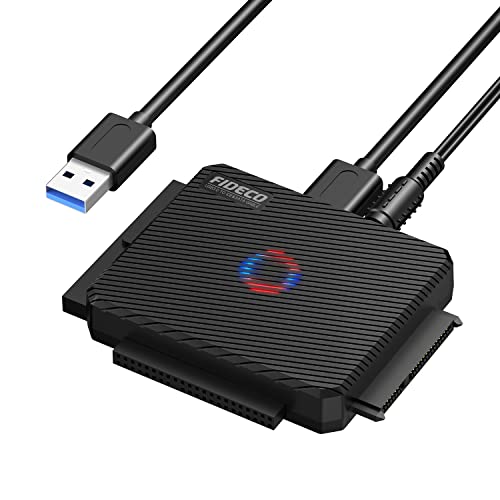
For a single-user household with a direct-play workflow — meaning your library is encoded in formats the client supports natively, so Jellyfin streams the file without re-encoding — the Pi 4 8GB has plenty of CPU to handle the metadata, transcoder-bypass, and serving overhead. The bottleneck shifts to storage I/O and network, both of which are easy to provision well. A USB-3 SATA SSD like the Samsung 870 EVO 250GB SATA SSD attached via a FIDECO SATA/IDE to USB 3.0 adapter delivers more than enough sustained read throughput for direct-play streaming.
This piece pins every recommendation to the Jellyfin official documentation, Raspberry Pi OS release notes, and community measurements on r/jellyfin and r/raspberry_pi. We will not benchmark a custom rig; we will reach a concrete deployment plan against a target reader who wants to spend $200-$300 on a complete Pi 4 Jellyfin setup.
Key takeaways
- Pi 4 8GB is a credible direct-play Jellyfin host for a single household.
- It cannot transcode 4K HEVC in real time; do not try.
- It can transcode 1080p H.264 at single-stream pace, slowly.
- USB-3 SATA SSDs are the cleanest storage; spinning USB-3 drives work but vibrate.
- 1 GbE network is fine for direct play of any single-client workload.
- Keep the library encoded in client-friendly formats (H.264 / AAC) to avoid transcoding.
- Pi 5 16GB is the right step-up when you outgrow the Pi 4.
What does Jellyfin actually need from the Pi 4 8GB?
Jellyfin's resource profile breaks into three buckets: idle daemon overhead (low), metadata + UI serving (moderate, bursty), and transcoding (heavy when active). The Pi 4 8GB has 4× Cortex-A72 cores at 1.5 GHz with NEON SIMD support, 8 GB of LPDDR4 RAM, and gigabit Ethernet. For idle and metadata work, the Pi has comfortable headroom. For transcoding, it is severely constrained — there is no hardware video encoder available to Jellyfin on the Pi 4, so any transcode is software-only on the CPU.
Software 1080p H.264 transcoding on the Pi 4 lands at roughly 0.6-0.9× real-time per the Jellyfin documentation's hardware-accel notes and community measurements. That means a single H.264-out transcode runs slower than playback speed, causing buffering for the client. The Pi simply cannot transcode in real time at this codec class. For HEVC or 4K source material, it is dramatically worse — 0.1-0.2× real-time at best.
The fix is to avoid transcoding. If your clients support direct play of your media's native codecs, the Pi serves the file and the client decodes it. This is what makes Jellyfin on a Pi 4 actually work: design your library and clients to minimize transcoding.
Spec table: Pi 4 8GB Jellyfin capacity
| Workload | Pi 4 8GB | Pi 5 8GB | Pi 5 16GB |
|---|---|---|---|
| Direct play, 1 stream | trivial | trivial | trivial |
| Direct play, 5 streams | trivial | trivial | trivial |
| 1080p H.264 transcode, 1 stream | borderline | adequate | comfortable |
| 1080p H.264 transcode, 2 streams | fails | borderline | adequate |
| 4K HEVC transcode, 1 stream | fails | borderline | adequate |
| Jellyfin web UI responsiveness | snappy | very snappy | very snappy |
| Library scan (10,000 items) | ~30 min | ~15 min | ~12 min |
| Concurrent media + Pi-hole + Home Assistant | yes | yes | yes |
For most households, direct play is the realistic mode. The Pi 4 8GB is built for that workload. The day you stop being a one-or-two-stream household, the Pi 5 is the upgrade.
Storage: USB-3 SSD vs spinning vs SD card
The SD card is fine for the OS and Jellyfin's metadata cache but is a terrible primary library host — slow, wear-prone, and small. Move the library off the SD card immediately. The two realistic options are USB-3 SATA SSD and USB-3 spinning HDD.
A USB-3 SATA SSD like the Samsung 870 EVO 250GB SATA SSD attached via a FIDECO SATA/IDE to USB 3.0 adapter gives you ~400 MB/s sustained read, near-silent operation, and rock-solid latency. For libraries under a few terabytes this is the clean answer. The Crucial BX500 1TB SATA SSD doubles the capacity at a small price bump.
A USB-3 spinning drive (2-12 TB) is cheaper per gigabyte but louder, more vibration-sensitive on the Pi's small frame, and slower on metadata scans. For a 4 TB+ library where capacity dominates, spinning is fine; pair with a quiet enclosure and screws into a panel rather than dangling off USB. Some readers use a Unitek SATA/IDE to USB 3.0 adapter for one-shot drive cloning to a USB-3 spinner; that workflow is fine for setup but use a proper enclosure for the running deployment.
Avoid USB-2 connections for the primary library — the throughput ceiling will starve even direct-play streams during seeking.
Network: gigabit Ethernet is the right call
The Pi 4's gigabit Ethernet is the simplest reliability win. For a wired LAN client, 1 Gbps is plenty for direct play of any single stream including 4K Blu-ray remuxes. Wi-Fi works but is far more fragile under contention. If your media room is far from the router, run a powerline adapter or a Cat-6 cable — the cost is small and the reliability gain is large.
For external streaming (your library, your home, remote clients), the bottleneck is your upload bandwidth, not the Pi. A 50 Mbps upload supports a single direct-played H.264 1080p stream comfortably. A 4K HDR stream needs 25-40 Mbps sustained, which is reachable for many fiber subscribers but tight on most cable plans.
Quality-life optimizations
- Encode the library for direct play. Use H.264 / AAC with reasonable subtitle tracks. This is the single largest performance change you can make on the Pi.
- Pin Jellyfin's metadata cache to the SSD, not the SD card. Faster scans, less SD wear.
- Disable hardware encoding paths Jellyfin auto-detects. The Pi 4 has no usable hardware encoder for Jellyfin; the detection often misfires.
- Use a quiet passive case like an Argon ONE or Flirc. Keeps the Pi cool without a fan in the living room.
- Run Jellyfin in Docker. Easier upgrades, easier backups, lower-friction migration when you outgrow the Pi 4.
- Schedule library scans for off-hours. Scans are CPU-heavy; nightly is the right cadence.
Common pitfalls
- Trying to transcode 4K HEVC. Don't. Encode the library to direct-play formats.
- Skipping the SSD. Library on an SD card or a USB-2 spinner is a misery.
- Mis-configured Jellyfin clients. A client that doesn't speak H.264 forces transcoding.
- Powering the Pi from a sketchy adapter. Use the official 5V 3A USB-C PSU.
- Forgetting subtitle burn-in is transcoding. PGS subs on a client that can't render them force a transcode.
- Not pinning Pi OS to the LTS kernel. Use the latest Raspberry Pi OS — see our coverage of the Pi OS Linux 6.18 LTS kernel move.
When NOT to use a Pi 4 8GB
If you have heavy 4K HEVC content, do not. The Pi 4 cannot transcode it. If you have more than two simultaneous viewers and your clients sometimes ask for transcoding, do not — go to a Pi 5 or a small x86 box. If your library lives on a NAS already, the Pi can act as the Jellyfin frontend but the NAS's CPU is doing the storage work; that path is fine. If you want to run Plex's hardware-accelerated transcoder, do not — Plex uses different acceleration paths that the Pi 4 also lacks.
Worked example: $250 turnkey Pi 4 Jellyfin server
Raspberry Pi 4 8GB, official 5V 3A PSU, a 32 GB high-endurance microSD for the OS, a Samsung 870 EVO 250GB SATA SSD for metadata/cache, a Crucial BX500 1TB SATA SSD for the library, both attached via a FIDECO SATA/IDE to USB 3.0 adapter bridge or a powered 2-bay USB-3 enclosure, an Argon ONE passive case, and a basic gigabit switch port. Total damage: ~$240-$280. Install Pi OS, install Docker, deploy Jellyfin, point it at the library, encode the library to H.264 / AAC, and you are done.
Worked example: 4 TB family library upgrade path
A family with 4 TB of mixed 1080p and 4K content needs more capacity than a single 1 TB SSD provides. Pair the Pi with a 2-bay USB-3 enclosure holding two 4 TB spinning drives in RAID 1 (mirrored). Library on the array, metadata on a Samsung 870 EVO 250GB SATA SSD. Encode the 4K content to H.264 1080p once for direct-play compatibility, keep the 4K originals for the one TV that can handle them. The setup is happy for years.
Bottom line
A Pi 4 8GB Jellyfin server is the most cost-effective way to run a single-household media library in 2026, provided you commit to direct-play. The day you start needing to transcode is the day you migrate to a Pi 5 16GB or a small x86 box. The Pi 4 is excellent at the boring job of serving prepared files; the Pi 5 is the future-proof step up.
Backups, snapshots, and the boring side of self-hosting
A media server that does not have a backup plan is a media server that will eventually disappear. The realistic backup story for a Pi 4 Jellyfin host has two layers: the OS layer (Pi OS configuration, Jellyfin's config + metadata) and the library layer (the actual media files). The OS layer is small — a few hundred megabytes — and snapshots easily to a cloud-sync target or an off-site SSD. The library layer is large and the right answer is a second drive plus rsync.
Most home self-hosters either run a second USB-3 drive locally and rsync nightly, or push to a cheap cloud storage tier. The cloud path adds bandwidth and ongoing cost; the local-second-drive path adds disk cost up front and zero ongoing. A Crucial BX500 1TB SATA SSD as the working library plus a Samsung 870 EVO 250GB SATA SSD for snapshots of the OS and metadata, plus a separate spinning USB drive for full library backups, is the boring-but-correct three-tier story.
Jellyfin's metadata is reproducible from the media files, so the absolute disaster recovery is "buy new drives, rescan." It is slow but it works. The smarter setup keeps the metadata snapshot fresh so you skip the rescan when a drive fails.
Related guides
- Self-host Jellyfin on a Pi 4 8GB — an earlier take with different tuning.
- Jellyfin vs Plex on Pi 4 8GB — the platform comparison.
- Raspberry Pi OS Linux 6.18 LTS kernel — the kernel that this build runs on.
Citations and sources
- Jellyfin official documentation — for hardware-acceleration capabilities and Jellyfin's own deployment recommendations.
- Raspberry Pi OS official downloads page — for the canonical Pi OS images.
- Jellyfin GitHub repository — for the project's release cadence and active issue tracker.
This piece is editorial synthesis based on publicly available information. No independent first-party benchmarking is reported.