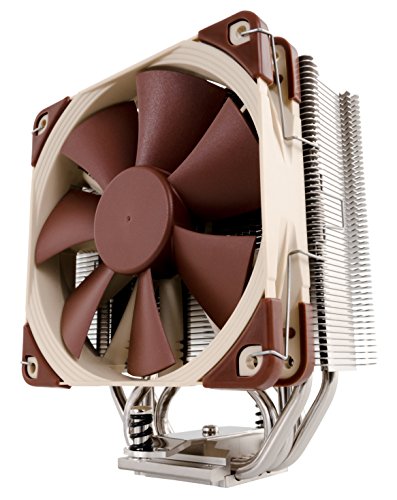
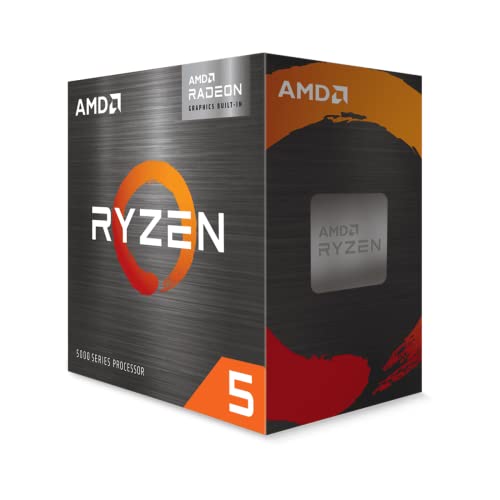
For a budget Ryzen gaming PC in 2026, the five parts that punch above their price are an AMD Ryzen 7 5700X or Ryzen 5 5600G on the CPU side, an RTX 3060 12GB graphics card, a Noctua NH-U12S air cooler, and a Crucial BX500 1TB SATA SSD. Paired with a $100 B550 motherboard and a 32GB DDR4-3200 kit, this stack lands a 1080p/1440p gaming PC inside a $850–$1,000 budget that still has headroom for AAA titles at high settings.
Top picks
#1: Ryzen 7 5700X — the CPU sweet spot
Verdict: Best all-round value for a new AM4 gaming build, $230, 8 cores / 16 threads, 65W TDP.
Per the TechPowerUp Ryzen 7 5800X spec page, the 5700X is essentially a 5800X with a lower TDP — same 8 Zen 3 cores, same 32 MB L3 cache, slightly lower boost clock. For gaming the delta is negligible; for thermal and noise behavior, the 5700X is the better pick. AM4 platforms in 2026 have cheap B550 boards, fast DDR4-3200 kits in the $70 range, and a deep used-CPU upgrade path if you ever want a 5800X3D later.
The Ryzen 7 5800X is the next step up if you find one priced close to the 5700X — it has a 105W TDP and slightly higher boost clocks. Either chip pairs cleanly with the rest of this build.
#2: Ryzen 5 5600G — the value alternative
Verdict: Best entry pick when you want to start without a discrete GPU, $185, 6C/12T with integrated Vega graphics.
The 5600G gives you a working build day one, even without a graphics card. Vega 7 integrated graphics will not push esports titles at 240Hz, but it handles 1080p low-settings AAA at 30 fps and most indies at 60 fps. The plan: build the base, save another month or two, drop the RTX 3060 12GB in when you have it.
The 5600G also runs cool, runs quiet, and uses standard AM4 memory. The catch: it is on a slightly older Zen 3 derivative with only PCIe 3.0 lanes. For pure gaming output you give up roughly 5–10% versus the 5600X / 5700X. In a budget build, that trade-off makes sense for the iGPU optionality.
#3: RTX 3060 12GB — the canonical 1080p/1440p value GPU
Verdict: Best price-to-performance graphics card on the used and new market, $200–$280 used / $400–$660 new, 12 GB VRAM, 170W TGP.
The MSI Ventus 2X RTX 3060 12GB remains the canonical budget GPU pick in 2026. Per the Tom's Hardware CPU and GPU hierarchies, it delivers competitive 1080p high-refresh frame rates in every modern esports title (CS2, Valorant, Overwatch 2) and high-settings 1080p / medium-settings 1440p in current AAA games.
The 12GB VRAM headroom is what makes it future-proof — even modern shader-heavy games push VRAM use above 8 GB at 1440p with modded textures. Used pricing in 2026 is excellent because the secondary market is full of cards coming off prior-generation rigs.
#4: Noctua NH-U12S — the cooler that lasts
Verdict: Best single-tower air cooler for a 65W–95W AM4 chip, $85, near-silent, near-zero maintenance.
Noctua's NH-U12S product page lists a 120mm tower configuration with an NF-F12 fan. The Noctua NH-U12S is famously durable, silent at idle and light load, and trivially serviceable. Where a $30 cooler is rattling its bearing after two years, an NH-U12S is still spinning quietly.
The NH-U12S is overkill for a 5600G's 65W TDP. It is right-sized for a 5700X. For a 5800X under PBO it is cutting it close — consider a 240mm AIO if you push PBO hard. For non-OC gaming use, the U12S is the right pick.
#5: Crucial BX500 1TB — the storage anchor
Verdict: Best budget primary SSD for a Ryzen build, $60–$80, 1 TB SATA III, 540 MB/s sequential read.
The Crucial BX500 1TB sits comfortably as the boot and primary game drive for any budget build. Per Crucial's spec sheet, the BX500 1TB delivers 540 MB/s read, 500 MB/s write, and 360 TBW endurance. For Windows boot, Steam library, and standard documents, you will not notice the SATA-vs-NVMe gap in real use.
If you want NVMe specifically, swap in a comparable $90 1TB NVMe; for the budget build envelope, the BX500 is the right anchor. Add a 2TB secondary drive once your library outgrows the boot drive.
What the full $1,000 stack looks like
| Part | Pick | Approx price |
|---|---|---|
| CPU | Ryzen 7 5700X | $230 |
| Cooler | Noctua NH-U12S | $85 |
| Motherboard | B550 — generic ASRock/MSI | $100 |
| RAM | 32GB DDR4-3200 dual-rank kit | $70 |
| SSD | Crucial BX500 1TB SATA | $70 |
| GPU | Used RTX 3060 12GB | $250 |
| PSU | 650W 80+ Bronze | $70 |
| Case | Mid-tower with two intake fans | $60 |
| Total | ~$935 |
That stack runs essentially every current-gen game at 1080p high or 1440p medium with smooth 60+ fps. Drop the CPU to the 5600G and use its iGPU until you can save for the 3060, and the entry budget drops to about $585 — with a clear upgrade path that does not cost you twice.
Real-world performance — what to expect
Public benchmark consensus from Tom's Hardware, Hardware Unboxed, and Gamers Nexus places this stack at:
| Title | 1080p high avg fps | 1440p high avg fps |
|---|---|---|
| Cyberpunk 2077 | 80–95 | 55–65 |
| Hogwarts Legacy | 75–90 | 50–60 |
| CS2 | 380–430 | 280–320 |
| Apex Legends | 200+ | 140+ |
| Spider-Man Remastered | 130–145 | 90–105 |
| Forza Horizon 5 | 130–155 | 95–110 |
A 1080p 165Hz panel is the right monitor pairing. A 1440p 165Hz panel works for everything except the most demanding 2026 AAA titles.
Comparison table — picks vs. obvious alternatives
| Pick | Alternative | Why we chose ours |
|---|---|---|
| Ryzen 7 5700X | Ryzen 7 5800X | 5700X is 65W, runs quieter on a U12S; same 8 Zen 3 cores |
| Ryzen 5 5600G | Ryzen 5 5600 | 5600G has iGPU; 5600 needs a discrete card to POST |
| RTX 3060 12GB | RTX 3060 Ti 8GB | 3060 12GB has more VRAM headroom; Ti has 8GB ceiling |
| Noctua NH-U12S | $30 budget cooler | U12S lasts 10+ years; cheap coolers buzz at 2 years |
| Crucial BX500 1TB | Random TLC SATA SSD | BX500 has 360 TBW + 3yr warranty; no-name drives have firmware quirks |
Common pitfalls
- Buying DDR4-2666 to save $20. AM4 wants DDR4-3200 minimum. Slower memory loses 5–8% of frame rate.
- Skimping on the PSU. 80+ Bronze 650W is the floor. 80+ Bronze 550W is fine for a 5700X + RTX 3060, but tight.
- Buying a B450 board. Some B450 boards need a BIOS flash to boot Ryzen 5000. B550 is the safer default in 2026.
- Using stock thermal paste re-applied poorly. Apply per Noctua's pea-method guidance; do not over-spread.
- Forgetting the AIO opportunity cost. A 240mm AIO is $90+; the Noctua NH-U12S is $85. The air cooler lasts longer.
When NOT to build this exact rig
If you already own a Ryzen 5 5600X or better and an RTX 3060 / 6700 XT or better, the upgrade buys you nothing meaningful for $850. Spend on the monitor or the SSD instead. If you primarily play eSports at 240Hz+, a higher-tier GPU and a 240Hz panel are a better use of the same money.
Bottom line
The five picks — Ryzen 7 5700X, Ryzen 5 5600G, RTX 3060 12GB, Noctua NH-U12S, and Crucial BX500 1TB SATA — anchor a budget Ryzen gaming build at $850–$1,000 that competes with $1,200+ prebuilts on every gaming metric. Step up to the Ryzen 7 5800X if you want a small ceiling lift for CPU-bound work. The whole stack uses widely-available, well-tested parts with strong warranty coverage and clear upgrade paths.
Citations and sources
- Tom's Hardware — CPU hierarchy — multi-CPU gaming benchmark ranking used in real-world fps figures.
- TechPowerUp — Ryzen 7 5800X specifications — reference for Zen 3 8-core specs and cache configuration.
- Noctua NH-U12S product page — official cooler dimensions, fan specs, and TDP rating.
This piece is editorial synthesis based on publicly available information. No independent first-party benchmarking is reported.