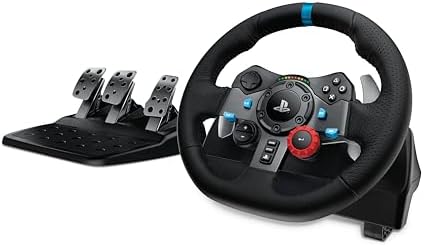
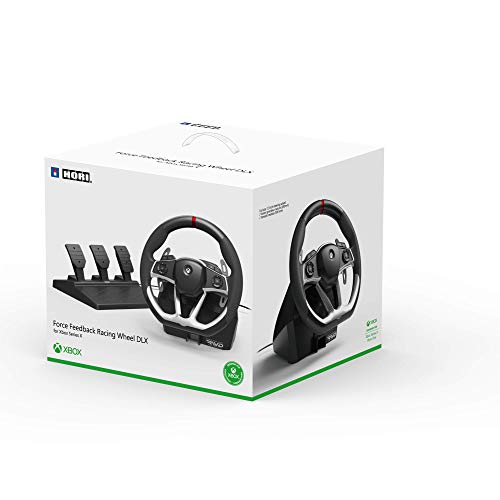
For PC sim racing in 2026, the best value entry force-feedback wheel is still the Logitech G29 — durable gear-driven FFB, solid three-pedal set, wide game support, and lower cost than direct-drive alternatives. The HORI Force Feedback Racing Wheel DLX is the interesting alternate pick for Xbox-first households and specific Forza tuning. Add a Thrustmaster TH8A shifter once you're sure sim racing sticks. Direct-drive wheels start twice the price and reward committed sim racers, not newcomers.
Editorial intro: what force feedback actually buys you
Force feedback (FFB) in a racing wheel is not a rumble effect. It's a servo motor turning the wheel against your hands based on the physics simulation's tire-and-suspension model. When you understeer into a corner in Assetto Corsa Competizione, the wheel goes light because the front tires have lost grip. When you catch a snap-oversteer in iRacing, you feel the rear come around before the visual cue arrives. Learning to read those cues is what separates a racing game from a racing simulator, and no thumbstick or gamepad trigger can replicate the sensation.
Three FFB technologies dominate at various price points:
- Gear-driven FFB (Logitech G29, HORI DLX): Cheapest. Uses a small DC motor with a gear train. Feels notchy at extremely low forces because of gear backlash, but transmits detail well enough for most drivers to improve their times noticeably. Long track record, durable, wide game support.
- Belt-driven FFB (Thrustmaster T300, Logitech G Pro Racing): Middle tier. Smoother at low forces than gear-driven; still has some belt lash. Feels appreciably nicer.
- Direct-drive FFB (Fanatec CSL DD, Simucube 2, Moza R21): Premium tier. Wheel is mounted directly to the motor shaft; no gears, no belts, no lash. Communicates every detail from the physics engine. Costs 2-4x the entry wheels and rewards drivers who can actually use the extra detail.
Almost every drove-a-sim-once buyer starts with a gear-driven wheel and either sells it a month later (didn't stick) or upgrades to direct-drive after a year (loved it). The two entry options that get 90% of that market are the G29 and the HORI DLX. This piece walks the comparison, notes where each wins, and lands on the shifter add-on that transforms both.
Key takeaways
- FFB type: G29 and HORI DLX both gear-driven. Comparable "feel" tier, different game-support strengths.
- Pedals: G29 ships with three pedals (throttle, brake, clutch) — a real advantage. HORI DLX ships with two.
- Shifter support: Both wheels have paddle shifters on the wheel. Neither includes an H-pattern; add the Thrustmaster TH8A if you want one.
- Game compatibility: G29 works everywhere. HORI DLX is Xbox-focused and works excellently in Forza Motorsport but requires per-game setup elsewhere.
- Rotation range: G29 900°. HORI DLX 270-540° depending on game and mode.
- Value verdict: G29 for the widest game library and best pedal set. HORI DLX if you play mainly Forza.
Step 0 — casual racer or committed sim?
Ask honestly:
- Casual arcade racer (Forza Horizon, The Crew, NFS): Any wheel is a huge upgrade over a controller. The G29 or HORI DLX both work fine; either is enjoyable.
- Committed sim (Assetto Corsa, iRacing, Automobilista 2, rFactor 2): The wheel matters more. G29 works, HORI DLX works, but you'll feel the gear-driven ceiling within a year. Plan for a direct-drive upgrade in 12-18 months if this sticks.
- Truck/farm sim (Euro Truck Simulator 2, Farming Sim): Wheel + H-pattern shifter is the whole reason you're buying. G29 + TH8A is the reference combo.
- Rally (Dirt Rally 2.0, WRC 24, EA Sports WRC): H-pattern or sequential shifter matters here too. TH8A supports both modes.
The wheel decision is inseparable from what you'll play. If your library is mostly Forza and Gran Turismo (on PC via GT7 for Windows), either wheel is fine. If it's Assetto Corsa Competizione and iRacing, focus on the FFB rather than the wheel's game-specific integrations.
How does the Logitech G29 feel in modern sims?
The G29 is the second generation of Logitech's Driving Force line — the official product page covers the specs but community reviews are what matter. Per r/simracing threads and long-running enthusiast forums, the G29's FFB reputation:
- Force strength: ~2-3 Nm peak. Enough to be useful, not enough to fatigue you in a 30-minute stint.
- Detail transmission: Good for the price. You feel road surface changes, kerbs, and grip loss. Fine detail like tire scrub and camber changes come through more subtly than on belt or direct-drive.
- Gear noise: Audible under heavy FFB, especially in modern sims that recommend running FFB near max. Not annoying, just present.
- Center dead zone: Small but present. On direct-drive wheels this goes away entirely.
- Durability: Excellent long-term reliability. Wheels bought in 2018 are still running today.
Pedals: three-pedal set (throttle, brake, clutch), all potentiometer-based. The brake has a small progressive spring — better than G27's felt but not as good as load-cell brakes. Load-cell mods exist for the community if you want them.
Shifter: paddle shifters on the wheel. Optional Logitech Driving Force Shifter accessory (~$60) adds H-pattern support with 7 forward gears + reverse. The Thrustmaster TH8A is the higher-quality alternative shifter and is cross-compatible.
Where the HORI Force Feedback Racing Wheel DLX fits
The HORI DLX launched officially licensed by Microsoft for Xbox Series X|S and is tuned specifically for Forza Motorsport and Forza Horizon on Xbox. On PC via Windows 10/11, it works — but the setup story is patchier than the G29.
Where it wins:
- Forza Motorsport (2023 reboot) integration: Excellent. Custom FFB profile from HORI and Turn 10 tuned to feel right.
- Two-pedal set: Cleaner-looking desk. Not as flexible as the G29's three-pedal set.
- Xbox controller cross-compat: If your household plays cross-platform Forza, the HORI is set up for that.
- 540° rotation option: Cleaner desk clearance if your desk is short.
Where it loses:
- Wider PC sim support: Assetto Corsa Competizione, iRacing, and Automobilista 2 all support the HORI DLX but the profile tuning is less mature than the G29's. Community FFB profiles exist and work; expect an hour of tinkering.
- Two pedals: No clutch. Kills the reason to add a real shifter.
- Firmware updates: HORI's update tool is Xbox-first. PC-only users occasionally get stranded on older firmware.
Verdict: HORI DLX for Xbox-first Forza-focused households. G29 for everyone else. The pedal-set difference is the biggest single decision point.
Does adding a Thrustmaster TH8A shifter transform the experience?
Yes. For any game that supports a manual H-pattern gearbox — rally, classic touring cars, ETS2, Farming Sim, any historic content in Assetto Corsa — the TH8A is transformative. Community reviews consistently rank it above Logitech's Driving Force Shifter on shift-feel, gate precision, and durability.
Key TH8A specs from the official product page:
- 7 forward gears + reverse (H-pattern mode)
- Sequential mode with push-pull shifting
- Steel plate mounting, table clamp compatible
- USB connection (works with G29, T300, T500, others)
Notes:
- Compatible with the G29 via USB pass-through (both plug into the PC separately).
- Also works with the HORI DLX and Thrustmaster's own wheels.
- Requires a solid desk or dedicated mount. The clamp is real but a wobbly IKEA desk will make it awkward.
If your library is arc-racing and modern GT racing (paddles only), the shifter is unnecessary. If it includes rally, truck sim, or vintage racing, it's a genuine game-changer.
Spec-delta table
| Spec | Logitech G29 | HORI FFB Wheel DLX | TH8A Shifter | |
|---|---|---|---|---|
| FFB technology | Gear-driven | Gear-driven | N/A (shifter) | |
| Peak torque | ~2-3 Nm | ~2-3 Nm | — | |
| Rotation | 900° | 270-540° | — | |
| Pedals included | 3 (throttle/brake/clutch) | 2 (throttle/brake) | — | |
| Paddle shifters | Yes (metal) | Yes (plastic) | — | |
| H-pattern mode | Via add-on shifter | Via add-on shifter | 7 gears + reverse | |
| Sequential mode | No | No | Yes (push/pull) | |
| PC compatibility | Excellent | Good | Excellent | |
| PS4/PS5 support | Yes | No | Yes (specific games) | |
| Xbox support | No (older Xbox One only) | Yes (Series X | S native) | Limited |
| Approx price (mid-2026) | $200-260 | $250-320 | $170-200 |
Feel and durability notes
Both G29 and HORI DLX gear-driven wheels have similar overall FFB "feel." Community consensus:
- Notchiness at low forces: Both have it. The G29 slightly more, per long-time forum reviewers, because of a older gear train design.
- Center dead zone: Present on both. Neither has direct-drive smoothness.
- Detail transmission: G29 marginally better in racing sims; HORI DLX marginally better in Forza-specific titles.
- Wheel material: G29 leather-wrapped rim, generally preferred long-term. HORI DLX rubberized grip zones, wear pattern shows within 2 years of regular use.
Durability:
- G29 lifespans of 5-8 years of regular use are common. FFB motor rarely fails; the potentiometer in the throttle pedal is the most common wear point.
- HORI DLX is newer to market; long-term durability data is less established. Two-year owner reports are broadly positive.
Mounting, desk clamps, and space
Racing wheels need a solid mount. Both wheels ship with G-clamps for a desk edge (works on any desk with a 20-55mm thick edge).
- Desk clamp works if: your desk is solid wood or thick MDF, well-anchored, and 55mm or thinner. Ikea-style hollow-core desks flex.
- Dedicated wheel stand ($150-300): The right upgrade for regular use. Wheel Stand Pro and Next Level Racing units are the popular picks.
- Full rig ($400-1500): Once sim racing sticks, most upgrade to a rig. Playseat Challenge, Trak Racer TR120 range, etc.
Pedal placement: pedals slide on carpet. Even with the G29's non-slip base, they walk during hard braking. A pedal box or floor mat helps.
Perf-per-dollar across a full setup
| Setup | Wheel | Pedals | Shifter | Approx total | Fits |
|---|---|---|---|---|---|
| Minimal entry | G29 | 3-pedal (included) | Paddles only | ~$230 | Any modern sim / arcade |
| Xbox-first | HORI DLX | 2-pedal (included) | Paddles only | ~$290 | Forza-first library |
| Complete entry | G29 + TH8A | 3-pedal | TH8A H-pattern | ~$420 | Rally + touring + truck sims |
| Committed | Direct-drive base + load-cell brake + shifter | — | — | $900-1500 | Serious sim work |
The G29 + TH8A combo at ~$420 gets you 90% of the sim-racing experience the direct-drive setup offers, at 40% of the cost. Committed sim racers eventually upgrade, but there's no shame in staying on the G29 for years.
Verdict matrix
Get the Logitech G29 if:
- You play a wide PC sim library (Assetto Corsa, iRacing, ACC, EA WRC).
- You want the three-pedal set for clutch use.
- You value long-established reliability and community support.
Get the HORI Force Feedback Racing Wheel DLX if:
- Your household is Xbox-primary or Forza-primary.
- You want a slightly cleaner two-pedal desk setup.
- You care about official Xbox certification.
Add the Thrustmaster TH8A shifter if:
- You play rally, ETS2, Farming Sim, or classic-era racing.
- You want both H-pattern and sequential modes.
- You've already committed to sim racing (this isn't the first purchase).
Skip these entirely and go direct-drive if:
- You've been sim racing on an older wheel and want the upgrade.
- Your budget starts at $900+.
Can I use these wheels with a controller as backup?
Yes, and most people do. A PlayStation DualSense or Xbox controller stays plugged in for menu navigation, non-racing games, and quick sessions when the wheel isn't worth setting up. Most modern PC sims switch input devices seamlessly.
Common pitfalls
- Clamping to a hollow-core Ikea desk. The desk flexes under FFB load and the wheel dances. Get a rig or clamp to a solid piece of furniture.
- Buying the HORI DLX for iRacing. It works, but the profile tuning story is worse than the G29's. G29 is the safe pick for iRacing.
- Skipping the clutch pedal. If you play ETS2 or truck sims, you need the third pedal. HORI DLX out of the box doesn't do it.
- Cheap USB hubs between the wheel and PC. FFB latency and dropped inputs. Plug directly into the PC.
- Not running the pedal-calibration step. Both wheels benefit from software calibration; users often skip and complain about response.
When NOT to buy a force-feedback wheel at all
- You play mostly with a controller and want "a little more immersion." A wheel is a $250 commitment that has to earn its place on the desk. If you're not sure, don't.
- You have limited desk depth. FFB wheels need at least 18" of clearance in front of them and pedals need floor space.
- You have young kids who like desks. Wheels are expensive and don't respond well to being climbed on.
Bottom line
Best PC sim racing wheel 2026 (entry-level, best value): Logitech G29. Wide game support, three pedals included, durable, ~$230.
Best Xbox-first alternate: HORI Force Feedback Racing Wheel DLX. Official Xbox certification, tuned for Forza. ~$290.
Best shifter add-on: Thrustmaster TH8A. Both H-pattern and sequential, ~$180.
Backup controller: DualSense for menus and non-racing use. ~$70.
Total complete entry setup: ~$420 for wheel + shifter + controller. Upgrade to direct-drive after 12-18 months if sim racing sticks.
Related reading
Citations and sources
- Logitech G — Driving Force Racing Wheel product page
- HORI — official product portal
- Thrustmaster — TH8A shifter product page
This piece is editorial synthesis based on publicly available information. No independent first-party benchmarking is reported.