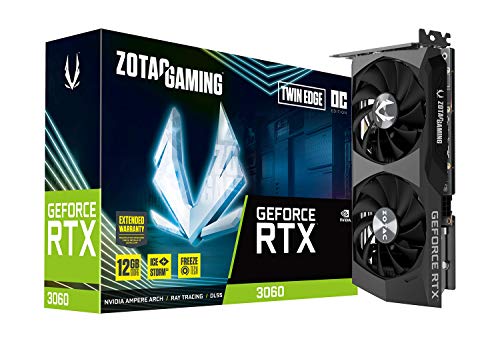
Whisper large-v3 wants roughly 10 GB of VRAM at full precision, which makes a 12 GB card the practical floor if you want the best model running while anything else is on screen. On a ZOTAC Gaming GeForce RTX 3060 Twin Edge OC 12GB a quantised build clears a four-hour VOD in well under an hour. The microphone, not the model, is what sets your error rate.
Who this is for
You have dozens or hundreds of hours of past broadcast sitting on a drive, and every one of them is invisible to search. Captions, chapter markers, clip-hunting, a searchable archive, show notes, translation stubs — all of it starts with a transcript, and none of it is worth doing by hand at four hours per stream.
The cloud answer is straightforward and it is priced per minute of audio. That model is fine when you transcribe an interview a week. It stops being fine the moment you point it at a back catalogue, because a back catalogue is a fixed, very large number of minutes that you pay for once at full rate and then pay for again every time you reprocess with a better model. Streamers hit that wall in a single afternoon of enthusiasm.
The second reason is the one people mention second and care about first: uploading raw, unedited audio of your living room to a third party is a decision, not a default. Unedited VOD audio contains everything — the sponsor conversation you had off-mic, the housemate, the phone call you forgot was running. Local transcription makes that a non-question.
What follows is the hardware side of moving that workload on-prem: how much VRAM each Whisper size needs, what a 12 GB card realistically does with it, why quantisation is nearly free here, and why the cheapest meaningful upgrade in the whole pipeline is usually the thing in front of your face rather than the thing in the PCIe slot.
Key takeaways
- VRAM scales with model size, not audio length. Whisper works in fixed 30-second windows, so a four-hour VOD has the same memory ceiling as a four-minute one. Only the wall-clock changes.
- 12 GB is the floor for large-v3 at full precision. Around 10 GB for weights and working set leaves an 8 GB card with nothing to spare for a browser, an overlay, or a game.
- Quantisation is the highest-value knob on the board. An int8 or q5 build cuts the memory footprint dramatically for a small accuracy cost, and it is what makes large-v3 comfortable rather than marginal.
- Capture quality moves word error rate more than model size does below
medium. Room reflections and background noise survive Whisper's 16 kHz resample; a bigger model does not remove them. - Storage is not the bottleneck. Transcription is decode-bound. A SATA SSD feeds the pipeline faster than the encoder consumes it.
- Breakeven against per-minute cloud pricing is a volume question. Steady output amortises hardware quickly; occasional output never does.
How much VRAM does each Whisper model size need?
The upstream model card publishes both the parameter count and an approximate VRAM requirement per size, and the relative-speed column is the one people forget to read. The jump from small to medium costs more than double the memory and roughly half the speed.
| Model | Parameters | Approx. VRAM (fp16) | Relative speed | Practical use |
|---|---|---|---|---|
| tiny | 39 M | ~1 GB | ~10× | Live captions, keyword spotting |
| base | 74 M | ~1 GB | ~7× | Rough index of a long archive |
| small | 244 M | ~2 GB | ~4× | Usable draft transcripts |
| medium | 769 M | ~5 GB | ~2× | The quality knee for most speech |
| large-v3 | 1550 M | ~10 GB | 1× | Publishable captions, accents, jargon |
Two things follow from that table. First, an 8 GB card runs medium with room to breathe and runs large-v3 only with quantisation or nothing else on the GPU. Second, the quality gap between small and medium is much wider than the gap between medium and large-v3 for clean, close-mic'd speech — which is exactly the situation a streamer with a decent microphone is in. Large-v3 earns its keep on accents, overlapping speech, game audio bleed, and proper nouns.
The whisper.cpp project publishes the on-disk ggml weight sizes and the quantised variants alongside them, and those numbers are the ones to plan a drive around: the full-precision large weights are a couple of gigabytes on disk, and the q5 build is roughly a third of that.
How fast is an RTX 3060 12GB at Whisper large-v3?
The 3060 is a GA106 part with 3,584 shaders, 12 GB of GDDR6 on a 192-bit bus, and a 170 W board power figure (TechPowerUp, NVIDIA). The 12 GB configuration is the reason this five-year-old card refuses to die: it is the cheapest new-in-box way to get double-digit VRAM, and Whisper is a workload where VRAM is the gate and raw compute is the throttle.
Realtime factor — how many minutes of audio you process per minute of wall clock — is the number that matters, and it moves with backend and precision far more than most people expect. The published cross-backend comparisons consistently show the CTranslate2-based faster-whisper runner several times quicker than the reference PyTorch implementation on the same weights and the same card, with the int8 path close behind fp16 rather than ahead of it on GPU.
| Backend / precision | Typical behaviour on a 12 GB Ampere card | VRAM pressure |
|---|---|---|
| Reference PyTorch, fp16 | Baseline. Slowest of the three. | Highest — ~10 GB |
| whisper.cpp, CUDA, q5_0 | Several× the baseline; smallest footprint | Lowest |
| faster-whisper (CTranslate2), fp16 | Fastest GPU path in most reports | High |
| faster-whisper (CTranslate2), int8 | Within a small margin of fp16 | Roughly half of fp16 |
Treat those as ordering, not as a promise of a specific multiplier on your machine — driver version, clip length, VAD settings and beam size all move the result. The practical takeaway holds regardless of the exact figure: on a 12 GB card, a well-configured large-v3 run processes a multi-hour VOD faster than realtime, which means an overnight queue clears a season of back catalogue.
Both 12 GB 3060 variants in the SpecPicks catalog land in the same place for this workload. The ZOTAC Twin Edge OC is the compact two-fan card for a mid-tower with limited clearance; the MSI GeForce RTX 3060 Ventus 3X 12G OC is the triple-fan version that runs its fans slower for the same heat. For a box that transcribes overnight, that acoustic difference is worth more than the boost-clock difference. We compared the two directly in the ZOTAC Twin Edge vs MSI Ventus 3X guide.
Which Whisper precision should you run?
This is the decision that determines whether large-v3 is comfortable or marginal on 12 GB.
| Precision | Relative footprint | Speed | Accuracy cost |
|---|---|---|---|
| fp16 | Full (~10 GB class) | Baseline GPU speed | None — reference output |
| int8 | Roughly half | Comparable to fp16 on CUDA | Small, usually invisible in clean speech |
| q8_0 (ggml) | Roughly half | Fast; strong CPU fallback | Small |
| q5_0 (ggml) | Roughly a third | Fastest of the four | Noticeable on hard audio, fine on clean |
The rule of thumb: if your audio is one person, close-mic'd, in a treated-enough room, q5 large-v3 will beat fp16 medium and use less memory doing it. If your audio has game bleed, a second speaker, or heavy accents, spend the memory on fp16 or int8 and keep the model at large-v3. Do not spend it on a bigger model at worse precision than you need — that trade only pays in the clean-audio direction.
Does the microphone actually change word error rate?
Yes, and it is the single most misunderstood part of this pipeline.
Whisper resamples everything to 16 kHz mono before it builds a log-Mel spectrogram. That means your 48 kHz capture, your bit depth, and your interface's headline specs are all discarded before the model sees a single frame. People read that and conclude the microphone does not matter. The opposite is true, because what the resample does not discard is everything that reached the capsule: HVAC hum, keyboard strike, desk thump, the housemate two rooms over, and — worst of all — room reflections, which arrive milliseconds after the direct sound and smear consonants in exactly the band that carries word identity.
A cardioid condenser positioned close to the speaker fixes that at the source. The Logitech Creators Blue Yeti USB Microphone has three capsules and four patterns, and for this job only one of them is correct: cardioid, capsule facing you, close. Its default out-of-box configuration — sat on a desk at arm's length, gain high — is the worst case, because a high-gain cardioid at distance is a very effective room microphone.
Compare that with the dual omnidirectional mics in a Logitech C922x HD Pro Webcam. Omni patterns are, by design, indifferent to direction. On a webcam mounted above a monitor, that means the mic is roughly as interested in your fan noise and your room's reverb tail as it is in you. It is a perfectly good camera and a poor transcription source, and no model size recovers the difference. If you are choosing a microphone rather than optimising one you own, our USB microphone comparison covers the trade-offs against the current alternatives, and the streaming starter kit guide puts it in the context of a full first build.
Three capture habits that are free and move error rate more than a GPU upgrade:
- Get close. Doubling your distance from the capsule roughly quarters direct sound power while leaving room reflections untouched — the ratio that matters gets worse fast.
- Record a clean voice track separately from the game mix. If the transcriber only ever hears you, it never has to guess whether a word came from a cutscene.
- Kill the obvious. A fan on the desk, an open window onto traffic, and a mechanical keyboard under the mic are each worth more error than the gap between
mediumandlarge-v3.
Do you need a fast SSD, or is SATA fine?
SATA is fine, and the arithmetic is not close.
An hour of stream audio at 128 kbps is about 58 MB. A four-hour VOD is therefore roughly 230 MB of audio, plus a couple of gigabytes of model weights loaded once at process start. A SATA III drive like the Kingston 960GB A400 delivers hundreds of megabytes per second sequentially, which means it hands the decoder the entire four-hour file in about a second. The GPU then spends minutes on it. The drive is idle for essentially the whole run.
Where storage does matter is capacity and convenience: at roughly 58 MB per hour of extracted audio, a 960 GB drive holds a very large archive of source audio plus every quantised model variant you might want to A/B, with room left for the rendered clips that are the actual point of the exercise. If you also keep the video masters on the same drive, that changes — but that is a video-editing sizing problem, not a transcription one. We worked the same decode-bound-versus-read-bound question for model libraries in the NVMe vs SATA SSD comparison, and the conclusion is the same on both workloads.
How much does the CPU matter?
More than the marketing suggests, and in a specific place. Three parts of this pipeline never touch the GPU:
- Demux and decode. Pulling an audio stream out of a multi-gigabyte container and resampling it to 16 kHz mono is a CPU job, and on a long VOD it is not instant.
- Voice activity detection. Most modern runners segment on VAD before transcribing, which cuts total work substantially by skipping silence — and which runs on the CPU.
- Output assembly. Timestamp alignment, subtitle formatting and file writing are single-threaded tail work.
On an 8-core desktop part these stages are comfortably faster than the GPU stage and disappear into the pipeline. On an older quad-core they can become the limiter, particularly if you are batching many files and the GPU finishes each one before the next is decoded. If your GPU utilisation graph looks like a sawtooth rather than a plateau, the CPU is your bottleneck — the fix is parallel decode, not a bigger card. We looked at CPU-side host duties for GPU inference boxes in the CPU-offload host comparison.
Prefill versus generation on a four-hour VOD
Whisper is an encoder-decoder, and the two halves behave differently as a file gets longer.
The encoder processes fixed 30-second windows. A four-hour VOD is 480 of those windows, and the cost is exactly linear — 480 identical, highly parallel chunks the GPU eats in a steady stream. This half scales beautifully and is where a faster card actually pays.
The decoder generates tokens autoregressively within each window. This half is latency-bound rather than throughput-bound, it does not parallelise the same way, and it is where beam size hurts you. Dropping from a wide beam search to greedy decoding can nearly halve total time on a long file for a very small quality difference on clean audio — which makes it, alongside quantisation, the second free win in the whole stack.
The practical consequence: long files are cheaper per minute than short ones, because the fixed costs (model load, warm-up, CUDA context) amortise across 480 windows instead of five. Batch your archive as one job overnight rather than as 60 individual runs.
What does this cost against cloud transcription?
Run the arithmetic on your own catalogue rather than on a hypothetical one, because the answer flips hard on volume.
The local side is a one-time hardware cost you may already have paid, plus electricity. A 3060 under a sustained transcription load sits near its 170 W board figure; add the rest of the system and call it 250 W at the wall. At that draw, an hour of transcription is a quarter of a kilowatt-hour — pennies at any residential tariff. Because a well-configured run is several times faster than realtime, an hour of audio costs a fraction of that. Local per-hour cost is, for practical purposes, noise.
The cloud side is a per-minute rate multiplied by a number that only ever grows. The breakeven is therefore not a quality judgement at all; it is the point where your cumulative minutes times the rate exceeds the card you would have bought anyway to game on. For a streamer producing 12 hours a week — 624 hours a year — that crossover arrives quickly. For someone producing two hours a month, it never does, and the honest recommendation is to keep paying per minute.
Three cases where local wins regardless of volume: content under NDA or embargo, content with identifiable third parties who did not consent to a cloud upload, and any workflow where you expect to reprocess the whole archive when a better model ships. That last one is not hypothetical — it is what happened to everyone who transcribed with medium and then wanted large-v3.
Common pitfalls
- Running large-v3 fp16 on an 8 GB card and blaming the model. When the allocator spills, throughput collapses. Check memory first, then complain.
- Leaving the browser open. A hardware-accelerated browser with a dozen tabs can hold a gigabyte of VRAM. On 12 GB that is the difference between comfortable and marginal.
- Transcribing the full mix. Game audio, music beds and alert sounds all become candidate words. Record a clean voice track.
- Using a wide beam search by default. You pay for it on every one of 480 windows and you rarely hear the difference.
- Trusting the first timestamp pass on very long files. Drift accumulates. If you are cutting clips from timestamps, verify against a known event near the end of the file before you trust the whole run.
Complete the build: a captions-and-clips box
Five parts, each doing one job in the pipeline.
The microphone — Blue Yeti. This is the accuracy component. Cardioid, close, gain low enough that the room disappears. Everything downstream inherits whatever this captures.
The GPU — ZOTAC RTX 3060 Twin Edge OC 12GB or MSI RTX 3060 Ventus 3X 12G OC. This is the throughput component. Twelve gigabytes is the number that matters; pick the Ventus 3X if the case has clearance and the box runs overnight in a room you sleep in, the Twin Edge if it does not.
The storage — Kingston 960GB A400. This is the capacity component, not a performance one. It holds the source audio, every model variant, and the rendered output, and it never becomes the limiter.
The camera — Logitech C922x HD Pro. This is on the list to be explicit about what it is not: it is your video source, and its onboard omnidirectional mics should never be your transcription source when a dedicated microphone is on the desk.
When not to do this
Skip local entirely if you produce a few hours a month, own no discrete GPU, and have no privacy constraint. The hardware never amortises and the cloud result is excellent. Skip it also if you need transcripts within seconds of going live and have not already built the streaming pipeline for it — real-time captioning is a different engineering problem from batch VOD transcription, and it wants tiny or base, not large-v3.
Bottom line
The smallest configuration that transcribes comfortably faster than realtime is a 12 GB RTX 3060, a quantised large-v3 build under faster-whisper or whisper.cpp, greedy decoding, VAD segmentation, and a cardioid microphone six inches from your face. The GPU decides how long the job takes. The microphone decides whether the output is worth reading. Most people buy those in the wrong order.
Related guides
- RTX 3060 12GB for Local LLMs: The Complete 2026 Guide
- ZOTAC RTX 3060 Twin Edge vs MSI RTX 3060 Ventus 3X
- HyperX QuadCast 2 vs Blue Yeti: Best USB Mic for Game Streaming
- Best Streaming Starter Kit for New Twitch Streamers in 2026
- NVMe vs SATA SSD for Local LLM Model Libraries in 2026
Citations and sources
- NVIDIA — GeForce RTX 3060 Family — accessed 28 August 2026. Source for the RTX 3060 12 GB memory configuration and board power.
- TechPowerUp — GeForce RTX 3060 12 GB Specifications — accessed 28 August 2026. Source for the GA106 shader count, 192-bit bus and memory bandwidth.
- whisper.cpp — ggml-org/whisper.cpp — accessed 28 August 2026. Source for the ggml model file sizes, the quantised variant list and the CUDA build path.
Prices quoted are SpecPicks catalog listings as of 28 August 2026 and move frequently; check the live listing before purchase. This piece is editorial synthesis based on publicly available manufacturer documentation and project specifications. No independent first-party benchmarking is reported.
— Mike Perry · Last verified 28 August 2026