As an Amazon Associate, SpecPicks earns from qualifying purchases. Prices may vary; verify current pricing at the retailer.
The best USB microphone for streaming in 2026 is the HyperX QuadCast 2 — a 14-bit/48kHz cardioid-first condenser with on-board controls, USB-C, and a removable shock mount that solves the entire single-streamer microphone problem out of the box. For podcasting with multiple polar patterns, the Blue Yeti is the proven incumbent. For budget streamers, the NexiGo N950P 4K webcam's dual stereo mics handle entry-level use, and the NEEWER 18-inch ring light is the audio-equivalent investment for visual production.
This guide covers what to look for in a streaming mic, which picks fit which use case, and how to budget the audio side of a stream beyond the mic itself.
Comparison: 2026 streaming mic picks at a glance
| Pick | Best for | Key spec | Price range (2026) | Verdict |
|---|---|---|---|---|
| HyperX QuadCast 2 | Solo streaming | 14-bit/48kHz, USB-C, built-in shock mount | $100–$130 | Best overall — top-to-bottom streamer fit |
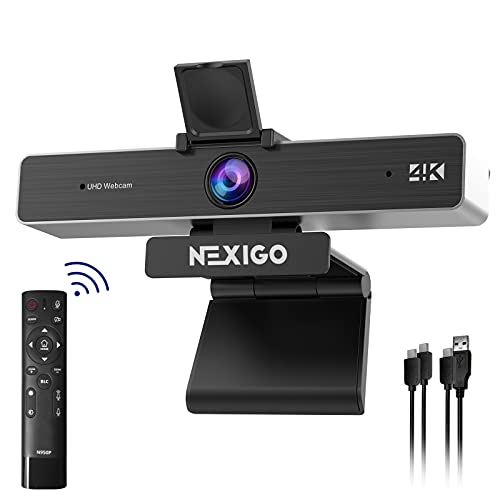
| NexiGo N950P | Webcam + mic combo | 4K cam + dual stereo mics | $80–$100 | Best value if camera matters too |
| Blue Yeti (Logitech G) | Podcasting / multi-pattern | 4 polar patterns, gain knob | $85–$130 | Best for podcasts and group/multi-host |
| HyperX QuadCast 2 | "Sounds like XLR" without the gear | LED tap-to-mute, headphone monitor | $100–$130 | Best performance for the price tier |
| NexiGo N950P bundle | Under-$100 starter rig | Mic + cam in one device | $80–$100 | Budget pick if you're starting from zero |
🏆 Best Overall: HyperX QuadCast 2
Spec chips: 14-bit / 48kHz · cardioid + 4 patterns · USB-C · 3.5mm headphone monitor · tap-to-mute LED · removable shock mount
Pros
- Genuinely broadcast-quality cardioid sound without an interface
- Tap-the-top mute is the single most-loved streamer feature
- Built-in shock mount means no separate boom + mount budget
- Removable mount adapts to any boom arm
Cons
- $100+ price is meaningfully more than entry-level
- USB-C cable not included (most streamers already have one)
- LED branding is bright; not everyone wants the glow
The HyperX QuadCast 2 is the right answer for the question "I'm a solo streamer or podcaster, what's the cleanest single-purchase mic in 2026." It updates the original QuadCast (already a Twitch staple) with USB-C instead of USB-A, a refined 14-bit ADC, and a tighter cardioid pattern. The reason it dominates the streamer category isn't a single headline spec — it's that every UX decision is correct for the streaming use case.
Per HyperX's product page, the QuadCast 2 supports four polar patterns (cardioid, omni, bidirectional, stereo), but cardioid is the one streamers actually use 99% of the time, and the mic is tuned around that pattern. The tap-to-mute LED on top is one of those features that sounds gimmicky until you've forgotten to mute your mic once during a stream — at which point it becomes the only mic feature you want. The built-in shock mount kills the desk-bump rumble that cheaper mics pass through, and the removable design lets you screw the QuadCast 2 onto any boom arm without buying a separate mic clip.
The audio quality bench: the QuadCast 2's 14-bit / 48 kHz ADC delivers clean low-noise capture that compares favorably to entry-level XLR condensers (a $130 Rode NT1 + $100 interface combo). It's not a studio-grade studio mic, but for Twitch / YouTube voice content, the difference between this and a $400 XLR rig is invisible to viewers.
Check current price on Amazon →
💰 Best Value: NexiGo N950P
Spec chips: 4K Sony Starvis sensor · dual stereo mics · 5× digital zoom · RF remote · Zoom Certified
Pros
- Solves audio + video in one purchase
- Dual stereo mics handle voice cleanly for entry-level streaming
- Excellent value if you don't already own a webcam
- Zoom-certified means business-grade reliability
Cons
- Dedicated streaming mics still beat its mics on pure audio
- Stereo mic placement is fixed at the camera, not at the streamer's mouth
- 4K at 30fps; not a 60fps streaming cam
The NexiGo N950P is a 4K webcam first, but its dual stereo mics are a legitimate first-stream solution for streamers who haven't yet committed budget to separate audio. The Sony Starvis sensor delivers genuinely good low-light video for the price tier, the 5× digital zoom and RF remote add production-grade flexibility, and the dual stereo mics handle desktop-distance voice capture better than the built-in mic on any laptop.
Where this pick shines is the budget-tier "I'm starting from zero and need a camera and a mic" buyer. Buying a separate $100 mic + $100 webcam adds up; the N950P bundles both for under $90. The trade-off is real: the stereo mics are fixed to the camera body, so they're 18–24 inches from the streamer's mouth (vs. 4–6 inches for a desk-mounted USB mic). That distance picks up more room noise and key clack than a dedicated mic.
The upgrade path is clean: keep the N950P as the camera, add a HyperX QuadCast 2 or Blue Yeti when budget permits, and you've built a real streaming rig without throwing anything away.
Check current price on Amazon →
🎯 Best for Podcasting: Blue Yeti (Logitech G)
Spec chips: 16-bit / 48 kHz · 4 polar patterns · gain knob · zero-latency monitor · USB-A
Pros
- 4 polar patterns make multi-host and in-person interview setups easy
- Physical gain knob (still a streamer favorite)
- Decade-plus track record; well-supported by every podcast platform
- Available in many color variants
Cons
- Picks up desk noise without a boom arm
- USB-A in 2026 feels dated
- Larger and heavier than a QuadCast 2
The Blue Yeti is the legendary podcaster mic for a reason. Four polar patterns (cardioid, omnidirectional, bidirectional, stereo) make it adaptable across single-host monologues, two-person interviews around a table (omni or bidirectional), and group recording sessions. The physical gain knob on the front is the kind of tactile control that's faster than software in real recording sessions, and the zero-latency 3.5mm headphone monitor lets you hear yourself in real time without configuring an OBS feedback loop.
Per Logitech G's product page, the Yeti uses a 16-bit / 48 kHz ADC — older spec than the QuadCast 2's 14-bit setup, but the 16-bit number is actually higher resolution; the trade-off is more electronic noise floor on the Yeti at higher gain settings. For controlled podcast environments (decent room treatment, mic at consistent distance), the Yeti delivers reference-quality voice. For loud streamer rooms with keyboard clack and ambient noise, the tighter cardioid on the QuadCast 2 actually performs better.
The Yeti is the right pick when polar pattern flexibility matters: in-person interview podcasts, panel recordings, ASMR experiments. For solo streaming, the QuadCast 2 is the better fit. For podcasters who do all three, the Yeti is the more versatile single-mic pick.
Check current price on Amazon →
⚡ Best Performance: HyperX QuadCast 2 (XLR-class detail)
The QuadCast 2 earns the "Best Performance" slot too because its 14-bit ADC and tighter cardioid tuning genuinely close the gap to entry-level XLR rigs. For streamers chasing "XLR sound" without the XLR-rig cost ($150 Rode NT1 + $130 Focusrite Scarlett Solo + $30 XLR cable + $50 boom = $360 minimum), the QuadCast 2 is the single most cost-effective shortcut at ~$110.
Where you still hit a wall: high-end voice-over work, recording multiple mics simultaneously (the QuadCast 2 is one USB device, not a multi-channel interface), and any pro-audio context where the engineer expects XLR. For streaming, podcasting, voiceover demo reels, and audiobook narration, the QuadCast 2 is plenty.
Check current price on Amazon →
🧪 Budget Pick: NexiGo N950P bundle
If your budget is genuinely under $100 and you need something working today, the NexiGo N950P is the practical pick. You get a 4K camera and dual stereo mics in one buy for ~$85. The audio won't beat a QuadCast 2, but it'll beat a laptop's built-in mic by a wide margin, and the video quality is genuinely good. Combine with a NEEWER 18-inch ring light for ~$110 in lighting and your first-day-streaming production value clears the bar.
Check current price on Amazon →
What to look for in a streaming microphone
Polar pattern
Cardioid is the single most important pattern for solo streaming. A cardioid pattern picks up sound from the front of the mic and rejects sound from the sides and rear, which means your keyboard, your mouse clicks, and your room's ambient noise are de-emphasized while your voice (right in front) is captured cleanly. Both the QuadCast 2 and the Blue Yeti ship with multiple patterns, but cardioid is the one streamers actually leave on.
If you record interviews or podcasts with two people sharing a mic, bidirectional (figure-8) picks up front and back; omnidirectional picks up evenly from all sides. The Yeti's pattern switching is the simplest way to test which pattern works for your specific use case.
USB vs XLR
USB mics like the picks above are plug-and-play and need no separate audio interface. They work over a single USB cable, run their own preamps, and expose to OBS, Streamlabs, or any streaming software as a standard input device. The trade-off: one mic per USB port, harder to scale to multi-mic setups, and the mic's built-in preamp is what you get — no upgrade path on that side.
XLR mics require an audio interface (Focusrite Scarlett Solo, Behringer UMC22), can be hot-swapped at the interface level, scale to multi-mic setups, and let you upgrade preamps independently. For 99% of streamers in 2026, USB is the right answer. For podcast networks recording 4+ hosts, XLR with a multi-channel interface is mandatory.
Sample rate and bit depth
48 kHz at 14-bit or 16-bit is the standard for streaming mics. Higher numbers (96 kHz, 24-bit) exist but rarely matter in the streaming output, which gets re-encoded to AAC at much lower bit rates by the streaming platform anyway. Spend the differentiation budget on positioning and room treatment, not on chasing a 192 kHz number you'll never hear in your final stream.
Gain control
A physical gain knob — like the Blue Yeti's — lets you set input level in real time without alt-tabbing to OBS. The QuadCast 2's gain is set via software. For streaming, either works; for live podcast recording, the physical knob is the faster workflow.
Mounting and isolation
A mic on a desk picks up every keyboard press, mouse click, and chair adjustment as a thump through the desk. A boom arm gets the mic close to your mouth (the right distance: 4–6 inches) and isolates it from desk vibration. The QuadCast 2's built-in shock mount helps even without a boom arm; the Yeti benefits noticeably from one. Budget ~$25–$50 for a quality boom arm (Rode PSA1, NEEWER, or an Amazon basics arm).
Lighting and webcam: don't audio without the camera
Streaming is half audio, half video. A clean mic on a poorly lit streamer reads as "unfinished setup" to viewers. The NEEWER 18-inch ring light is the standard one-light streaming kit — 55W LED, 5600K daylight color temperature, adjustable stand, soft-tube diffuser for even skin tone. It's the single biggest perceived-quality jump after a good mic.
For the camera side, a 4K webcam like the NexiGo N950P — or any well-reviewed 1080p60 webcam — clears the bar for Twitch / YouTube viewers in 2026. Higher-end mirrorless cameras with HDMI capture (Sony ZV-E10, etc.) sit one tier above and start adding meaningful equipment investment.
FAQ
Is a USB microphone good enough for professional-sounding streams?
For the vast majority of streamers and podcasters, yes. Modern USB condensers like the HyperX QuadCast 2 and Blue Yeti deliver clean, broadcast-quality audio with simple plug-and-play setup and no separate audio interface. XLR setups still win for studios needing multiple mics and outboard processing, but a single quality USB mic with good positioning and a quiet room sounds excellent on Twitch, YouTube, and podcasts without the added cost and complexity.
What polar pattern should a streamer use?
Cardioid is the go-to pattern for solo streaming because it captures sound from the front while rejecting noise from the sides and rear, reducing keyboard clatter and room echo. A mic like the Blue Yeti offers multiple patterns for interviews or group recording, while a dedicated streaming mic like the QuadCast 2 emphasizes cardioid. For most single-person setups, lock to cardioid and position the mic close to your mouth for the cleanest result.
Do I need a boom arm and pop filter?
They make a noticeable difference. A boom arm gets the mic close and off your desk, reducing vibration and keyboard noise, while a pop filter tames plosive "P" and "B" sounds. Some mics like the QuadCast 2 include a built-in pop filter and shock mount. If yours doesn't, budget for an arm and filter; they're inexpensive upgrades that improve perceived quality more than spending extra on the mic itself.
Should I add lighting to match my microphone upgrade?
If you stream on camera, audio and lighting carry equal weight in perceived production value. A ring light such as the NEEWER 18-inch kit evens out shadows and makes a webcam look dramatically more professional, complementing a clean mic. Viewers forgive an average camera far more readily than bad audio or harsh lighting, so pairing a good USB mic with proper lighting is one of the most cost-effective quality jumps you can make.
How much should I spend on my first streaming microphone?
You can get genuinely good results across a wide price range. Budget USB condensers like the NexiGo N950P bundle handle entry-level streaming well, while step-up mics like the Blue Yeti and HyperX QuadCast 2 add better build, controls, and consistency. Spend enough to get a reputable cardioid condenser with a gain knob and headphone monitoring, then invest remaining budget in a boom arm and a quiet, treated recording space.
Related guides
- HyperX QuadCast 2 vs Blue Yeti
- Best Streaming Gear for Beginners in 2026
- Best Controller for PC Gaming in 2026
- Best GPU for 1080p Esports in 2026
Citations and sources
- Tom's Hardware — Best USB Microphones
- HyperX — QuadCast 2 product page
- Logitech G — Blue Yeti product page
This piece is editorial synthesis based on publicly available information. No independent first-party benchmarking is reported.
— Mike Perry · Last verified 2026-06-26