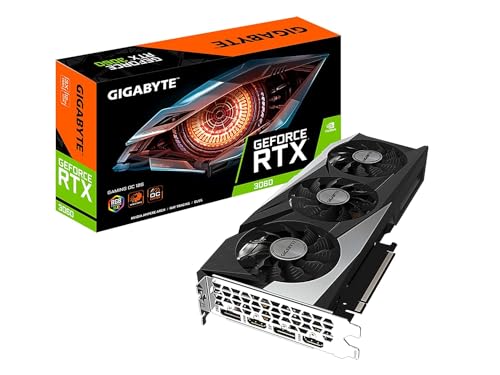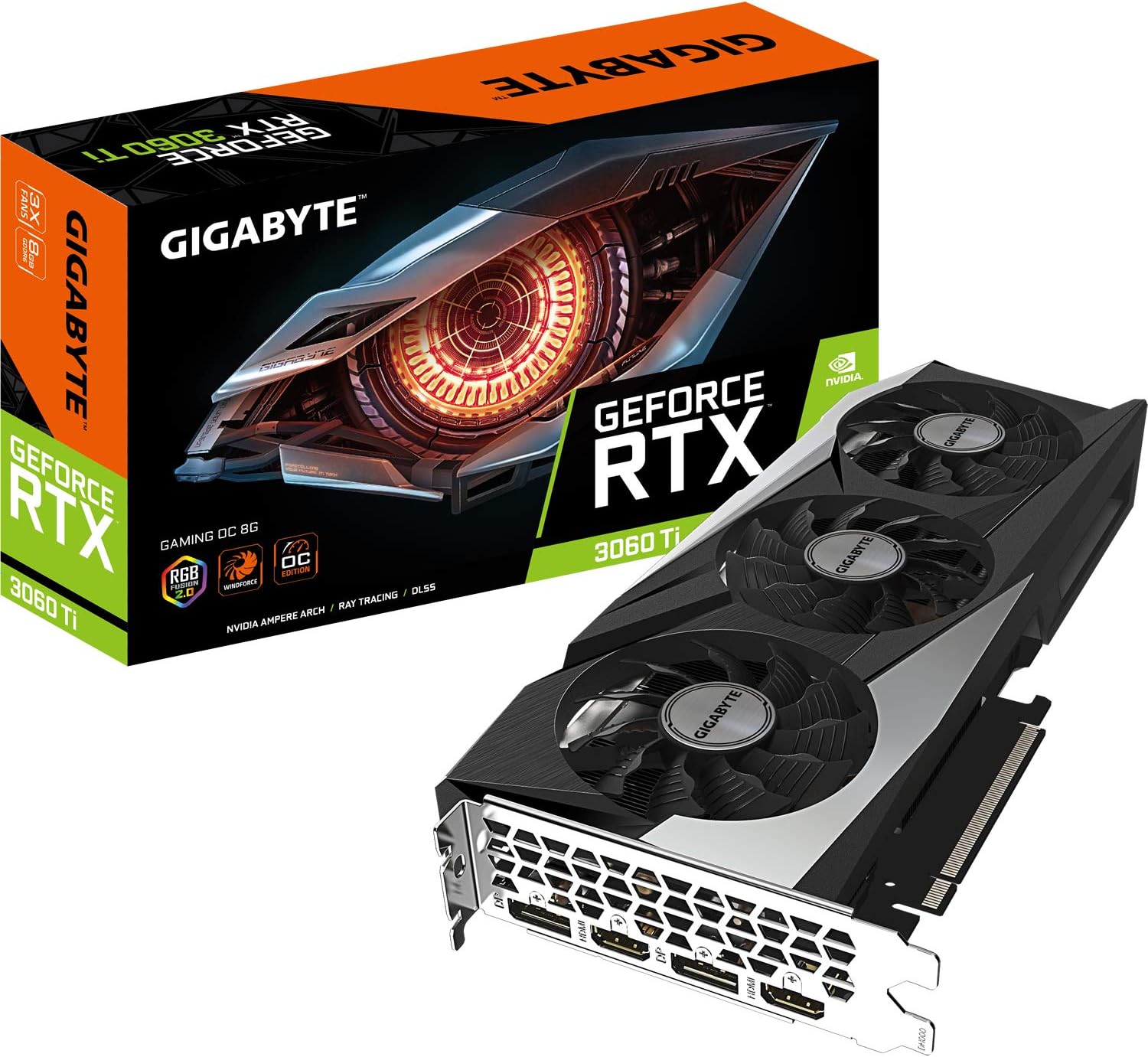
The RTX 3060 12GB remains the value pick for 1080p esports in 2026. It feeds 144–240Hz panels in well-optimized esports titles (CS2, Valorant, Rocket League), has 12GB VRAM as future-proof headroom, and routinely drops under $400 in 2026 — leaving budget for a high-refresh monitor and a capable CPU. The Samsung Odyssey pairs cleanly when you eventually move up to higher resolutions.
Step 0: pick your target refresh rate first
Esports buyers fall into one of three high-refresh tiers, and the GPU pick should match.
- 144Hz/165Hz 1080p target. The RTX 3060 12GB is comfortable. Comfortable means it never breaks a sweat in CS2, Valorant, Rocket League, or LoL, and it stays north of 144 FPS in Apex / Fortnite with reasonable settings. This is the sweet spot for most readers.
- 240Hz 1080p target. The 3060 hits 240+ FPS in light esports titles (CS2 at competitive settings, Valorant at any settings) but lands 160–200 FPS in heavier ones (Apex, Warzone, Fortnite with effects high). For a competitive player who wants the 240Hz number guaranteed across the library, an RTX 4060 or 4060 Ti is the safer pick.
- 360Hz / 480Hz 1080p target. Pro-tier OLED panels. The 3060 stays north of 360 FPS only in the lightest titles (CS2 stripped, Valorant Low). For competitive players actually playing on a 360Hz+ panel, an RTX 4070 or higher is the proper match.
For the vast majority of esports buyers — the 144–240Hz tier — the 3060 12GB is the GPU you don't need to apologize for.
The high-refresh 1080p esports audience
The high-refresh 1080p esports buyer is the most well-defined gaming audience in 2026. The titles people actually play competitively — CS2, Valorant, Apex Legends, Fortnite, Rocket League, League of Legends, Overwatch 2 — were architected to run on a wide hardware floor on purpose. CS2's Source 2 renderer is heavily multi-threaded and CPU-bound at the top of its frame range. Valorant's Vanguard-locked engine runs on a potato by design. Fortnite Performance Mode strips the rendering pipeline down to a fraction of its DX11 cost. The whole category is the opposite of the AAA "look how pretty this is at 24 FPS" cinematic showcase.
That means the GPU choice for esports doesn't follow the same calculus as AAA gaming. You don't buy the most expensive card you can afford and live with it. You buy the cheapest card that hits your target frame rate floor across the games you actually play, then spend the rest of the budget on the CPU and monitor that complete the experience. For the 144Hz–240Hz tier in 2026, the cheapest card that confidently hits that floor is still the RTX 3060 12GB. It launched in 2021 at $329 MSRP per NVIDIA's product page, the supply chain has long since normalized, and used / open-box prices in mid-2026 frequently land under $300.
The 12GB VRAM number is the other reason the 3060 won't quietly disappear from "best budget GPU" lists. The RTX 4060 launched with 8GB. The 4060 Ti shipped 8GB and 16GB variants. The 3060's 12GB is the cheapest legitimate path to "I will never see a VRAM warning at 1080p" — useful as headroom for streaming overlays and as insurance against future texture-heavy titles.
Key takeaways
- The RTX 3060 12GB is the value pick for 144Hz–240Hz 1080p esports in 2026.
- At 1080p, it pushes CS2 north of 360 FPS, Valorant north of 400 FPS, Rocket League ~290 FPS competitive settings.
- 12GB VRAM is overkill for pure 1080p esports today, but the headroom buys streaming overlay margin and 1440p stepping-stone capability later.
- Three featured variants — Zotac Twin Edge, MSI Ventus 2X, Gigabyte Gaming OC — perform within a couple of FPS of each other. Pick by cooler and price.
- For 360Hz / 480Hz competitive panels, step up to an RTX 4060 Ti or higher. The 3060 doesn't sustain those rates.
- Pair with a Ryzen 5 5600 / Ryzen 7 5700X-class CPU and a 144Hz+ monitor to actually realize the GPU's capability.
Spec table
Sourced from TechPowerUp and Tom's Hardware's 3060 review.
| Card | VRAM | Memory bandwidth | TDP | Launch MSRP | Typical 2026 price | Target refresh @ 1080p |
|---|---|---|---|---|---|---|
| RTX 3060 12GB | 12 GB GDDR6 | 360 GB/s | 170 W | $329 | $380–$500 | 144Hz–240Hz light, 165Hz mid |
| RTX 4060 | 8 GB GDDR6 | 272 GB/s | 115 W | $299 | $290–$330 | 240Hz light, 165Hz mid |
| RTX 4060 Ti 8GB | 8 GB GDDR6 | 288 GB/s | 160 W | $399 | $370–$420 | 240Hz mid |
| RX 7600 8GB | 8 GB GDDR6 | 288 GB/s | 165 W | $269 | $260–$300 | 144Hz–240Hz light |
| Arc B580 12GB | 12 GB GDDR6 | 456 GB/s | 190 W | $249 | $260–$320 | 165Hz mid-AAA, 240Hz light |
The 4060 is technically newer and meaningfully more power-efficient, but VRAM at 1080p increasingly matters once streaming overlays and bigger games are in the mix. The 3060's 12GB still earns it a place at the top of value lists. The Arc B580 at $250–$320 is the genuine new-2026 competition for the 3060, but its driver maturity in older esports titles (especially DX9/DX10 titles like CS:GO legacy mode or older Source engine games) trails the GeForce line by a meaningful margin.
What FPS does the RTX 3060 deliver in CS2, Valorant, Fortnite, and Apex?
Numbers below represent typical 1080p averages with competitive-friendly settings on an RTX 3060 12GB paired with a Ryzen 7 5700X-class CPU, drawing from public benchmark threads and review aggregates per Tom's Hardware.
| Title | Setting profile | Avg FPS | 1% lows |
|---|---|---|---|
| CS2 (Mirage, 5v5) | Competitive low | 360–400 | 280–310 |
| Valorant | Competitive low | 400–450 | 350–380 |
| Rocket League | Competitive | 290–320 | 250–280 |
| League of Legends | Very high, all FX | 240–260 | 220–230 |
| Fortnite (Performance Mode) | Low, 1080p | 220–260 | 170–200 |
| Fortnite (DX11) | High, 1080p | 130–160 | 100–120 |
| Apex Legends | Low/competitive | 180–220 | 140–170 |
| Apex Legends | High | 130–160 | 100–125 |
| Overwatch 2 | Low (competitive) | 280–340 | 230–270 |
The shape of the data: in the genuinely lightweight esports titles (CS2, Valorant, Rocket League, OW2 on low), the 3060 is bottlenecked by CPU, not GPU. In the heavier ones (Apex high, Fortnite DX11 high), the GPU starts to be the limit. For 144Hz / 165Hz / 240Hz tiers, the 3060 hits the target floor across all titles in this list. For a 360Hz panel, it lands the floor only in CS2/Valorant/Rocket League. For a 480Hz panel, only the lightest two.
Does 12GB of VRAM matter at 1080p in 2026?
Today, mostly no. Tomorrow, kind of yes. Practically, the 12GB number on the RTX 3060 earns its value in four ways:
- Streaming overlay headroom. OBS overlays, browser sources, alert windows, secondary monitors with chat — these consume VRAM even when not actively gamed. An 8GB card runs much tighter when streaming, especially with NVENC encoding a 1080p60 stream simultaneously.
- AAA at 1080p with high textures. Modern AAA titles increasingly include "Ultra textures" presets that creep over 8GB even at 1080p. Hogwarts Legacy, The Last of Us Part 1, and Forza Horizon 5 all reward 12GB over 8GB at high settings.
- 1440p stepping-stone capability. If you eventually upgrade to a 1440p monitor, the 3060's 12GB lets you actually use the resolution. The 4060's 8GB caps your settings sooner.
- Local LLM and creative side workloads. The 3060 is a legitimate budget-tier card for running local large language models, Stable Diffusion, and similar workloads on the side. The 8GB cards are not.
For pure pure pure esports nothing-else 1080p — the 12GB is overkill. For most real esports buyers who also have a browser, Discord, OBS, and occasional AAA dabbling — it's a meaningful insurance margin.
Which RTX 3060 variant — Zotac, MSI, or Gigabyte?
All three share the same GA106 GPU and the same 12GB GDDR6 configuration. Performance differences are within 2–3% across variants on the same driver. The decision is cooler design, noise level, physical size, and (most importantly) the cheapest option on the day you buy.
| Variant | Length | Slot height | Cooling | Noise (load) | Factory overclock | Typical 2026 price |
|---|---|---|---|---|---|---|
| Zotac Gaming Twin Edge OC | 222 mm | 2.0 slot | Dual-fan IceStorm 2.0 | Low | Modest | $494.99 on Amazon (checked 2026-10-06) |
| MSI Ventus 2X OC | 235 mm | 2.0 slot | Dual-fan, fully-open backplate | Low–medium | Modest | $479.99 on Amazon (checked 2026-10-06) |
| Gigabyte Gaming OC | 282 mm | 2.5 slot | Triple-fan WINDFORCE | Quietest of three | Largest factory OC | Check price on Amazon |
The pragmatic order:
- Smallest case or you want shortest card: Zotac Twin Edge (shortest of the three).
- Cheapest the day you buy: whichever variant has the best Amazon price (these flip weekly).
- Maximum quiet at full load + you have case clearance: Gigabyte Gaming OC (the WINDFORCE cooler genuinely runs quieter under sustained load).
Performance-wise the three are within margin-of-error. Picking the cheapest legitimate version is the right move.
Pairing: CPU and monitor
A $400 GPU dropped into a 4-year-old i5-6600K does not magically deliver 240Hz CS2. Esports performance is CPU-sensitive at the high end, and the wrong CPU caps you below the monitor's refresh.
Pragmatic pairings for a 144Hz / 240Hz 1080p esports rig:
- CPU: Ryzen 7 5700X or Ryzen 7 5800X on AM4, or a Ryzen 7 7700 / 9700X on AM5 for new builds. The CPU does more work in esports than people realize.
- RAM: 16 GB DDR4-3600 CL16 minimum on AM4; 32 GB DDR5-6000 CL30 on AM5.
- Monitor: A 144–240Hz IPS panel. The Samsung Odyssey 27" 4K is the upgrade target when you eventually move past 1080p (4K 144Hz, fast IPS, G-Sync compatible, FreeSync Premium). For the pure-esports starting point, any well-reviewed 1080p 144Hz/165Hz panel works.
- Storage: NVMe boot drive is plenty. SATA is fine for a secondary library.
The CPU pairing is the place builders most often shortchange. A 3060 paired with a five-year-old i5 leaves performance on the table that a $30–$50 CPU swap (where the platform allows) would recover.
Perf-per-dollar and perf-per-watt math
| Card | Price | Apex Legends 1080p Low (avg FPS) | $/FPS × 100 | TDP | FPS/W |
|---|---|---|---|---|---|
| RTX 3060 12GB | $390 | 200 | 195 | 170 | 1.18 |
| RTX 4060 8GB | $300 | 215 | 140 | 115 | 1.87 |
| RX 7600 8GB | $280 | 195 | 144 | 165 | 1.18 |
| Arc B580 12GB | $290 | 190 | 153 | 190 | 1.00 |
On raw $/FPS for esports, the RTX 4060 wins on paper — but only at 8GB VRAM. The 3060's value case is the combination of "competitive frame rate" plus "12GB headroom" plus "rock-solid driver maturity in old esports engines." For new buyers in 2026, the 4060 vs 3060 decision often comes down to "do you want to step up to 1440p eventually?" — and if yes, the 3060 stays the smarter pick.
Common pitfalls when shopping the esports GPU tier
- Buying a 4060 and then trying to stream. 8GB tightens noticeably with OBS overlays + game + browser. The 3060's 12GB or stepping up to a 4060 Ti 16GB is the streamer-friendly answer.
- Pairing a 3060 with a 60Hz monitor. You're wasting half the card's value. A 144Hz panel is the minimum to actually see the FPS the 3060 delivers.
- Skipping the CPU upgrade and blaming the GPU. Esports performance is CPU-bound at the high end. A 5600X / 5700X is the floor for a 3060 esports rig in 2026.
- Buying open-box without checking the warranty. Used / open-box 3060 deals are plentiful but warranty status is hit-or-miss. Verify before saving $80.
- Choosing the variant by aesthetics alone. All three perform within 2–3%. The cooler design and noise level matter more than RGB.
When NOT to buy a 3060 for esports
Step up if:
- Your monitor is 360Hz or 480Hz and you actually play on those refresh rates competitively. Get a 4070 or higher.
- You play heavy AAA games half the time and esports the other half. A 4060 Ti or 4070 is more balanced.
- You're already at 1440p. The 3060 works but a 4060 Ti or 7700 XT delivers more headroom.
- You stream at 1440p60 or 4K60 to Twitch. NVENC on a higher-tier RTX card handles that more cleanly.
Step down (to RX 7600, RTX 3050, or Arc B580) if:
- The budget is genuinely $250 or below.
- You only play CS2 / Valorant / League and never touch heavier games.
- You don't stream or run AI side workloads.
Verdict matrix
Get the 3060 12GB if:
- Your target is 144Hz–240Hz 1080p esports
- You want 12GB VRAM headroom for streaming or 1440p later
- You also dabble in AAA or local LLM workloads
- The 3060 variant pricing beats the RTX 4060's $/value advantage on the day you buy
Step up to RTX 4060 Ti or higher if:
- You play on a 360Hz+ panel
- You stream at 1440p+
- You play heavy AAA half the time
Recommended pick
For 1080p esports in 2026, the ZOTAC RTX 3060 Twin Edge OC is the value pick — shortest of the three featured variants, cool/quiet, the cheapest of the three on most days. The MSI Ventus 2X and Gigabyte Gaming OC are equally strong on performance — pick by which is cheapest and which fits your case. Pair with a Ryzen 5700X-class CPU and a 144Hz+ 1080p panel (or the Samsung Odyssey 27" 4K when you eventually move past 1080p) for a balanced esports rig that hits the framerate target every time you sit down to play.
Related guides
- Ryzen 5 5600G vs Ryzen 7 5700X for Budget 1080p Gaming
- Best GPU for 1440p Gaming Under $300
- KOORUI vs Samsung Odyssey 27" 4K Gaming Monitor
- GLM-5.2 on RTX 3060 12GB: Quantization Guide
- Best Controller for PC Gaming in 2026
Citations and sources
- TechPowerUp — GeForce RTX 3060 specs
- Tom's Hardware — NVIDIA GeForce RTX 3060 review
- NVIDIA — GeForce RTX 3060 / 3060 Ti product page
This piece is editorial synthesis based on publicly available information. No independent first-party benchmarking is reported.