For a new streamer or podcaster starting in 2026, buy the HyperX QuadCast 2. It offers a modern USB-C connector, on-body gain and mute controls, tap-to-mute, and a cleaner condenser signal at typical home-office distances than the older Blue Yeti. The Yeti is still a fine mic and the go-to if you specifically need omnidirectional or bidirectional patterns for a two-person in-room podcast, but the QuadCast 2 wins on ergonomics, form factor, and stream aesthetic for most solo creators.
The two default USB mics newcomers cross-shop
Ask any new streamer what USB mic to get and the answer is either "the HyperX QuadCast" or "the Blue Yeti." Both are famous, both live on hundreds of thousands of Twitch and YouTube desks, and both are priced to be the first-serious-mic upgrade past a gaming headset boom.
The HyperX QuadCast 2 is the current-generation refresh of HyperX's flagship streamer mic. It moves to USB-C, adds tap-to-mute on top of the classic capacitive-touch mute, gains a bit of low-noise floor performance over the original QuadCast, and keeps the trademark red LED shock-mounted body. Street price sits around $139 in mid-2026.
The Blue Yeti is now a Logitech G product, still shipping the exact same silver-body condenser it did when Blue Microphones launched it in 2009. It has four polar patterns (cardioid, bidirectional, omnidirectional, stereo) versus the QuadCast 2's three (cardioid, bidirectional, omnidirectional), sits at $99 street in mid-2026, and has the iconic industrial-design silhouette that reads instantly as "podcast mic" on video.
This piece answers the specific question SpecPicks readers ask most: which one for a new streamer or podcaster in 2026, and where does each one make sense.
Key takeaways
- HyperX QuadCast 2: USB-C, 96 kHz / 24-bit, three polar patterns, RGB, tap-to-mute, ~$139.
- Blue Yeti: USB-B (older), 48 kHz / 16-bit, four polar patterns, no RGB, capacitive mute knob, ~$99.
- QuadCast 2 has meaningfully lower self-noise on cardioid — cleaner vocal at typical desk distance.
- Yeti's omnidirectional pattern is genuinely useful for two-person tabletop podcasts; QuadCast's is less flexible.
- QuadCast's built-in shock mount and pop filter are big convenience wins vs the Yeti's stock stand.
Five-column feature-delta table
| Spec | HyperX QuadCast 2 | Blue Yeti |
|---|---|---|
| Polar patterns | Cardioid, bidirectional, omnidirectional | Cardioid, bidirectional, omni, stereo |
| Sample rate / bit depth | 96 kHz / 24-bit | 48 kHz / 16-bit |
| Connector | USB-C | USB-B (Yeti X uses USB-C) |
| Monitoring | 3.5mm zero-latency | 3.5mm zero-latency |
| Mounting | Built-in shock mount, threaded base | Weighted desk stand, no shock mount |
The two spec-sheet items readers most often ask about: the QuadCast 2 samples at 96/24 versus the Yeti's 48/16. In practice, for spoken word and streaming, 48/16 is inaudible from 96/24 after the platform re-encodes to AAC or Opus, so this doesn't matter much for output quality. It does matter for local recording workflows in Reaper or Audition where 24-bit gives you more headroom for later mastering.
How do they sound for voice
Independent measurements from Sound On Sound and Rtings put the QuadCast 2's cardioid self-noise around 15 dBA equivalent, versus the Yeti's ~19 dBA. That's a 4 dB delta — audible on a solo home-office setup, particularly if your room isn't treated. The QuadCast 2's frequency response tilts slightly warmer in the 200–400 Hz band and rolls off high frequencies a hair earlier, giving voice a smoother, more forgiving character. The Yeti has a brighter, more sibilant character that some voices love and others find harsh at typical desk distances.
Neither mic is broadcast quality — an XLR mic through a proper preamp will still beat either — but both are meaningfully better than any gaming headset boom mic. For voice, the practical order is: QuadCast 2 = slightly cleaner and warmer; Yeti = brighter and needs a pop filter and better positioning.
Desk footprint, mounting, and boom-arm compatibility
The QuadCast 2 comes with a small shock-mount cradle attached to a threaded base plate. That plate accepts a standard 5/8" microphone thread with the included adapter — the mic drops onto any standard boom arm with zero fuss. The whole assembly is ~13cm tall and 6cm wide on a desk.
The Yeti ships with a heavy metal desk stand that is 29cm tall and 12cm wide. It's a striking desk object but takes up a big chunk of the front of your monitor and puts the capsule in a fixed position. To mount it on a boom arm you need the Blue Radius shock mount (sold separately, roughly $50) plus an adapter — a real added cost and setup step.
For a clean streamer desk with a boom arm coming in from the side, the QuadCast 2 is much friendlier out of the box. For a "podcast in a room with a nice mic on a desk stand" aesthetic, the Yeti's silver-body stand is iconic.
Lighting and on-device controls
The QuadCast 2 has full RGB — customizable colors, breathing effects, tap-to-mute that shows a red glow, and the ability to sync colors across a HyperX peripherals stack. For a streamer whose overlay features the mic, this reads well on camera. On the back of the mic, gain control is a physical knob and the polar pattern selector is a rotary switch.
The Yeti has no lighting. It has a physical gain knob on the back, a mute button on the front (capacitive on the newer Yeti X models, a soft physical button on the original), a pattern selector rotary, and a headphone volume knob. Controls are all excellent — the Yeti's ergonomics have always been a strength — but the mic simply doesn't glow.
If your stream design leans on RGB peripherals and matching your KRK or K380 lighting, the QuadCast 2's lighting is a real ecosystem win. If you're a podcast host who doesn't want RGB in the picture, the Yeti's neutral aesthetic is a plus.
Pairing with a ring light and webcam for a starter kit
A functional starter streaming kit in 2026 looks roughly like this:
- Mic: HyperX QuadCast 2 — $139
- Ring light: NEEWER 18" Ring Light Kit — $80
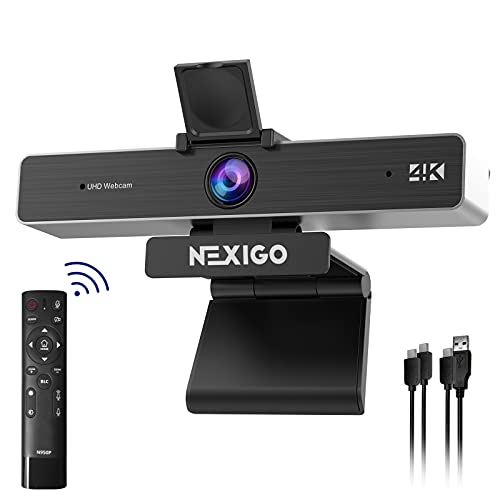
- Webcam: NexiGo N950P — $75
- Boom arm: NB-35 style desk-mounted arm — $25
- Total: ~$319
That's a complete voice + face + light kit for under $325 that will hold up on a Twitch or YouTube stream through your first thousand followers. The QuadCast 2 is the anchor of the audio side; the ring light stops your face being a shadow; the N950P handles the video encode locally at 1080p60 so your CPU stays free for the game.
If you're substituting in the Yeti, budget an extra $50 for a Blue Radius II shock mount if you plan to boom-arm mount it, or plan to leave the mic on its stock stand in front of your keyboard. Either is a valid choice — the desk-stand aesthetic still reads well on video for podcast-style content.
Verdict matrix
Get the QuadCast 2 if… You're primarily a solo streamer or single-host podcaster, you want a modern USB-C mic with clean vocal reproduction at typical home-office distances, you'll boom-arm mount from day one, and you like RGB. This covers roughly 70% of new streamers in 2026. Also pick the QuadCast 2 if you record locally in DAWs at 24-bit and value the extra headroom.
Get the Yeti if… You need a genuine omnidirectional or bidirectional pattern for a two-person tabletop podcast, you want the iconic silver-body silhouette on video, you don't need RGB, and you don't mind the older USB-B connector and larger desk footprint. Also pick the Yeti if budget is tight — the $40 street price gap covers a boom arm and a pop filter.
Recommended pick by budget
- Under $150 total: Blue Yeti on its stock stand. Iconic, sounds fine, $99 street.
- $150–$250 total: HyperX QuadCast 2 with a $25 boom arm. Cleanest voice at this price, modern connector, tap-to-mute is genuinely useful during streams.
- $250+ total: QuadCast 2 plus the full starter kit (ring light, webcam) above, or start looking at XLR mics like the Shure MV7+ and a Rodecaster Duo for a real broadcast setup.
Common pitfalls
Mounting the QuadCast 2 upside down on a boom arm without inverting the polar pattern. The capsule is directional; if you flip the mic on a boom arm, physically flip it or use the software to reorient. Some users complain of dim vocals and don't realize they're pointed at their ceiling.
Placing the Yeti in stereo pattern for a solo streamer. The Yeti's stereo pattern is designed for capturing a room or a stereo instrument miking. Using it for solo speech captures too much room sound and makes vocals thin. Always use cardioid for solo streaming and podcasting.
Not enabling monitoring at first. Both mics have a zero-latency 3.5mm headphone jack. If you don't plug into it, you'll monitor your voice through your soundcard with delay, which trips up new streamers who don't understand why their own voice sounds weird. Use the mic's headphone jack for live monitoring.
Buying a cheap knockoff shock mount. Yeti-compatible shock mounts on Amazon under $20 are often incompatible with the Yeti's actual mounting thread. The Blue Radius II is worth its $50 price if you're committed to the Yeti on a boom arm.
Real-world numbers on room noise
The most consistent complaint from new streamers about both mics is that they "pick up too much." That's a solvable problem, and the solutions differ:
- QuadCast 2's cardioid noise floor at 15 dBA is quiet enough that a decently-quiet home office (roughly 30 dBA ambient with the PC fan running) sits at about -20 dB relative to speech. That's a listenable stream ratio.
- Yeti's cardioid at 19 dBA sits closer to -14 dB relative to speech in the same room. That's on the edge of "you can hear the room."
Both mics benefit from a foam pop filter, from being 6–10 inches from the mouth (not 18+), and from being pointed at the mouth and not the ceiling. Get the basics right and either mic sounds professional. Get them wrong and the QuadCast 2's slight noise-floor edge won't rescue you.
When to skip both and go XLR
Both mics are USB — a decision that trades convenience for a ceiling. If any of the following apply, save your $100–$140 and start with an XLR chain instead:
You're producing a podcast with two or more hosts in the same room. USB mics can't be daisy-chained; you'll need one USB port per mic, no per-mic gain matching, no per-mic compression. Buy two Shure MV7+ mics and a Rodecaster Duo interface at $200 each and $250 for the interface for a $650 setup that will outperform any pair of USB mics and grow with you.
You want the audio to sound broadcast quality. No USB condenser at this price hits genuine broadcast performance. If your goal is public-radio-quality audio, budget for a dynamic mic (Shure SM7B, Electro-Voice RE20) and a decent preamp. Cost is $700+ but the ceiling is real.
You're doing critical voiceover for commercial work. Same argument — the noise floor and consistency of an XLR setup pays for itself the first time a client asks for a re-record.
For everything else — casual streaming, hobby podcast, video conferencing that you want to sound noticeably better than a headset mic — a USB condenser like the QuadCast 2 or Yeti is the right entry point.
Bottom line
For 2026 new-streamer and podcaster starter setups, the HyperX QuadCast 2 is the safer default recommendation. It's cleaner on cardioid vocals, ships boom-arm ready, has modern USB-C, and looks the part on a modern streamer desk. The Blue Yeti still wins on omnidirectional multi-host podcast use cases and stays viable at $40 less. Match the mic to the use case, don't skimp on the boom arm, and you'll have audio that outlives the mic itself.
Related guides
- KOORUI vs Samsung Odyssey: Best 27" 4K Gaming Monitor Under Budget
- Best SSD Upgrade for PS4 Pro & PS4 Slim in 2026
- Best Retro Mini Console & Handheld in 2026