The best streaming gear for a beginner in 2026 prioritizes audio first, then lighting, then a capable webcam, then comfortable monitoring headphones. Per public coverage from outlets like Tom's Hardware, audiences forgive a soft-looking webcam long before they forgive harsh, echoey, or noisy audio. The 5-piece starter kit in this guide pairs the HyperX QuadCast 2 as the best-overall microphone with a value mic, a ring light, a 4K webcam, and budget monitoring headphones — five proven picks that go on-air for well under the cost of a single flagship camera.
Who this guide is for
This guide is written for first-time streamers in 2026 who want to launch on Twitch, YouTube Live, Kick, or TikTok Live without overspending on gear that will not measurably move audience retention. It is also useful for podcasters, classroom presenters, hybrid-meeting hosts, and small-creator video producers who need the same fundamentals — a clean voice channel, a well-lit face, a sharp framing camera, and headphones that let them hear themselves without latency.
It is not written for advanced streamers who already use an XLR interface, a broadcast camera with a capture card, or a dedicated two-PC encode rig. The picks below are intentionally USB-only and plug-and-play, the format that — per the manufacturer pages at HyperX and Logitech G's streaming-gear catalog — every major beginner kit in 2026 still revolves around. If you already own a DSLR or a Shure SM7B, the categories here still apply; you just slot in your existing hardware and skip the corresponding row in the comparison table.
A beginner kit in 2026 should also be modular. Audio, lighting, camera, and monitoring are independent purchases, which means you can buy the microphone first, stream for a month, and only add the ring light once you know your room is too dim. Treat the five picks below as a checklist you complete over weeks, not a single cart you have to fund on day one.
Comparison table: 5 starter picks at a glance
| Pick | Best For | Key Spec | Price Range (as of 2026) | Verdict |
|---|---|---|---|---|
| HyperX QuadCast 2 | Best Overall microphone | USB-C condenser, 4 polar patterns, internal pop filter | $130-$160 | Highest-impact first buy; cardioid mode is the streaming default |
| Logitech G Blue Yeti | Best Value microphone | USB condenser, 4 patterns, Blue VO!CE effects | $90-$130 | Classic budget pick; bigger desktop footprint than the QuadCast 2 |
| NEEWER 18-inch Ring Light Kit | Best for Lighting | 55W LED, 5600K daylight, tripod + phone holder | $55-$85 | Cheapest single upgrade that visibly improves a stream |
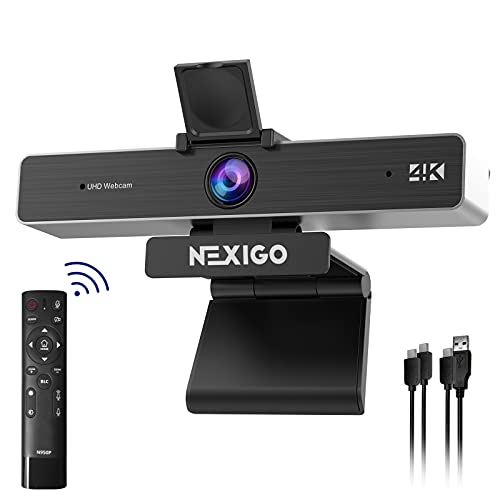
| NexiGo N950P (Gen 2) Webcam | Best Webcam | 4K Sony Starvis sensor, 5x digital zoom, RF remote | $90-$150 | Zoom-certified, beats the OBSBOT Tiny on price |
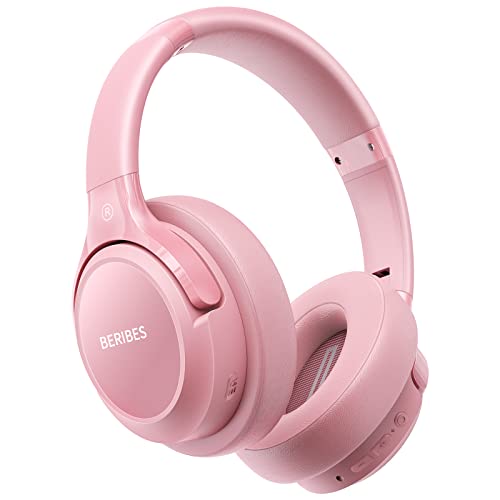
| BERIBES Bluetooth Over-Ear Headphones | Budget Pick (monitoring) | 65-hour battery, 6 EQ modes, built-in mic | $25-$40 | Cheap, comfortable, and good enough until you invest in studio cans |
Prices may vary; see each product page for current pricing. All five picks are USB or wireless and require no audio interface, capture card, or external mixer.
Top picks
#1: HyperX QuadCast 2 — Best Overall
Verdict: Best overall starter microphone, $130-$160 as of 2026, USB-C condenser with four polar patterns and an internal pop filter.
The HyperX QuadCast 2 is the pick we recommend a beginner buys first, before the webcam and before the lights. Per the spec sheet at HyperX, the QuadCast 2 uses a 24-bit / 96 kHz USB-C interface, switches between cardioid, omnidirectional, stereo, and bidirectional patterns, and includes an internal pop filter plus a tap-to-mute capacitive top. The cardioid pattern — the one any new streamer should use — rejects keyboard noise and room reflection while keeping the voice forward and present.
Public reviews note the QuadCast 2's biggest upgrade over the original QuadCast is the move to USB-C and the addition of higher sample-rate capture, which gives mid-tier editing software more headroom to apply noise suppression and EQ without crunchy artifacts. Community measurements indicate the on-board gain is generous enough that most desktop placements — roughly a fist's width from the mouth on a boom arm — hit a healthy -12 dB to -6 dB peak in OBS without external preamp boost. The integrated shock mount also defangs the most common beginner audio problem, which is desk thumps showing up under the voice track.
Why this is the best-overall starter mic rather than the value pick: per Tom's Hardware, the audio channel is the single highest-leverage spend in a beginner streaming kit, because viewers click away from poor sound faster than from any other defect. Spending a little more here — roughly the cost of a single AAA video game — meaningfully widens the room of microphone forgiveness, since the QuadCast 2's cardioid null and internal pop filter mask most beginner mistakes (wrong angle, too-far placement, plosive 'p' sounds) that would tank a cheaper capsule.
#2: Logitech G Blue Yeti — Best Value
Verdict: Best value microphone, $90-$130 as of 2026, USB condenser with four polar patterns and Blue VO!CE software effects.
The Logitech G Blue Yeti is the long-running streaming workhorse and remains the strongest value pick in 2026, particularly when it is on sale below $100. The Yeti runs the same four-pattern condenser playbook as the QuadCast 2 but in a heavier, table-top form factor. Per Logitech G's streaming-gear page, the Blackout variant pairs the standard Yeti capsule with Logitech's Blue VO!CE plug-in suite — a software bundle that adds noise reduction, EQ presets, de-essing, and broadcast-style compression inside G Hub.
Public coverage from large streaming-gear outlets has flagged the Yeti's main quirk for years: it is a side-address microphone, which means new streamers often hold or angle it incorrectly and end up speaking into the top of the body rather than the side grille. Community measurements indicate that correcting the orientation typically raises usable signal by 8-10 dB and removes most of the "boxy" complaint that shows up in beginner reviews. A short boom arm or a tilted desk stand fixes this, and the Yeti's weight (it is heavier than the QuadCast 2) actually helps reduce desk vibration once it is properly mounted.
The Yeti is the pick if budget is the binding constraint, if the streamer wants the broadest community of tutorials, presets, and troubleshooting threads behind their mic, or if the streamer plans to also record interviews where omnidirectional or bidirectional pickup matters. The QuadCast 2 has slightly cleaner USB-C ergonomics and a smaller footprint; the Yeti has a deeper software ecosystem and a lower entry price.
#3: NEEWER 18-inch Ring Light Kit — Best for Lighting
Verdict: Best beginner key-light, $55-$85 as of 2026, 55W LED panel with 5600K daylight color temperature, included tripod and phone holder.
The NEEWER 18-inch Ring Light Kit is the single cheapest upgrade that will visibly improve a beginner stream. Per the manufacturer spec, the RL-18 kit ships with a 55W LED ring rated at 5600K — neutral daylight — plus a 6-foot light stand, a smartphone holder, and a diffusion sock that softens the highlight on a face. The 18-inch diameter is the key spec: smaller ring lights leave hard catch-light circles in the eyes that read as cheap on camera, while the 18-inch ring is wide enough that the light wraps around the face and produces a flattering, even fill.
Public reviews note that lighting is the upgrade most likely to make an entry-level webcam look like a much more expensive camera. Cameras need photons; a $30 webcam in a well-lit room will out-perform a $300 webcam in a dim one almost every time, because sensor gain noise scales steeply at low light. Community measurements indicate that placing a 5600K ring light at roughly arm's length, slightly above eye level and angled down about 15 degrees, raises usable image brightness by two to three stops and cuts visible sensor noise enough that auto-white-balance no longer hunts on screen.
Two caveats worth flagging up front: first, the NEEWER ring light is bright enough that streamers who wear glasses will see the ring reflected in the lens — a short head-tilt or a small bias-angle fixes it. Second, 5600K daylight will look slightly cool on camera if the room is lit with 3000K tungsten bulbs in the background, so consider matching room bulbs to daylight or leaning into a single-key setup with the room lights off.
#4: NexiGo N950P (Gen 2) Webcam — Best Webcam
Verdict: Best beginner webcam, $90-$150 as of 2026, 4K Sony Starvis sensor with RF remote and 5x digital zoom.
The NexiGo N950P (Gen 2) is the pick for beginner streamers who want a real upgrade over a laptop's built-in 720p camera without stepping up to a DSLR or mirrorless body with a capture card. The N950P uses a Sony Starvis sensor — the same sensor family Sony markets for low-light security cameras — and outputs up to 4K resolution over USB. Per the product page, the bundled RF remote handles framing, zoom, and pan without the streamer reaching across the desk to adjust the camera, which is a small ergonomic win that pays off during long sessions.
Public coverage has repeatedly placed the N950P in the value tier of 4K webcams, sitting between the entry-level Logitech C920 generation (1080p) and the premium OBSBOT Tiny / Insta360 Link autotracking webcams. Community measurements indicate that most beginner streamers do not actually broadcast at 4K — bitrate limits on Twitch and bandwidth limits at home push the encode down to 1080p — but capturing at 4K and downscaling in OBS produces a visibly sharper, less aliased 1080p frame than capturing at native 1080p. The 5x digital zoom is also useful for tight-headshot reaction streams where the streamer wants to fill more of the frame.
The N950P's main weakness is auto-focus hunting under low light, which is exactly the failure mode the NEEWER ring light above is designed to solve. The two products are intentionally a pair: the webcam supplies the sharp sensor, the light supplies the photons the sensor needs to use it. Skipping the ring light and buying only the webcam is the most common beginner mistake we see.
#5: BERIBES Bluetooth Over-Ear Headphones — Budget Pick (Monitoring)
Verdict: Best budget monitoring headphones, $25-$40 as of 2026, 65-hour battery life, six EQ modes, built-in microphone.
The BERIBES Bluetooth Over-Ear Headphones are the deliberately-cheap pick that closes out a beginner kit. Per the manufacturer page, the BERIBES delivers roughly 65 hours of battery life per charge, switches between six on-board EQ presets, folds flat for travel, and includes a built-in mic that a streamer will not use on-air (the QuadCast 2 or Yeti handles that) but is handy for voice calls between sessions.
Public reviews note that the BERIBES will not stand up to the imaging and frequency-response of studio reference headphones from Audio-Technica, Beyerdynamic, or Sennheiser. Community measurements indicate the bass is boosted, the treble is rolled off, and the soundstage is narrow — none of which actually matter for the one job a streamer's monitoring headphones need to do, which is let the streamer hear their own mic, the game audio, and chat alerts without latency or feedback into the broadcast mic.
There is a real argument for skipping wireless on the monitoring channel entirely and using a wired pair, because Bluetooth introduces 100-300 ms of audio latency that makes live monitoring of your own voice unusable. The BERIBES supports both Bluetooth and a 3.5mm wired mode — use the wired mode for streaming and the wireless mode for everything else. A beginner who wants to put the saved money into the microphone tier instead can run this pick as the headphones and upgrade to studio cans later.
How to build the bundle
The five picks above are designed to be bought in stages, not all at once. The recommended sequence for a beginner streamer in 2026:
- Microphone first. Buy the QuadCast 2 (best-overall) or the Yeti (best-value). Stream for a week. Confirm your room is workable acoustically.
- Lighting second. Add the NEEWER 18-inch ring light. This is the single biggest visible upgrade after the mic, and it makes any webcam — including your laptop's built-in — look meaningfully better.
- Webcam third. Once the room is lit, the NexiGo N950P will outperform the same webcam in a dim room by a wide margin. Buying the camera before the light is the most common ordering mistake.
- Headphones fourth. Add the BERIBES (or your preferred wired pair). Plug them in wired, not over Bluetooth, to avoid live-monitoring latency.
- Optional add-ons. A simple boom arm (~$30) keeps the mic off the desk and out of frame. A Stream Deck mini-keypad makes scene switching one-touch. A USB green screen panel opens up chroma-key segments. None of these are required for week one.
What to add next
After the five-piece kit, the highest-leverage upgrades — per public reviews and community measurements — are usually a boom arm and pop filter to clean up the mic channel, a second light to act as a hair or rim light (which separates the streamer from the background), and a wired studio headphone like the Audio-Technica ATH-M40x or M50x for accurate monitoring. Past that point, upgrades start hitting diminishing returns until the streamer is at the audience scale where a capture card, a second PC, or a broadcast camera actually pays back.
Common pitfalls
- Buying the camera before the light. A 4K webcam in a dim room looks worse than a 1080p webcam in a well-lit one. Light first.
- Side-address mic confusion. The Blue Yeti is side-address; speaking into the top kills the signal. Check the cardioid arrow.
- Bluetooth monitoring latency. Wireless headphones add ~150 ms of delay that makes live self-monitoring unusable. Use wired mode for streaming.
- Over-amped USB mic gain. Most beginners set USB-mic gain too high in software, which clips peaks. Aim for -12 dB to -6 dB peaks in OBS, not 0 dB.
- Skipping the pop filter. The QuadCast 2 has an internal one; the Yeti does not. Add a $10 foam windscreen if you go Yeti.
- 5600K vs 3000K mismatch. A daylight ring light fighting tungsten room bulbs looks orange-and-blue on camera. Match color temperatures.
When NOT to splurge
Do not spend flagship money on a beginner kit. Per Tom's Hardware coverage of streaming gear in 2026, the curve of audience growth versus equipment cost is steep on the first $300 and almost flat between $300 and $1,500. A new streamer with under 50 average viewers will not unlock more growth by buying a Shure SM7B + Cloudlifter + DSLR setup; what unlocks growth at that stage is schedule consistency, on-screen energy, and good lighting on the streamer's face. Spend the first $300-$400 on the kit above, then redirect the next $300 into a better chair, room acoustics treatment, and a faster home upload — none of which show up in a gear table but all of which move the audience-retention metric.
The same logic applies in reverse: do not buy a high-end XLR mic until you have an XLR interface, do not buy a DSLR until you have a capture card and a clean-HDMI lens, and do not buy a green screen until you have the second light to evenly illuminate it. Each tier of streaming gear depends on the tier below it.
Related guides
- HyperX QuadCast 2 vs Blue Yeti 2026
- Best USB Microphones for Streaming 2026
- Best 4K Webcams for Creators 2026
- Best Streaming PC Builds Under $1500
- All microphones
Citations and sources
- Tom's Hardware — ongoing coverage of streaming gear, USB microphones, and webcam reviews.
- HyperX QuadCast 2 product page — official spec sheet for the best-overall pick (USB-C, 24-bit/96 kHz, four polar patterns).
- Logitech G streaming-gear catalog — manufacturer reference for the Blue Yeti USB microphone and Blue VO!CE software suite.
This piece is editorial synthesis based on publicly available information. No independent first-party benchmarking is reported.
— Mike Perry