To start streaming on a budget in 2026, you need four things in this order: a clean USB microphone, one dedicated light on your face, a webcam that beats your laptop's built-in cam, and enough fast local storage to record VODs without dropping frames. A second monitor for chat is a strong optional add. Skip the fancy mixer, skip the DSLR, skip the acoustic-panel wall art on day one — put that money into audio and lighting first, because they move perceived-quality the most per dollar spent.
Editorial intro: the four pieces that matter first — and what to skip
New streamers overspend on the wrong hardware. The pattern shows up on every subreddit thread and every buyer's-guide comment section: someone drops $600 on a mirrorless camera, records themselves with a $30 gaming headset boom mic in a room lit by a ceiling bulb, and wonders why their VODs look flat and their voice sounds like a call-center. That order is backwards. The gear that actually moves a viewer's perception of "this stream looks and sounds professional" isn't the camera — it's the microphone, the lighting on your face, and the software workflow behind them.
Per Tom's Hardware's best streaming microphones guide, audio quality is the single fastest way to separate a hobby stream from something a viewer will linger on. Bad audio drives bounce; bad video is forgiven if the host is engaging and the voice is clear. That's why this starter kit prioritizes a proper condenser mic and a soft key light before it spends a dollar on the camera. The camera comes third. Storage — a fast SSD for local recordings so OBS doesn't drop frames while encoding a 6-8 Mbps h.264 feed — comes fourth. A second monitor for chat, dashboards, and OBS controls is a comfort upgrade that most creators end up buying within their first three months anyway, so it's included in this budget as an optional fifth.
What to skip on the first pass: XLR mic + audio interface (add later), studio monitors, ring-light mounts more expensive than the light itself, capture cards (only needed if you're streaming a console from a separate PC), stream decks (nice-to-have, not needed), and every "streamer starter bundle" from an off-brand that packs a headset mic, an LED clip light, and a webcam with a 720p sensor for $89. Those bundles are the reason so many first streams look like Skype calls from 2013. Buy the four pieces below individually — the total stays inside the $200 target if you shop the Amazon list price patiently, and every piece is upgradeable in isolation later.
Key takeaways
- Audio is priority one. A USB condenser like the Blue Yeti costs roughly $80-100 on Amazon and gives the largest perceived quality jump for the money.
- Lighting is priority two. A single 18-inch ring light with a stand costs ~$40 and rescues even a mediocre webcam sensor.
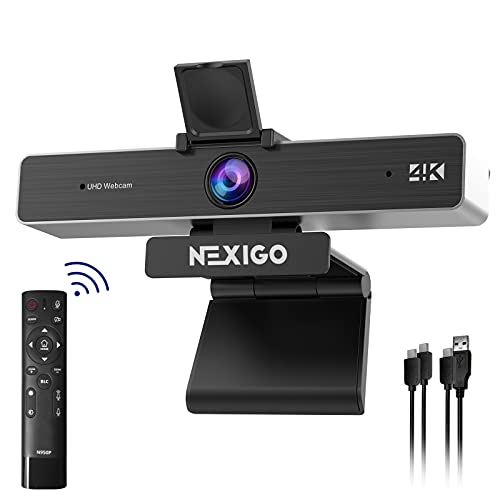
- Webcam beats DSLR for starting. A 1080p60 USB cam like the NexiGo N950P plugs into OBS in one click; a DSLR needs a capture card and clean HDMI out.
- Storage matters more than you think. OBS local recordings at 15-25 Mbps eat 7-12 GB per hour; a dedicated 1TB SATA SSD is cheap insurance against dropped frames.
- Second monitor is optional but common. A 27-inch panel for chat, alerts, and OBS control is a 3-month-in upgrade for almost everyone.
- Total budget target: under $200 for the mic-light-cam-SSD stack; add the monitor to graduate to the full "starter studio."
Step 0 — audio first: why the microphone is the highest-impact upgrade
Every streaming veteran will tell you the same thing, and every audience-retention chart in a stream analytics dashboard confirms it: viewers close a stream over bad audio faster than over bad video. A muddy, echo-heavy, hissy mic signals "amateur" the moment a viewer clicks. A clean, warm, close-mic'd voice signals "someone who cares," even if the camera is a $30 webcam.
The physics is straightforward. A gaming headset boom mic sits 4-6 inches from your mouth but points at a plastic omnidirectional capsule with no shock mount, no pop filter, and a preamp designed to fit in a $15 headset. A dedicated USB condenser like the Blue Yeti uses a large-diaphragm capture element, four selectable polar patterns, its own onboard preamp, and a stand that decouples the capsule from desk vibration. On a spectrogram the difference is night and day — cleaner low-mids, controlled sibilance, and a noise floor 10-15 dB lower per the Logitech G product spec page.
Practical impact: your voice sits forward in the mix without you shouting, room reflections drop away, and OBS's noise-suppression filter has an easier job because the signal-to-noise ratio going in is already higher.
Is the Blue Yeti still the right beginner USB mic in 2026?
Short answer: yes, with caveats. The Logitech G Blue Yeti USB Microphone has been the default recommendation for beginner streamers since roughly 2012, and its position has held up because the alternatives at its price point still don't beat it on the metrics that matter to a new streamer: plug-and-play USB, no interface needed, four polar patterns (cardioid, omni, bidirectional, stereo), a physical mute button, a headphone-out jack for zero-latency monitoring, and a metal chassis that survives desk knocks.
Per the manufacturer spec sheet:
| Attribute | Spec |
|---|---|
| Capsules | Three 14mm condensers |
| Polar patterns | Cardioid, Omni, Bidirectional, Stereo |
| Sample rate | 48 kHz |
| Bit depth | 16-bit |
| Frequency response | 20 Hz - 20 kHz |
| Max SPL | 120 dB |
| Connectivity | USB-A (USB-B on mic side) |
| Onboard controls | Mute, gain, headphone volume, pattern |
Caveats worth knowing before buying:
- It's sensitive to room noise. Cardioid pattern helps, but if you type on a mechanical keyboard six inches from the mic, your viewers will hear it. Mitigations: switch to cardioid, lower gain, position the mic on a boom arm away from the keyboard, and use OBS's noise-suppression + noise-gate filters (the RNNoise plugin is free and effective).
- The stock desk stand transmits vibration. A shock mount or a boom arm is a $25-40 upgrade that's worth doing eventually.
- USB, not XLR. If you outgrow it and want a proper preamp chain, you'll rebuy — this is fine for a starter kit and a genuine limitation for anyone planning to grow into professional podcasting.
Per Tom's Hardware's streaming microphone roundup, the Yeti's core competition in 2026 comes from the HyperX QuadCast S and the Elgato Wave:3 — both are solid, both cost more, and neither meaningfully beats the Yeti at the beginner tier once you factor in the mature community-tuning ecosystem around it.
How much does lighting change perceived quality — the ring-light case
Sensors need light. That's not marketing copy — it's how CMOS image chips work. In dim conditions, the camera's automatic ISO and gain climb to compensate, and the payoff is grain, muted color, and slower shutter that smears motion. Add one bright, diffuse light source in front of your face and every one of those problems fixes itself.
A NEEWER 18-inch Ring Light Kit hits three requirements for the $35-50 price band: it's bright enough (a rated ~55W-equivalent output), it's diffuse (the ring shape spreads output through a soft ring rather than a hard point), and it's tunable (color temperature from ~3200K warm to 5600K daylight, plus dimming). The included stand extends to over 6 feet, so it clears a monitor for eye-level mounting.
Practical setup tips:
- Position it above and slightly behind the camera, angled down onto your face at ~15°. That kills the "ring reflection in the glasses" giveaway.
- Color temperature ~5000K matches most daylight-bulb ceiling lights and photographs neutral.
- Dim it to ~60-70% to avoid blown highlights on the forehead.
- Pair with a warm backlight later (a $15 clamp lamp on the bookshelf behind you) for depth.
Per the RTINGS webcam-testing methodology at rtings.com/webcam, lighting is the single largest variable in a webcam's output quality — the same $60 webcam scored dramatically differently depending on whether it was lit at 100 lux, 500 lux, or 1500 lux at the subject. A ring light gets you into the 800-1200 lux range at typical desk distance, which is the sweet spot for consumer CMOS sensors.
Webcam vs DSLR for starting out — the NexiGo N950P angle
There's a persistent myth that "real streamers use a DSLR." Some do. Most don't. For a beginner budget, a modern USB webcam wins on almost every practical axis for the first year. Here's how the NexiGo N950P Webcam — a 1080p60 USB webcam — compares to a hypothetical entry-level DSLR path:
| Spec | NexiGo N950P (USB webcam) | Entry DSLR + capture card |
|---|---|---|
| Resolution / frame rate | 1080p @ 60 fps | 1080p @ 60 fps (clean HDMI out) |
| Setup time | Plug in, add source in OBS | Buy dummy battery, HDMI cable, capture card, install drivers |
| All-in cost | ~$70-90 | $500-1200+ |
| Auto-focus | Yes, continuous | Model dependent; often noisy |
| Overheating on long streams | No | Common — most DSLRs limit to 29:59 recording windows |
| Firmware updates | USB, easy | Vendor tool required |
Per RTINGS' webcam methodology, a good 1080p60 USB webcam in adequate light delivers 90%+ of the perceptual quality of an entry DSLR to a viewer watching a 1080p Twitch stream that's been re-encoded to 6 Mbps h.264. The extra data captured by the DSLR sensor is thrown away by Twitch's transcoder anyway. Save the DSLR budget for year two, when you have an audience and a lighting rig that can exploit it.
Where does your footage go? Capture, VOD storage, and a chat monitor
OBS at 1080p60 with a x264 medium preset writes local recordings at roughly 15-25 Mbps. That's 7-12 GB per hour. A 3-hour stream is 25-35 GB. Ten sessions and you're at 300+ GB. Recording to your OS drive is a bad idea for three reasons: it competes for I/O with everything else, it fragments the drive faster, and if the drive fills you drop frames mid-stream.
A dedicated Crucial BX500 1TB SATA SSD is the cheapest reliable answer. Per the manufacturer's spec sheet:
| Attribute | Spec |
|---|---|
| Capacity | 1 TB |
| Interface | SATA 6 Gb/s |
| Sequential read | ~540 MB/s |
| Sequential write | ~500 MB/s |
| Endurance (TBW) | ~360 TBW |
| Form factor | 2.5" |
A sustained 25 Mbps write is ~3.1 MB/s — the BX500 has 150x that headroom. The BX500 isn't the fastest SSD you can buy in 2026 (a Gen4 NVMe will trounce it on sequentials), but for OBS local capture, VOD storage, and clip editing it's overkill in exactly the right way: rock-solid write consistency at a bargain-tier price. And critically, mounting it as a separate D:\ or E:\ drive means your OS drive stays untouched.
A second display is a comfort upgrade that most streamers add within their first quarter of streaming. The KOORUI 27-inch 4K QD-Mini LED Monitor is a stretch pick for a "budget" build — it's a 27-inch panel with 4K resolution, mini-LED backlighting, and a wide-gamut QD stack — so treat it as the graduation upgrade, not the day-one buy. A cheaper 24" 1080p panel works fine for chat and OBS at $110-140; the KOORUI slot is here for creators who also do video editing and want one display that pulls double duty.
What you'll need — checklist + total cost math
Baseline "under $200" starter kit (audio + lighting + camera + storage):
| Item | Product | Typical Amazon list |
|---|---|---|
| Microphone | Blue Yeti | ~$100 |
| Ring light | NEEWER 18" kit | ~$40 |
| Webcam | NexiGo N950P | ~$70 |
| Recording storage | Crucial BX500 1TB | ~$55 |
| Baseline subtotal | ~$265 list, often $180-210 on sale |
Add the monitor to graduate:
| Add-on | Product | Typical list |
|---|---|---|
| Chat/dashboard monitor | KOORUI 27" 4K QD-Mini LED | ~$300+ |
Perf-per-dollar note: the mic is the highest-ROI line item on the sheet. If you're truly at a $150 hard cap, buy the Blue Yeti and the NEEWER ring light and use your laptop webcam plus your existing drive. The audio-plus-lighting jump alone will double the perceived professionalism of your stream. Layer the webcam and SSD in as budget allows.
Verdict matrix — where to spend first
Prioritize the mic if… your current audio is a headset boom, a laptop built-in, or anything you can hear the room reverb through. This is the majority of new streamers, and it's the correct starting point 80% of the time.
Add the light if… you're on a laptop webcam or an entry USB cam and viewers have said your video "looks dark" or "looks yellow." A single soft key light fixes both symptoms and costs less than a mic upgrade.
Upgrade the cam if… you already have clean audio, decent lighting, and viewers are complimenting the audio but the video still looks like a Skype call. That's the moment to jump from a laptop cam to a proper 1080p60 USB webcam like the NexiGo N950P.
Add the SSD when… OBS starts logging "encoder overloaded" or dropped-frame warnings during recording. Or before that — it's cheap insurance.
Add the second monitor when… you find yourself alt-tabbing away from gameplay to check chat every 30 seconds. It's a quality-of-life fix that pays back within a week of streaming.
Recommended starter bundle for most people: Blue Yeti + NEEWER 18" ring light + NexiGo N950P webcam + Crucial BX500 1TB SSD. That's the full audio-video-storage stack, upgradeable in isolation, no piece regretted.
Bottom line
Streaming gear is a spectrum, but the correct entry point is narrow: fix your audio, add one light, get a real webcam, and give your recordings somewhere to live. Everything else — capture cards, XLR chains, DSLRs, stream decks, second PCs — is an upgrade path you unlock after you've got a real audience and know which of those things you actually need. Buy the four core pieces above, keep your total near $200, and put the money you didn't spend on a "starter bundle" toward your next month's electricity bill for the ring light.
Related guides worth reading next:
- Best budget gaming monitors buying guide
- Best 1TB SSDs for creators
- Best beginner USB microphones
- Best budget webcams for streaming
- Streaming PC build guides
Citations and sources
- Logitech G Blue Yeti product page
- RTINGS webcam testing methodology and reviews
- Tom's Hardware — best streaming microphones
This piece is editorial synthesis based on publicly available information. No independent first-party benchmarking is reported.