For most new streamers in 2026, the HyperX QuadCast 2 is the more streamer-focused pick thanks to onboard gain, tap-to-mute, and a broadcast-leaning voice character, while the Blue Yeti remains the safer versatile choice if you need multiple polar patterns for guests, interviews, or instruments. Either mic will vastly outperform a headset — your room, gain staging, and pop control matter more than which badge you buy.
The enduring USB-mic decision for new streamers
Every wave of new streamers arrives at the same crossroads: the headset microphone that came bundled with the gaming headset is fine for a Discord call, but the moment you go live, its thin, boxy, close-proximity presentation gives away the amateur status of the channel. The upgrade path splits almost immediately into two well-known camps — the HyperX QuadCast 2 and the Logitech Blue Yeti — and the reason both continue to dominate this recommendation slot as of 2026 is that they solve the beginner's core problem in slightly different ways.
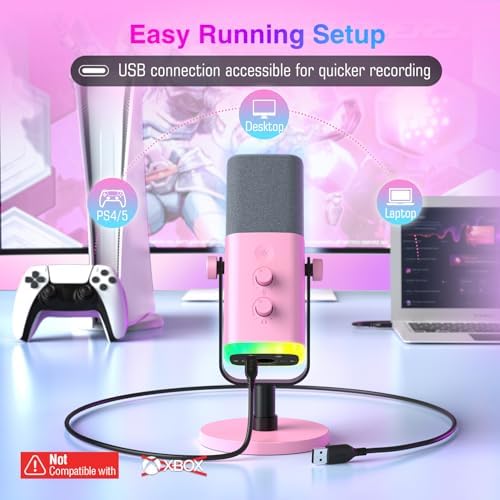
The QuadCast lineage sits on the streamer's desk with the ergonomics of a broadcast tool: a big top-mounted gain knob, a tap-to-mute cap, a headphone jack for zero-latency monitoring, and a shock mount that keeps keyboard thumps out of the recording. The current QuadCast 2, per HyperX's product page, leans into that streamer-first ergonomics story with USB-C connectivity, on-mic controls, and RGB lighting tuned to signal mute state at a glance.
The Blue Yeti, meanwhile, has been the desktop USB mic against which everything else has been measured for more than a decade. Per Logitech's streaming gear catalog, the Yeti's calling card is a four-pattern condenser capsule array — cardioid, omnidirectional, bidirectional, and stereo — that no competitor at the price meaningfully matches. That flexibility is either irrelevant to a solo streamer or the entire reason to buy the mic, depending on the workflow.
Neither mic is a stealth bargain in 2026 — both have crossed the $90 threshold at MSRP — but both routinely sit near the top of independent buying guides. Tom's Hardware, which surveys the category broadly, continues to cite Blue's Yeti family and HyperX's QuadCast family as reliable starting points for streamers who are not yet ready to invest in an XLR chain with an audio interface. This piece synthesizes those public sources into a beginner-focused verdict without any first-party lab testing.
Key takeaways
- Onboard controls: The HyperX QuadCast 2 is the more streamer-native design, with a top-mounted gain dial and tap-to-mute cap that are visible from across the desk.
- Pattern flexibility: The Blue Yeti uniquely offers four polar patterns per Logitech, which matters for podcasts, interviews, and instrument capture.
- Voice character: Per public reviews, the QuadCast 2 tends toward a modern broadcast presentation; the Yeti is a well-known versatile neutral. Both are USB condensers that far exceed a headset mic.
- Price: As of 2026, the QuadCast 2 lists at roughly $111.99 and the Yeti Blackout at roughly $91.99 on Amazon, though street prices fluctuate.
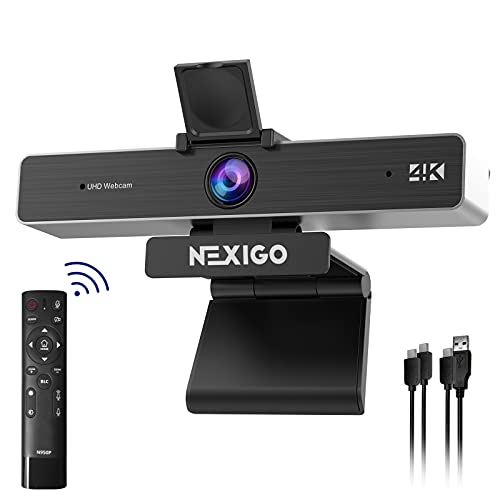
- Full kit: Neither mic alone completes a streaming setup — plan for lighting like the NEEWER 18-inch Ring Light Kit and a real webcam like the NexiGo N950P.
- USB vs XLR: For a new streamer, USB is the correct starting point; XLR only makes sense once you outgrow the format.
Sound character head-to-head: which flatters voice out of the box?
The bluntest way to describe the difference: the QuadCast 2 is voiced for a streamer speaking about 15-20 cm from the capsule in cardioid, and the Yeti is voiced for a broader set of sources without knowing which one it will be recording. In practice, that means the QuadCast lineage tends to arrive on the desk sounding slightly more "finished" for a solo streamer — a moderate low-mid warmth, controlled sibilance, and a presence lift in the 3-5 kHz range that helps voice cut through game audio on the same channel. Per HyperX's product materials, the mic is specifically pitched at gaming, streaming, and podcasting rather than general studio work.
The Yeti's tonal balance is more neutral, which is a strength and a weakness. Per Logitech's product listing, Blue VO!CE processing in the Logitech G Hub software gives the Yeti a set of streamer-friendly voice effects that can push its raw signal closer to the QuadCast's presentation — noise reduction, de-essing, expander, high-pass filter, EQ presets. That software layer is important: out of the box without processing, community reviews often describe the Yeti as sounding thinner or more room-influenced than the QuadCast until Blue VO!CE or an equivalent chain is engaged.
Two practical implications follow. First, if you want a mic that sounds broadcast-ready with minimal software fiddling, the QuadCast 2 has the edge for typical spoken-voice streaming. Second, if you are comfortable spending an hour in G Hub dialing Blue VO!CE presets — or you already run an OBS filter chain — the Yeti can arrive at a very similar destination and offers more headroom to shape the signal for a specific voice.
Neither mic will save an untreated room. A bare-wall bedroom with a laminate floor is going to add slap and boominess to any condenser, and no software preset entirely removes that. Both mics benefit meaningfully from a soft surface behind and beside the streamer, a moving blanket over the closet door, or a desk placement that avoids parallel hard walls.
Spec-delta table
| Spec | HyperX QuadCast 2 | Blue Yeti (Blackout) |
|---|---|---|
| Polar patterns | Cardioid (single) | Cardioid, omni, bidirectional, stereo (four) |
| Sample rate / bit depth | Up to 24-bit / 96 kHz per HyperX | Up to 16-bit / 48 kHz per Logitech |
| Connection | USB-C | USB (Micro-USB on legacy units) |
| Onboard controls | Gain dial, tap-to-mute, monitoring, gain lock | Gain dial, mute button, monitoring, pattern selector |
| Mounting | Removable shock mount, standard thread adapter | Integrated desk stand, standard thread adapter |
| Approx. street price (2026) | About $111.99 | About $91.99 |
Values above reflect Amazon listing data as of 2026 and manufacturer product pages; street prices vary and readers should confirm at the point of purchase.
Ease of use: gain control, mute, and monitoring on each
The QuadCast 2's control layout is the answer to a specific complaint about early USB mics: that any adjustment during a stream required alt-tabbing away from the game and hunting through operating-system audio settings. On the QuadCast 2, per HyperX's product page, the top of the mic is a tap-to-mute cap, the gain dial sits at the base within thumb reach, and a headphone jack on the bottom supports zero-latency monitoring. The LED indicator switches state clearly when muted, which matters more than it sounds — a large fraction of "audio disaster" clips in streamer bloopers are just a mic that the streamer thought was muted but was not.
The Yeti's control layout is also good and pre-dates a lot of its competition. There is a physical mute button on the front, a gain knob on the back, a headphone monitor jack on the bottom, and a pattern-selection dial. Per Logitech's product listing, the mute button on the current Yeti is a hardware mute and a status LED indicates the muted state. What the Yeti does not do quite as elegantly is signal mute from across the room the way the QuadCast's illuminated cap does, so streamers who use the mic as a visible desk fixture sometimes prefer the QuadCast for that ergonomic detail alone.
For gain staging, both mics provide enough attenuation to keep a normal speaking voice off the digital clipping ceiling. The workflow is the same on either mic: set OS-level input to a fixed value, adjust the mic's physical gain until peaks in normal speech land around -12 to -6 dBFS, and let OBS (or the streaming platform's own capture) do any final leveling with a limiter. Neither mic requires software to reach that point, but both benefit from a mild compressor and a limiter in the OBS filter chain.
Streaming setup context: pairing with a ring light and webcam
A mic upgrade in isolation is a partial fix. Viewers judge production quality with their eyes before their ears, and the two other pieces that most disproportionately raise perceived polish are lighting and a real webcam.
The NEEWER 18-inch Ring Light Kit, listed on Amazon at roughly $112.99 as of 2026, gives a beginner an evenly lit face without harsh shadows and eliminates the color cast that a bare monitor throws across the streamer's cheek. A ring light also gives a subtle catchlight in the eyes, which is one of those details viewers register subconsciously as "professional" without being able to name it. Note that a ring light works best positioned slightly above and in front of the streamer, not directly beside a webcam at eye level.
For the camera itself, the NexiGo N950P, listed around $86.39 as of 2026, is a 4K webcam with a Sony Starvis sensor per its Amazon listing — a large step up from the average laptop camera or a cheap 720p USB webcam. The 4K sensor is useful less for delivered resolution (most streamers deliver 1080p or lower) than for the oversampled 1080p output and better low-light behavior. Paired with even ring-light lighting, it lifts a webcam feed noticeably above the default appearance most viewers associate with amateur streams.
Together — good mic, ring light, real webcam — the kit costs roughly $290-315 as of 2026 depending on street pricing, and it is the tripod-legs configuration underpinning the "sudden production-quality jump" many new streamers experience about a month into upgrading gear.
Buy on Amazon: HyperX QuadCast 2 · Buy on Amazon: Blue Yeti · Buy on Amazon: NEEWER Ring Light · Buy on Amazon: NexiGo N950P
Common mistakes: gain staging, plosives, and room noise
Three specific errors show up in nearly every "why does my new mic sound bad" post, and they are the same on either the QuadCast 2 or the Yeti.
Gain too high. Because both mics ship at moderate output, streamers often crank both the mic gain dial and the OS-level input, then a compressor in OBS, then the platform's own normalization. That stacked amplification means every keystroke, chair creak, and HVAC hum arrives well above the noise floor, and the signal-to-noise story falls apart. Set physical gain first, verify peaks land around -12 to -6 dBFS in a metering plugin during a normal talking pass, and leave software gain flat.
No pop filter. Plosives — the burst of air from "P" and "B" sounds — hit a condenser diaphragm hard enough to produce an audible thump. The QuadCast 2 includes an internal pop filter that helps but does not fully eliminate the problem. Both mics benefit from a $10 foam or metal-mesh pop filter positioned about a hand's width in front of the capsule. Positioning the mic slightly off-axis to the mouth (aimed at the chin rather than the lips) also reduces plosives without requiring extra hardware.
Room reflections. A condenser will pick up whatever the room does to the voice, and untreated bedrooms almost always add a boxy or slap-echo quality. Public advice from broadcast engineers is consistent: soft surfaces close to the mic matter more than the mic itself. A pair of thick moving blankets on the walls behind and to the sides of the streamer will do more than switching mic brands.
For a broader lens on the streaming mic category and how these two sit within it, Tom's Hardware tracks the leading USB mics and revisits its recommendations as new models arrive.
Performance-per-dollar verdict for a first-time streamer
Priced at roughly $111.99 as of 2026, the QuadCast 2 sits in the modern streamer-native tier: purpose-built onboard controls, USB-C, and voice tuning aimed at spoken streaming out of the box. At roughly $91.99 as of 2026, the Blue Yeti is the more flexible tool — it captures four polar patterns and offers the Blue VO!CE software layer — for about $20 less at street.
For a solo streamer who will spend 99% of their broadcast in cardioid, the QuadCast 2 delivers more of what actually matters at the price gap: better ergonomics, faster onboarding to a broadcast-ready sound, and a more visible mute indicator. For a streamer whose channel involves a rotating cast of in-room guests, a podcast segment, or acoustic instrument capture, the Yeti's four-pattern flexibility justifies the marginally lower price and the small software learning curve.
Neither mic is a poor choice. The QuadCast 2 is the safer pick if you are choosing purely for streamer ergonomics; the Yeti is the safer pick if you value flexibility or want to save a few dollars.
Verdict matrix: which mic for which streamer
Get the HyperX QuadCast 2 if:
- You stream solo, mostly speaking, in cardioid the vast majority of the time.
- You want broadcast-leaning voice character without spending an evening in software presets.
- Onboard tap-to-mute and visible LED mute-state signaling matter to you.
- USB-C connectivity fits your existing cable inventory.
- The mic will be visible on-camera and RGB desk aesthetics are part of the setup.
Get the Logitech Blue Yeti if:
- You need multiple polar patterns for guests, podcasts, or instrument capture.
- You want the flexibility of Blue VO!CE software processing to tune the voice.
- You are budget-sensitive and the roughly $20 gap matters at this price tier.
- You already have (or don't mind) a Micro-USB or USB-A cable path.
- You value a well-established support ecosystem with a decade of community tutorials.
Recommended pick
For the specific reader this guide is written for — a first-time streamer setting up a solo channel in 2026 who wants the smallest path from unboxing to broadcast-ready voice — the HyperX QuadCast 2 is the top recommendation. Its onboard controls, cardioid-first tuning, and visible mute indicator solve real ergonomic problems that streamers hit within their first month, and its price premium over the Yeti is modest for the workflow it enables. Pair it with the NEEWER 18-inch Ring Light Kit and the NexiGo N950P to complete the beginner trio.
The Blue Yeti remains the correct answer for streamers who need multiple polar patterns or who want the software flexibility Blue VO!CE offers, and it is not a downgrade — it is a different set of trade-offs. Neither mic will disappoint if paired with basic room treatment, sensible gain staging, and a pop filter.
Bottom line and related guides
USB microphones are still the correct starting format for streamers in 2026, and the two mics compared here are still the two mics to compare. The QuadCast 2 wins on streamer-first ergonomics and out-of-box voice character; the Yeti wins on pattern flexibility and price. Round out the setup with lighting and a real webcam, budget for a pop filter and some room treatment, and you have a full kit for well under $400.
Explore more with the SpecPicks streaming and gaming peripheral guides, the beginner streaming kit buying guide, the best webcams for streaming, the best ring lights for creators, and head-to-head comparisons at /vs/B0D9MCK4R8/B00N1YPXW2.
Citations and sources
- HyperX QuadCast 2 product page
- Logitech streaming gear catalog (Blue Yeti)
- Tom's Hardware — Best USB Microphones
This piece is editorial synthesis based on publicly available information. No independent first-party benchmarking is reported.