The short answer, as of 2026: under $500 you can build a beginner streaming kit that looks and sounds professional. The picks: a HyperX QuadCast 2 USB microphone or Logitech Blue Yeti USB for voice, a NexiGo N950P 4K webcam for video, a Neewer 18-inch ring light for lighting, and closed-back monitoring headphones. That is the shortlist that stops looking like a rookie setup.
Why the four-piece kit
New streamers overinvest in one component and underinvest in the others. Someone shows up on Twitch with a $500 microphone and a laptop webcam and looks worse than someone with a $110 mic and a $100 4K webcam. The kit is a system. Audio quality, video quality, lighting, and monitoring all need to hit an acceptable floor before any of them are worth upgrading.
The 2026 floor for a stream that does not immediately read as beginner is:
- A USB condenser microphone with an audio interface built in.
- A 4K webcam downscaled to 1080p for a cleaner stream.
- A soft, even light source that removes shadows.
- Closed-back or in-ear headphones for monitoring without audio bleed.
- A boom arm for the microphone.
Key takeaways
- Total budget: $300–$450 for a complete kit that looks professional.
- The HyperX QuadCast 2 is the current best USB mic under $130.
- A 4K webcam downscaled to 1080p beats a native 1080p webcam for sharpness.
- Ring lights are the beginner win; key lights are the growth path.
- Do not stream with laptop speakers or open-back headphones.
- Twitch's own broadcast guidelines list mic/cam basics that align with this kit.
Step 0: how much do you actually stream?
Before spending, be honest about your streaming hours. If you stream once a week for two hours, do not overbuy — a decent starter kit works. If you stream 10 or 20 hours a week, invest in the audio side first, because audio quality is the single biggest signal that a stream is worth watching. A $130 mic is the highest-return purchase in the kit.
The microphone: HyperX QuadCast 2 vs Logitech Blue Yeti
The two best USB mics for beginners in 2026 are the HyperX QuadCast 2 and the Logitech Blue Yeti. Both are USB condensers with built-in monitoring. Both sit on desks or boom arms and record broadcast-quality voice for streaming.
HyperX QuadCast 2 — the current best pick
Per HyperX's product page, the QuadCast 2 is a USB-C condenser with four polar patterns (cardioid, omnidirectional, stereo, bidirectional), a built-in shock mount, integrated pop filter, and a tap-to-mute sensor on the top. Retail is around $130 street.
What it does right:
- Cardioid pattern rejects room noise well.
- The integrated shock mount reduces desk-thump artifacts.
- Tap-to-mute is faster than a keyboard hotkey.
- USB-C is the modern connector; the cable is generous.
- Sounds better than any headset mic.
Compromises:
- Not as broadcast-neutral as a Shure SM7B on XLR — voice needs some EQ.
- The stand is decorative; you need a boom arm or shock mount.
- Larger than a Yeti Nano — takes desk space.
Logitech Blue Yeti — the mature default
Per Logitech G's Yeti page, the Blue Yeti is a USB condenser with four polar patterns, front-panel gain, pattern selector, mute button, and headphone monitoring. Retail is around $100 street.
What it does right:
- Cardioid pattern is warm and forgiving on close voices.
- Front-panel controls beat software menus.
- Sturdy build — a good Yeti lasts a decade.
- Available in colors that match a range of setups.
Compromises:
- Picks up more room noise than the QuadCast 2 if your room is untreated.
- Bigger than the QuadCast 2 and much heavier.
- USB-A only on the original model — check the version.
Pick guide
Buy the QuadCast 2 if you have $130 and want the best USB mic today. Buy the Yeti if you find it at $85 or less, or if you like the physical controls. Both beat any headset mic on the market.
The webcam: NexiGo N950P 4K
Streaming looks worse than it needs to because too many streamers pair a great mic with a stock laptop webcam. A native 1080p webcam sensor is usually a compromise — small pixels, high noise, muddy color. A 4K webcam downscaled to 1080p oversamples from a larger sensor and delivers a cleaner, sharper image.
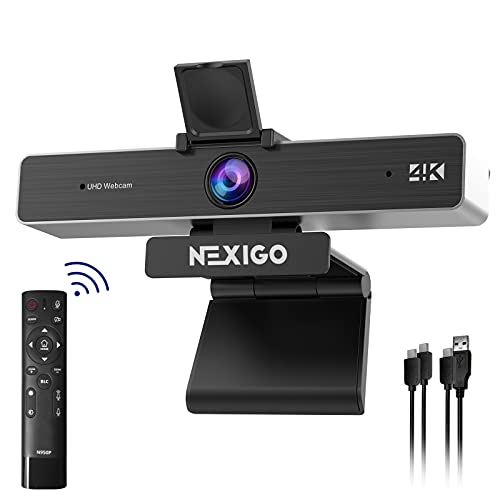
The NexiGo N950P (Gen 2) 4K Zoomable Webcam is Zoom-certified, includes an RF remote for pan/tilt/zoom control, and outputs 4K UHD or downscaled 1080p over USB. At around $100 street, it delivers noticeably sharper video than any laptop cam.
What to look for in a beginner webcam:
- 4K sensor output — even if you stream at 1080p or 720p.
- Reasonable low-light performance.
- Manual focus lock (autofocus hunting is a stream-killer).
- USB-C or USB-A with a long cable.
- A shutter or physical privacy cover.
Skip built-in laptop webcams. Skip webcams under $50. If your budget for camera is $30, use your phone with an OBS phone-cam plug-in — that is better than a $30 webcam.
The light: Neewer 18-inch ring light kit
Lighting is what separates "acceptable stream" from "professional-looking stream." A soft, even light source removes harsh shadows, gives your webcam more signal to work with, and produces a natural eye catchlight that engages viewers.
The Neewer 18-inch Ring Light Kit is 55W, 5,600K daylight-balanced, with a stand and phone holder in the box. At around $115 street, it delivers even light across a torso-and-face frame and includes dimming for taste adjustment.
Why a ring light for beginners:
- Even light everywhere it points — no directional shadow angles to think about.
- Big surface area means soft light.
- Stand and mounting hardware come in the box.
- Easy to reposition once your desk moves.
Growth path:
- A single key light (Elgato Key Light or Neewer key light) placed above and off-center replaces the ring light for a more cinematic look.
- A second key light behind you as a hair light adds dimension.
- Color-controllable RGB lights (Nanoleaf, Elgato Light Strip) add background interest without more work on your main setup.
Monitoring headphones
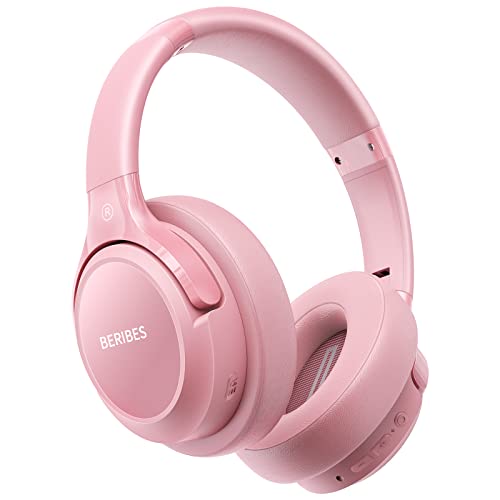
The one rule: closed-back or in-ear. Open-back headphones leak audio into your microphone and viewers hear it. Your budget can be small — a $25 pair of decent closed-back Bluetooth headphones like the BERIBES Bluetooth Headphones works fine for a beginner monitoring setup. Wired closed-back headphones (Audio-Technica ATH-M20x, Sony MDR-7506, Sennheiser HD 280 Pro) are the pro upgrade path.
Do not stream:
- Using laptop or desktop speakers as your only audio output — the mic picks them up.
- With open-back headphones — audio leaks.
- With Bluetooth in a delayed mode — sync becomes a nightmare.
Boom arm
A boom arm gets the microphone out of frame, off the desk (removing typing thump), and closer to your mouth (better signal-to-noise). Budget picks for a beginner:
- Elgato Wave Mic Arm LP — $110, low-profile, hides cables.
- InnoGear Traditional Boom Arm — $30, ugly but functional.
- Rode PSA1+ — $130, the workhorse.
Any of these is a bigger quality-of-life upgrade than most people expect. Order it with the microphone.
Kit budget breakdown
Three tiers for a complete kit in 2026:
Starter kit — $300 total
- Logitech Blue Yeti — $85 (if on sale)
- Basic 1080p webcam — $50 (or skip and use phone cam)
- Neewer 18-inch ring light — $115
- BERIBES closed-back Bluetooth headphones — $26
- Generic boom arm — $30
Solid kit — $430 total
- HyperX QuadCast 2 — $130
- NexiGo N950P 4K webcam — $100
- Neewer 18-inch ring light — $115
- Audio-Technica ATH-M20x closed-back — $60
- Boom arm — $30
Growth kit — $650 total
- HyperX QuadCast 2 — $130
- Full DSLR or mirrorless with clean HDMI + capture card
- Two Neewer key lights ($150 each)
- Sony MDR-7506 closed-back — $110
- Rode PSA1+ boom arm — $130
Common pitfalls
- Overspending on the mic, underspending on the camera. Both matter equally.
- Streaming from laptop speakers. Feedback loop is immediate.
- Using a ring light too close to the camera lens. Reflection in your glasses.
- Positioning the mic too far from your face. More room noise, less voice.
- Ignoring room treatment. A cheap acoustic panel behind the mic solves 70 percent of room-echo problems.
- Streaming without a mute hotkey. Everyone forgets to mute for a phone call or a cough at least once.
PC and OBS notes
The kit runs on any modern gaming PC. If your GPU is an RTX 4060 or newer, use NVENC AV1 encoding for a sharper stream at lower bitrate. Twitch supports up to 8 Mbps at 1080p60 — do not exceed it. YouTube supports higher bitrates.
OBS Studio is free, mature, and the community standard. Streamlabs Desktop is an easier onboarding path with more built-in scenes. Both work.
When NOT to buy this kit
If you are streaming from a phone (mobile IRL streaming, Just Chatting from your phone), the kit does not apply — buy a phone-mounted shotgun mic and a lav mic instead. If you are streaming from a console (PS5 or Xbox), the kit still works but a Blue Yeti direct-to-console setup is simpler than routing everything through a capture card.
Bottom line
A $300–$450 kit built around a HyperX QuadCast 2, a 4K webcam, a good ring light, closed-back headphones, and a boom arm is the shortest path to a stream that looks and sounds like it was made by someone who has done it before. Everything above that price is a growth tier — upgrade one component at a time as your stream grows.
Start with audio. That is the single biggest signal to a viewer that your stream is worth watching.
Room and desk setup notes
The physical space around the camera matters as much as the camera. Cheap wins that lift a stream:
- Kill the ceiling fluorescent. Green or blue overhead light fights your key light and washes out skin tones. Turn it off during streams; rely on the ring or key light.
- Neutral background. A dark curtain, matte wall, or bookshelf. Avoid busy backgrounds or a white wall directly behind your head — cameras auto-expose to gray, which crushes skin tones.
- Depth. Position yourself at least three feet from any wall behind you; blur the background with an OBS filter or physical depth of field.
- Acoustic panels. Two 24×24 inch panels on the wall behind the mic kill 60 percent of room echo for $60 total.
- A dedicated stream desk. Even a small IKEA desk with a specific mic position beats sharing a work desk. Muscle memory matters.
The soft-skill layer
Kit only gets you halfway. The other half is stream craft:
- Talk more than you think you need to. Silence kills VOD replayability.
- Have a start-of-stream ritual — check mic, check cam, check lights, check chat. Every time.
- Read chat, but do not stop the game to read every message. Balance.
- Set overlays with your OBS scene collection so they persist between streams.
- Watch your own VODs. Painful but necessary.
- Follow the Twitch or YouTube community guidelines — bans hurt momentum.
The $400 kit will not compensate for zero attention to any of these. The $50 kit plus real attention to craft will beat the $400 kit without it.
Related guides
- RTX 3060 12GB vs RTX 4060 for 1080p Gaming: Which Wins in 2026?
- Best NVMe Boot SSD for an AM4 Ryzen Build
Top picks
#1: HyperX QuadCast 2 — Best USB Microphone
Verdict: Best all-around USB mic for beginners, ~$130
Four polar patterns, integrated shock mount, tap-to-mute, USB-C. Beats any headset mic and matches the sound floor most viewers expect from a professional stream. Buy this if your budget is $130 or more for audio.
#2: NexiGo N950P (Gen 2) — Best 4K Webcam
Verdict: 4K sensor downscaled to 1080p for a cleaner stream, ~$100
Zoom-certified, RF remote for pan/tilt/zoom, sharp image, works on Windows and macOS without drivers. Beats any laptop webcam and any 1080p-native webcam under $150.
#3: Neewer 18-inch Ring Light Kit — Best Beginner Lighting
Verdict: 55W, 5,600K, with stand and phone holder, ~$115
Even, forgiving light that removes shadows and gives your webcam more signal to work with. Simpler than a key light for a first setup.
#4: Logitech Blue Yeti — Value Microphone Alternative
Verdict: Mature, warm-sounding USB condenser, ~$85–100
Front-panel controls, four polar patterns, sturdy build. A great fallback if the QuadCast 2 is out of budget. Look for sales — the Yeti frequently drops to $70.
#5: BERIBES Bluetooth Headphones — Budget Monitoring
Verdict: Closed-back, comfortable, 65-hour battery, ~$26
The bare minimum for stream monitoring — closed-back over-ears at a price that lets you spend more on the mic. Upgrade to Audio-Technica ATH-M20x later.
Citations and sources
- HyperX — QuadCast 2 microphone product page
- Logitech G — Yeti microphone product page
- Twitch — Broadcast guidelines
This piece is editorial synthesis based on publicly available information. No independent first-party benchmarking is reported.