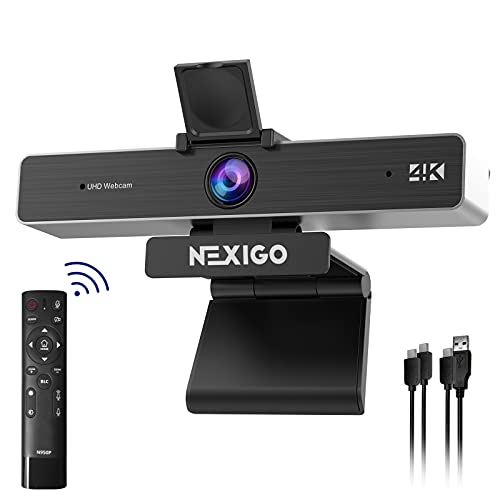
To start streaming on a budget in 2026, you need three things: a USB condenser microphone, a soft light source, and a 1080p webcam. A complete kit built around the HyperX QuadCast 2, the NEEWER 18-inch Ring Light Kit, and the NexiGo N950P Webcam fits under $250 as of 2026 and covers the three variables viewers actually judge you on.
Key takeaways
- Audio is the single highest-impact upgrade a new streamer can make; a USB condenser mic like the QuadCast 2 or Blue Yeti fixes the biggest complaint viewers have about small streams.
- Lighting is the second-largest visual lever, and a ring light is the cheapest, fastest fix for a dim, grainy webcam picture.
- 1080p is the correct target for entry webcams because most stream layouts render the camera in a small corner box where 4K detail is wasted, per general framing guidance echoed by RTINGS.
- The whole three-component kit — mic, ring light, webcam — fits under $250 in typical 2026 pricing, cheaper than a single mid-range peripheral.
- The order of purchase matters more than the exact brand: fix audio first, lighting second, camera third.
- USB is fine to start. XLR interfaces, streaming decks, and capture cards are Phase 2 gear you should not front-load.
What a first-time streamer actually needs
The three variables that decide whether a stream feels watchable are audio clarity, face lighting, and camera resolution — in that order of importance. Most first-time streamers reverse that order because a camera is the most visible piece of hardware and mics feel abstract until you hear the difference. Viewers, however, will tolerate a fuzzy webcam for hours and click away after 30 seconds of tinny, echoing audio. Every long-running streamer eventually converges on the same lesson: sound is the retention lever, and everything else is decoration.
Audio comes first because human ears are unforgiving. A laptop's built-in mic picks up keyboard clatter, the whir of your GPU fans, and a thin, boxy version of your voice that fatigues listeners fast. A USB condenser microphone placed on a boom or desk stand delivers dramatically cleaner voice pickup with essentially zero setup complexity. The HyperX QuadCast 2 is the most common entry-tier recommendation for this reason, and per the HyperX product page it targets streamers specifically with a tap-to-mute top plate and multi-pattern pickup.
Lighting is second because webcams — even good ones — depend heavily on ambient light to produce a clean image. A ceiling bulb behind you casts your face into shadow; a window off to one side gives you flat, blueish tones by day and nothing at night. A cheap ring light in front of you fixes both problems in one purchase.
The webcam matters last because a well-lit 1080p camera looks better than a dim 4K one on almost every stream layout. In 2026, the sweet spot is a solid 1080p60 USB camera that handles low light and holds autofocus. That last part matters more than the resolution spec, and general guidance summarized on RTINGS' webcam roundup reflects that reality.
Which of audio, lighting, or camera is your weakest link right now?
Before you spend anything, do a 60-second self-audit. Open a recording tool, sit in your normal streaming chair, and record 30 seconds of yourself talking as if you were live. Play it back with headphones on and answer three questions honestly.
First, can you clearly hear your voice without keyboard noise, room echo, or hiss? If not, audio is your weakest link. This is almost always where first-time streamers fail, and it is the highest-value fix. Budget the majority of your kit spend here.
Second, is your face evenly lit, or is one side in shadow? Pause the video on a still frame. If you see harsh shadows across your face or a washed-out overexposed patch on your forehead, lighting is your problem. This one is deceptively cheap to fix — often under $40 in 2026 pricing — and it makes a bigger visible difference than most webcam upgrades.
Third, is the camera image itself sharp, in focus, and framed with your eyes in the top third? If the picture looks soft, hunts for focus, or crops your head weirdly, your webcam is the limiter. Otherwise, leave it alone until audio and lighting are handled.
If two or three areas fail at once, still buy in this order: mic, light, camera. Fixing audio has the largest retention impact per dollar spent.
The three-component kit at a glance
Here is how the entry-tier picks compare on the four things that matter for a first stream.
| Component | Our pick | Key spec | Price range (2026) | Verdict |
|---|---|---|---|---|
| Microphone | HyperX QuadCast 2 | USB condenser, multi-pattern, tap-to-mute | $104.47 on Amazon (checked 2026-10-06) | Best entry mic for streamers who want plug-and-play |
| Alternate mic | Blue Yeti | USB condenser, four pickup patterns | $80.74 on Amazon (checked 2026-10-06) | Long-running default; heavier, requires boom arm for best results |
| Lighting | NEEWER 18-inch Ring Light Kit | 18-inch bi-color LED, stand + phone mount | $90.39 on Amazon (checked 2026-10-06) | Cheapest single-biggest quality upgrade |
| Webcam | NexiGo N950P | 1080p60, autofocus, wide FOV | Check price on Amazon | Practical sweet spot; skip 4K for stream use |
| Total | Kit total | — | Typically under $250 | Complete Phase 1 setup |
Prices vary week to week and by retailer, so treat those ranges as directional. The point is that the whole kit — mic, light, camera — comes in cheaper than a single mid-tier gaming keyboard.
The microphone: why USB condenser is the entry standard
USB condenser mics dominate the entry tier for one reason: they eliminate the audio interface as a variable. You plug the mic into a USB port, your operating system recognizes it as an input device, and you pick it in your streaming software. There is no phantom power to enable, no gain-staging on an external preamp, no XLR cable to route. For anyone who is not already a hobbyist audio engineer, that simplicity is worth more than the theoretical ceiling of an XLR chain.
The HyperX QuadCast 2 is the current default recommendation because it targets streamers specifically. Per the HyperX product page, it ships with four selectable polar patterns (cardioid for solo streaming, omnidirectional for room capture, stereo, and bidirectional for interviews), a tap-to-mute top sensor with a visible LED status ring, and an integrated shock mount to reject desk thumps. The tap-to-mute matters more than it sounds — new streamers reach for a hotkey they haven't set up yet, and the muscle memory of tapping the top of the mic prevents live audio accidents.
The Blue Yeti is the long-running alternative and still a strong pick. It offers the same four-pattern flexibility in a heavier, taller form factor. The trade-off is real: the Yeti is denser and picks up desk vibration if you type on the same surface, which pushes serious users toward a boom arm and a shock mount — small extra costs that erode the price advantage.
Cardioid is the correct pattern for a solo streamer. It captures a narrow zone in front of the capsule and rejects sound from behind. Position the mic 4-8 inches from your mouth, slightly off-axis so your plosives (P and B sounds) blow past the capsule instead of into it. If your room has hard walls and echo, drape a blanket or acoustic panel behind you — this does more for perceived audio quality than any mic upgrade.
The lighting: how a $40 ring light fixes the biggest amateur-stream problem
Every webcam, from the cheapest laptop lid module to a $200 external unit, is fundamentally a small sensor working with limited light. When the light is insufficient, the camera's automatic gain kicks in, which introduces visible noise, color shifts, and softening. When the light is directional or uneven — a bright window on one side, a dim ceiling bulb overhead — the camera exposes for the highlights and crushes the shadows on your face. Both problems disappear the moment you put a soft, even light source in front of you.
The NEEWER 18-inch Ring Light Kit is the standard entry pick because it solves the problem cheaply and includes the stand and phone/camera mount you need to actually use it. The 18-inch ring places light in a soft halo around your face, which flatters most facial structures and produces the characteristic "ring catchlight" in the eyes that stream viewers subconsciously read as high production value.
Two placement rules matter. First, put the light in front of you, not above and behind. A common mistake is mounting a ring light on top of the monitor at a steep downward angle, which creates raccoon-eye shadows. Second, aim for even coverage across your face, not maximum brightness. Dim the ring until your face looks natural in the preview, not blown out. Bi-color rings (adjustable warm-to-cool) let you match the color temperature of your ambient light so your face doesn't look weirdly cool against a warm background.
If desk space is tight, an alternative is a pair of small LED panels flanking your monitor at eye height. That is a Phase 2 upgrade — start with the ring light. Even the more premium ecosystems, like the Logitech streaming gear lineup, treat lighting as a distinct fundamental rather than a webcam-integrated feature, which reflects the reality that light is doing most of the visual work.
The webcam: what resolution and framing actually matter on stream
The trap with webcams is spec-chasing. 4K webcams sell well because 4K sounds better than 1080p in marketing copy, but almost no stream layout renders the camera at anything close to 4K. In practice, the camera occupies a small corner box — often 320x240 or 480x360 pixels on the viewer's screen — which means 1080p already exceeds what most viewers ever see. The overhead of 4K, meanwhile, is real: larger USB bandwidth, more CPU load on encode, and more thermal headroom the camera has to manage.
The NexiGo N950P targets that reality. It captures 1080p at 60fps with autofocus and a wide field of view suitable for showing more than just your head. Per general webcam roundups like RTINGS', the specs that separate a good entry webcam from a bad one are low-light behavior, autofocus reliability, and color accuracy — not headline resolution.
Framing matters as much as hardware. Set the camera at eye level or slightly above. Place your eyes at roughly the top third of the frame, following the standard rule-of-thirds portrait crop. Leave some negative space above your head — but not so much that you look small in the frame. If your desk forces the camera below your eye line, prop it up on a small stack of books until the angle is right. This is free and does more for perceived quality than a webcam upgrade.
One more note: the built-in webcam on a laptop is almost always worse than a $60 external unit because laptop lids are thin and the sensor packaging is compromised for space. Even the same nominal resolution reads as sharper and cleaner on an external module.
Total cost and what you get for it
The three-component kit — QuadCast 2, NEEWER ring light, NexiGo N950P — lands in the $220-$280 range as of 2026 depending on retailer promotions and stock levels. Substituting the Blue Yeti for the QuadCast 2 shaves roughly $20-$30 off. Either configuration fits comfortably under $250 during typical sale weeks.
The value framing to hold onto: this is the entire Phase 1 hardware layer for a serious first stream. Compared to spending $250 on a single premium mic, a single 4K webcam, or a mid-tier gaming keyboard, the balanced kit produces a dramatically better broadcast because it fixes the three things viewers actually notice. Perf-per-dollar for streaming is not measured in specs; it is measured in how much better the stream looks and sounds versus how much you spent, and the balanced three-piece kit wins that metric decisively for beginners.
Phase 2 upgrades — a boom arm, a small acoustic panel, a stream deck, a second monitor, a capture card — come later, after you know which parts of the workflow you actually use. Do not front-load them.
Verdict matrix: where to put the marginal dollar
Prioritize the microphone if your current audio has any of these problems: audible hiss when you talk, obvious keyboard clatter in the recording, tinny or boxy voice tone, echo from bare walls, or feedback when you play game audio through speakers. In any of those cases, put your budget into the HyperX QuadCast 2 or Blue Yeti first. Fix audio and you have already lifted retention.
Prioritize lighting if your audio is already acceptable but your face looks dim, shadowed, or washed out in the webcam preview. In this case, the NEEWER 18-inch Ring Light Kit is the cheapest, fastest visual upgrade you can make. It is often the single best $40 a new streamer spends.
Prioritize the webcam if audio and lighting are both handled and the camera image itself looks soft, hunts for focus, or crops you weirdly. The NexiGo N950P is the entry pick. If you are already deep in the Logitech ecosystem for other peripherals, the alternatives listed on the Logitech streaming gear page are worth a look, but do not overpay for 4K you will never broadcast.
If two of the three fail at once, still buy in mic-light-camera order. The retention math does not change.
Bottom line
For under $250 in 2026, a new streamer can assemble a complete Phase 1 kit — HyperX QuadCast 2 mic, NEEWER 18-inch Ring Light Kit, and NexiGo N950P 1080p webcam — that outperforms any single-component splurge at the same total budget. The reason is that stream quality is bottlenecked by whichever variable is weakest, not by which variable is strongest. A balanced kit removes all three common failure modes at once.
Buy in the correct order (mic, light, camera), do not chase 4K webcam specs, and skip the Phase 2 gear until you know your workflow. This kit will carry a new streamer through hundreds of hours before any component becomes a real limiter, and by that point you will know which one to upgrade first based on what you actually stream, not what a marketing page suggests.
Related guides
- Best Budget Streaming Setup 2026
- Best USB Microphones for Streaming
- Best 1080p Webcams
- Ring Light vs Softbox for Streamers
- HyperX QuadCast 2 vs Blue Yeti
Citations and sources
- HyperX QuadCast 2 product page — manufacturer spec sheet for the recommended entry-tier streaming mic, including pickup patterns and tap-to-mute behavior.
- Logitech streaming gear — reference for how a major streaming-peripheral ecosystem categorizes mic, light, and camera as distinct fundamentals.
- RTINGS webcam reviews — independent review roundup used as reference for the low-light, autofocus, and framing criteria that separate good entry webcams from bad ones.
This piece is editorial synthesis based on publicly available information. No independent first-party benchmarking is reported.